GuidelinesOther guideline
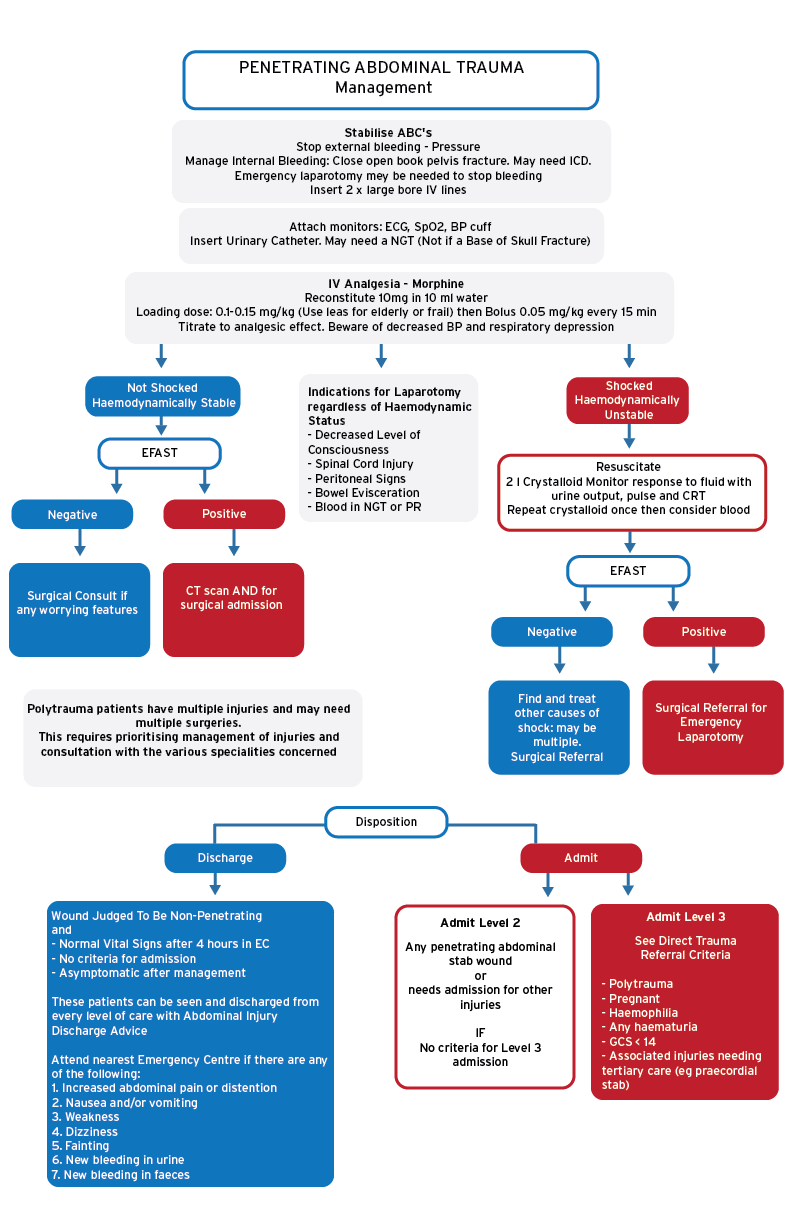
Abdominal Trauma - Penetrating
Penetrating Abdominal Trauma
ASSESSMENT
The life-threatening consequences of Penetrating Abdominal Trauma are:
- Intra-abdominal bleeding from vascular injury or solid organ injury
- Hollow organ injury
- Renal Injury
- Diaphragmatic Injury
- Suspect severe abdominal injury if: Penetrating injury to the abdomen or chest and any of the following:
- Haemodynamic Instability, Peritoneal Signs or Intraperitonel Free Air
- Evisceration
- GIT Haemorrhage
- Intra-abdominal Foreign Body
- Macroscopic or Microscopic Haematuria
NB: Abdominal Injuries frequently accompany multiple other injuries: ALWAYS look for co-existing injuries.
The goal is to determine whether there Is a clinically significant intra-abdominal injury.
- Use a standard ATLS Approach: Assess – Intervene – Reassess: Assessment and Management occur in tandem.
- DeMIST handover from ambulance
- TRIAGE PATIENT USING SATS SCORE
- Measure and Record Vital Signs
Examination:
Primary: Assess ABCDE’S Then Secondary Head to Toe Examination
Specifically for Penetrating Abdominal Trauma:
- Check haemodynamic status and Hb.
- Look for potential sites of blood loss
- Screen for External Bleeding (NB: Look at the back)
- Screen for Internal Bleeding (Chest, abdomen, pelvis, long bones)
- Abdominal examination: Distension, Discolouration, Tenderness, Rebound, Peritonism
- Examine wound tract carefully to attempt to determine depth
- Abdominal signs may be masked in head injury, intoxication or other severe injuries
- PR exam to examine for blood PR
- EFAST scan to look for intra-abdominal fluid, haemopericardium, haemothorax and pneumothorax
Attach: Monitors, ECG, SpO2, BP, Urine Catheter, NGT as needed
SAMPLE History:
- Signs and Symptoms: Abdominal Pain, Vomiting.
- Allergies. Medications.
- Past medical history: Previous Abdominal
- Last Meal.
- Events: Mechanism and Type of Injury.
INVESTIGATIONS:
- Hb.
- Urine Dipstix, specifically for haematuria
- Consider: FBC, U&E, X Match
- Trauma Xray series (C/Spine; CXR; Pelvis).
- Erect CXR for free air.
- Other XRays as clinically indicated
- EFAST US Scan.
- If stable, consider CT scan of abdomen.
MANAGEMENT