Adult, Adolescent and Older Child Contacts
TPT should be offered to TPT should be deferred or not offered if the individual Management of TPT in adult, adolescent, and older child (weighing more than 25 kilograms) contacts This group of potential TPT patients were previously called “household contacts”. Significant TB exposure can however occur both within and outside the household. Therefore, the term “household contact” is confusing and
TPT should be deferred or not offered if the individual
Management of TPT in adult, adolescent, and older child (weighing more than 25 kilograms) contacts
This group of potential TPT patients were previously called “household contacts”. Significant TB exposure can however occur both within and outside the household. Therefore, the term “household contact” is confusing and should no longer be used. Instead, these guidelines use the term “contacts” for “those with significant TB exposure”, defined as:
Significant exposure: (Documented) exposure to a person (adult or adolescent) with pulmonary TB who shared the same enclosed space for one or more nights or for frequent or extended daytime periods during the three months before the index patient started TB treatment.
TPT should be offered to
All adult, adolescent, and child contacts. TPT should be offered regardless of HIV status and age. 3HP can be used for children ≥25kg, adolescents and adults.
Prior completion of either TB treatment or TPT does not exclude a new course of TPT for a new exposure.
TPT should be deferred or not offered if the individual
- is diagnosed with TB disease
- has active liver disease (acute or chronic)
- has symptoms and signs of severe peripheral neuropathy (could consider rifampicin only [4R] regimen)
- has a history of adverse reactions to any of the drugs (medications) used for TPT
- drinks excessive alcohol, and is unwilling or unable to scale down use:
- for men: more than five standard drinks on any day or 15 drinks per week
- for women: more than four standard drinks on any day or eight drinks per week
For individuals with abnormal baseline liver function test results, sound clinical judgement is required to ensure that the benefit of TB preventive treatment outweighs the risks, and they should be tested routinely at subsequent visits.
Management of TPT in adult, adolescent, and older child (weighing more than 25 kilograms) contacts
All adult, adolescent and child contacts require TPT once TB disease has been excluded through evaluation and testing. When an adult or adolescent is diagnosed with pulmonary TB disease it is essential for thorough contact investigations to establish who has had significant exposure to this index patient. Each person with significant exposure should be documented, evaluated for TB disease and offered either TPT or TB treatment – i.e., the TB test and treat approach.
If contacts decline TPT (despite counselling), they should be counselled further regarding TB symptoms and should be offered TPT again at the next opportunity. If they develop symptoms suggestive of TB, they should be evaluated for TB disease again, and be offered TB treatment (if diseased) or offered TPT once more (if TB disease has been excluded).
Evaluation for TB disease amongst adult, adolescent, and older child contacts
Evaluation for TB disease includes symptom screening, physical examination and diagnostic testing irrespective of reported symptoms. TB can either be bacteriologically confirmed or clinically diagnosed. Amongst adults, adolescents, and older children (≥25kg), at least symptom screening and a sputum test are required prior to initiating TPT.
Please refer to Figure 2 for the overall approach to the management of adults, adolescents and older children with TB exposure.
Symptom screening for TB disease amongst adults, adolescents, and older children include one or more of the following:
- current cough
- weight loss
- fever
- night sweats
- haemoptysis
Diagnostic tests for TB disease amongst adults, adolescents, and older children, regardless of the presence of symptoms:
- a sputum sample for testing using Xpert
- if no sputum sample can be collected, a chest radiograph should be obtained to rule out TB disease
- tests of TB infection (TST/IGRA) are not a requirement to initiate TPT
- most children ≥25kg can spontaneously expectorate sputum. If children cannot expectorate sputum and are well (no signs or symptoms), sputum testing is not required. CXR should be used as available to rule out TB. If a child is well and CXR is not available, TPT should still be initiated, and the child followed
- in a child with suggestive signs or symptoms, a CXR should be obtained where possible and sputum sampling attempted
TPT regimens for adult, adolescent, and older child (≥25kg) contacts
There are currently four potential regimens for this group: 3HP, 3RH, 6H or 12H. The short course 3HP regimen should be prioritised if possible. This applies to adults, adolescents and older children who are NOT living with HIV.
If 3HP is not available for HIV-negative children ≥25kg, adolescents and adults, use 3RH. Also consider 3RH use as an alternative to 6H, especially to harmonise treatments in a household or family setting.
For adults, adolescents and children ≥25kg living with HIV and initiating dolutegravir-containing ART, 12H is preferred.
Recommended weekly dosages for the 3HP regimen for adult, adolescent, and child ≥25kg contacts not living with HIV
| Body weight (kg) |
Rifapentine | Isoniazid | Duration |
| 150mg tablets (weekly) | 300mg tablets (weekly) | ||
| 25-29.9 | 4 | 2 | 12 weeks (3 months) |
| 30 – 49.9 | 6 | 3 | 12 weeks (3 months) |
| >50 | 6 | 3 | 12 weeks (3 months) |
Note:
If 3HP is not available, 3RH should be used in adults, adolescents and children ≥25kg without HIV. Alternatively, 6H can be used.
Recommended daily dosages for the 3RH regimen in adult, adolescent and child ≥25kg contacts who are not living with HIV
| Pre-treatment body weight | RH (150,75) | RH (300,150) |
| 25-37 kg | 2 tabs | |
| 38-54 kg | 3 tabs | |
| 55-70 kg | 2 tabs | |
| >70kg | 2 tabs |
Recommended daily dosages for the 12H regimen in adults, adolescents and children ≥25kg living with HIV
| Drug | Isoniazid (H) |
| Dose | 5mg/kg |
| Maximum Dose/day | 300mg* |
| Duration | 12 months |
| Interval | Daily |
* If 300mg tablets are not available, use 100mg x 3
Recommended daily dosages for the 12 months once-daily Isoniazid 12H regimen (only adults living with HIV)
| Drug | Dosage | Number of tablets (daily) | Duration |
| Isoniazid(H) |
300mg tablet | 1 | 12 months |
| Or 100mg tablet | 3 | 12 months |
All people receiving TPT should be offered pyridoxine (vitamin B6) for the duration of their TPT: 25mg/day if five years or older, 12.5mg/day if younger than five years of age. Lack of pyridoxine supply should not be a reason to withhold or postpone TPT.
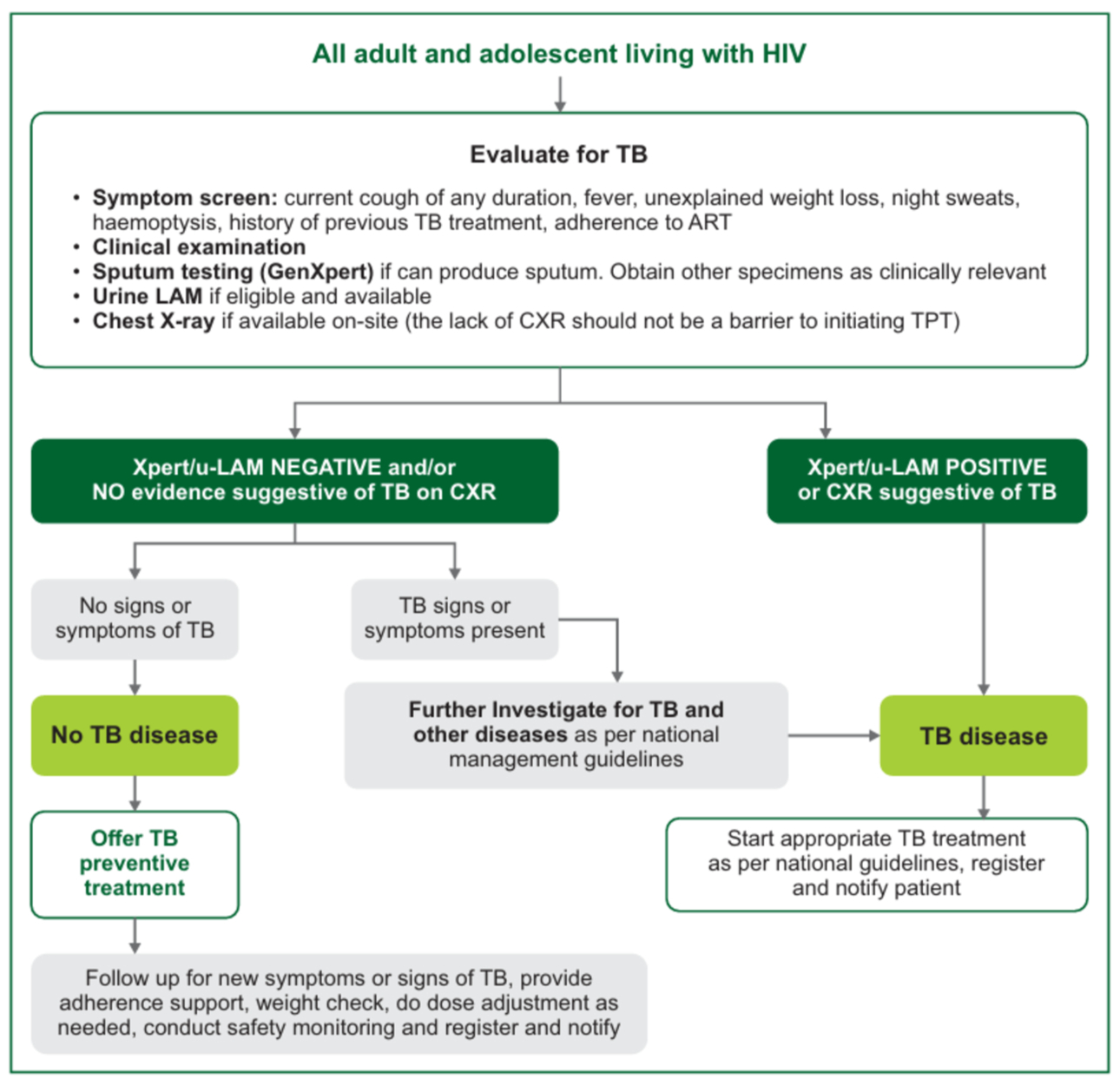
Figure 2. Algorithm for provision of TB preventive treatment for adult, adolescent and older child (≥25kg) TB contacts
Click on the image to enlarge.
- Tests of TB infection (tuberculin skin test/TST or IGRA) not required to initiate TPT in adult or adolescent TB contacts
- For management of DR-TB exposure, refer to the latest National DR-TB Guidelines
National Guidelines on the Treatment of Tuberculosis Infection, February 2023
Adult, Adolescent and Older Child Contacts