Antiretroviral Therapy, Adults and Adolescents (10-19 years old)
Please click on the link below to access the most up-to-date version of this guideline. The content on this page is currently being updated to align with the latest publication. Always check the version number at the bottom of the screen to confirm which version you are using. Click here to access the Primary Health Care - PHC Chapter 11: Human Immunodeficiency Virus and Acquired Immune Deficienc
Please click on the link below to access the most up-to-date version of this guideline. The content on this page is currently being updated to align with the latest publication. Always check the version number at the bottom of the screen to confirm which version you are using.
Click here to access the Primary Health Care - PHC Chapter 11: Human Immunodeficiency Virus and Acquired Immune Deficiency Syndrome (HIV and AIDS) - 26 February 2026
Eligibility of ART
Psychosocial Indicators of Readiness for ART
ART Regimens
Switching Existing Clients to DTG-containing Regimens
Re-initiating ART in Patients who have Interrupted Treatment
ART: Dosing and Important Adverse Effects
ART: Drug-Drug Interactions
Referral
B24
DESCRIPTION
Antiretroviral therapy (ART) suppresses viral replication (measured with the viral load test), increases the CD4 count and reduces HIV-associated diseases and death. ART guidelines are regularly updated, so it is important to consult the current National Guidelines.
ELIGIBILITY FOR ART
All adults with confirmed HIV infection, irrespective of CD4 count or WHO clinical stage.
LoE:Ia2
Timing for ART initiation:
ART may be started on the day of diagnosis if the patient has no clinical contraindication, and the patient is willing to start after receiving pre-ART counselling. For clinical indications for deferring ART initiation, see below.
Immediate initiation:
Initiate ART immediately in pregnancy and during breastfeeding if the patient has no clinical contraindication.
LoE:IIa3
Clinical indications for deferring ART initiation:
Early ART initiation increases the risk of the immune reconstitution inflammatory syndrome (IRIS) (see Immune Reconstitution Inflammatory Syndrome (IRIS)). Defer ART in patients with cryptococcal meningitis (see Cryptococcal meningitis) or TB meningitis (see Tuberculosis, extrapulmonary) as there is increased risk of mortality due to IRIS with early ART initiation (see below for timing).
TB co-infection:
- In TB co-infection, start with TB treatment first, followed by ART initiation according to CD4 count (except TB meningitis – see below):
- CD4 counts < 50 cells/mm3: start ART within 2 weeks of starting TB treatment.
- CD4 count ≥ 50 cells/mm3: defer ART until 8 weeks after starting TB treatment, which does not increase the risk of mortality and reduces the risk of deterioration due to the immune reconstitution inflammatory syndrome (IRIS).
LoE:Ia4
TB meningitis co-infection:
- In patients with TB meningitis (irrespective of CD4 count), defer ART until 8 weeks after starting TB treatment.
LoE:IIIa5
Cryptococcal meningitis co-infection:
- Defer ART until 4–6 weeks after starting antifungal treatment (earlier initiation has been shown to increase the risk of death).
LoE:IIIa6
Positive cryptococcal antigen and no evidence for meningitis on LP:
- No need to delay ART. ART can be started immediately.
LoE:IVb7
PSYCHOSOCIAL INDICATORS OF READINESS FOR ART
It is essential that patients have good insight into the need for long-term therapy and high levels of adherence.
Give careful attention to adherence planning.
Encourage patients to disclose their HIV status to somebody to act as a treatment supporter. If this is not possible then the patient should join a support group.
Manage depression.
Active substance abuse/alcohol is an impediment to adherence and, where possible, should be addressed before initiating ART.
LoE:IIIb8
ART REGIMENS
| INITIATING ART | |
| Treatment-naïve patients |
Individuals ≥30kg and ≥10 years Note: LoE:IIa10 Patients on rifampicin-based TB treatment: |
| Contraindications/ intolerance to DTG | TDF + 3TC/FTC + EFV |
| Contraindications to EFV and DTG |
Start protease inhibitor-based regimen: Note: If patient requires rifampicin-based TB treatment, substitute ATV/r with LPV/r at 800/200 mg 12-hourly. Note: There is an increased risk of ALT/AST elevations and gastrointestinal disorders. LPV/r dose should be gradually titrated upward over 1-2 weeks (e.g. 600/150 mg and then 800/200 mg). The LPV/r can be switched back to ATV/r two weeks after completion of TB therapy. |
| Contraindication to TDF - eGFR <50 mL/minute. |
If chronic hepatitis B coinfection and eGFR 30-50 ml/min: Other scenarios: |
| Contraindication to TDF/TAF and ABC intolerance/hypersensitivity | AZT + 3TC with DTG |
| Note: In the unlikely scenario where there is intolerance/contraindication to all currently available NRTIs, the following alternative dual-therapy regimens may be used after consulting a specialist: - DTG + 3TC (if no resistance/intolerance to 3TC and VL <500 000 copies/mL) - EFV + LPV/r - DTG + LPV/r LoE:IIb15 |
|
| VIROLOGICAL FAILURE | |
| Management of viraemia on TLD |
If plasma VL >50 copies/mL: If plasma VL remains > 50: |
| SWITCHING EXISTING CLIENTS TO DTG-CONTAINING REGIMENS | |
|
Patient on: - TDF/FTC/EFV - ABC/3TC/EFV (or NVP) - AZT/3TC/EFV (or NVP) - AZT/3TC/DTG - Any LPV/r- or ATV/r-containing regimen for <2 years - Any LPV/r- or ATV/r-containing regimen with latest VL <1000 copies/mL |
Switch to DTG-containing regimen regardless of VL result: TDF + 3TC + DTG (“TLD”) If contraindications to DTG or TDF, use alternative regimen as in “Initiating ART” section above. LoE:IIb16 |
| Patient on: - ATV/r or LPV/r regimen for >2 years and ≥2 consecutive VL ≥1000 copies/mL |
If adherence >80%, discuss with an HIV expert to authorise and interpret a resistance test before switching.* Provide individualised regimen as recommended by HIV expert. If adherence < 80%. switch to DTG-containing regimen: TDF + 3TC + DTG (“TLD”) If contraindications to DTG or TDF, use alternative regimen as per “Initiating ART” section above. LoE:IIb17 |
| CLIENTS WITH DTG RESISTANCE | |
|
Any DTG resistance shown on genotype authorised by HIV expert |
Discuss case with an HIV expert*. The regimen will be determined by an Expert Committee based on the pattern of resistant mutations and the prior history of antiretroviral exposure. Application for 3rd line using the standard motivation form may be required (available from TLART@health.gov.za or from https://www.righttocare.org/) |
| RIFAMPICIN-BASED TB TREATMENT | |
|
Rifampicin-based TB treatment |
If on DTG: LoE:IIIb18 If on ATV/r: Note: There is an increased risk of ALT/AST elevations and gastrointestinal disorders. LPV/r dose should be gradually titrated upward over 1-2 weeks. The LPV/r can be switched back to ATV/r two weeks after completion of TB therapy |
ABC=Abacavir, ATV/r=Atazanavir/ritonavir, AZT=Zidovudine, 3TC=Lamivudine, DTG= Dolutegravir, EFV=Efavirenz FTC=Emtricitabine, LPV/r=Lopinavir/ritonavir, TDF=Tenofovir disoproxil fumarate TAF= Tenofovir alafenamide
Table 1: ART regimens
*For advice from an HIV expert, approach an HIV Hotline, an infectious disease specialist, or the Third Line ART committee.
HIV Hotlines:
- National HIV & TB Health Care Worker Hotline: 0800 212 506
- Right to Care Paediatric, Adolescent and Adult HIV Helpline: 082 352 6642
- KZN Paediatric Hotline: 0800 006 603
Note:
Always check hepatitis B surface antigen (HBsAg) before stopping TDF:
- If patient has chronic hepatitis B, stopping TDF may lead to a fatal hepatitis flare.
- If HBsAg positive, TDF should be incorporated as part of the ART regimen.
Currently available ARV FDC preparations on contract:
- ABC 600 mg + 3TC 300 mg
- TDF 300 mg + FTC 200 mg
- AZT 300 mg + 3TC 150 mg
- LPV 100 mg + ritonavir 25 mg
- LPV 200 mg + ritonavir 50 mg
- TDF 300 mg + FTC 200 mg + EFV 600 mg
- TDF 300mg + DTG 50 mg + 3TC 300 mg
- ATV 300mg + ritonavir 100mg
- ABC 600mg + 3TC 300mg + DTG 50mg
Source: Contract circular HP13-2022ARV http://www.health.gov.za/
SWITCHING EXISTING CLIENTS TO DTG-CONTAINING REGIMENS
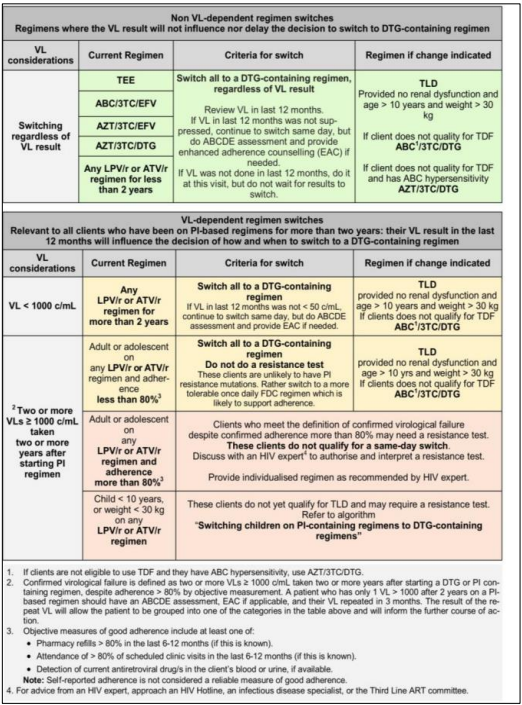
Figure 1: Switching existing clients to DTG-containing regimens (adopted from the NDoH 2023 ART Clinical Guidelines for the Management of HIV in Adults, Pregnancy and Breastfeeding, Adolescents, Children, Infants and Neonates.
Click on image to enlarge
RE-INITIATING ART IN PATIENTS WHO HAVE INTERRUPTED TREATMENT
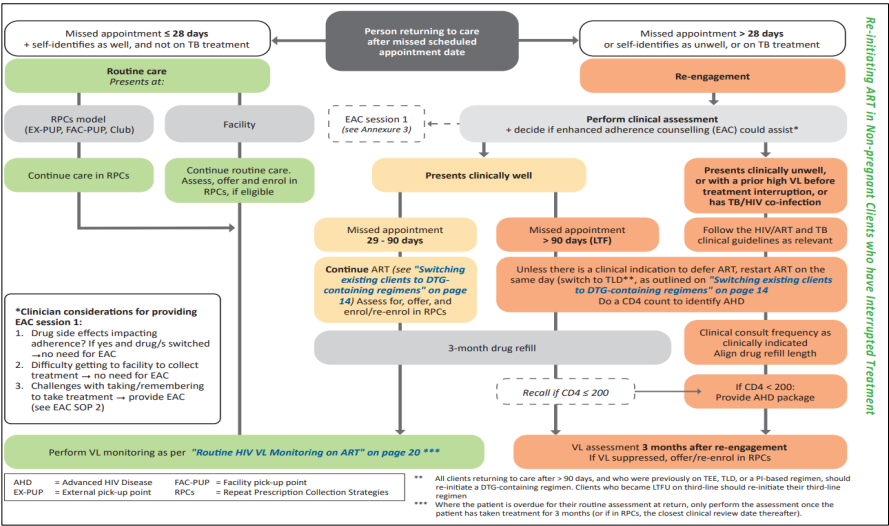
Figure 2: Management algorithm of a patient who returns to care after interrupting treatment. Incorporated from the NDoH 2023 ART Clinical Guidelines for the Management of HIV in Adults, Pregnancy and Breastfeeding, Adolescents, Children, Infants and Neonates.
Click on image to enlarge
MONITORING ON ART
| Baseline evaluation |
LoE:IVb19
LoE:IIIb20, LoE:IIb21 *TB-NAAT: TB Nucleic Acid Amplification Test (e.g. GeneXpert Ultra MTB/RIF) |
| On ART |
|
Table 2: Monitoring on ART
HIV VIRAL LOAD MONITORING SCHEDULE
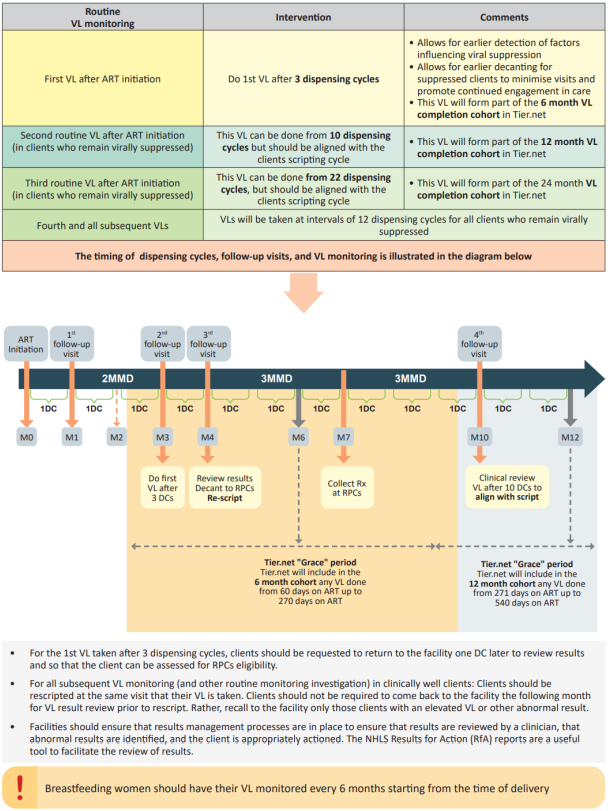
Figure 3: Incorporated from the NDoH 2023 ART Clinical Guidelines for the Management of HIV in Adults, Pregnancy and Breastfeeding, Adolescents, Children, Infants and Neonates. DC: Dispensing cycle; MMD: Multi-month dispensing; RPCs: Repeat prescription collection strategies
Click on image to enlarge
ART: DOSING AND IMPORTANT ADVERSE EFFECTS
| Class: InSTIs | |
| Generic name | Dolutegravir (DTG) |
| Usual dose | 50 mg once daily |
| Renal adjusted dose | Dose adjustment not required |
| Important adverse drug reactions and timing |
- Hypersensitivity (rare, weeks) |
| Class: NRTI | |
| Generic name | Tenofovir disoproxil fumarate (TDF) |
| Usual dose | 300 mg daily |
| Renal adjusted dose | Avoid in renal impairment (eGFR <50 mL/min) |
| Important adverse drug reactions and timing | - Acute kidney injury (rare - weeks to months). - Decline in eGFR (months to years) - Fanconi syndrome (rare – months to years) - Reduced bone mineral density (months to years) |
| Class: NRTI | |
| Generic name | Abacavir (ABC) |
| Usual dose | 600 mg daily |
| Renal adjusted dose |
Dose adjustment not required |
| Important adverse drug reactions and timing | - Hypersensitivity reaction (1 to 6 weeks): fever, rash, constitutional symptoms, gastrointestinal symptoms and respiratory symptoms. |
| Class: NRTI | |
| Generic name | Zidovudine (AZT) |
| Usual dose | 300 mg 12 hourly |
| Renal adjusted dose | eGFR <10 mL/min: 300 mg daily |
| Important adverse drug reactions and timing | - Anaemia, neutropenia (weeks to months). - Gastro-intestinal upset. - Headache. - Myopathy (rare). - Hyperlactataemia / steatohepatitis (medium risk - months). - Lipoatrophy (months to years). |
| Class: NRTI | |
| Generic name | Lamivudine (3TC) |
| Usual dose | 300 mg daily (or 150 mg 12 hourly) |
| Renal adjusted dose | eGFR 10-50 mL/min: 150 mg daily CrCl <10 mL/min: 50 mg daily |
| Important adverse drug reactions and timing | - Anaemia due to pure red cell aplasia (rare). |
| Class: NRTI | |
| Generic name | Emtricitabine (FTC) |
| Usual dose | 200 mg daily |
| Renal adjusted dose |
eGFR 15-29 mL/min: eGFR <15 mL/min: Note: FTC is not available as a singleingredient formulation |
| Important adverse drug reactions and timing | - Palmar hyperpigmentation. - Anaemia due to pure red cell aplasia (rare). LoE:IVb22 |
| Class: NRTI | |
| Generic name | Tenofovir alafenamide (TAF) |
| Usual dose |
25 mg daily If co-formulated with FTC, avoid if eGFR <30 ml/min. If used as a single agent, avoid if eGFR <15 ml/min and not on haemodialysis. |
| Important adverse drug reactions and timing |
- Acute kidney injury (rare - weeks to months). |
| Class: NNRTI | |
| Generic name | Efavirenz (EFV) |
| Usual dose | 600 mg at night |
| Renal adjusted dose | Dose adjustment not required |
| Important adverse drug reactions and timing |
- Central nervous system symptoms: vivid dreams, problems with concentration, confusion, mood disturbance, psychosis (days to weeks). LoE:IVb23 |
| Class: Boosted PI | |
| Generic name | Lopinavir/ ritonavir (LPV/r) |
| Usual dose | 400/100 mg 12-hourly OR 800/200 mg daily (only if PI-naïve) |
| Renal adjusted dose | Dose adjustment not required |
| Important adverse drug reactions and timing | - Gastrointestinal upset. - Dyslipidaemia (weeks). - Rash and/or hepatitis (1 to 6 weeks). |
| Class: Boosted PI | |
| Generic name | Atazanavir/ ritonavir (ATV/r) |
| Usual dose | ATV 300 mg taken with ritonavir 100 mg daily |
| Renal adjusted dose | Dose adjustment not required |
| Important adverse drug reactions and timing | - Unconjugated hyperbilirubinaemia (common, but benign). - Dyslipidaemia (low risk). - Hepatitis (rare - 1 to 6 weeks). - Renal stones (uncommon). |
Table 3: Dosing and important adverse effects associated with ART
The time-onset information with respect to adverse drug reactions (ADRs) serves as an estimate. Patients may present with ADRs with the onset deviating from that indicated in the table. InSTI: integrase strand transfer inhibitor; NRTI: nucleoside reverse transcriptase inhibitor; NNRTI: non-nucleoside reverse transcriptase inhibitor; PI: protease inhibitor.
LoE:IIIb24
ART: DRUG-DRUG INTERACTIONS
Information can be accessed from:
- https://www.hiv-druginteractionslite.org/checker.
- http://www.mic.uct.ac.za/ and download the ARV/EML interaction checker.
- Package inserts.
| ART INTERACTIONS WITH RIFAMPICIN AND RECOMMENDATIONS FOR ADMINISTRATION | |||
| Class | ARV | Interaction with rifampicin | Dose of ARV with rifampicin |
| NRTI | 3TC/FTC/TDF/ AZT/ABC | No clinically significant pharmacokinetic interactions | No dose adjustment required. |
| NNRTI | EFV | Non-significant change (EFV concentrations may increase in patients who are genetic slow metabolisers of EFV and are on isoniazid (INH) which also inhibits EFV metabolism). | No dose adjustment required (600 mg at night). |
| InSTI | DTG | Significant reduction in concentration of DTG |
Increased dose frequency to 50 mg 12 hourly. Note: Continue increased dose for 2 weeks after rifampicin is stopped, then decrease to usual dose. |
| PI | LPV/r | LPV plasma concentrations significantly decreased |
Double the dose of LPV/r to 800/200 mg 12-hourly. Adjusted dose should be continued for 2 weeks after rifampicin is stopped. |
| All other PIs | Marked reduction in PI concentrations | Do not prescribe concomitantly – replace rifampicin with rifabutin 150 mg daily. | |
Table 4: ART interactions with rifampicin and dose-adjustment recommendations
LoE:IIIb25
In patients on atazanavir or darunavir, or if double dose LPV/r is not tolerated, replace rifampicin with rifabutin (doctor prescribed) – See Antiretroviral therapy.
DRUG INTERACTIONS WITH DOLUTEGRAVIR
| Interacting medicine | Effect of coadministration | Recommendation |
| Preparations containing polyvalent cations (Mg2+ , Ca2+, Fe2+, Al3+, Zn2+) Antacids Sucralfate Mineral supplements |
Significant reduction in concentration of DTG | Magnesium- and aluminum-containing preparations should be taken 6 hours before or 2 hours after DTG. Calcium- and iron-containing preparations can be taken with DTG together with food. Note: Iron and calcium should be taken at least 4 hours apart from one another |
| Anticonvulsants: Carbamazepine Phenobarbital Phenytoin |
Significant reduction in concentration of DTG |
Avoid co-administration if possible. For carbamazepine: |
| Metformin | May increase metformin concentration |
Metformin initiation: DTG initiation: Patients with renal impairment: |
| Rifampicin | Significant reduction in DTG concentration | Double DTG dose to 50 mg 12 hourly. |
Table 5: Drug interactions with DTG
LoE:IIIb26
DRUG INTERACTIONS WITH BOOSTED PIs
| Interacting medicine | Effect of coadministration | Recommendation |
| Substrates of cytochrome P450 3A4 (e.g. most statins, calcium channel blockers, most SSRIs, most benzodiazepines) | Significant increase in concentrations of CYP3A4 substrates | Avoid co-administration or use lower doses of CYP3A4 substrates (always consult interaction resources) |
| Anticonvulsants: Carbamazepine Phenobarbital Phenytoin |
Significant reduction in concentration of PI |
Avoid co-administration. |
| Proton pump inhibitors | Significant reduction in ATV levels |
Avoid co-administration. LoE:IIIb27 |
| Rifampicin | Significant reduction in PI concentration |
Double LPV/r dose. Note: There is an increased risk of ALT/AST elevations and gastrointestinal disorders. LPV/r dose should be gradually titrated upward over 1-2 weeks (e.g. 600/150 mg and then 800/200 mg). Adjusted dose of LPV/r should be continued for 2 weeks after rifampicin is stopped. The LPV/r can be switched back to ATV/r two weeks after completion of TB therapy. If ATV/r or DVR/r is required, rifampicin must be replaced with dose-adjusted rifabutin (doctor prescribed) - See Antiretroviral therapy. |
Table 6: Drug interactions with boosted PIs
REFERRAL
Dolutegravir resistance demonstrated on resistance testing.
Standard Treatment Guidelines and Essential Medicines List for South Africa, Primary Healthcare, 2020-2024_Version 2.1_09 December 2024
Chapter 11: Human Immunodeficiency Virus and Acquired Immune Deficiency Syndrome (HIV AND AIDS)_11.1 Antiretroviral Therapy, Adults and Adolescents (10-19 years old)