Anxiety And Obsessive-Compulsive Disorders
Description General measures Medicine treatment Referral ICD-10 code: F40.0-2/F40.8-9/F41.0-3/F41.8-9/F42.0-9 + (F10.0-F19.9/R45.0-8/Z65.0-5/Z65.8-9/Z81.0-4/Z81.8) Description Anxiety is an emotional response to a perceived or anticipated stress. It is diagnosed as a disorder when it is excessive or persistent and impacts daily functioning. Anxiety disorders often present with medically une
ICD-10 code: F40.0-2/F40.8-9/F41.0-3/F41.8-9/F42.0-9 + (F10.0-F19.9/R45.0-8/Z65.0-5/Z65.8-9/Z81.0-4/Z81.8)
Description
Anxiety is an emotional response to a perceived or anticipated stress. It is diagnosed as a disorder when it is excessive or persistent and impacts daily functioning. Anxiety disorders often present with medically unexplained symptoms such as non-cardiac chest pain, abdominal discomfort and neck and back muscle tension. However, anxiety symptoms may be caused by various medical conditions. In addition, medical conditions are commonly comorbid with anxiety disorders; they may exacerbate the symptoms and the anxiety disorder may worsen the outcome of treatment of the medical condition.
Tobacco, alcohol, and other substance use are commonly associated with anxiety disorders. The substance use may be secondary to the disorder or causative or both. If caused by a substance, then an anxiety disorder due to the specific substance should be diagnosed.
Anxiety during pregnancy and the postnatal period may impact negatively on the mother’s well-being and use of services, and is associated with poor psychological and neurodevelopmental outcomes in the child (See PHC STGs and EML, Maternal mental health).
- Psychological manifestations of anxiety include panic symptoms, excessive worry, fear, mood changes, irritability, tearfulness, distress, and poor concentration.
- Physical symptoms include muscle tension, headache, abdominal cramps, nausea, palpitations, sweating, a choking feeling, shortness of breath, chest pain, dizziness, numbness, and tingling of the hands and feet.
- People with intellectual disability may present with aggression, agitation, and demanding behaviour instead of anxiety.
- Panic attacks are abrupt surges of intense anxiety with prominent physical symptoms. They may occur in anxiety, mood, and psychotic disorders, and with alcohol and other substance misuse. They are a marker of increased severity of the primary disorder and may indicate a heightened risk of suicide.
- Social phobia (social anxiety disorder) is the fear of social interactions and usually starts in adolescence. Distorted thoughts are of perceived negative evaluation by others. Self-medication with alcohol or other substances is common and substance intoxication may be the presenting feature.
- Obsessive thoughts and/or compulsive behaviour are a core feature of obsessive compulsive disorder but may also occur in other disorders, particularly tic disorders, autistic spectrum, and psychotic disorders. Themes of the distorted thoughts and compulsions include hygiene (cleaning), security, symmetry, sexual and taboo topics, fears of causing harm, perceived physical defects, hair-pulling, or hoarding.
General Measures
Most patients can be treated as outpatients, but some may need to be admitted for diagnostic clarification, containment in extreme distress, or if at high risk of suicide.
- Maintain patience and an empathic attitude.
- Screen for and manage:
- causative and comorbid medical illness, e.g. thyroid disease, hyperparathyroidism, phaeochromocytoma, vestibular dysfunctions, epilepsy, and cardiac conditions, hypertension, COPD, asthma, inflammatory bowel disease, GORD.
- substance misuse, e.g. caffeine, nicotine, alcohol, analgesics, amphetamines and cocaine.
- psychosocial stressors, especially in people with intellectual and other disabilities.
- Psychoeducate the patient and family (with patient’s permission).
- Refer to registered counsellors and local support groups. Provide links to self-help literature, websites or groups, e.g. South African Depression and Anxiety Group (SADAG - www.sadag.org).
Medicine Treatment
Indicated where symptoms interfere with normal functions of daily living.
- Offer a choice of psychotherapy (if available) or medication and monitor response. Note: where there is concomitant drug/alcohol dependence or a comorbid major depressive episode, an antidepressant may be more appropriate than psychotherapy.
- Review every 2–4 weeks for 3 months, then 3–6 monthly.
- Partial response: combine medication with psychotherapy.
- If effective, continue for at least 12 months to prevent relapse.
- Selective serotonin reuptake inhibitor (SSRI), e.g.:
- Fluoxetine, oral.
- Initiate at 20 mg alternate days for 2 weeks.
- Increase to 20 mg daily after 2–4 weeks.
- Delay dosage increase if increased agitation / panic symptoms occur.
- If partial response, increase to 40 mg daily.
If fluoxetine is poorly tolerated:
- Alternative SSRI e.g.:
- Citalopram, oral.
- Initiate at 10 mg daily for the 1st week.
- Then increase to 20 mg daily.
- If partial response, increase to 40 mg daily (except in cardiac disease or if >65 years of age).
CAUTION - SSRIs
SSRIs (e.g. fluoxetine, citalopram) may cause agitation initially.
This typically resolves within 2-4 weeks.
LoE:IVbxxi
Ask about suicidal ideation in all patients, particularly adolescents and young adults (PHC STGs and EML, Suicide risk assessment).
If suicidal ideation present, refer before initiating SSRI. Once started, monitor closely for clinical worsening, suicidality, or unusual changes in behaviour. Advise families and caregivers of the need for close observation and refer as required.
Note:
Continue treatment for a minimum of 12 months. Consider slowly tapering and stopping treatment only if patient has had no/minimal symptoms and has been able to carry out routine daily activities.
Prolong treatment if any of the following are present:
- Previous episode/s of anxiety (extend treatment to at least 3 years).
- Any of the following: onset in adolescence, severe anxiety, suicidal attempt, sudden onset of symptoms, family history of bipolar disorder (extend treatment to at least 3 years).
- ≥3 previous episodes of anxiety (advise lifelong treatment).
For short term use only in severe acute distress:
- Benzodiazepines, e.g.:
- Diazepam, oral, 2.5–5 mg as a single dose.
- Repeat 8 hourly, if required to a maximum of 30 mg daily (in divided doses).
- Half the dose in the elderly or debilitated.
- Duration of therapy: up to 2 weeks, taper off to zero within 6 weeks.
- Commence definitive treatment with psychotherapy/SSRI treatment.
CAUTION - BENZODIAZEPINES
- Associated with cognitive impairment – reversible with short-term use and irreversible with long-term use.
- Elderly are at risk of over-sedation, falls and hip fractures.
- Dependence may occur after only a few weeks of treatment.
- Prescribe for as short a period of time as possible to achieve desired effect.
- Warn patient not to drive or operate machinery when used short-term.
- Avoid use in people at high risk of addiction, e.g. personality disorders and those with previous or other substance misuse.
PREGNANCY AND BREASTFEEDING
- SSRI treatment of depression in pregnancy is associated with improved symptoms in the mother and better emotional and psychological development of the child. Benefit is greater with increasing illness severity. Effect of SSRIs on anxiety in pregnancy is less clear.
- Lack of matched case-control studies mean harms of treatment are unclear.
- If stable on an SSRI, do not stop – discuss risk/benefit with mother.
- Index presentations: offer counselling, psychotherapy; discuss risk/benefit of SSRIs.
- Refer social worker to explore social and financial support systems.
- Avoid fluoxetine due to long half-life and relatively high concentration in breastmilk. Consider citalopram as alternative.
- All antidepressants: possible increased risk of miscarriage, transient neonatal symptoms (jitteriness, irritability), and persistent pulmonary hypertension of the newborn.
- Avoid benzodiazepines – some association with neurodevelopmental delay in the child; neonatal sedation if used late in pregnancy.
Referral
- High suicide risk
- Severe symptoms with marked functional impairment
- Co-morbid severe psychiatric or medical conditions
- Poor response to treatment.
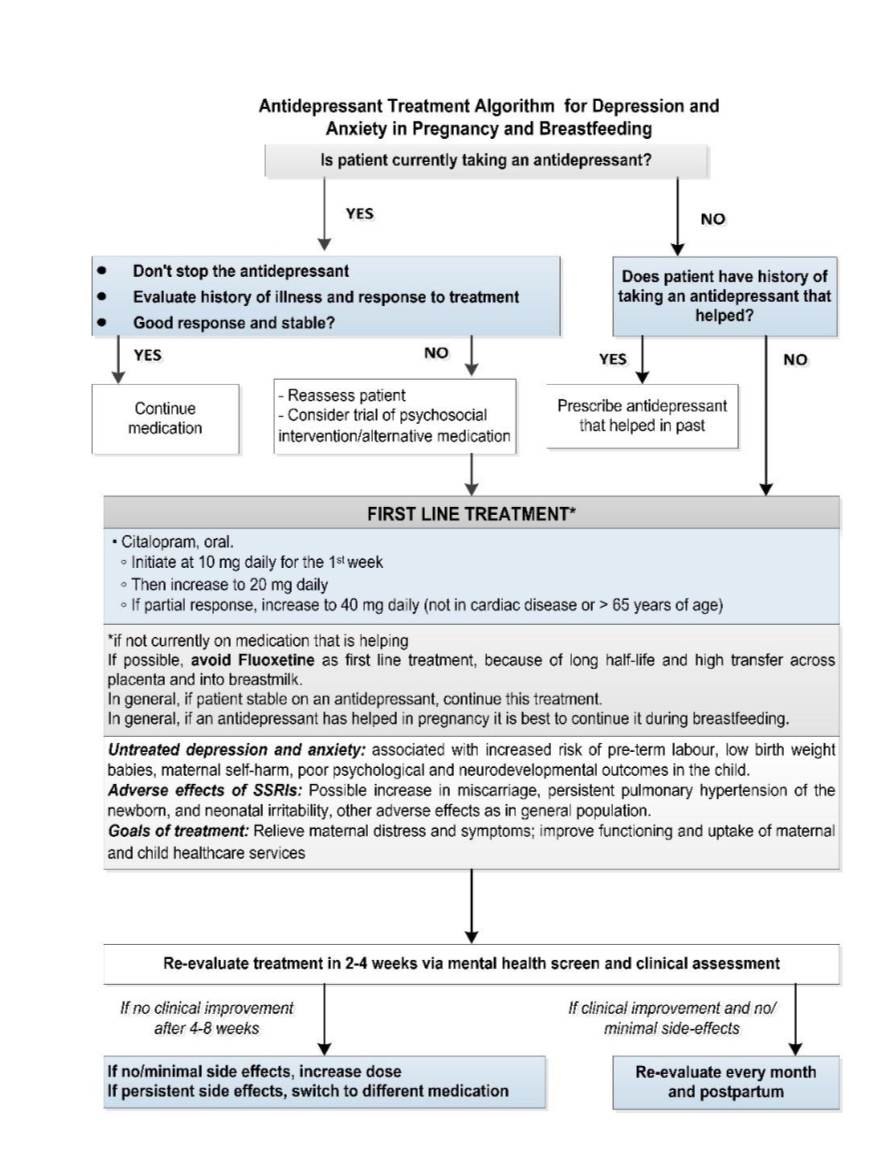
Figure 15.2: Antidepressant treatment algorithm for depression and anxiety in pregnancy and breastfeeding. Adapted from the MCPAP for Moms Perinatal Depression Toolkit funded by the Massachusetts Department of Mental Health. Original Authors: Byatt N., Biebel K., Mittal L., Lundquist R., Freeman M., & Cohen L., Moore Simas T.
Click on the image to enlarge
Click here for the pdf of the image
Standard Treatment Guidelines and Essential Medicines List for South Africa, Hospital Level, Adults_Chapter 15: Mental Health Conditions and Substance Misuse_NEMLC Recommendations for Medicine Amendments 2020-2023
Drugs mentioned
ICD-10 codes
- F10.0Mental and behavioural disorders due to use of alcohol, acute intoxication
- F10.1Mental and behavioural disorders due to use of alcohol, harmful use
- F10.2Mental and behavioural disorders due to use of alcohol, dependence syndrome
- F10.3Mental and behavioural disorders due to use of alcohol, withdrawal state
- F10.4Mental and behavioural disorders due to use of alcohol, withdrawal state with delirium
- F10.5Mental and behavioural disorders due to use of alcohol, psychotic disorder
- F10.6Mental and behavioural disorders due to use of alcohol, amnesic syndrome
- F10.7Mental and behavioural disorders due to use of alcohol, residual and late-onset psychotic disorder
- F10.8Mental and behavioural disorders due to use of alcohol, other mental and behavioural disorders
- F10.9Mental and behavioural disorders due to use of alcohol, unspecified mental and behavioural disorder
- F11.0Mental and behavioural disorders due to use of opioids, acute intoxication
- F11.1Mental and behavioural disorders due to use of opioids, harmful use
- F11.2Mental and behavioural disorders due to use of opioids, dependence syndrome
- F11.3Mental and behavioural disorders due to use of opioids, withdrawal state
- F11.4Mental and behavioural disorders due to use of opioids, withdrawal state with delirium
- F11.5Mental and behavioural disorders due to use of opioids, psychotic disorder
- F11.6Mental and behavioural disorders due to use of opioids, amnesic syndrome
- F11.7Mental and behavioural disorders due to use of opioids, residual and late-onset psychotic disorder
- F11.8Mental and behavioural disorders due to use of opioids, other mental and behavioural disorders
- F11.9Mental and behavioural disorders due to use of opioids, unspecified mental and behavioural disorder
- F12.0Mental and behavioural disorders due to use of cannabinoids, acute intoxication
- F12.1Mental and behavioural disorders due to use of cannabinoids, harmful use
- F12.2Mental and behavioural disorders due to use of cannabinoids, dependence syndrome
- F12.3Mental and behavioural disorders due to use of cannabinoids, withdrawal state
- F12.4Mental and behavioural disorders due to use of cannabinoids, withdrawal state with delirium
- F12.5Mental and behavioural disorders due to use of cannabinoids, psychotic disorder
- F12.6Mental and behavioural disorders due to use of cannabionoids, amnesic syndrome
- F12.7Mental and behavioural disorders due to use of cannabinoids, residual and late-onset psychotic disorder
- F12.8Mental and behavioural disorders due to use of cannabinoids, other mental and behavioural disorders
- F12.9Mental and behavioural disorders due to use of cannabinoids, unspecified mental and behavioural disorder
- F13.0Mental and behavioural disorders due to use of sedatives or hypnotics, acute intoxication
- F13.1Mental and behavioural disorders due to use of sedatives or hypnotics, harmful use
- F13.2Mental and behavioural disorders due to use of sedatives or hypnotics, dependence syndrome
- F13.3Mental and behavioural disorders due to use of sedatives or hypnotics, withdrawal state
- F13.4Mental and behavioural disorders due to use of sedatives or hypnotics, withdrawal state with delirium
- F13.5Mental and behavioural disorders due to use of sedatives or hypnotics, psychotic disorder
- F13.6Mental and behavioural disorders due to use of sedatives or hypnotics, amnesic syndrome
- F13.7Mental and behavioural disorders due to use of sedatives or hypnotics, residual and late-onset psychotic disorder
- F13.8Mental and behavioural disorders due to use of sedatives or hypnotics, other mental and behavioural disorders
- F13.9Mental and behavioural disorders due to use of sedatives or hypnotics, unspecified mental and behavioural disorder
- F14.0Mental and behavioural disorders due to use of cocaine, acute intoxication
- F14.1Mental and behavioural disorders due to use of cocaine, harmful use
- F14.2Mental and behavioural disorders due to use of cocaine, dependence syndrome
- F14.3Mental and behavioural disorders due to use of cocaine, withdrawal state
- F14.4Mental and behavioural disorders due to use of cocaine, withdrawal state with delirium
- F14.5Mental and behavioural disorders due to use of cocaine, psychotic disorder
- F14.6Mental and behavioural disorders due to use of cocaine, amnesic syndrome
- F14.7Mental and behavioural disorders due to use of cocaine, residual and late-onset psychotic disorder
- F14.8Mental and behavioural disorders due to use of cocaine, other mental and behavioural disorders
- F14.9Mental and behavioural disorders due to use of cocaine, unspecified mental and behavioural disorder
- F15.0Mental and behavioural disorders due to use of other stimulants, including caffeine, acute intoxication
- F15.1Mental and behavioural disorders due to use of other stimulants, including caffeine, harmful use
- F15.2Mental and behavioural disorders due to use of other stimulants, including caffeine, dependence syndrome
- F15.3Mental and behavioural disorders due to use of other stimulants, including caffeine, withdrawal state
- F15.4Mental and behavioural disorders due to use of other stimulants, including caffeine, withdrawal state with delirium
- F15.5Mental and behavioural disorders due to use of other stimulants, including caffeine, psychotic disorder
- F15.6Mental and behavioural disorders due to use of other stimulants, including caffeine, amnesic syndrome
- F15.7Mental and behavioural disorders due to use of other stimulants, including caffeine, residual and late-onset psychotic disorder
- F15.8Mental and behavioural disorders due to use of other stimulants, including caffeine, other mental and behavioural disorders
- F15.9Mental and behavioural disorders due to use of other stimulants, including caffeine, unspecified mental and behavioural disorder
- F16.0Mental and behavioural disorders due to use of hallucinogens, acute intoxication
- F16.1Mental and behavioural disorders due to use of hallucinogens, harmful use
- F16.2Mental and behavioural disorders due to use of hallucinogens, dependence syndrome
- F16.3Mental and behavioural disorders due to use of hallucinogens, withdrawal state
- F16.4Mental and behavioural disorders due to use of hallucinogens, withdrawal state with delirium
- F16.5Mental and behavioural disorders due to use of hallucinogens, psychotic disorder
- F16.6Mental and behavioural disorders due to use of hallucinogens, amnesic syndrome
- F16.7Mental and behavioural disorders due to use of hallucinogens, residual and late-onset psychotic disorder
- F16.8Mental and behavioural disorders due to use of hallucinogens, other mental and behavioural disorders
- F16.9Mental and behavioural disorders due to use of hallucinogens, unspecified mental and behavioural disorder
- F17.0Mental and behavioural disorders due to use of tobacco, acute intoxication
- F17.1Mental and behavioural disorders due to use of tobacco, harmful use
- F17.2Mental and behavioural disorders due to use of tobacco, dependence syndrome
- F17.3Mental and behavioural disorders due to use of tobacco, withdrawal state
- F17.4Mental and behavioural disorders due to use of tobacco, withdrawal state with delirium
- F17.5Mental and behavioural disorders due to use of tobacco, psychotic disorder
- F17.6Mental and behavioural disorders due to use of tobacco, amnesic syndrome
- F17.7Mental and behavioural disorders due to use of tobacco, residual and late-onset psychotic disorder
- F17.8Mental and behavioural disorders due to use of tobacco, other mental and behavioural disorders
- F17.9Mental and behavioural disorders due to use of tobacco, unspecified mental and behavioural disorder
- F18.0Mental and behavioural disorders due to use of volatile solvents, acute intoxication
- F18.1Mental and behavioural disorders due to use of volatile solvents, harmful use
- F18.2Mental and behavioural disorders due to use of volatile solvents, dependence syndrome
- F18.3Mental and behavioural disorders due to use of volatile solvents, withdrawal state
- F18.4Mental and behavioural disorders due to use of volatile solvents, withdrawal state with delirium
- F18.5Mental and behavioural disorders due to use of volatile solvents, psychotic disorder
- F18.6Mental and behavioural disorders due to use of volatile solvents, amnesic syndrome
- F18.7Mental and behavioural disorders due to use of volatile solvents, residual and late-onset psychotic disorder
- F18.8Mental and behavioural disorders due to use of volatile solvents, other mental and behavioural disorders
- F18.9Mental and behavioural disorders due to use of volatile solvents, unspecified mental and behavioural disorder
- F19.0Mental and behavioural disorders due to multiple drug use and use of other psychoactive substances, acute intoxication
- F19.1Mental and behavioural disorders due to multiple drug use and use of other psychoactive substances, harmful use
- F19.2Mental and behavioural disorders due to multiple drug use and use of other psychoactive substances, dependence syndrome
- F19.3Mental and behavioural disorders due to multiple drug use and use of other psychoactive substances, withdrawal state
- F19.4Mental and behavioural disorders due to multiple drug use and use of other psychoactive substances, withdrawal state with delirium
- F19.5Mental and behavioural disorders due to multiple drug use and use of other psychoactive substances, other psychotic disorder
- F19.6Mental and behavioural disorders due to multiple drug use and use of other psychoactive substances, amnesic syndrome
- F19.7Mental and behavioural disorders due to multiple drug use and use of other psychoactive substances, residual and late-onset other psychotic disorder
- F19.8Mental and behavioural disorders due to multiple drug use and use of other psychoactive substances, other mental and behavioural disorders
- F19.9Mental and behavioural disorders due to multiple drug use and use of other psychoactive substances, unspecified mental and behavioural disorder
- F40.0Agoraphobia
- F40.1Social phobias
- F40.2Specific (isolated) phobias
- F40.8Other phobic anxiety disorders
- F40.9Phobic anxiety disorder, unspecified
- F41.0Panic disorder [episodic paroxysmal anxiety]
- F41.1Generalized anxiety disorder
- F41.2Mixed anxiety and depressive disorder
- F41.3Other mixed anxiety disorders
- F41.8Other specified anxiety disorders
- F41.9Anxiety disorder, unspecified
- F42.0Predominantly obsessional thoughts or ruminations
- F42.1Predominantly compulsive acts [obsessional rituals]
- F42.2Mixed obsessional thoughts and acts
- F42.8Other obsessive-compulsive disorders
- F42.9Obsessive-compulsive disorder, unspecified
- R45.0Nervousness
- R45.1Restlessness and agitation
- R45.2Unhappiness
- R45.3Demoralization and apathy
- R45.4Irritability and anger
- R45.5Hostility
- R45.6Physical violence
- R45.7State of emotional shock and stress, unspecified
- R45.8Other symptoms and signs involving emotional state
- Z65.0Conviction in civil and criminal proceedings without imprisonment
- Z65.1Imprisonment and other incarceration
- Z65.2Problems related to release from prison
- Z65.3Problems related to other legal circumstances
- Z65.4Victim of crime and terrorism
- Z65.5Exposure to disaster, war and other hostilities
- Z65.8Other specified problems related to psychosocial circumstances
- Z65.9Problem related to unspecified psychosocial circumstances
- Z81.0Family history of mental retardation
- Z81.1Family history of alcohol abuse
- Z81.2Family history of tobacco abuse
- Z81.3Family history of other psychoactive substance abuse
- Z81.4Family history of other substance abuse
- Z81.8Family history of other mental and behavioural disorders