Approach to Achieving Glycaemic Control
Approach to Achieving Glycaemic Control
Factors to consider when choosing glucose lowering drugs
The 2017 SEMDSA approach and algorithm for the management of type 2 diabetes
Recommendations for glucose lowering drugs
Type 2 diabetes is a heterogeneous disease, with the underlying mechanism ranging from predominantly insulin resistance with relative insulin deficiency, to predominantly an insulin secretory defect with lesser degrees of insulin resistance. The relative contribution of each abnormality varies between individuals, as well as within the same individual at different stages of the disease.
People with type 2 diabetes are heterogeneous; diabetes is prevalent across all socio-economic strata, ethnic groups, age groups and weight categories, in individuals with highly variable nutrient intakes and levels of physical activity.1 In addition to phenotypic heterogeneity, there is genetic variability which may play a role in susceptibility, both to the disease itself or its complications.2
The response to treatment is heterogeneous; we see diversity in responses to the same treatments even in patients with near-identical phenotypes. It seems intuitive then, that a single uniform approach to management of such a heterogeneous disorder is unlikely to be successful. The optimal pharmacological approach to glucose control for any individual patient varies, which is why many international guidelines have endorsed individualised management, with no restriction on the choice of glucose lowering drug after initial metformin therapy.3,4,5,6,7
The concept of patient-centred care incorporates patients as partners in their healthcare. In practice, this means providing care that is “respectful of and responsive to individual patient preferences, needs and values, and ensures that patient values guide all clinical decisions”.3 These guidelines also have a broad target audience that includes health care professionals at all levels of expertise.
The SEMDSA approach to glycaemic control does not lose focus of patient-centred care, but attempts to provide guidance about appropriate therapeutic choices for primary healthcare practitioners managing patients at different stages of type 2 diabetes. This is done by attempting to match the therapeutic options with the diverse clinical profiles encountered in patients, while still offering a rational approach to drug management. In the South African healthcare system, with its shortage of doctors, it is also important that nurses at primary healthcare clinics have access to medicines with the lowest probability of harm.
Figure I: Some of the factors to consider when choosing glucose lowering drug therapy at various stages of type 2 diabetes
| Gliclazide modified release | Pioglitazone | DPP-4 inhibitor | GLP-1 receptor agonist | SGLT2 inhibitor | Basal insulin | |
| Mean HbA1C reduction | -0.8 to -1.0% | -0.8 to -1.0% | -0.7% | -0.8 to -1.2% | -0.8 to -1.0% | -0.8 to -1.2% |
| Hypoglycaemia (monotherapy) | Yes | Rare | Rare | Rare | Rare | Yes |
| Hypoglycaemia (added to SU) | - | ++ | + | + | + | ++ |
| Weight change | +0.0 to 1.5kg | + | Neutral | -3.0 kg | -3.0 kg | +3-5 kg |
| Adverse events* | None | Fluid Retention (oedema, CHF) | Heart Failure with saxagliptin | Common - GI upset | Common - GU infection Dehydration | Local Skin Reaction |
| Rare SAEs | None | Fractures, bladder cancer | Pancreatitis, pancreatic cancer | Pancreatitis, pancreatic cancer | Fractures Amputation DKA | None |
| Treatment complexity | Low | High | Low | Intermediate | High | High |
| Cardiovascular benefit | None | Yes,1oor 2o prevention | None | Yes (2o Prevention) | Yes (2o Prevention) | None |
| Cost# | <R100 | R120-R180 | R250-350 | R650-2150 | Unknown | R200 to > 1000§ |
| Initiate at | 1st or 2nd Line | 1st or 2nd Line | 1st or 2nd Line | 3rd Line | 2nd Line | 3rd Line |
*Side effects other than weight gain and hypoglycaemia; GI=gastrointestinal; GU= genitourinary; SU = sulphonylurea; SAEs= serious adverse events
Information represents a synthesis of data from various sources discussed in the text.
#Cost is based on single exit price in the private health sector; figures may differ in the public health sector. §Cost of insulin depends on dose, and excludes ancillary costs. In the 4T study basal insulin dose ranged from 0.5u/kg to 1.0u/kg from year 1 to year 3,8 though evidence supporting specific insulin regimens is limited. Methods in an open-label, controlled, multicenter trial, we randomly assigned 708 patients with a suboptimal glycated hemoglobin level (7.0 to 10.0% This translates to 40 to 80u/ day for intensive basal insulin therapy in an 80kg person).
*Adverse events refer to common side effects (other than weight gain and hypoglycaemia), that impact tolerability and drug discontinuation rates. Treatment complexity considers the ease with which the drug can be prescribed; higher complexity may demand greater resources (consulting time or other resources), in screening for contraindications, educating the patient about the treatment or the patient’s required investment in complying with the treatment (e.g. injecting, SMBG and dose titration), as well as resources to monitor and treat adverse effects.
FACTORS TO CONSIDER WHEN CHOOSING GLUCOSE LOWERING DRUGS
The factors that need to be considered when choosing appropriate pharmacologic therapies to match individual patient needs, fears and comorbidities are many, and are summarised in Figure I. These are also the factors that were considered when formulating the algorithm for the management of hyperglycaemia.
a. Glycaemic targets
The importance of individualised glycaemic targets, and the factors to consider, are covered in Glycaemic Targets. These range from an HbA1C < 6.5% for younger newly diagnosed patients with no comorbidities and long life expectancy, to 8.5% for the frail patient with multiple comorbidities and shorter life expectancy. In general though, the glycaemic target for the majority of patients should be an HbA1C ≤ 7.0%.
b. Glycaemic efficacy
This is probably less of a consideration than in the past. All of the drug options are efficacious at lowering blood glucose and the reductions obtained with monotherapy are generally greater than those obtained with combination therapy for the same drug. Maximum glucose lowering efficacy is usually evident by six months. A meta-analysis of the various drug choices show that most will reduce HbA1C by approximately 0.8 to 1.2%, without much difference between all of the available agents, when added to metformin.9,10,11,12
For triple therapy (adding to metformin + sulphonylurea), the most effective 3rd line drugs appear to be basal insulin, followed by TZDs, GLP-1RA and SGLT2 inhibitors equally, with DPP-4 inhibitors having the greatest odds of treatment failure.10 Again the differences are not large. Also, in clinical practice, the range of HbA1C reduction for each drug is wide, with some patients responding very well, and others not responding at all to a particular drug. Baseline HbA1c also determines glycaemic efficacy; a 1% higher baseline HbA1C predicts an additional -0.5% HbA1C reduction at six months.12
To illustrate this point, in a study analysing patients with high baseline HbA1C , empagliflozin 25 mg reduced the HbA1C by 3.3% from a baseline HbA1C of 11.1%.13 The ability of a patient to concurrently intensify lifestyle measures is also important when intensifying drug therapy. In clinical practice, the combination of these interventions has been known to dramatically reduce HbA1C levels to an extent far greater than published mean HbA1C reductions.
The variability in glycaemic efficacy within each drug class, and between drug classes in patients with similar phenotypes, together with the small absolute differences between agents, suggests that the choice of glucose lowering drug should probably be based on other patient factors (See: Figure I), which are more likely to impact treatment success or failure, rather than glycaemic efficacy alone. In any event, the efficacy of any added therapy must be assessed within six months; failure to achieve the target and reduce the HbA1C by ≥ 0.5% should prompt a change to an alternative drug.
c. Hypoglycaemia
Treatment-related hypoglycaemia is the commonest form of hypoglycaemia, and is a function of insulin or insulin sulphonylurea use. This topic is covered in Hypoglycaemia in type 2 diabetes. Hypoglycaemia is an important consideration when choosing therapies because it can have a significant negative impact on a person’s well being and quality of life, and can influence adherence, compliance, and therefore the success of treatment. Severe hypoglycaemia emerges as one of the strongest risk factors for cardiovascular events and mortality, especially in those patients with higher cardiovascular risk.14,15,16,17,18,19 Independent risk factors for severe hypoglycaemia are listed in Figure II. The circumstances where the consequences of severe hypoglycaemia are sufficiently severe to warrant the avoidance of hypoglycaemia-inducing drugs are listed in Figure III.
Figure II: Independent risk factors for severe hypoglycaemia17,20
| Insulin or sulphonylurea use |
| Intensive glucose control |
| Use of 2 or more oral glucose lowering drugs |
| Older age |
| Diabetes duration |
| Hypoglycaemia unawareness |
| Impaired cognitive function |
| Low body mass index |
| Renal impairment |
| Microvascular complications |
Figure III: Circumstances where the consequences of hypoglycaemia may be catastrophic
| Operators of heavy machinery |
| Scaffold workers |
| Drivers of public transport or heavy duty vehicles |
| Airline pilots |
| Emergency rescue workers |
| People who live alone and have impaired cognition or mobility (may not be able to respond to symptoms promptly) |
| Hypoglycaemia unawareness |
| People at high fall and fracture risk |
Recurrent hypoglycaemia may be an important impediment to achieving good glycaemic control. Patients who fear hypoglycaemia are unlikely to titrate insulin as instructed, and may also overeat for protection, setting up a vicious cycle of weight gain, hyperglycaemia and increasing insulin doses – the adage of “hypoglycaemia begets hypoglycaemia”. Patients receiving hypoglycaemic drugs must be questioned about hypoglycaemia at every visit, in order to address treatment failures. Any patient who has a severe hypoglycaemic event must be evaluated for a cause and must have their treatment reviewed. Any treatment plan should have ready access to drugs that do not cause hypoglycaemia when the circumstances demand this.
d. Weight gain
Weight effects of medications are considered separately because of their importance to patients’ quality of life and self-esteem, and treatment compliance. Obesity, as part of the metabolic syndrome, is a well-known cardiovascular risk factor. Weight gain after diagnosis of type 2 diabetes may also be a risk factor for cardiovascular disease but this remains to be proven.21
Metformin, SGLT2 inhibitors, and GLP-1 agonists are associated with weight loss, DPP-4 inhibitors and acarbose are weight neutral, whereas sulphonylureas cause modest weight gain. Weight gain is worst with pioglitazone and insulin.9,10,11,12 Patients who experience significant weight gain (as defined by themselves) with pioglitazone or insulin are unlikely to comply with their treatment. They may be better served with a less effective treatment with better compliance. Alternative treatment options should be considered for patients who experience unacceptable weight gain.
e. Adverse effects
Adverse effects other than hypoglycaemia and weight gain, which are considered separately, should be taken into account. Common adverse effects can limit compliance and adherence to therapy. Each patient’s potential to tolerate common adverse effects needs to be considered. Metformin has common GI side effects leading to about a 10% discontinuation rate. In the LEAD 6 trial program 15-20% of patients discontinued GLP-1RA therapy. Similarly genitourinary side effects may limit the use of SGLT2 inhibitors. Patients should be warned about the common adverse events when commencing therapy.
f. Serious adverse effects
The rare but serious adverse events for each drug/class are discussed individually. SEMDSA has considered the impact these have on patient selection and ease of prescribing in the primary healthcare setting.
g.Treatment complexity
The choice of treatment considers the patient, provider and general healthcare resources that may be required for a particular therapeutic choice. The use of insulin therapy is a good example of treatment complexity.
Escalation to insulin therapy is premised on information from clinical trials demonstrating equivalent and sometimes better glycaemic control than other therapeutic options. These trials often exclude patients who are unable or unwilling to perform and record frequent SMBG or to “force-titrate” insulin doses to strict glycaemic targets.
These trial patients receive intensive education about insulin use, injection technique, SMBG, titration protocols and are provided with adequate supplies of insulin, needles and test strips. They also have ongoing education, very frequent clinic follow-up visits (usually two to four weeks apart), and continual, unlimited telephonic support.
Translating the positive glucose control results from such trials into daily clinical practice in some/most/all primary healthcare centres may sometimes be a “mis- translation”. The patient may be given a prescription for one or other insulin, possibly with very little or no ongoing education on how to use it, with no titration instruction or protocol, perhaps a limited supply of test-strips (if at all), and no access to support for months on-end. In this regard insulin therapy could be construed as a “pseudo-escalation” of treatment.
Given the relative demands of insulin initiation and titration for the patient and clinic staff, the might patient be better served with a somewhat less efficacious oral glucose lowering drug that has a lower complexity.
Other aspects of treatment complexity to be considered include assessments and counselling before and after a drug prescription in order to ensure patient safety, e.g. assessment of fracture risk for patients being considered for pioglitazone or canagliflozin treatment.
h. Patient factors
The entire point in considering all the features about each pharmacological agent is, of course, to find the “best-fit” for the patient. Each patient has their own needs and fears, and each have their own expectation of treatment outcomes.
THE 2017 SEMDSA APPROACH AND ALGORITHM FOR THE MANAGEMENT OF TYPE 2 DIABETES
In planning the treatment algorithm, the SEMDSA Expert Committee was cognisant that the majority of type 2 diabetes patients are, and should be, managed at primary healthcare facilities. There is evidence though, that the standards of care for type 2 diabetes at all levels is not adequate22,23,24,25,26,27,28 and that interventions to improve processes of care for non- communicable diseases may not be successful.29
The current local evidence is that 10 to 30% of patients achieve an HbA1C of <7.0% and as many as 30% have an HbA1C > 11%. It is clear that a metformin-sulphonylurea-insulin strategy is not effective in the South African primary health care setting. The purpose of this algorithm therefore is to improve glycaemic control by attempting to give primary healthcare practitioners the tools needed to achieve this in a way that is both safe and effective.
A few caveats about this algorithm need emphasising. Firstly, it is a guideline for primary healthcare; patients managed at specialist care level often have multiple comorbidities and more severe disease requiring more complex therapies. Secondly, the algorithm applies to the stable type 2 diabetes patient who has suboptimal glycaemic control; it does not apply to the metabolically decompensated patient with severe symptomatic hyperglycaemia; those patients usually need referral for intensive management.
Thirdly, it does not apply to patients with severe microvascular or macrovascular complications; these patients should also be managed under specialist supervision, and the optimal treatment options differ from this algorithm. Lastly, this can only serve as a guideline and cannot, and should not be applied rigidly to the very heterogeneous type 2 diabetes population (as discussed above).
However, the suggested therapeutic options should cater for the glucose control needs of the majority of type 2 diabetes patients who are being managed appropriately in the primary healthcare setting.
The algorithm should be interpreted in conjunction with the “Pharmacological Management” (See: Glucose Control : Non-Insulin Therapies and Glucose Control: Insulin Therapy) , which provide a summary of each drug, as well as with the recommendations for each drug below. For those wanting more detailed information, a review of each drug class is provided in the Appendix. The footnotes explain the algorithm in greater detail.
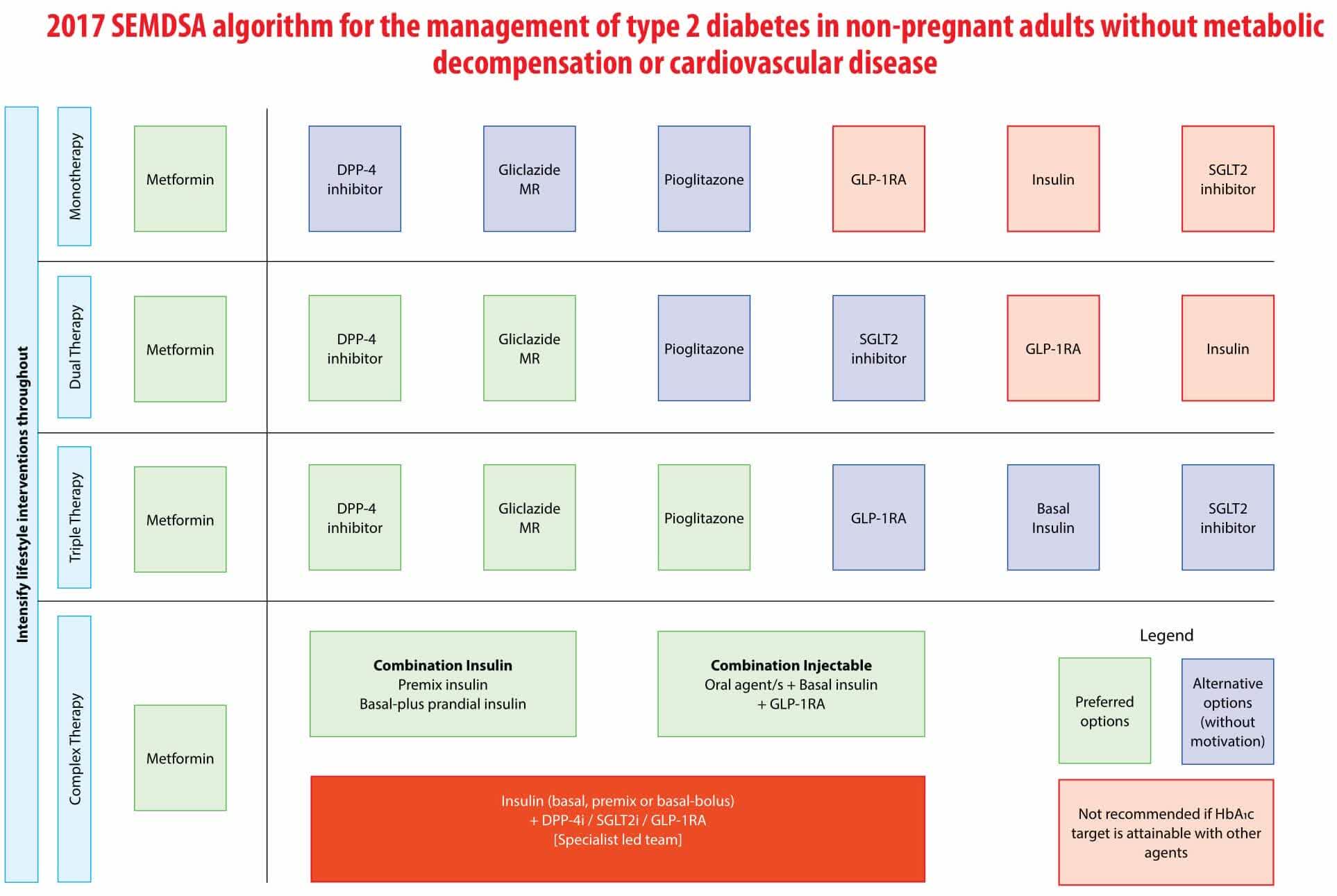
Footnote to the 2017 SEMDSA algorithm for the management of type 2 diabetes
Reinforce advice on diet and lifestyle at every contact.
If the patient has metabolic decompensation (marked weight loss, FPG > 14 mmol/L,HbA1C > 10%, or a hyperglycaemic emergency) at diagnosis, or at any stage, consider specialist referral for intensive insulin therapy. Decide on an individualised HbA1C target using the guidelines in Glycaemic Targets.
Monitor HbA1C every three months until the target is achieved; then every six months. Always assess the response to added treatments; if the HbA1C reduction is not > 0.5% after 3-6 months, consider treatment failure and change to an alternative option.
| Monotherapy | In newly diagnosed patients the target HbA1C should be <6.5% unless there are factors that preclude this Metformin remains the drug of first choice at diagnosis, and if tolerated, should be continued until contraindicated. If tolerability is poor, consider switching to the extended release formulation. If metformin is contraindicated or not tolerated, consider gliclazide MR if the HbA1C target is <7%, or a DPP-4 inhibitor/pioglitazone if the HbA1C target is <6.5%. SGLT2 inhibitors, GLP-1RAs and insulin are not recommended alternatives to metformin; they offer no compelling additional benefits at this stage of the disease to justify the additional cost. Established cardiovascular disease would be a compelling reason to use either an SGLT2 inhibitor or GLP-1RA in metformin intolerant patients (under specialist care) Consider initial dual therapy with metformin + gliclazide MR if the patient has symptomatic hyperglycaemia and HbA1C is >9% at diagnosis. The decision to continue gliclazide MR can be reviewed when metformin dose and lifestyle interventions have been optimised |
| Dual Therapy | If the HbA1C target is not achieved after three months of metformin or subsequently rises, consider adding gliclazide MR, a DPP-4 inhibitor, pioglitazone, or an SGLT2 inhibitor. Revise the HbA1C target if necessary. The HbA1C target for the majority of patients should be <7% (in recently diagnosed patients who have not yet achieved their target it can remain at < 6.5% provided it can still be achieved safely). Consider patient preference, comorbidities, the ability to access medicines as well as the properties of each drug (See: Figure I and text recommendations). Consider gliclazide MR for most patients whose target is <7%. If the target is <6.5% or there are other reasons why gliclazide MR cannot be used (e.g. recurrent hypoglycaemia), then consider a DPP-4 inhibitor (or pioglitazone, or an SGLT2 inhibitor) based on the patient profile. Fixed dose combinations of a DPP-4 inhibitor + metformin may have compliance and cost advantages. GLP-1RA and insulin offer no compelling advantages at this stage for the added cost/complexity, provided the HbA1C target is still attainable |
| Triple Therapy | If the HbA1C is above the individualised target (which should still be <7% for most patients) with two oral agents, consider adding either a third oral agent or an injectable agent (GLP-1RA or basal insulin) - Refer to: figure IV. Consider patient preference, comorbidities, and ability to access medicines as well as the properties of each drug, (See: Figure I and text recommendations) in selecting an appropriate option. Do not combine a GLP-1RA with either a DPP-4 inhibitor or an SGLT2 inhibitor, and do not combine pioglitazone with insulin. Expected HbA1C reductions are similar when adding a GLP-1RA or titrated basal insulin, and both are slightly superior to triple oral therapy. Insulin initiation must be accompanied by ongoing patient education, appropriate SMBG, self- titration of insulin doses, frequent review (initially) and counselling regarding hypoglycaemia. In the absence of appropriate support for insulin therapy, a third oral agent is preferred. Use basal insulins with the lowest acquisition cost. Switch NPH to a basal analogue insulin if nocturnal hypoglycaemia is problematic. |
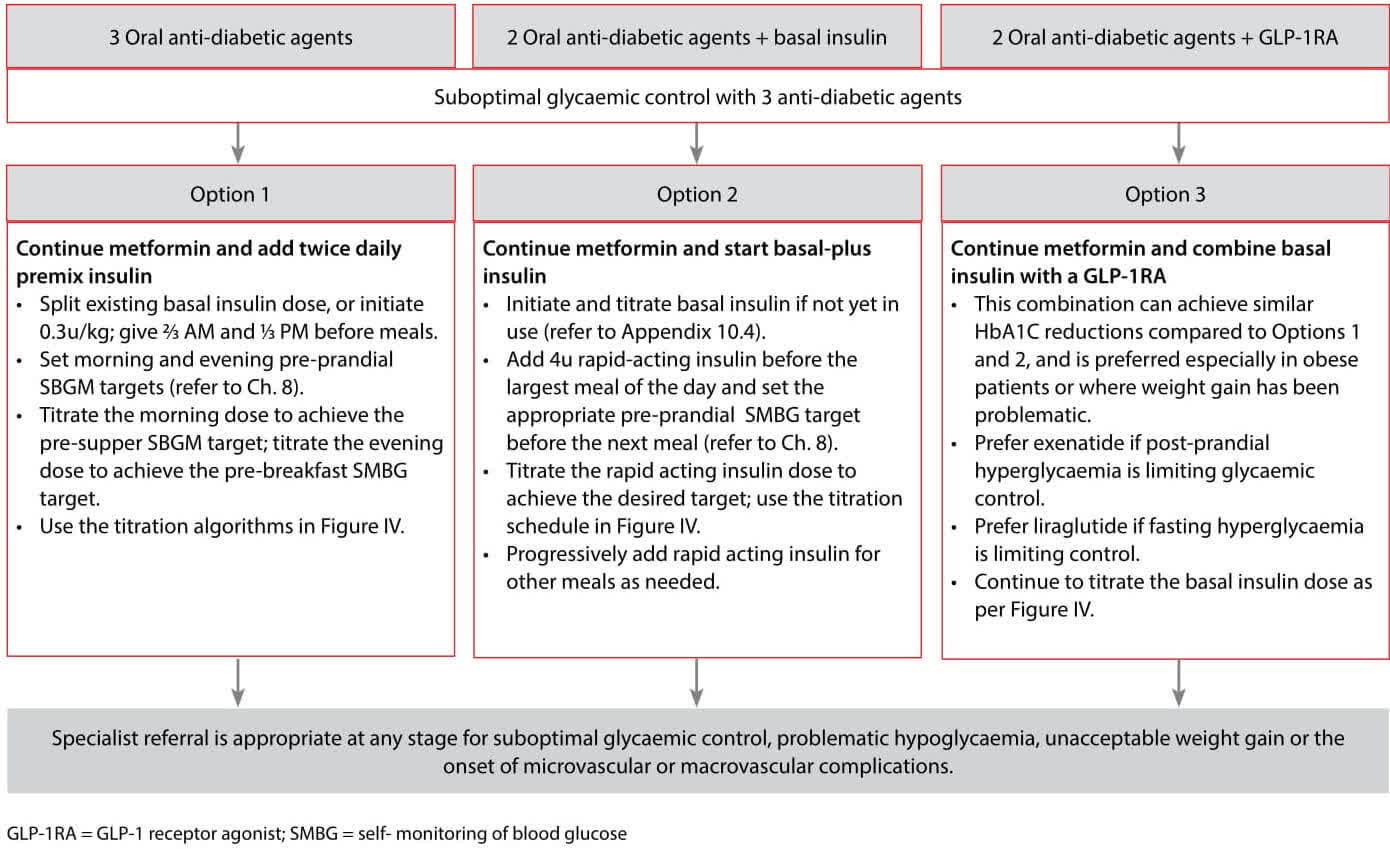
| Complex Therapy | When triple therapy is inadequate at maintaining or achieving glycaemic targets, combination injectable (complex) therapy will become necessary (refer to: figure V). Depending on the support services available, patients at this stage may continue to be managed at primary care level, or be referred for escalation to more complex therapies (including basal-bolus insulin therapy). For patients on three oral agents, consider escalation to a twice-daily premix insulin regimen with metformin; the other oral agents can be stopped. Alternatively, a DPP-4 inhibitor (if used) may be switched to basal insulin and/or a GLP1RA if the glycaemic target is attainable, (basal insulin and GLP1RAs are more efficacious than DPP-4 inhibitors). For patients already on a single injectable agent (basal insulin or GLP1RA), consider escalation to any of the following 3 options: a. Combination basal insulin and GLP-1RA therapy b. Premix (twice daily) insulin c. Basal-plus insulin therapy (adding one or more prandial doses of insulin to basal insulin) Each of these options has advantages and disadvantages that will need to be considered and discussed with the patient. For all three options metformin should be retained; consider stopping the other oral agents to reduce the cost and complexity of the regimen.Recurrent hypoglycaemia, unacceptable weight gain and treatment failure (failure to achieve an HbA1C level that is within 0.5% of the target, or to lower the HbA1C by more than 1%) with these complex therapies should warrant a critical review of the chosen regimen, and specialist referral |
Figure IV: Initiating and titrating basal insulin therapy
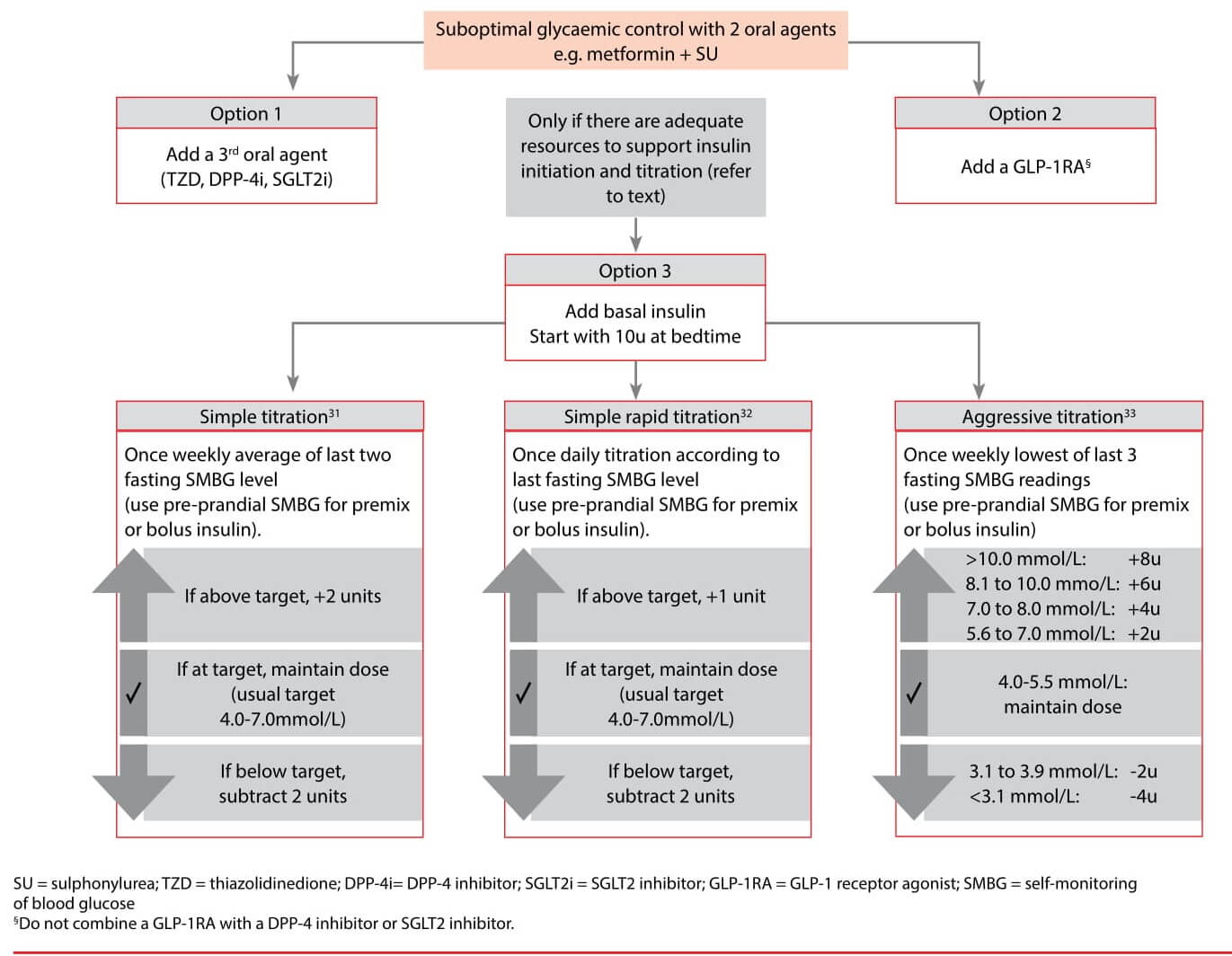
SU = sulphonylurea; TZD = thiazolidinedione; DPP-4i= DPP-4 inhibitor; SGLT2i = SGLT2 inhibitor; GLP-1RA = GLP-1 receptor agonist; SMBG = self-monitoring of blood glucose
§Do not combine a GLP-1RA with a DPP-4 inhibitor or SGLT2 inhibitor
Figure V: Complex (combination injection) therapies
RECOMMENDATIONS FOR GLUCOSE LOWERING DRUGS
(Reproduced from Glucose Control: Non-insulin Therapies)
SEMDSA 2017 Recommendations for metformin
- Initiate standard-release metformin therapy in all newly diagnosed obese patients with type 2 diabetes
- Initiate standard-release metformin therapy in all newly diagnosed non-obese patients with type 2 diabetes
- Dosing: Start with 500 mg once daily and up-titrate the dose slowly every 10 to 14 days until glycaemic targets are met or side effects occur. Few patients will achieve and maintain glycaemic targets with 500 mg once daily. Most patients will require 1000 – 2550 mg per day in two or three divided doses. The optimum dose for cardiovascular benefit in obese patients is 2550 mg/day (850 mg TDS).
- If gastrointestinal (GI) adverse events are limiting, try temporarily reducing or discontinuing the drug, and re-titrate when the GI disturbances resolve. The GI side-effects with metformin extended-release is not different to the standard release when used as initial therapy; however patients who switch to the extended release may have improved tolerability. If GI disturbances remain intolerable with standard metformin tablets, try switching to a metformin extended release (XR) formulation and titrate the dose every 10-14 days again.
- The extended release formulation should be dosed once daily with the evening meal at a dose not exceeding 2000 mg/day. The 2000 mg dose can be taken as 1000 mg twice a day without disadvantages if the patient so prefers. Patients not achieving their glycaemic target with 2000 mg of the extended release may benefit from switching to a higher dose of the standard release metformin.
- Monitor renal function (eGFR) in all patients at least annually. Do not exceed 1000 mg/day if the eGFR is 30-45 ml/ min/1.73m2. Stop metformin therapy if the eGFR is < 30 ml/ min/1.73m2
- The significance of low serum vitamin B12 levels associated with long-term metformin use is not known. Measure and treat whenever clinically appropriate
- Profile of the patient in whom metformin may not be the preferred option:
- Patients with irritable bowel syndrome or other chronic gastrointestinal disorders
- Normal weight individuals who do not wish to lose weight
- Patients at high risk for lactic acidosis (severe heart, lung, liver, renal or peripheral vascular disease)
- There is a history of metformin intolerance
- Patients with irritable bowel syndrome or other chronic gastrointestinal disorders
SEMDSA 2017 Recommendations for sulphonylureas
- The sulphonylurea of choice should be gliclazide modified- release because:
- It has equivalent efficacy compared to other sulphonylureas.
- It is consistently associated with lower rates of hypoglycaemia and better cardiovascular and renal safety relative to other sulphonylureas
- It has proven benefits for long-term microvascular disease outcomes
- It has equivalent efficacy compared to other sulphonylureas.
- Glibenclamide must not be used at primary care level
- Consider gliclazide modified-release as initial monotherapy when metformin is not tolerated or is contraindicated
- Consider gliclazide modified-release as add-on (dual therapy) to metformin (or other initial drug therapy) in most patients not achieving or maintaining their glycaemic targets.
- If not already in use, consider gliclazide modified-release as a third glucose lowering drug
- To convert treatment from another sulphonylurea to gliclazide modified-release, use the following dose conversion:
- Glibenclamide 5 mg ≈ Gliclazide modified-release 30 mg
- Glimepiride 1-2 mg ≈ Gliclazide modified-release 30 mg
- Glibenclamide 5 mg ≈ Gliclazide modified-release 30 mg
- Only continue gliclazide modified-release beyond stage 3 chronic kidney disease (when the eGFR is less 30 ml/min/m2) with specialist supervision
- Circumstances where gliclazide MR may be preferred to other treatment options:
- Gliclazide MR should be the preferred second drug for the majority of patients with type 2 diabetes
- At diagnosis when rapid control of hyperglycaemic symptoms is required
- Gliclazide MR should be the preferred second drug for the majority of patients with type 2 diabetes
- Circumstances where gliclazide MR may not be the preferred option:
- The individualised glycaemic target is ≤ 6.5% (as the risk of hypoglycaemia may be unacceptably high with this target)
- There is a history of severe hypoglycaemia or hypoglycaemia unawareness
- There is a history of recurrent hypoglycaemia (any degree) despite dose adjustments
- The risk of hypoglycaemia is high and/or its consequences are severe
- The patient has advanced liver disease
- The individualised glycaemic target is ≤ 6.5% (as the risk of hypoglycaemia may be unacceptably high with this target)
SEMDSA 2017 Recommendations for pioglitazone
- Consider pioglitazone as initial monotherapy when metformin is contraindicated or not tolerated
- Consider pioglitazone as add-on to metformin or other initial drug therapy, in selected patients not achieving or maintaining their glycaemic targets
- Consider pioglitazone as a third non-insulin glucose lowering drug in selected patients not achieving or maintaining their glycaemic targets on an existing oral two-drug regimen
- Circumstances where pioglitazone is preferred to other treatment options:
- Gliclazide MR is contraindicated or not tolerated
- Non-alcoholic steatohepatitis is present
- The patient has features of severe insulin resistance
- There is a history of previous myocardial infarction, previous stroke or chronic kidney disease stage-3 (pioglitazone offers probable benefit for secondary prevention)
- Gliclazide MR is contraindicated or not tolerated
- Circumstances where pioglitazone may not be the preferred option:
- Age > 75 years old (risk of congestive heart failure (CHF), fracture and bladder cancer)
- History of congestive heart failure
- History of osteoporosis
- History of bladder cancer, or haematuria that has not been investigated
- Stage-4 or worse chronic kidney disease (risk of fluid retention)
- Patients on insulin therapy (higher risk of fluid retention and CHF)
- Elevated liver enzymes (>2x ULN) not due to NASH
- Age > 75 years old (risk of congestive heart failure (CHF), fracture and bladder cancer)
SEMDSA 2017 Recommendations for DPP-4 inhibitors
- Consider a DPP-4 inhibitor as initial monotherapy when metformin is contraindicated or not tolerated
- Consider a DPP-4 inhibitor as add-on to metformin or other initial drug therapy, in selected patients not achieving or maintaining their glycaemic targets
- Consider a DPP-4 inhibitor as the third glucose lowering drug in selected patients not achieving or maintaining their glycaemic targets on an existing oral two-drug regimen
- Combination DPP-4 inhibitor and insulin therapy should be initiated at specialist level
- Be aware of dose adjustments for chronic kidney disease
- Circumstances where a DPP-4 inhibitor may be preferred to other treatment options:
- As the 2nd add-on drug when gliclazide MR is contraindicated or not tolerated
- As the 3rd add on drug for most patients if HbA1C targets are potentially achievable
- Older patients with multiple comorbidities
- Patients with stage-4 chronic kidney disease (can be used without risk of hypoglycaemia)
- If a fixed-dose combination tablet will improve adherence, compliance and/or cost-effectiveness
- As the 2nd add-on drug when gliclazide MR is contraindicated or not tolerated
- Circumstances where a DPP-4 inhibitor may not be the preferred option:
- Very high HbA1C and the glycemic target is not likely to be achieved with a DPP-4 inhibitor
- History of pancreatitis or pancreatic tumour
- History of heart failure or high risk of heart failure (saxagliptin)
- Liver disease: moderate (do not use saxagliptin or vildagliptin) or severe (do not any DPP-4 inhibitor)
- Very high HbA1C and the glycemic target is not likely to be achieved with a DPP-4 inhibitor
SEMDSA 2017 Recommendations for GLP-1 receptor agonists (GLP-1RA)
- Consider a GLP-1RA injectable as the third glucose lowering drug (triple therapy) in overweight and obese patients when glycaemic targets are not being achieved or maintained
- Consider adding a GLP-1RA to existing basal insulin therapy (with oral therapies) as an alternative to intensifying the insulin regimen, especially when weight gain and/or hypoglycaemia is a limiting factor
- Escalate the dose of GLP-1RA slowly to minimise side-effects
- Circumstances where a GLP-1RA may be preferred to other treatment options:
- Overweight and obese patients
- Weight gain or hypoglycaemia has been, or is likely to be problematic with other treatment options
- HbA1C is very high (GLP-1RA and insulin are the most effective glucose lowering drugs for most patients)
- Patients with established cardiovascular disease (liraglutide benefit); to be managed at specialist care level
- Overweight and obese patients
- Circumstances where a GLP-1RA may not be the preferred option:
- Patients in whom weight loss is not desirable
- Patients with chronic gastrointestinal disorders
- Patients with a history of pancreatitis or pancreatic tumour
- Patients in whom weight loss is not desirable
SEMDSA 2017 Recommendations for SGLT2 inhibitors
- Do not use SGLT2 inhibitors as initial monotherapy
- Consider an SGLT2 inhibitor as add-on (dual therapy) to metformin (or other initial drug therapy) in selected patients not achieving or maintaining their glycaemic targets
- Consider an SGLT2 inhibitor as the 3rd glucose lowering drug in selected patients not achieving or maintaining their glycaemic targets on an existing oral two-drug regimen
- Circumstances where an SGLT2 inhibitor may be preferred to other treatment options:
- Overweight and obese patients
- Weight gain or hypoglycaemia has been, or is likely to be problematic with other treatment options
- Patients with established cardiovascular disease (empagliflozin benefit); to be managed at specialist care level
- Overweight and obese patients
- Circumstances where an SGLT2 inhibitor may not be the preferred option:
- Patients with recurrent mycotic genital infections or urinary tract infections
- Patients at risk for dehydration and hypotension
- Patients at high risk for stroke, fracture (canagliflozin), amputation (canagliflozin), bladder cancer (dapagliflozin) or ketoacidosis (refer to drug review)
- Patients with recurrent mycotic genital infections or urinary tract infections
- Do not initiate SGLT2 inhibitors when the eGFR is < 60 ml/min/m2.
- Stop all SGLT2 inhibitors when the eGFR is < 45 ml/min/m2.
Author: Aslam Amod
Editors: Zaheer Bayat, Ankia Coetzee, Nazeer A Mohamed, Joel A Dave, Tanya Kinvig and Fraser J Pirie
References
- Shisana O, Labadarios D, Rehle T, et al. South African National Health and Nutrition Examination Survey, 2012 (SANHANES-1). In: 2014th ed. Cape Town: HSRC Press; 2014:1-397.
- Bonora E, Targher G, Alberiche M, et al. Predictors of insulin sensitivity in Type 2 diabetes mellitus. Diabet Med. 2002;19(7):535-542.
- Inzucchi SE, Bergenstal RM, Buse JB, et al. Management of Hyperglycemia in Type 2 Diabetes: A Patient-Centered Approach: Position Statement of the American Diabetes Association (ADA) and the European Association for the Study of Diabetes (EASD). Diabetes Care. 2012;35(6):1364-1379. doi:10.2337/ dc12-0413.
- Inzucchi SE, Bergenstal RM, Buse JB, et al. Management of Hyperglycemia in Type 2 Diabetes, 2015: A Patient-Centered Approach: Update to a Position Statement of the American Diabetes Association and the European Association for the Study of Diabetes. Diabetes Care. 2015;38(1):140-149. doi:10.2337/ dc14-2441.
- Harper W, Clement M, Goldenberg R, et al. Pharmacologic Management of Type 2 Diabetes. Can J Diabetes. 2013;37:S61-S68. doi:10.1016/j.jcjd.2013.01.021.
- Handelsman Y, Bloomgarden ZT, Grunberger G, et al. American Association Of Clinical Endocrinologists And American College Of Endocrinology – Clinical Practice Guidelines For Developing A Diabetes Mellitus Comprehensive Care Plan – 2015 — Executive Summary. Endocr Pract. 2015;21(4):413-437. doi:10.4158/EP15672.GL.
- American Diabetes Association. Pharmacologic Approaches to Glycemic Treatment. Sec. 8. In Standards of Medical Care in Diabetes 2017. Diabetes Care. 2017;40(Supplement 1):S64-S74. doi:10.2337/dc17-S011.
- Holman RR, Thorne KI, Farmer AJ, et al. Addition of Biphasic, Prandial, or Basal Insulin to Oral Therapy in Type 2 Diabetes. N Engl J Med. 2007;357(17):1716- 1730. doi:10.1056/NEJMoa075392.
- Liu S-C, Tu Y-K, Chien M-N, Chien K-L. Effect of antidiabetic agents added to metformin on glycaemic control, hypoglycaemia and weight change in patients with type 2 diabetes: a network meta-analysis. Diabetes, Obes Metab. 2012;14(9):810-820. doi:10.1111/j.1463-1326.2012.01606.x.
- Palmer SC, Mavridis D, Nicolucci A, et al. Comparison of Clinical Outcomes and Adverse Events Associated With Glucose-Lowering Drugs in Patients With Type 2 Diabetes. JAMA. 2016;316(3):313. doi:10.1001/jama.2016.9400.
- Bennett WL, Maruthur NM, Singh S, et al. Comparative Effectiveness and Safety of Medications for Type 2 Diabetes: An Update Including New Drugs and 2-Drug Combinations. Ann Intern Med. 2011;154(9):602. doi:10.7326/0003-4819-154-9-201105030-00336.
- Sherifali D, Nerenberg K, Pullenayegum E, Cheng JE, Gerstein HC. The Effect of Oral Antidiabetic Agents on A1C Levels: A systematic review and meta-analysis. Diabetes Care. 2010;33(8):1859-1864. doi:10.2337/dc09-1727.
- European Medicines Agency. Jardiance : European Public Assessment Report - Product Information. Updated 07 December 2015. http://www.ema.europa.eu/ docs/en_GB/document_library/EPAR_-_Product_Information/human/002677/ WC500168592.pdf. Accessed February 10, 2016.
- Bedenis R, Price AH, Robertson CM, et al. Association Between Severe Hypoglycemia, Adverse Macrovascular Events, and Inflammation in the Edinburgh Type 2 Diabetes Study. Diabetes Care. 2014;37(12):3301-3308. doi:10.2337/dc14-0908.
- McCoy RG, Van Houten HK, Ziegenfuss JY, Shah ND, Wermers RA, Smith SA. Increased Mortality of Patients With Diabetes Reporting Severe Hypoglycemia. Diabetes Care. 2012;35(9):1897-1901. doi:10.2337/dc11-2054.
- Mellbin LG, Ryden L, Riddle MC, et al. Does hypoglycaemia increase the risk of cardiovascular events? A report from the ORIGIN trial. Eur Heart J. 2013;34(40):3137-3144. doi:10.1093/eurheartj/eht332.
- Zoungas S, Patel A, Chalmers J, et al. Severe Hypoglycemia and Risks of Vascular Events and Death. N Engl J Med. 2010;363(15):1410-1418. doi:10.1056/ NEJMoa1003795.
- Goto A, Arah OA, Goto M, Terauchi Y, Noda M. Severe hypoglycaemia and cardiovascular disease: systematic review and meta-analysis with bias analysis. BMJ. 2013;347(jul29 3):f4533-f4533. doi:10.1136/bmj.f4533.
- Bonds DE, Miller ME, Bergenstal RM, et al. The association between symptomatic, severe hypoglycaemia and mortality in type 2 diabetes: retrospective epidemiological analysis of the ACCORD study. BMJ. 2010;340(jan08 1):b4909- b4909. doi:10.1136/bmj.b4909.
- Clayton D, Woo V, Yale J-F. Hypoglycemia. Can J Diabetes. 2013;37:S69-S71. doi:10.1016/j.jcjd.2013.01.022.
- Bodegard J, Sundström J, Svennblad B, Östgren CJ, Nilsson PM, Johansson G. Changes in body mass index following newly diagnosed type 2 diabetes and risk of cardiovascular mortality: A cohort study of 8486 primary-care patients. Diabetes Metab. 2013;39(4):306-313. doi:10.1016/j.diabet.2013.05.004.
- Erasmus RT, Blanco Blanco E, Okesina a B, Gqweta Z, Matsha T. Assessment of glycaemic control in stable type 2 black South African diabetics attending a peri-urban clinic. Postgrad Med J. 1999;75(888):603-606.
- Pinchevsky Y, Shukla V, Butkow N, Raal FJ, Chirwa T. The achievement of glycaemic, blood pressure and LDL cholesterol targets in patients with type 2 diabetes attending a South African tertiary hospital outpatient clinic. J Endocrinol Metab Diabetes South Africa. 2015;20(2):28-34. doi:10.1080/160896 77.2015.1056468.
- Pinchevsky Y, Butkow N, Raal F, Chirwa T. The implementation of guidelines in a South African population with type 2 diabetes. J Endocrinol Metab Diabetes South Africa. 2014;18(3):154-158. doi:10.1080/22201009.2013.10872322.
- Pillay S, Sa FCP, Physician S, Aldous C, Lecturer S. Diabetic patients served at a regional level hospital : what is their clinical picture ? J Endocrinol Metab Diabetes South Africa. 2015;20(1):60-66.
- Steyn K, Levitt NS, Patel M, Gwebushe N, Lombard C, Everett K. Hypertension and diabetes: Poor care for patients at community health centres. J Endocrinol Metab Diabetes South Africa. 2008;13(2):64-70. doi:10.1080/22201009.2008.10872172.
- Igbojiaku OJ, Harbor OC, Ross A. Compliance with diabetes guidelines at a regional hospital in KwaZulu-Natal, South Africa. African J Prim Heal Care Fam Med. 2013;5(1):1-5. doi:10.4102/phcfm.v5i1.447.
- Amod A, Riback W, Schoeman HS. Diabetes guidelines and clinical practice: is there a gap? The South African cohort of the International Diabetes Management Practices Study. J Endocrinol Metab Diabetes South Africa. 2012;17(2):85-90.
- Steyn K, Lombard C, Nomonde Gwebushe, et al. Implementation of national guidelines, incorporated within structured diabetes and hypertension records at primary level care in Cape Town, South Africa: A randomised controlled trial. Glob Health Action. 2013;6(1). doi:10.3402/gha.v6i0.20796.
- Turner RC, Cull CA, Frighi V, Holman RR. Glycemic control with diet, sulfonylurea, metformin, or insulin in patients with type 2 diabetes mellitus: progressive requirement for multiple therapies (UKPDS 49). UK Prospective Diabetes Study (UKPDS) Group. JAMA. 1999;281(21):2005-2012.
- Endocrinologic and Metabolic Drug Advisory Committee. Insulin degludec and insulin degludec/insulin aspart treatment to improve glycaemic control in patients with diabetes mellitus: NDAs 203314 and 203313 FDA briefing document. Published November 8,2012
- Type-2 diabetes insulin initiation & titration suggestions: Insulin prescription [Internet]. Toronto: Ontario College of Family Physicians; 2007. [Accessed 20 Feb 2016]. Available from: http://www.ocfp.on.ca/English/OCFP/Communications/ CurrentIssues/Insulin/default.asp?s=1
- Adapted from: Riddle MC, Rosenstock J, Gerich J. The Treat-to-Target Trial: Randomized addition of glargine or human NPH insulin to oral therapy of type 2 diabetic patients. Diabetes Care. 2003;26(11):3080-3086. doi:10.2337/ diacare.26.11.3080.