Assessment of Acute Pain
Introduction Pain measurement tools Measurement considerations in special populations Monitoring guidelines Introduction A reliable assessment of acute pain is necessary to ensure appropriate, safe and effective pain management. The assessment of pain should form part of all routine vital observations so that therapy can be individualised according to patient response. Pain should be assessed wit
Measurement considerations in special populations
Introduction
A reliable assessment of acute pain is necessary to ensure appropriate, safe and effective pain management. The assessment of pain should form part of all routine vital observations so that therapy can be individualised according to patient response.
Pain should be assessed within a biopsychosocial model which recognises the influence of physiological, psychological, cultural and environmental factors on the overall pain experience. Therefore, a particular pain rating should not be the only factor that determines a specific intervention.
Pain measurement tools
Self-reporting is an important part of pain assessment. However, it is also important to acknowledge that self-reporting is affected by the language, culture, perceptions of disease, and cognitive skills of both the patient and the caregiver.
Pain history
The assessment of acute pain includes a thorough general medical history, a specific ‘pain history’ (Table I), a physical examination and an evaluation of associated functional impairment. It may help to distinguish between different underlying pain states, such as nociceptive (somatic and visceral) and neuropathic pain, which require different treatment modalities.
Characteristics of somatic pain include the following:
- sharp
- hot or stinging
- well localised
- associated with local and surrounding tenderness
Characteristics of visceral pain include the following:
- dull
- cramping or colicky
- poorly localised
- associated with local tenderness and/or referred pain
- can be associated with ANS phenomena, including nausea, sweating and cardiovascular (CV) changes
While nociceptive pain typically predominates in the acute pain setting, neuropathic pain may co-exist.
Features of neuropathic pain include the following:
- circumstances associated with a high risk of nerve injury (e.g. thoracic or chest wall procedures, amputations and hernia repairs)
- pain descriptors such as burning, shooting or stabbing
- paroxysmal or spontaneous nature of the pain, without clear precipitating factors
- presence of dysaesthesias (spontaneous or evoked unpleasant abnormal sensations)
- hyperalgesia (increased response to a normally painful stimulus), allodynia (pain due to a stimulus that does not normally evoke pain, such as light touch) or areas of hypoaesthesia
- regional autonomic features (changes in colour, temperature and sweating)
- phantom phenomena
Table I: Fundamentals of a pain history
| Site of pain |
a. Primary location |
| Circumstances associated with pain onset | a. Trauma or surgical procedures |
| Intensity of pain | a. Current pain, highest intensity b. At rest and during movement c. Temporal factors: duration, during last week, continuous or intermittent d. Aggravating and relieving factors |
| Associated symptoms | a. Effect of pain on daily activity and sleep b. Autonomic phenomena: nausea, sweating, CV changes |
| Treatment | a. Current and previous medications: dose, frequency of use, efficacy, adverse effects b. Other treatment (e.g. transcutaneous electrical nerve stimulation) c. Health professionals consulted |
| Medical history | a. Previous or co-existing pain conditions and treatment outcomes b. Previous or co-existing medical conditions |
| Factors affecting symptomatic treatment | a. Belief concerning the causes of pain b. Knowledge, expectations and preferences for pain management c. Reduction in pain required for patient satisfaction or to resume reasonable activities d. Effect of anxiety or psychiatric disorders (e.g. depression or psychosis) on the coping response e. Family expectations and beliefs about pain, stress and postoperative care |
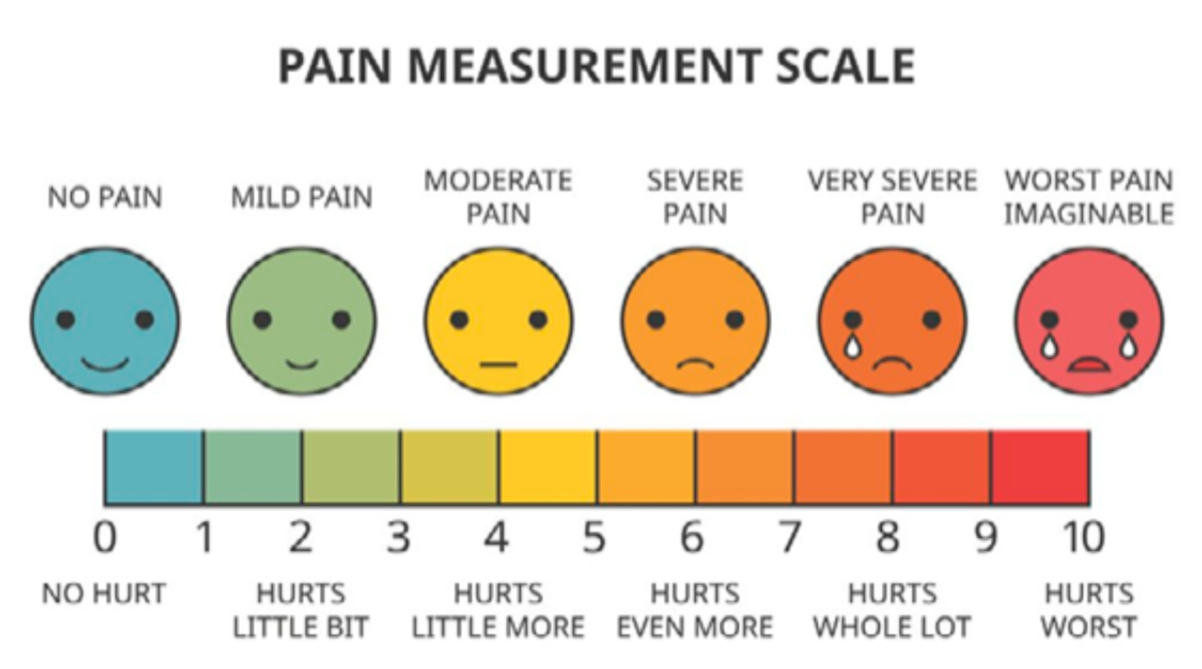
Figure 1: Visual analogue scale
Click on the image to enlarge
Visual analogue scale
The visual analogue scale (VAS) is the most commonly used scale for rating pain intensity in clinical trials. It is a 100 mm or 10 cm (or 10 or 100 units) horizontal line. The left end represents ‘no pain’ and the right end is ‘worst pain imaginable’, with no other tick marks along the length of the line (Figure 1).
A ‘pain meter’ consists of five coloured emoticon faces on the front of a ruler, with corresponding VAS scores on the back. The patients move a slider to mark the intensity of the pain they are experiencing. On the back of the ruler, the slider indicates the VAS in cm or mm, with ‘no pain’ indicated at VAS = 0 and ‘worst pain imaginable’ indicated at VAS = 100 mm or 10 cm (or units). The minimal translation difficulties have led to an unknown number of cross-cultural adaptations of the VAS.
The VAS must be presented to the patient in person (it cannot be used over the telephone). Patients mark the point along the line which they feel corresponds to the level of pain that they are experiencing, and the pain score is recorded as the measurement in millimetres, centimetres or units from the left end of the scale to the patients’ mark. Caution is required when the scale is photocopied as this may change the length of the 10-cm line. Also, the same alignment of the scale should be used consistently with the same patient.
A VAS rating of ≥ 70 mm (units) is indicative of ‘severe pain’ while 0–5 mm (units) indicates ‘no pain’. ‘Mild pain’ is 5–44 mm (units) and ‘moderate pain’ is 45–69 mm (units). The emoticon faces on the VAS may also allow for the evaluation of other aspects of the pain experience (e.g. affective components, patient satisfaction or adverse effects).
The VAS requires concentration and coordination. This could mean that the assessment of pain immediately after surgery is more difficult, leading to greater interpatient variability in pain scores because of transient anaesthetic-related cognitive impairments and decreases in visual acuity. It also cannot be used in patients with visual or cognitive impairment.
The VAS has similar sensitivity to the numeric rating scale (NRS) when comparing acute postoperative pain intensity, and has greater sensitivity than a four-category verbal descriptor scale. VAS is more sensitive to small changes than simple descriptive ordinal scales in which symptoms are rated, for example, as mild or slight, moderate, or severe to agonising. The VAS is meaningful when used with the same patient over time, but not necessarily between patients.
Numerical rating scale
The eleven-point (0–10) NRS is similar to the VAS, but can be administered either verbally or in a written format. Patients are asked to rate the intensity of their pain according to a point scale from 0 (‘no pain’) to 10 (‘worst pain imaginable’). A pain score of 1–3 is considered ‘mild pain’, 4–7 is considered ‘moderate pain’ and a score of > 7 is ‘severe pain’. Pain relief may be measured in the reverse direction with 0 representing ‘no relief’ and 10 representing ‘complete relief’.
The NRS does not require any physical materials and is widely accepted in clinical practice. Strengths of the NRS over the VAS are that it can be administered either verbally or in writing, and its simplicity of scoring. The NRS can easily be adapted for use across different cultures and languages. However, scores are subject to social, cognitive and contextual influences. As with the VAS, the NRS is meaningful if used with the same patient over time, but not necessarily between patients.
A disadvantage of the NRS is that it evaluates only one component of the pain experience and intensity; therefore, it does not capture the complexity and idiosyncratic nature of the pain experience or improvements due to symptom fluctuations.
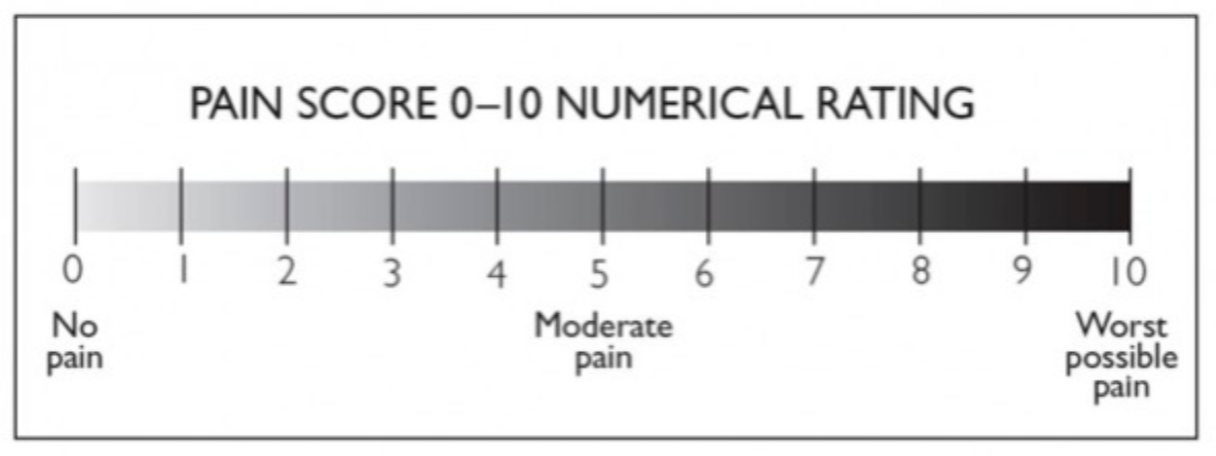
Figure 2: Numerical rating scale
This photo by an unknown author is licensed under CC BY-ND
Click on the image to enlarge
Pain scales are useful for the assessment of the effectiveness of postoperative analgesia. The VAS and the 11-point NRS are the most commonly used. A reduction in the pain score itself, however, may not equate to an improvement in the patient’s experience. Pooled data from two postoperative analgesic studies found that VAS pain scores of up to 44 mm are consistent with a patient rating of mild pain. Current guidelines recommend titrating analgesia to achieve a VAS pain score of 40 mm or less. Postoperative pain studies using patient-controlled analgesia (PCA) typically titrate to a VAS or NRS pain score of 30 mm.
Pain is both subjective and multidimensional. Neither the VAS nor the NRS captures the complete pain experience. Clinical decisions are made on the basis of existing pain count.
Click on the image to enlarge
The pain assessment in advanced dementia scale
| Items | 0 | 1 | 2 |
| Breathing independent of vocalisation | Normal | Occasional laboured breathing, short period of hyperventilation | Noisy laboured breathing, long period of hyperventilation, Cheyne-Stokes respirations |
| Negative vocalisation | None | Occasional moaning or groaning, low-level speech with a negative or disapproving quality | Repeated troubled calling out, loud moaning or groaning, crying |
| Facial expression | Smiling or inexpressive | Sad, frightened or frowning | Facial grimacing |
| Body language | Relaxed | Tense, distressed pacing, fidgeting | Rigid, fists clenched, knees pulled up, pulling or pushing away, striking out |
| Consolability | No need to console | Distracted or reassured by voice or touch | Unable to console, distract or reassure |
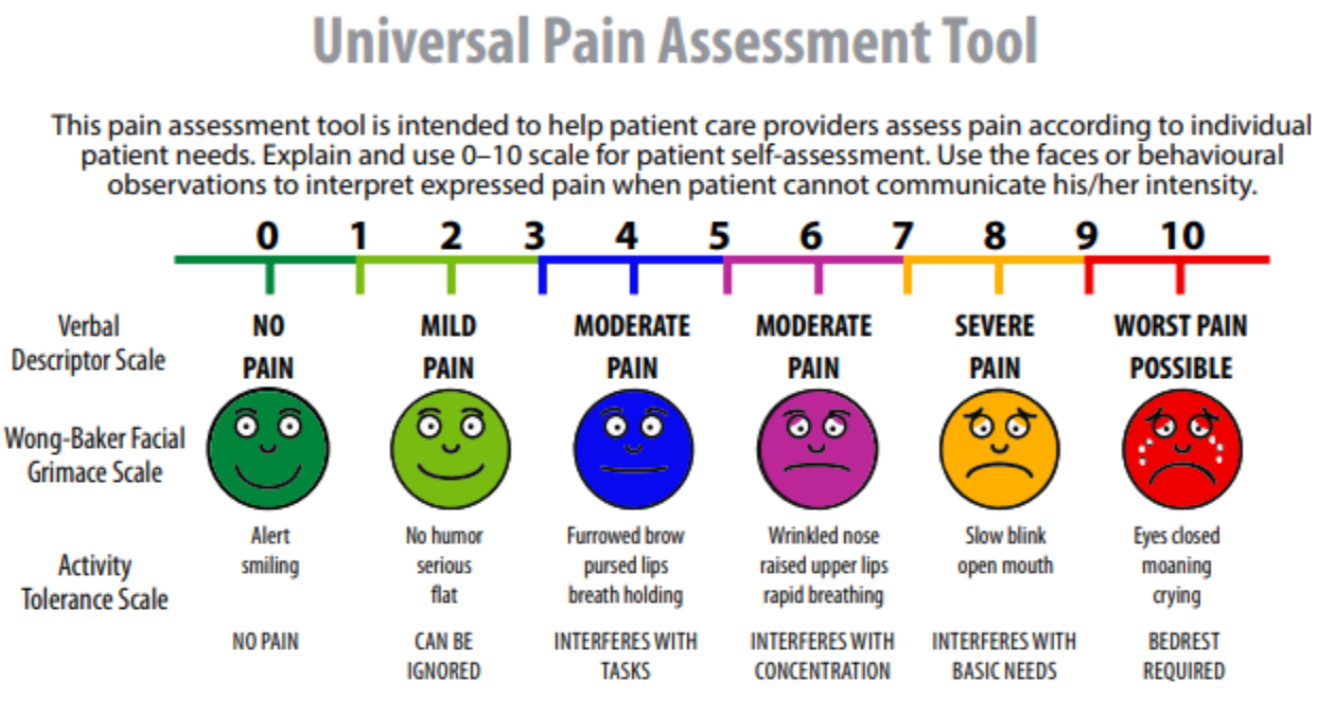
Figure 3: Universal pain assessment tool and the pain assessment in advanced dementia (PAINAD) scale
Therefore, it is important to know what changes from a particular baseline is clinically significant from a patient’s perspective. The extremes of pain indicated on a VAS, typically ‘no pain’ and ‘worst pain imaginable’, may not accurately represent absolute limits of perception.
Measurement considerations in special populations
It is important to recognise that patients with impairment or a limited ability to communicate verbally could also experience pain and be in need of pain-relieving treatment. Limiting factors include old age, dementia, unconsciousness or sedation. Other circumstances that pose a particular challenge when assessing pain include breakthrough pain either in cancer patients or those with chronic noncancer pain, as well as patients with a history of, or current, drug misuse. Physiological signs can be useful to indicate the presence of pain in elderly patients – particularly those with cognitive impairment. These clinical signs include hypertension, tachycardia or bradycardia, sweating and increased muscle tone.
The Wong-Baker FACES pain scale
For those patients with some, albeit limited, ability to communicate, the Wong-Baker FACES pain scale (FPS) (Figure 3) can be useful. Patients are shown a range of faces indicating varying degrees of distress, and they are asked to select the expression that corresponds to the amount of pain which they are currently experiencing.
The pain assessment in advanced dementia
The pain assessment in advanced dementia (PAINAD) scale is an observer-rated tool for assessing pain-related behaviour, and it is partly based on the FLACC (face, legs, activity, cry, consolability) scale.
The behavioural pain scale
Assessing pain in patients who are critically ill is a challenge, particularly when patients are nonverbal due to sedation or lack of consciousness. This is especially true where altered mental state is the main risk factor for patients receiving no pain assessment.
The behavioural pain scale (BPS) has been validated for use in critically ill, sedated and mechanically-ventilated patients. The BPS score is calculated as the sum of three subscales (facial expression, upper limb movements and compliance with mechanical ventilation). Of the pain scales developed for use in adult patients receiving intensive care, the BPS is considered to be one of the most valid and reliable (Table II).
Table II: The behavioural pain scale
| Score | Facial expression | Verbalisation | Body position |
| 0 | Neutral/positive facial expression, composed, calm | Normal conversation laugh, crow | Inactive, laying relaxed with all extremities, sitting, walking |
| 1 | Negative facial expression, concerned | Completely quiet or sobbing and/or complaining but not because of pain | Restless movements, shifting fashion and/or touching wound or wound area |
| 2 | Negative facial expression, grimace, distorted face | Crying, screaming and/or complaining of pain | Lying rigid and/or drawn up with legs and arms to the body |
Monitoring guidelines
In acute pain management, assessment must be undertaken at appropriate intervals. At these times, an evaluation of pain intensity, functional impact and adverse effects of treatment must be undertaken. Assessment tools and scales must be consistent, valid and reliable. In addition, pain assessment should lead to re-evaluation of and changes in pain management to ensure improvements in the quality of care (Figure 4).
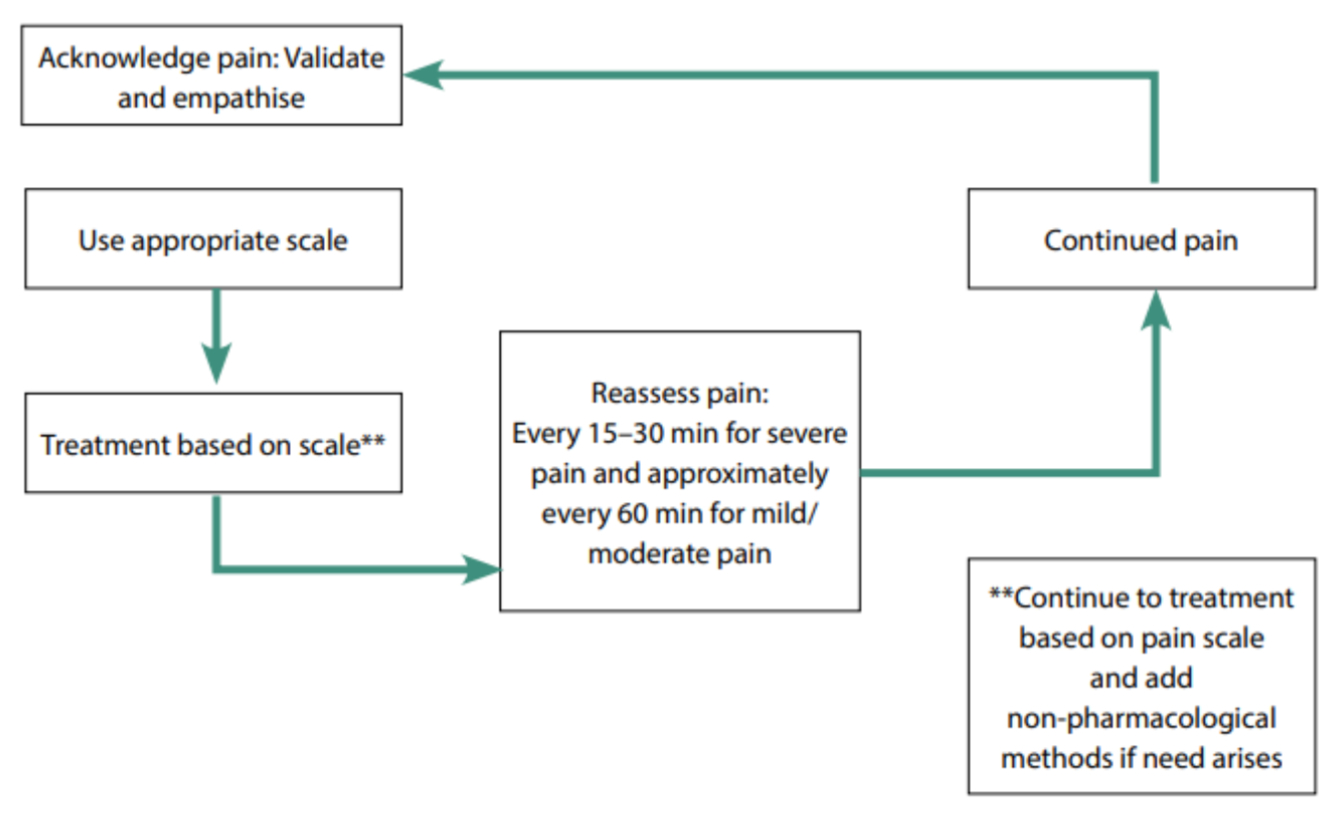
Figure 4: Pain assessment and re-evaluation
Click on the image to enlarge
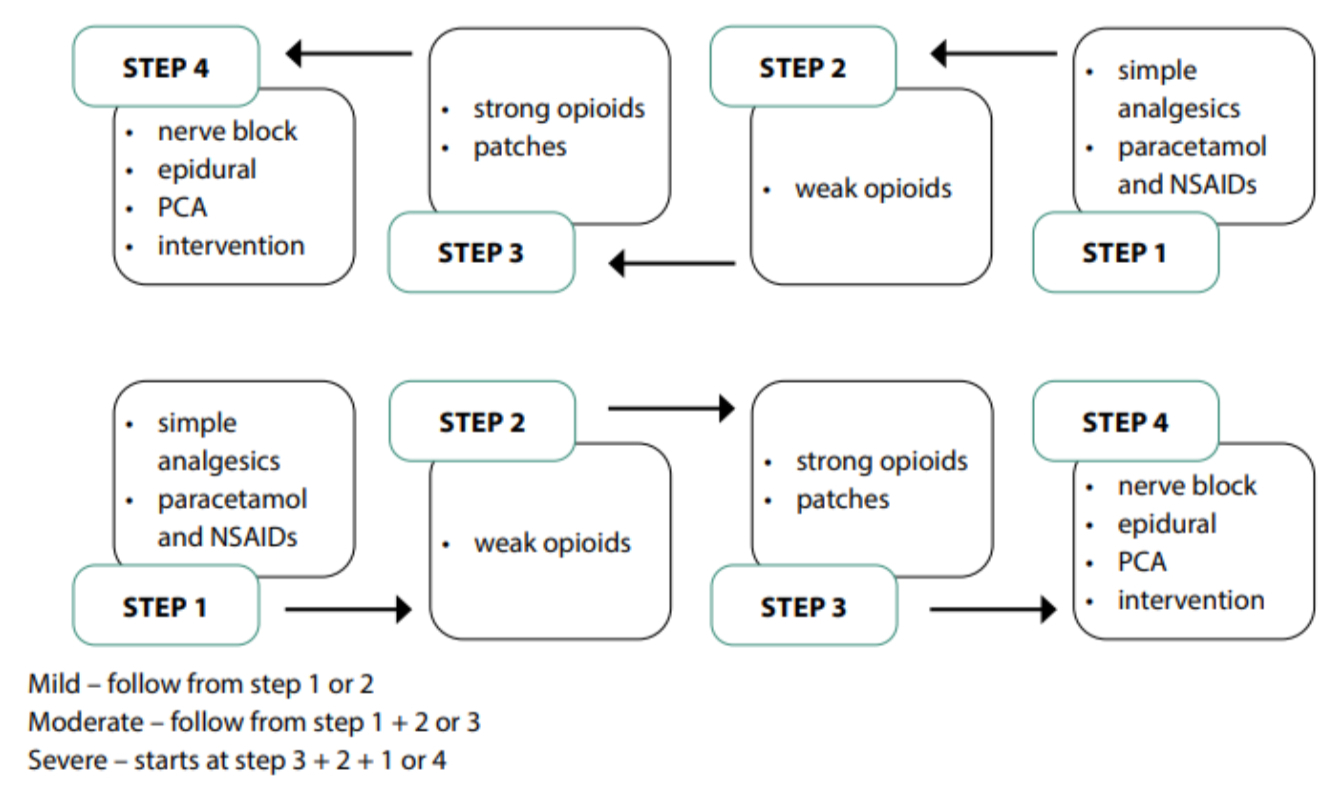
Figure 5: Treatment guide for acute pain
Click on the image to enlarge
Bibliography
- Hachimi-Idrissi S. Guidelines for the management of acute pain in emergency situations. Aartselaar: European Society of Emergency Medicine; 2020.
- Myles P, Myles D, Galagher W, et al. Measuring acute postoperative pain using the visual analog scale: the minimal clinically important difference and patient acceptable symptom state. BJA. 2017;118(3):424-9. https://doi.org/10.1093/bja/aew466.
- Nortjé N, Albertyn R. The cultural language of pain: a South African study. SA Fam Prac. 2015;57(1):24-7. https://doi.org/10.1080/2078619 0.2014.977034.
- Schug SAP, Palmer G, Scott DA, Halliwell R, Jane T. Acute Pain Management: Scientific Evidence. 4th ed. Melbourne: Australian and New Zealand College of Anaesthetists; 2015.
South African Society of Anaesthesiologists (SASA) Guidelines for the Management of Acute Pain in Specific Scenarios 2022