Basic Wound Management
Basic Wound Managment
Definition
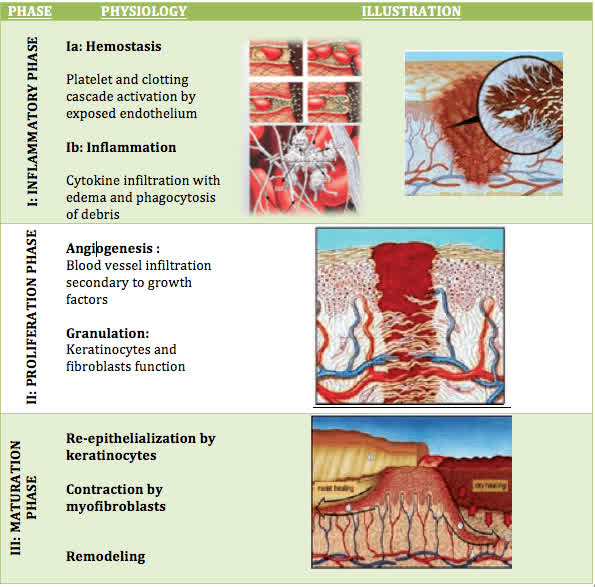
Phases of wound healing
10 Steps to wound bed preparation
Specific wound care scenarios
Wound care products
Definition
Wound healing is a complex process influenced by various factors such as the
- host (the patient including his/her co-morbidities),
- the environment (hospital environment, community, home care and housing, availability of fresh water etc.)
- the multi-disciplinary team (Doctor, Nurse, Social Worker, Physiotherapist and Dietician)
“The wound environment is part of a larger human ecosystem. No wound should be treated as an isolated phenomenon. If each wound is treated as part of a macro environment it will result in sustainable wound repair.” – Kane et al.
Phases of wound healing
10 steps to wound bed preparation
(Adapted from CAWC Intitute of Wound Management and Prevention)
Step 1 & 2: identify the cause, document and treat the cause & co-morbidities
Remember the pneumonic “DEAAD” WOUNDS
“DEAAD” | IDENTIFY | TREAT |
D - DRUGS | Steroids; Immunosuppressive drugs; Smoking; Alcohol | Consider alternatives or stop if not needed |
E – EDEMA | Venous insufficiency Lymphoedema Cellulitis Heart Failure | TED Stockings Elevation Elevation; NSAIDs Diuretics |
A - ALBUMIN | Nutritional Problems Albumin <30 – Delayed healing Albumin <20 - Non-healing | Dietician consult Psychologist for disorders Add Zinc, Multivitamins |
A - ANAEMIA | Identify cause of anaemia Hb <10 – Delayed healing Hb < 8 – Non-healing | Treat cause Iron supplements Gastroscopy |
D - DISEASES | Diabetes mellitus Peripheral arterial disease Rheumatoid arthritis SLE Malignancy | Glycemic control; Aspirin; Simvastatin; Best medical therapy Vascular Consult Rheumatology Consult Refer for Work-up |
Step 3: address patient centred concerns
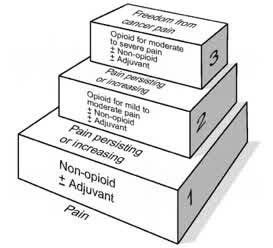
- Assess Pain & Control
- WHO Pain Ladder
- Quality of life assessment
- Family collateral
- Social worker review
Step 4: evaluate wound and document each visit
Remember the pneumonic “MEASURE”
- M Measure- wound diameter - reducing or increasing?
- E Exudate - dry/ wet, serous/ purulent
- A Appearance - granulation/ necrosis
- S Suffering - pain/ mobility
- U Undermining - present/ not, better/ worse
- R Re-evaluate
- E Edge - granulating/ erythema/ surrounding skin
Step 5: debride the wound
Note:
Before any form of debridement, cleansing of the wound for at least 30 minutes with one of the following solutions is indicated
i.e. normal saline; chlorhexidine or povidone iodine solution
The type of debridement depends on the following:
- Necrotic tissue (Presence / Absence) and Amount
- Debris / “Slough” (Presence / Absence) and Amount
- Infection (Deep / Superficial)
- Granulation tissue
*Debride according to Wound Bed Preparation Algorithm
- necrotic tissue
- minimal <2cm - L/A debride
- moderate/ severe - G/A, theatre
- debris/ slough
- minimal - jelonet, NS gauze
- moderate/ severe - hydrogels
- infection
- superficial - irrigate/ dressing
- deep/systemic - G/A debride
Step 6: inflammation / infection control
Determine whether superficial or deep infection and systemic manifestations, take Wound Swab for MCS and treat according to Wound Bed Preparation Algorithm.
Superficial | Deep | Systemic | ||
| N | Non-healing | S | Size increase | Fever |
| E | Exudate increase | T | Temperature | Tachycardia |
| R | Red; Friable tissue | O | Os exposed | Raised WCC |
| D | Delayed healing | N | New areas of breakdown | Pain |
| S | Smell | E | Erythema | |
| E | Exudate increase | |||
| E | Edema | |||
| S | Smell | |||
Superficial Infection
- Pseudomonas
- acetic acid dressing
- daily x 72 hours
- Other bacterial
- Iodine dressing, (eg Betadine) 12-24 hours
- Siver (e.g. Flamzine, Acticoat), 48-72 hours
- Medicinal honey (Melladerm), 48-72 hours
Deep Infection
- IV antibiotics
- Debride
- G/A
Step 7: moisture / odour control
Adequate moisture is crucial for wound bed granulation. It is important to distinguish moisture from slough, which is devitalised tissue with no purpose and high risk of infection. Moisture is non-foul smelling exudate, which promotes autolytic debridement and subsequent granulation.
Therefore retaining, adding or absorbing moisture by products listed in the Wound Bed Preparation Algorithm can sometimes be a trial and error experience. It is important that moisture control happens in the absence of infection.
- Absorption
- Small<5cm - foam dressing (Tielle)/ Non-adherent (daptic)
- Large>5cm - Foam dressing (Allevyn)
- Burns (partial thickness) - Hydrofiber
- Retention
- Films (Opsite/ Tagaderm /change at 48hrs)
- Hydrocolloids (Granuflex)
- Addition
- Hydrogels (Intrasite/Cutimed/Granugel/ every 48-72 hrs)
- Malodour
- Activated charcoal (Actisorb Silver220)
Step 8: re-evaluate
- Re-evaluating your wound at appropriate intervals after dressings, debridement or infection control will determine whether your management is successful or not.
- Re-evaluation also helps determining the phase of wound healing and dressing applicable to the presenting tissue.
If any concern regarding wound healing arises, more frequent follow-ups should be arranged.
- Debrided surgical wound - 12- 24 hours post op
- Sloughy/debris/Superficial infection/ burns - every 48-72 hours
- Granulating wound - every 1-2 weeks
Step 9: biological products and adjunctive therapies
(reserved to surgical units)
- Biologicals: Skin graft; Larval therapy; Synthetic grafts (Apligraft® ect.)
- Adjunctive therapy: Vacuum Assisted Dressings (Heavy exudative wounds; Cavitating wounds; Diabetic feet etc.)
Step 10: organisational and family support (“pliers”)
- P: Prescribing simple and thorough wound Plans till next follow up
- L: Life support i.e. Grants
- I: Involving family and community care nursing
- E: Education of the patient, nurses and family
- R: Rehabilitation i.e. OT/Physio / Placement
- S: Social worker involvement
Specific wound care scenarios
Clinically infected wounds: If a wound shows clinical signs of infection, and the patient is systemically unwell, the Western Cape Antibiotic Recommendations booklet will guide the choice of empiric systemic antibiotics. Topical antibiotic application is controversial in most instances, as such substances may interfere with the wound healing process. Topical antiseptics are not recommended in most instances as they can be rapidly deactivated in the presence of wound exudate. Application of silver sulphadiazide cream is advocated, however, in limited situations, such as in the presence of pseudomonas, as it has sustained release properties.
Daily saline irrigation and dressing changes are required in the treatment of infected wounds. This is the only instance in the utilisation of new generation wound care products where the frequency of dressing changes can be pre-determined. This is also the one scenario where the application of traditional gauze dressings is a cost effective option due to the frequency of dressing changes. A diet high in protein, or protein supplements should be ensured (as in all situations where tissue repair is required).
Malignant wounds: these wounds are unlikely to heal. More information can be obtained from the Radiotherapy Department (Sr. Grehan bleep 1044)
If the wound appears clean, Vaseline scraped (use a limited amount) onto gauze is applied daily. Wounds are cleaned with saline when necessary using an irrigation method. If slough is present, substitute ichthammol ointment (spread thinly over gauze) for Vaseline.
Fungating wounds are rinsed with normal saline and an ichthammol ointment dressing is applied. Acriflavine can be substituted if ichthammol induces pain. Large amounts of exudate are contained by using incontinence pads or nappies held in place with elastomesh.
Malodorous malignant wounds are irrigated with hydrogen peroxide and rinsed with sodium bicarbonate in water (deodorising effect). Ichthammol ointment or glycerine and ichthammol lotion is then applied sparingly. Metronidazole powder can be used in conjunction with this treatment. This regime is recommended for a period of 3-4 days only. Residual odour can be eliminated with application of eucalyptus oil on clothing or outer dressing.
Povidone iodine products are not recommended for use on malignant wounds.
Wound care products
Semipermeable films, e.g. opsite, tagaderm
- Permeable to oxygen and water vapour
- Mechanical barrier to moisture/ bacteria
- Non-toxic, transparent, highly conformable
Indications
- Primary Dressing (ie. next to wound surface)
- Intravenous insertion site
- Clean non exuding surgical wounds (non exuding)
- Protection- abraded skin Secondary dressing
- Over foams, alginates, hydrogels
Contra-indications
- Infected wounds
- Fragile skin
- Exuding wounds Cavities (as primary dressing)
- Sloughy or necrotic wounds
Practical issues
- Clean, dry, skin 3-4 cm from wound edge
- Change when leakage
Hydrogels (e.g. intrasite gel, nugel, granugel)
- Made up of 70- 80% H2O, Initial cooling effect
- Absorbs minimal/ moderate amount exudate
- Desloughs/ debrides by rehydration
- Odour remission (slight)
- Ease of application and removal
Indications
- Wounds with little exudate
- Ulcers Sloughy/ necrotic wounds
- Shallow/ deep cavities
Contra-indications
- Infected wounds
- Wounds with heavy exudate
Practical issues
- Excessive amount may cause maceration
- Requires a secondary dressing
- Change frequently if debriding is required
Foams (e.g. lyofoam, allevyn, tielle)
- Open-cell polyurethane sheet
- Surface cells collapsed- draw blood and exudate through collapsed cells
- Particle free Gas permeable
- Easily cut/ conformable
Indications
- Moderate to heavy exudate
- Cavity wounds (foam cavity filler available)
- Ulcers/ pressure areas
- Infected wounds
- Secondary dressing
Contra-indications
- No absolute
- ? Dry wounds/ eschar
Practical issues
- Apply 2cm from margin
Hydrocolloids (e.g. granuflex, comfeel)
- Flexible, water resistant outer layer
- Hydro-active particles at skin contact layer
- Excludes atmospheric oxygen and promotes blood supply
- Maintains pH 6.0 - inhibits growth of pathogens
- Debriding agent
Indications
- Low - moderate exudate
- Sloughy wounds
- Ulcers/ pressure areas
- Superficial burns
- Suture lines
- Abrased skin
Contra-indications
- Infected wounds
- Active vasculitis
- Full thickness burns
- Ulcers secondary to TB, syphilis, fungal infection
Practical issues
- Produces yellow gel with characteristic odour
- Watch for hypergranulation
- If cavity present, use hydrocolloid paste/gel under wafer
- Wound can enlarge initially (autolysis)
- Apply wafer 2cm from wound margin
- Change only when leakage occurs
- Do not use in conjunction with other products eg. hydrogel
Alginates (e.g. kaltostat)
- Calcium alginate fibre / Polysaccharide - seaweed
- Absorbs exudate and tissue fluid to form hydrophilic gel:
- CaAlg+ Na (in wound exudate) NaAlg+ Ca
- Haemostatic (Ca ions released into wound assist clotting cascade)
- Facilitates de-sloughing
Indications
- Moderate - heavy exudate
- Donor sites
- Venous ulcers
- Pressure sores
- Infected wounds (but costly+)
Contra-indications
- dry wounds/ eschar
- deep sinuses
Practical issues
- Change only when strike through occurs
- Change daily if infected
- Do not soak in saline prior to application
Vacuum- assisted closure (e.g. coldex)
- Sub atmospheric pressures promotes angiogenesis and increased blood supply (growth factors/ macrophages etc..) to wound
- Wound exudate effectively removed - provides bacterial clearance
- Promotes wound autolysis and granulation ++
Indications
- Clean, sloughy, and infected wounds
Contra-indications
- Presence of eschar (debride prior)
- Patients at risk of bed rest complications (decreases mobility)
- Wounds situated close to major blood vessels- risk of haemorrhage
Practical issues
- Attach to wall suction (40-80mm Hg) or VAC pump (up to 200mm Hg)
- Suction can be disconnected for toileting etc.. (keep tube ends sterile)
- Pressure care necessary