GuidelinesIMCI
Blisters / Sores / Pustules
IMCI - Skin problems
Chicken Pox
Look
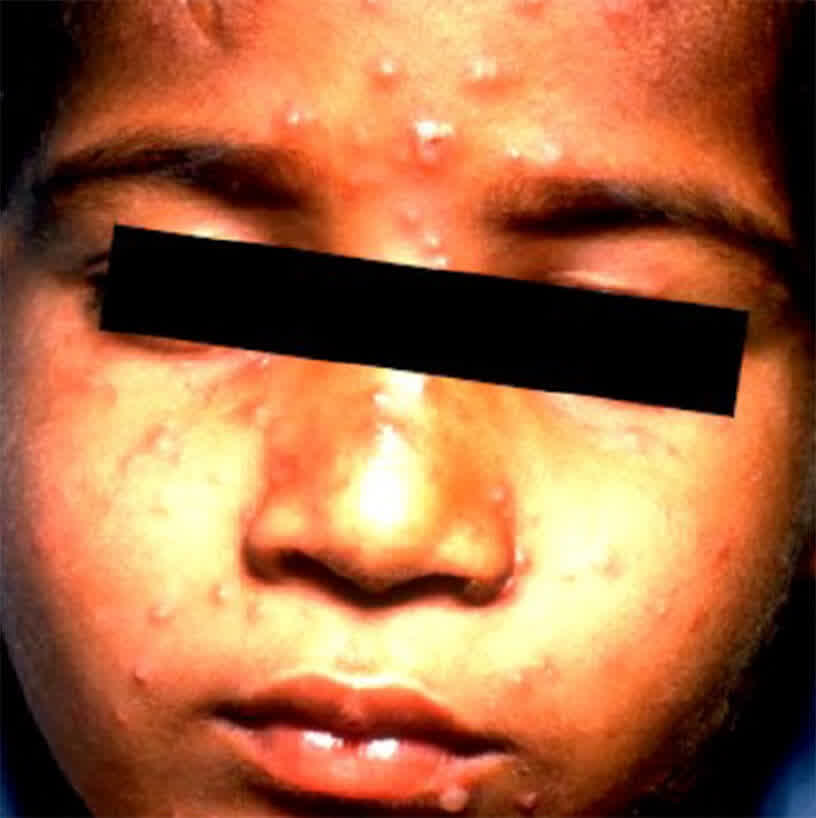
Click on image to enlarge
Signs
- Mild fever preceding the rash
- Rash begins on the trunk and face,later spreads to the arms and legs
- Vesicles appear progressively over days and forms scabs after they rupture
- Contagious from the fever starts until all lesions have crusted
- Usually lasts for about 1 week
Treat
- Limit contact with other children and pregnant women until all lesions have crusted
- Ensure adequate hydration
- Cut fingernails short and discourage scratching
- Treat itching:
- Apply calamine lotion
- In severe cases, give an oral antihistamine :
Chlorphenamine 0.1 mg/kg/dose 6–8 hourly NB: only children >2 years) - Refer urgently if severe rash or complications (e.g.pneumonia, jaundice, meningitis, myocarditis, hepatitis)
Features in HIV Infection
- Atypical presentation in immuno compromised children
- May last longer
- Complications like secondary bacterial infection, myocarditis, hepatitis, encephalitis, meningitis and pneumoniaare more frequent
- Chronic infection with continued appearance of new lesions for >1 month
- Typical vesicles evolve into non-healing ulcers that become necrotic and crusted
Herpes Zoster
Look
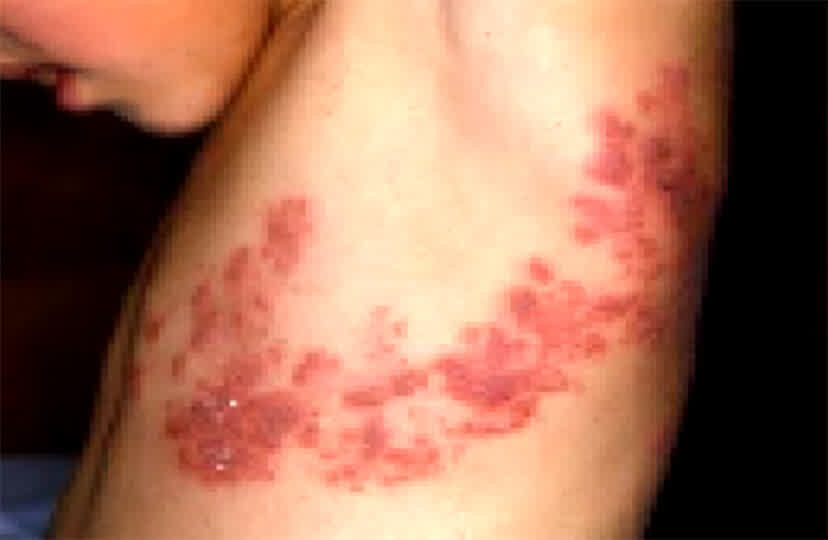
Click on image to enlarge
Signs
- Vesicles in one area on one side of body with intense pain or scars plus shooting pain
- They are uncommon in children except when they are immune-compromised
Treat
- Keep lesions clean and dry
- Acyclovir 20 mg/kg 4 times daily for 7 days
- Give paracetamol for pain relief
- Follow up in 7 days
- Refer if disseminated disease, involvement of the eye, pneumonia or features meningitis
- Monitor for secondary bacterial infection
Features in HIV Infection
- Duration of disease longer
- Haemorrhagic vesicles, necrotic ulceration
- Rarely recurrent, disseminated or multidermatomal
- A clinical stage 2 defining disease
Impetigo
Look
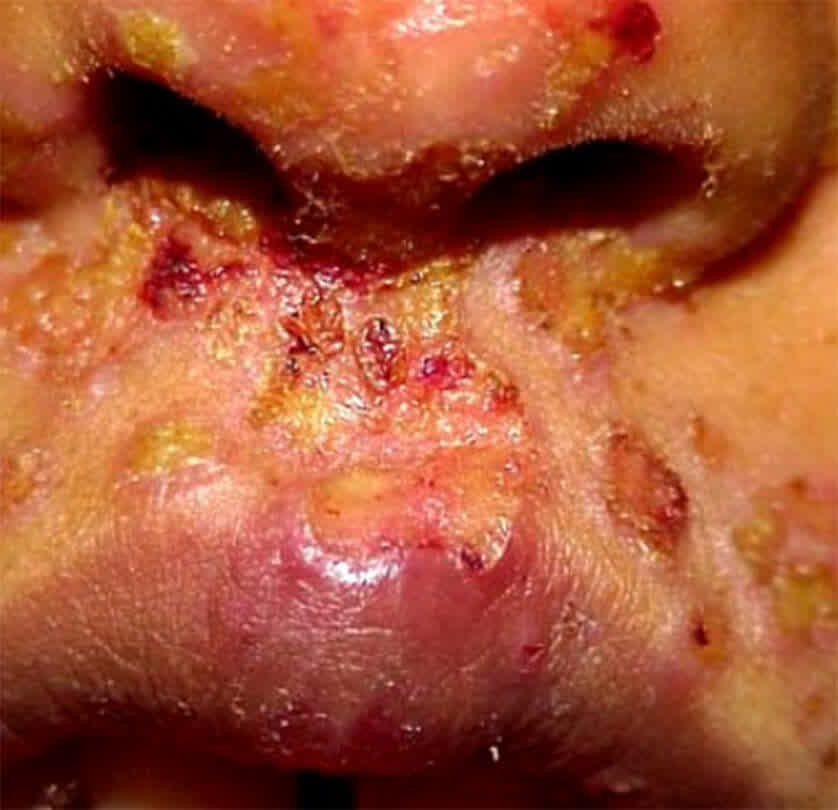
Click on image to enlarge
Signs
- Pustules and papules with honey coloured crusts
- Commonly starts on the face or buttocks, then spreads to the neck, hands, arms and legs
Treat
- Good personal and household hygiene to avoid spread of infection
- Wash and soak sores in soapy water to soften and remove crusts
- Apply antiseptic 8 hourly: Povidone iodine 5% cream or 10% ointment
- Drain pus if fluctuant
- Give antibiotic if extensive lesions: Cephalexin, oral, 12-25mg/kg/dose 6 hourly OR Flucloxacillin, oral, 500mg 6 hourly
- Refer urgently if child has fever and or if infection extends to the muscles
Integrated Management of Childhood Illness 2022; Skin problems; Blisters/Sores/Pustules
Last checked for updates: June 2023