GuidelinesIMCI
Breastfeeding Support
IMCI - Counsel the Mother or Caregiver on Infant and Young Child Feeding
Teach Correct Positioning and Attachment
Tips to Help a Mother Breastfeed her Baby
Breastfeeding Assessment
- Has the baby breastfed in the previous hour?
- If baby has not fed in the last hour, ask mother to put baby to the breast. Observe the breastfeed for 4 minutes. (If baby was fed during the last hour, ask mother if she can wait and tell you when the infant is willing to feed again)
- Is baby able to attach?
- not at all / poor attachment / good attachment
- Is the baby suckling well (that is, slow deep sucks, sometimes pausing)?
- not at all/ not suckling well/ suckling well
- Clear a blocked nose if it interferes with breastfeeding
Signs of good attachment
- More areola visible above than below baby’s mouth
- Mouth wide open
- Lower lip turned outwards
- Chin touching breast
- Slow, deep sucks and swallowing sounds
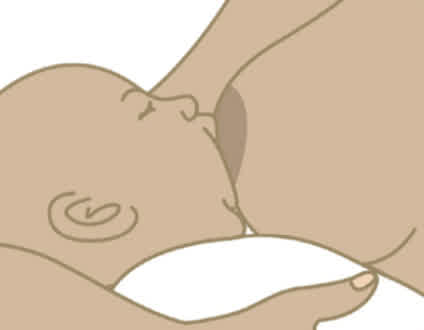
Teach Correct Positioning and Attachment
Seat the mother comfortably
- Show the mother how to hold her infant:
- with the infant’s head and body straight
- facing her breast, with infant’s nose opposite her nipple
- with infant’s body close to her body
- supporting infant’s whole body, not just neck and shoulders
- Show her how to help the infant attach. She should:
- touch her infant’s lips with her nipple
- wait until her infant’s mouth is opening wide
- move her infant quickly onto her breast, aiming the infant’s lower lip well below the nipple
- Look for signs of good attachment and effective suckling. If the attachment or suckling is not good, try again
- Most of the common breastfeeding problems expressed by mother are related to poor positioning and attachment
Signs of poor attachment
- Baby sucking on the nipple, not the areola
- Rapid shallow sucks
- Smacking or clicking sounds
- Cheeks drawn in
- Chin not touching breast
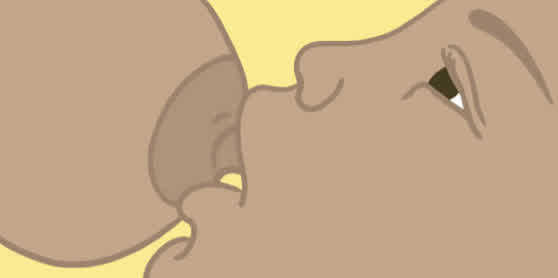
Tips to help a mother breastfeed her baby
- Express a few drops of milk on the baby’s lip to help the baby start breastfeeding
- For low birth weight baby give short rests during a breastfeed
- If the baby coughs, gags, or spits up when starting to breastfeed, the milk may be letting down too fast for the baby. Teach the mother to take the baby off the breast if this happens
- Hold the baby against her chest until the baby can breathe well again then put it back to the breast after the let-down of milk has passed
- If the mother will be away from the baby for some time, teach the mother to express breastmilk
- Make sure that the person who will feed the baby has been taught to cupfeed correctly
Click here to open the above content in the original PDF view
Integrated Management of Childhood Illness 2022; Young Infant (Birth up to 2 months); Counsel the Mother or Caregiver on Infant and Young Child Feeding (Birth up to 2 months); Support Mothers to Breastfeed Successfully, Breastfeeding Assessment
Last checked for updates: June 2023