C-spine - Clearance
C-spine - Clearance
Decision rules for determining the need for cervical spine radiography
Clinical pathway
Step 1 (Use a validated decision rule)
Step 2 (Evaluate plain film imaging)
Step 3 (Decision time)
Step 4 (Referral suggestions and further imaging)
Points for discussion
Not all patients with suspected C-spine injuries require imaging and the following two rules are well validated in the literature. It is suggested that clinicians working in the Emergency room should be familiar with:
Decision Rules for Determining the Need for Cervical Spine Radiography
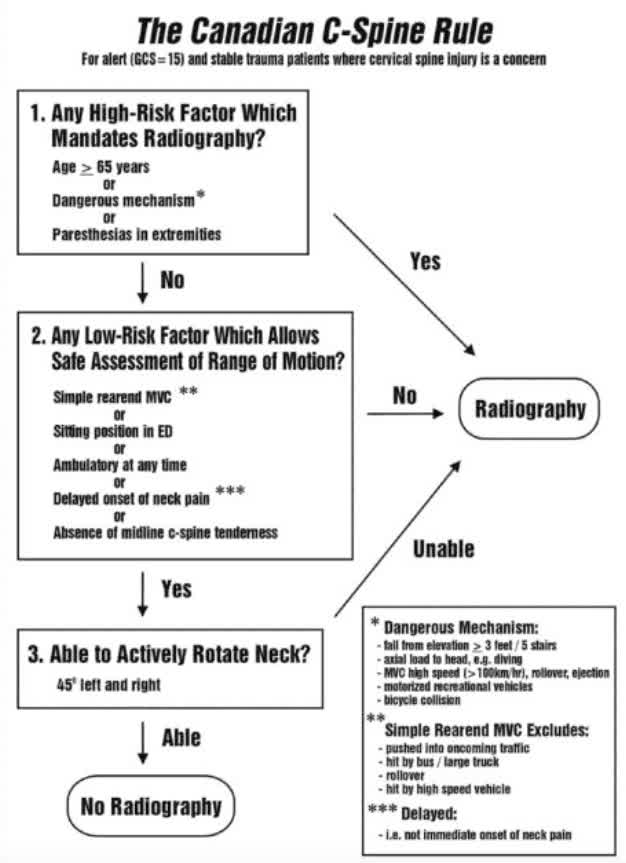
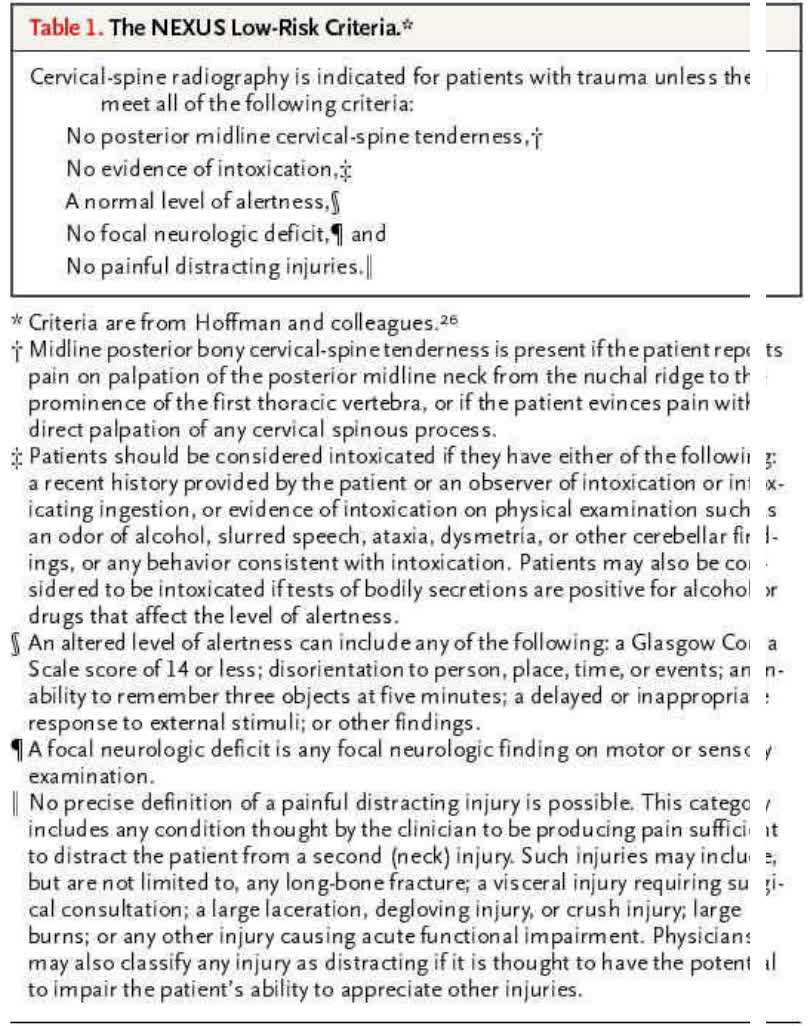
Clinical Pathway
Patients with suspected C-spine injury
STEP 1 (Use a validated decision rule)
- Mid-line cervical spine tenderness?
- Neurologic deficits?
- Altered mental status? (with possible trauma history)
- Distracting painful injury?
- Evidence of intoxication? (any substances suspected to alter cognitive function)
If the answer to all the above is NO use clinical discretion to decide if imaging is appropriate.
STEP 2 (Evaluate plain film imaging)
- Obtain 3 view C-spine film (AP / Lateral / Peg view)
- Is the view adequate? Yes / No
- If views inadequate obtain swimmers and if still inadequate consider CT if high clinical suspicion.
STEP 3 (Decision time)
If no fracture seen on plain film the collar can be removed and the following should be done.
- Normal neurology examination has been documented.
- Dynamic (range of motion) evaluation of the neck should be undertaken to assess the mobility of the cervical spine. (Active!! - the patient should move his neck)
- If the dynamic exam produces no tenderness or sensory/motor deficits, the cervical spine is considered clinically clear of potential injury.
- If motion produces midline tenderness or neurologic deficits (even if transient), cervical stabilisation should be maintained and further radiographic evaluation pursued.
- Parastesia should place the physician on high alert.
STEP 4 (Referral suggestions and further imaging)
If there is a fracture on the plain film with no neurology collar should be kept on. If Philadelphia collar is available it can be used for patient comfort and the patient should be referred to closest trauma centre.
The two most common causes for missing cervical spine injuries are:
- Misinterpretation of the plain films
- Inadequate views
Points for discussion :
The Emergency physician or unit manager in consultation with the orthopaedic service should have a clear message to the staff working in the emergency centre about clearing the C-spine clinically.
Clinicians must find the appropriate balance between clinical judgement and appropriate application of predefined criteria. Making sure that the criteria is applied to the correct individual patient.
Distracting injuries is a bone of contention in the literature and trying to classify them is a formidable challenge after reading through the material I would suggest the clinician should take every case into consideration and if there is any doubts to err on the side of caution and use special investigations.