Chickenpox
Description General Measures Medicine Treatment Referral ICD-10 codes: B01.9/B01.8 DESCRIPTION A mild viral infection that presents 2–3 weeks after exposure, with: mild fever preceding the rash lesions beginning on the trunk and face, later spreading to the arms and legs small, red, itchy spots that turn into blisters and crusts. These stages may all be present at the same time. Chickenpox
Description
General Measures
Medicine Treatment
Referral
ICD-10 codes: B01.9/B01.8
DESCRIPTION
A mild viral infection that presents 2–3 weeks after exposure, with:
- mild fever preceding the rash
- lesions beginning on the trunk and face, later spreading to the arms and legs
- small, red, itchy spots that turn into blisters and crusts. These stages may all be present at the same time.
Chickenpox is infective from the start of the fever until 6 days after the lesions have appeared or until all the lesions have crusted.
The infection is self-limiting, with a duration of about 1 week.
Complications such as secondary bacterial infection, encephalitis, meningitis and pneumonia may occur (more common in adults and immunocompromised patients).
GENERAL MEASURES
- Isolate from immunocompromised people and pregnant women until all lesions have crusted.
- Ensure adequate hydration.
- Cut fingernails short and discourage scratching.
MEDICINE TREATMENT
CAUTION:
Avoid the use of aspirin in children and adolescents < 16 years of age with acute febrile illness because of risk of Reye’s syndrome.
For itch:
- Calamine lotion, applied as needed.
In severe cases
Children
- Chlorphenamine, oral, 0.1mg/kg/dose 6–8 hourly. See: dosing table.
Adults
- Chlorphenamine, oral, 4mg, 6–8 hourly.
For fever with distress:
Children
- Paracetamol, oral, 10–15 mg/kg/dose 6 hourly when required. See: dosing table.
Adult
- Paracetamol, oral, 1g 4–6 hourly when required to a maximum of 4 doses per 24 hours.
- Maximum dose: 15mg/kg/dose.
- Maximum dose: 4g in 24 hours.
If skin infection is present due to scratching, treat as for bacterial skin infection. See: Bacterial infections (Cellulitis, Impetigo and Boil, Abscess) of the skin.
Treatments with antiviral agents are recommended for:
- Immunocompromised patients.
- All patients with severe chickenpox (irrespective of duration of rash).
- Extensive rash.
- Visceral involvement.
- Haemorrhagic rash.
- Presence of complications.
- Adults and adolescents presenting within 48 hours of the onset of the rash.
- Pregnant women.
Children
- Aciclovir, oral, 20mg/kg/dose 6 hourly for 7 days (Doctor prescribed).
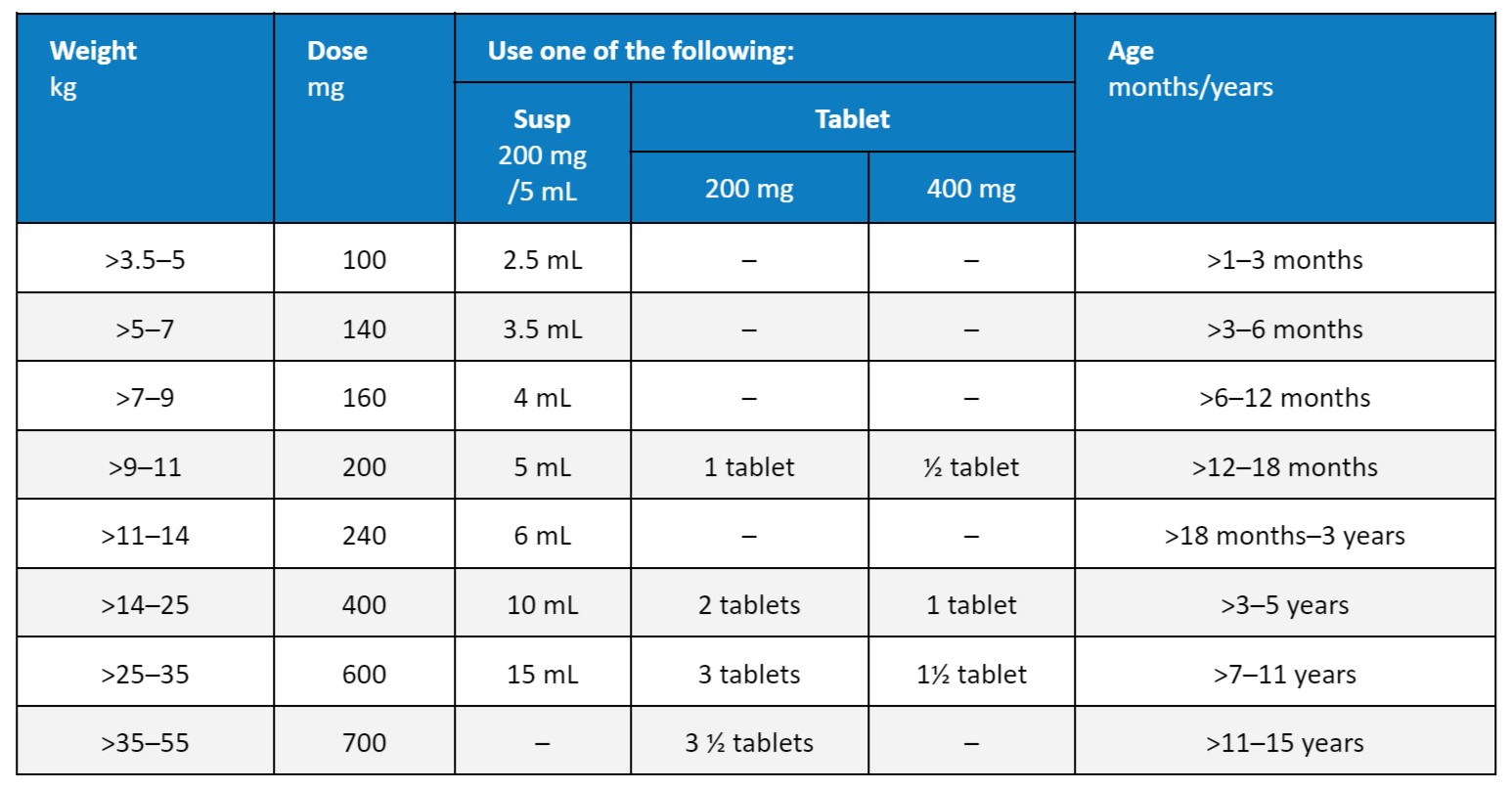
Click on table to enlarge
Adults
- Antiviral, (active against varicella zoster) e.g.:
- Aciclovir, oral, 800mg 6 hourly for 7 days (Doctor prescribed).
LoE:IIIb1
REFERRAL
- Complications such as:
- meningoencephalitis
- pneumonia
- Severely ill patients.
- Pregnant women.
- Asymptomatic neonates whose mothers had developed chickenpox during the period from 7 days before to 7 days after delivery.
- Neonates with clinical chickenpox.
Standard Treatment Guidelines and Essential Medicines List for South Africa, Primary Healthcare, 2020-2024_Version 1.1_20 January 2025
Chapter 10: Infections and Related Conditions_10.2 Chickenpox