Circular August 2024: Emicizumab for prophylaxis in the management of patients with Haemophilia A with Factor VIII inhibitors
Date: March 2023 (updated November 2023, March 2024, and August 2024) NOTE: Efficacy and safety evidence was presented to the National Essential Medicines List Committee (NEMLC) in March 2023. It was proposed by the Tertiary and Quaternary Hospital Level Expert Review Committee (and agreed to by the NEMLC) that a cost-effectiveness analysis be conducted. Scoping document for cost-effectiveness an
Date: March 2023 (updated November 2023, March 2024, and August 2024)
NOTE:
Efficacy and safety evidence was presented to the National Essential Medicines List Committee (NEMLC) in March 2023. It was proposed by the Tertiary and Quaternary Hospital Level Expert Review Committee (and agreed to by the NEMLC) that a cost-effectiveness analysis be conducted. Scoping document for cost-effectiveness analysis developed and approved by the NEMLC in July 2023.
Update November 2023: The cost-effectiveness analysis was presented at the NEMLC meeting held on the 30th of November 2023 – see accompanying costing report document “‘Evaluating the cost and intermediary cost-effectiveness of emicizumab prophylaxis in patients with haemophilia A with inhibitors in South Africa.’ NEMLC requested a cost-neutral price to be determined on the scenario deemed most likely to reflect current setting based on procurement data which favoured bypassing agents.
Update March 2024: NEMLC recommendation made on 14 March 2024 based on costing model findings.
Updated August 2024: New price offer to meet reference price received. NEMLC updated recommendation on 29 August 2024.
National essential medicines list committee recommendation
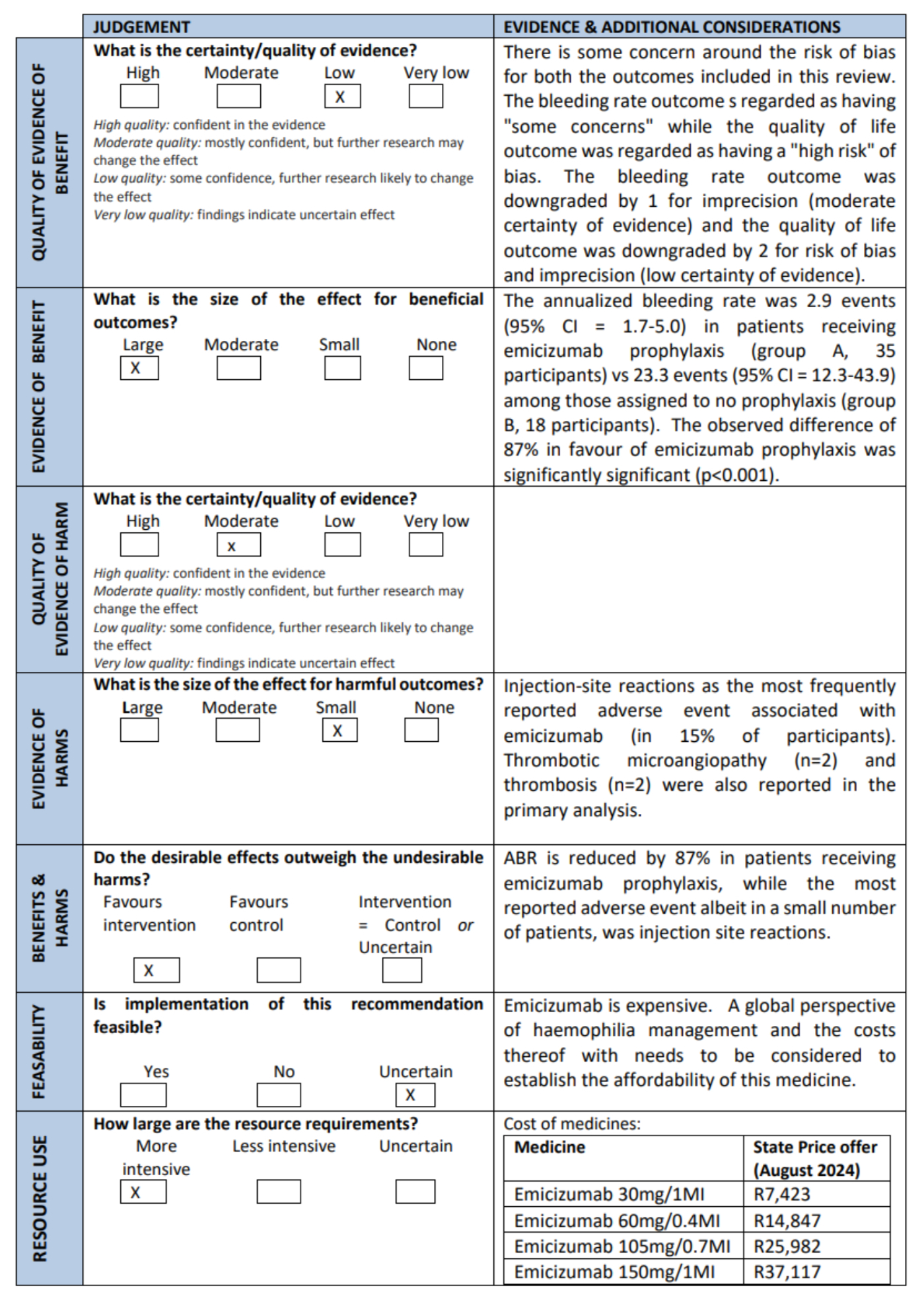
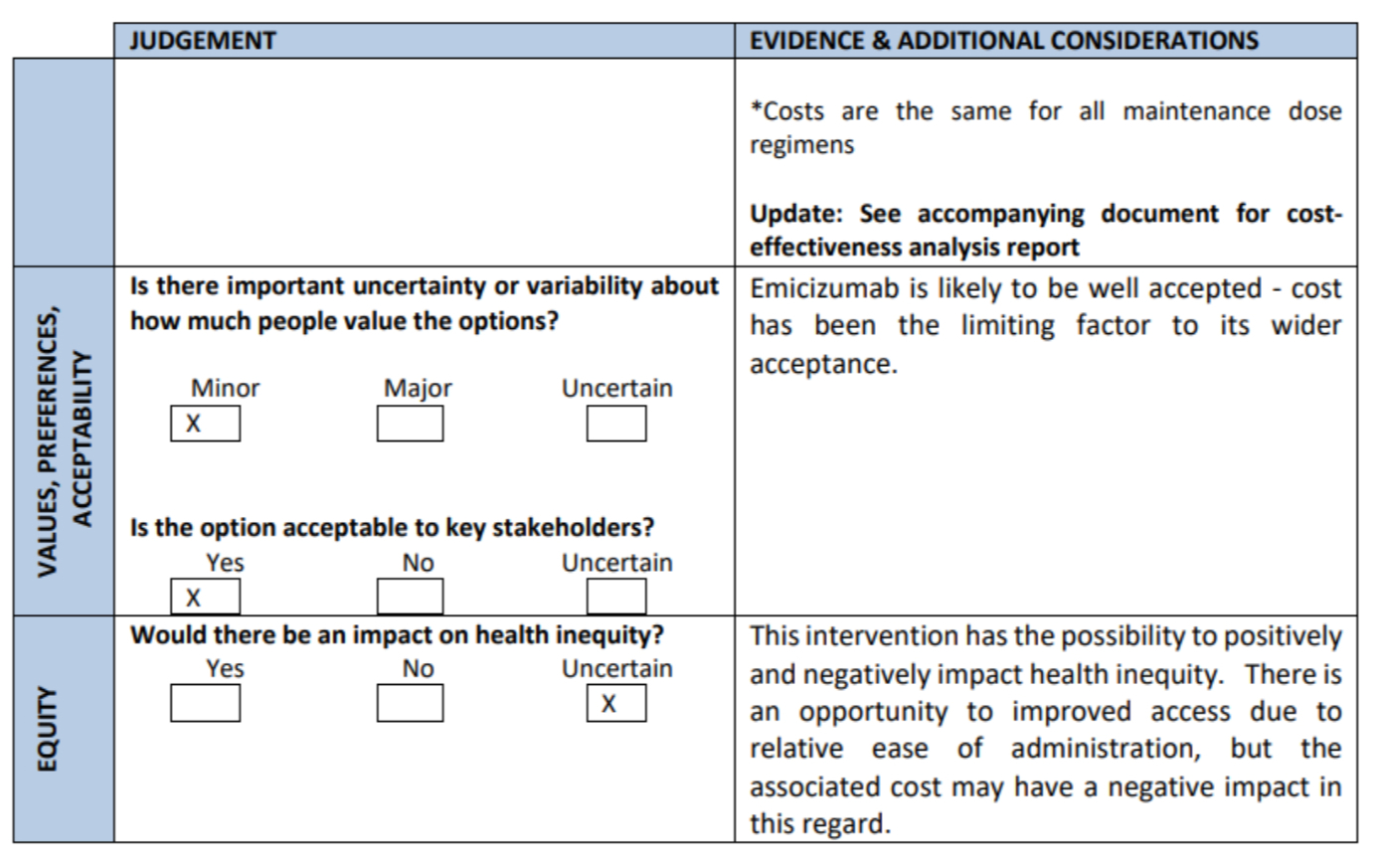
Appendix 1: Evidence to decision framework
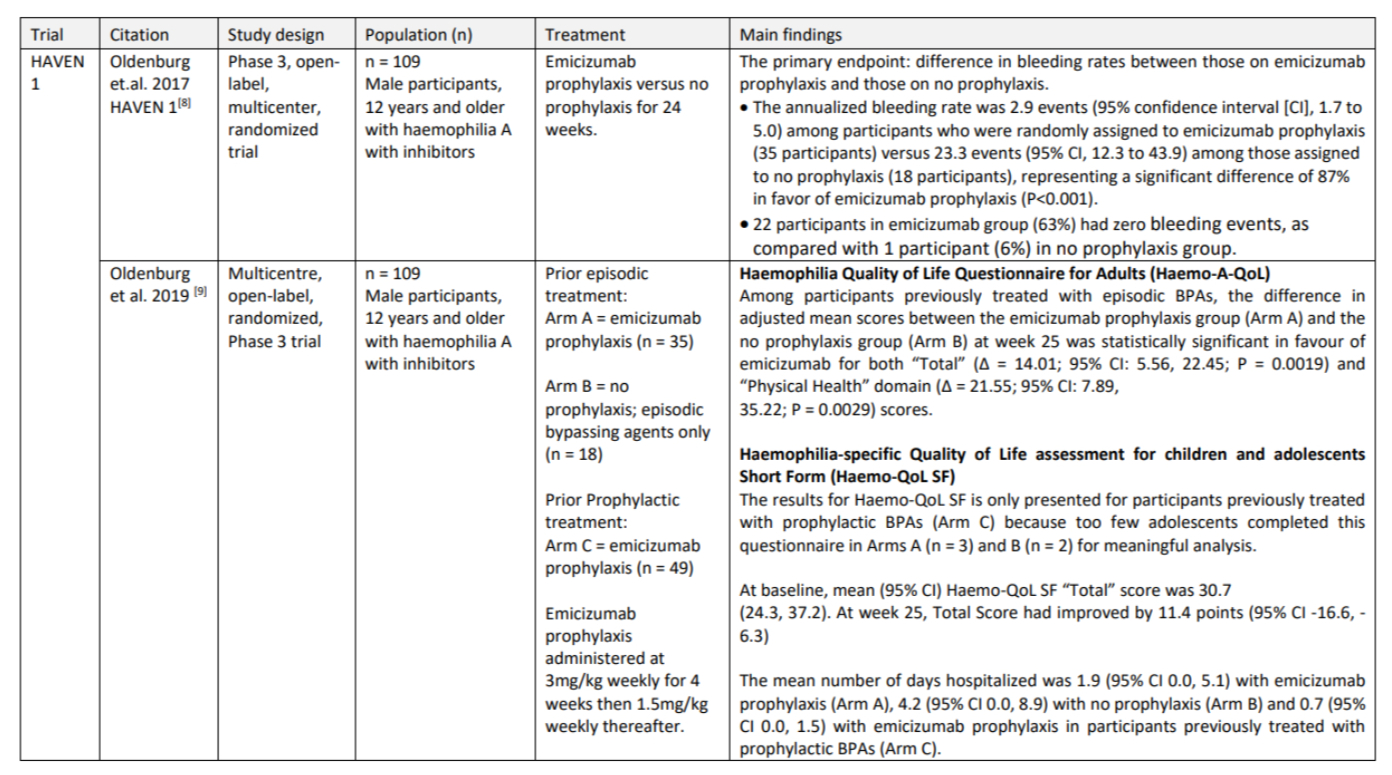
Appendix 3: Characteristics of studies
Appendix 4: Risk of Bias 2 Assessment
Key findings
| - A review was conducted of the available clinical evidence pertaining to the use of emicizumab when used as prophylaxis in the management of haemophilia A patients with Factor VIII inhibitors. - One small open-labelled, randomized controlled trial evaluating annualised bleeding rate and health-related quality of life was identified for inclusion in this review. Emicizumab prophylaxis was administered at a dose of 3.0 mg per kilogram of body weight weekly for 4 weeks, followed by 1.5 mg per kilogram weekly thereafter. - The annualized bleeding rate was 2.9 events (95% CI = 1.7-5.0) in patients receiving emicizumab prophylaxis (group A, 35 participants) vs 23.3 events (95% CI = 12.3-43.9) among those assigned to no prophylaxis (group B, 18 participants). The observed difference of 87% in favour of emicizumab prophylaxis was significant (p<0.001) - moderate certainty of evidence. - There was statistically significant mean difference of 13.2 points in favour of emicizumab prophylaxis; 95% CI [20.34 to 6.06 lower); p = 0.0019) in health-related quality of life across the "Total" domain scores – low certainty of evidence. - Injection-site reactions was the most frequently reported adverse event (15%) associated with emicizumab use. Thrombotic microangiopathy (n=2) and thrombosis (n=2) were also reported in the primary analysis. - A single placebo-controlled study in a small cohort of patients investigating the use of emicizumab as prophylaxis in the management of patients with haemophilia A and factor VIII inhibitors has demonstrated statistically significant reduction in annualized bleeding rate. The cost of this agent is such that a formal cost-effectiveness analysis is warranted before finalizing a decision on whether it can be included on the Tertiary/Quaternary Essential Medicines List. - Update November 2023: Costing analysis conducted – See accompanying report document. Update March 2024: NEMLC recommendation (informed by costing model). Update August 2024: Update following new price offer to meet reference price. |
National essential medicines list committee recommendation

Click on the image to enlarge.
NEMLC recommended that emicizumab prophylaxis be included on the Tertiary and Quaternary Essential Medicines List (EML) for the management of patients with severe Haemophilia A with Factor VIII inhibitors, as special access for patients where emicizumab therapy would be cost-neutral or cost-saving compared to use of on-demand bypassing agents.
Rationale:
NEMLC acknowledged price decrease (August 2024) and the potential benefits associated with the use of emicizumab, and agreed to make it EML-special access, for use on a per patient basis where this agent if more affordable than on-demand treatment with bypassing agents.
March 2023: Evidence for efficacy and safety presented by TQ ERC. Cost-effectiveness analysis proposed by the Tertiary and Quaternary Hospital Level Expert Review Committee and agreed to by the NEMLC.
UPDATE July 2023: Scoping document for commissioning of cost-effectiveness analysis developed and approved by the NEMLC.
UPDATE November 2023: The cost-effectiveness analysis presented – see accompanying costing report document ‘Evaluating the cost and intermediary cost-effectiveness of emicizumab prophylaxis in patients with haemophilia A with inhibitors in South Africa.’ Current price deemed unaffordable, request for costneutral price to be calculated for procurement-based scenario.
UPDATE March 2024: NEMLC final recommendation was made by NEMLC on 14 March 2024.
Update August 2024: NEMLC updated recommendation to include emicizumab as special access item, in patients where this agent would be cost-neutral, or cost-saving as compared to on-demand bypassing agents.
Level of Evidence: I (Randomized Controlled Trials)
Review indicator:
- Price changes
- Changes in evidence
- Availability of alternative agents
(Refer to appendix 1 for the evidence to decision framework)
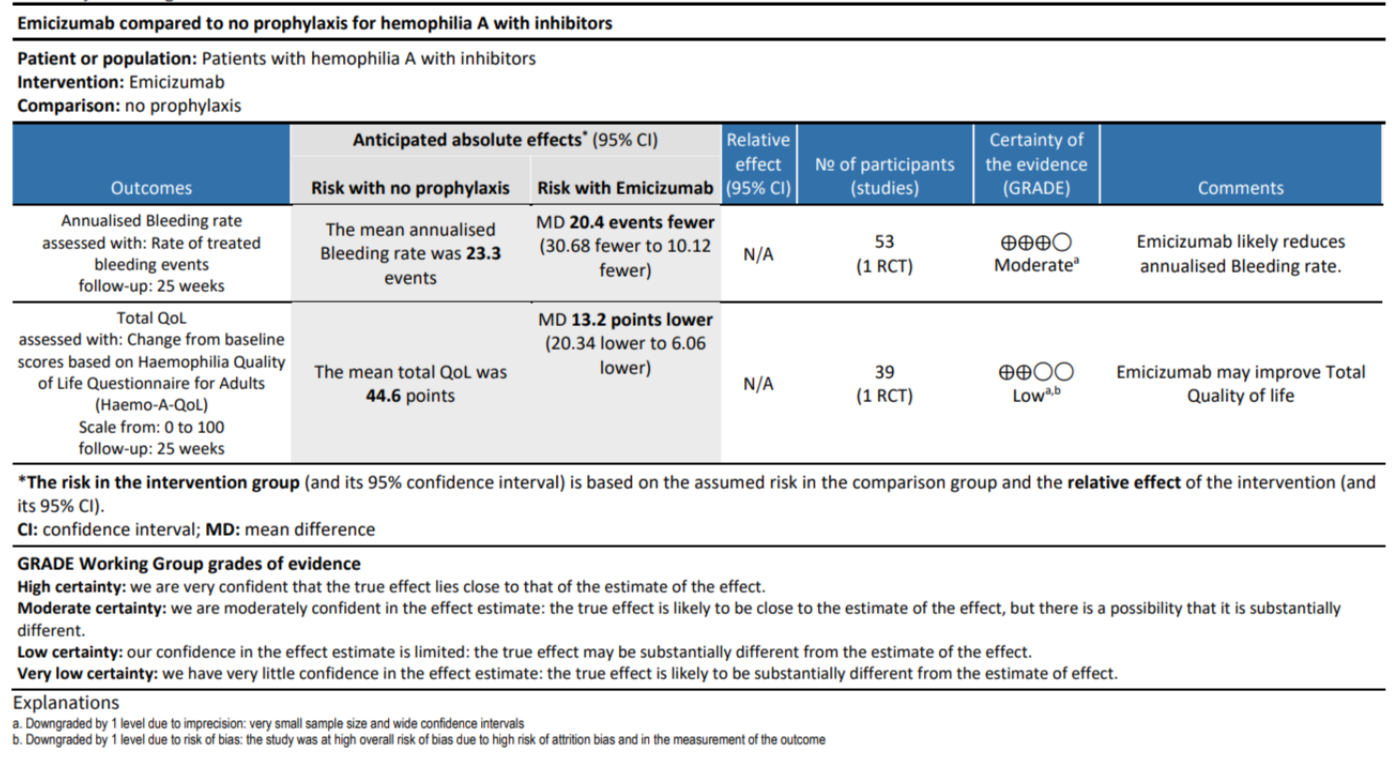
Summary of findings table
 Click on the image to enlarge.
Background
Haemophilia A is a rare hereditary bleeding disorder caused by a deficiency of coagulation factor VIII due to an X-linked recessive mutation. Haemophilia has a prevalence of 17.1 cases per 100 000 males for all severities of Haemophilia A and 6.0 cases per 100 000 males for severe Haemophilia A. In South Africa, there were reported to be 2 419 haemophilia patients in 2021 of which 2 021 patients were diagnosed with Haemophilia A[1].
Haemophilia A is diagnosed by confirming factor VIII deficiency and the clinical manifestation depends on the severity of the disease (severe, moderate or mild) based on the factor VIII level. The presence of factor VIII antibodies (inhibitors) is a major complication of haemophilia A and unfortunately render factor VIII replacement ineffective in approximately 30% of patients with haemophilia.[2]
The current standard of care in South Africa for severe haemophilia A patients with inhibitors is to treat bleeds as they occur with bypassing agents, such as activated factor VIIa (Novo7®) or Activated Prothrombin Complex Concentrate (FEIBA®). These agents are expensive and patients not receiving prophylaxis are at potential increased risk of morbidity associated with bleeds if not treated timeously, thus international guidelines recommend prophylaxis therapy to reduce the frequency of bleeds in patients with severe haemophilia A with and without inhibitors[2].
Emicizumab has been approved globally as a non-replacement therapy for people with Haemophilia A with and without inhibitors. It is a subcutaneously administered monoclonal bispecific factor IXa- and factor Xdirected antibody that allows it to bridge activated factor IX and factor X, the role normally played by activated factor VIII in the clotting cascade. It is administered subcutaneously and can be dosed weekly, biweekly, or monthly. In South Africa, emicizumab is registered for routine prophylaxis to prevent bleeding or reduce the frequency of bleeding episodes in patients with haemophilia A (congenital factor VIII deficiency) with factor VIII inhibitors. There are no data on infants aged ≤1 year, and limited data in children aged 1-2 years. The recommended dose is 3mg/kg once weekly for the first 4 weeks, followed by 1.5 mg/kg once weekly thereafter (administered as a subcutaneous injection).[3]
This review aimed to assess the safety and efficacy of emicizumab compared to standard of care in the management of patients with severe haemophilia A with inhibitors.
Research Question
Should emicizumab prophylaxis be used in the management of haemophilia A in patient with inhibitors?
Methods
Eligibility criteria for review
Population: Adults, adolescents and children with Haemophilia A with inhibitors
Intervention: Subcutaneous emicizumab prophylaxis
Comparators: Treatment of bleeds with on-demand bypassing agents
Outcomes: Annualised bleeding rate, target joint damage, adverse events, health related quality of life
Study designs: Randomized controlled trials and systematic reviews
Search strategy:
The search strategy is represented in Appendix 2 and was approved by the Tertiary/Quaternary Expert Review Committee. We searched PubMed and the Cochrane Library on 24 October 2022 (updated February 2023).
Study selection
Screening of titles and abstracts was conducted manually by 1 reviewer. From the identified potentially eligible full-texts, one author screened the full-texts of identified documents for eligibility. Eligible studies were presented to the Tertiary and Quaternary Expert Review Committee for final selection.
Data extraction
Data extraction was undertaken by 1 author and peer reviewed by two other reviewers. Risk of bias assessment Risk of bias of the included study was assessed independently by two reviewers using Cochrane ROB 2.0 tool[4], which assesses the risk of bias across five domains.
Assessing certainty of the evidence
Two reviewers assessed the overall certainty of the evidence using the Grading of Recommendations Assessment, Development and Evaluation (GRADE) approach[5]. The certainty of the evidence started at high for the included RCT, and five factors were considered for downgrading the certainty (risk of bias, inconsistency, indirectness, imprecision, publication bias). For each factor, we provided a judgement with a rationale included as a footnote in the Summary of Findings (SoF) table. We prepared SoF tables for two key outcomes: annualized bleeding rate and Total quality of life for adults.
Results
Two hundred and twenty-five documents were found during the search of which 201 documents excluded during screening. Twenty-four documents underwent full text review, and 20 documents were excluded. Four eligible documents (1 randomised controlled trial and two non-randomised trials were presented to the Tertiary/Quaternary Expert Review Committee for agreement on final inclusion. Two further documents were excluded at this stage as they reported on data from non-randomised trials (see Table 1). Thus two documents (emanating from one randomised controlled trial) were selected for final inclusion and underwent data extraction (See Appendix 3 - Table for Characteristics of included studies). The PRISMA diagram below provides a flow chart for study selection.
Table 1: Studies excluded during Tertiary/Quaternary Expert Review Committee Discussion
(See Appendix 3 - Table 2 for more details)
| Young et al[6] | A multicenter, open-label phase 3 study of emicizumab prophylaxis in children with hemophilia A with inhibitors (HAVEN 2) | Blood 2019;134(24):2127- 2138. |
| Callagahan et al.[7] | Long-term outcomes with emicizumab prophylaxis for hemophilia A with or without FVIII inhibitors from the HAVEN 1-4 studies | Blood. 2021 Apr 22;137(16):2231-2242. doi: 10.1182/blood.2020009217. |
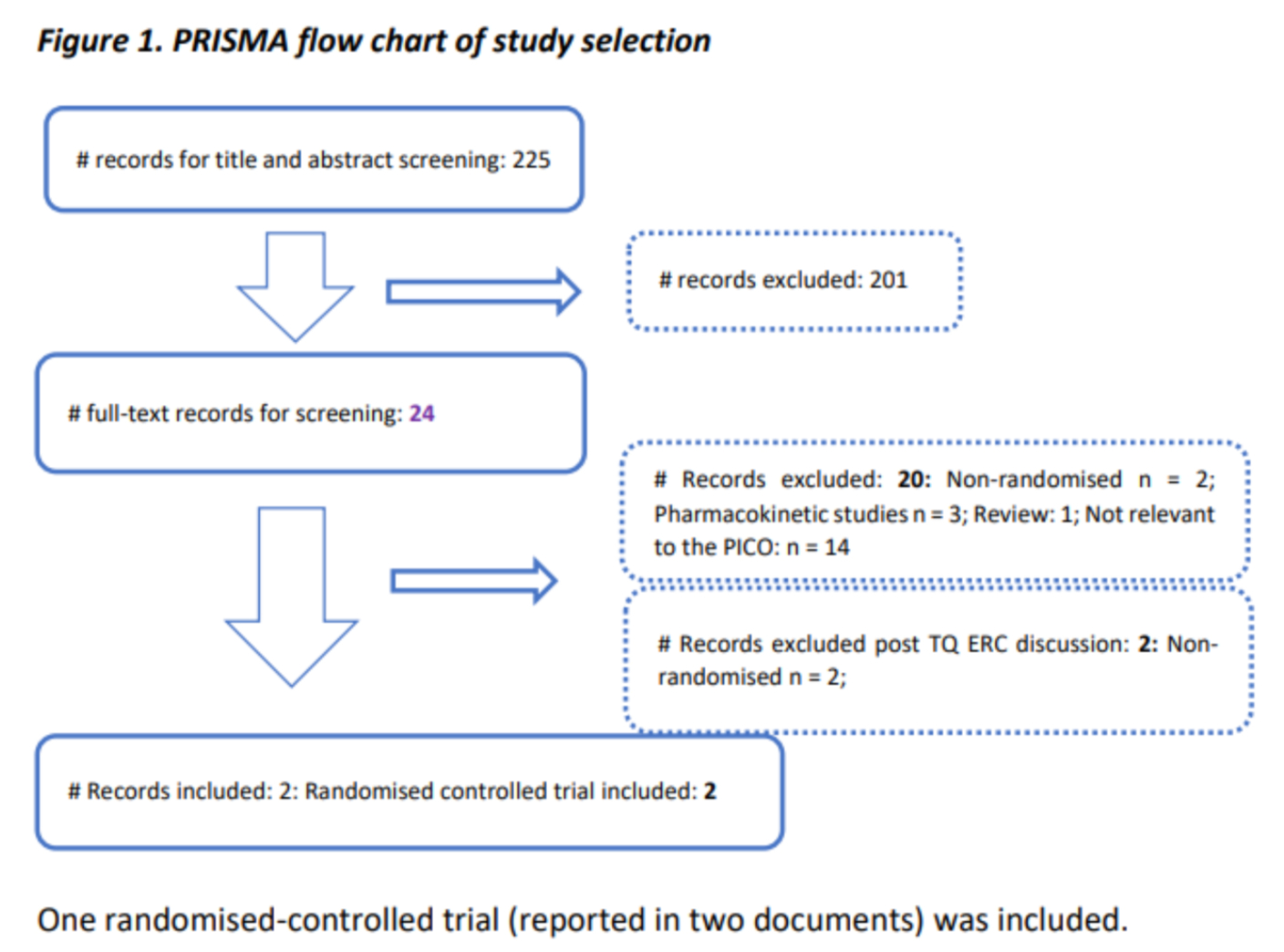 Click on the image to enlarge.
Table 2: Description of included documents:
| Author | Trial | Title | Journal ref |
| Oldenburg et al[8] | HAVEN 1 | Emicizumab Prophylaxis in Hemophilia A with Inhibitors (HAVEN 1) | N Engl J Med 2017;377:809- 18 |
| Oldenburg et al[9] | The effect of emicizumab prophylaxis on health-related outcomes in persons with haemophilia A with inhibitors: HAVEN 1 Study | Haemophilia. 2019 25 (1), 33–44. DOI: 10.1111/hae.13618 |
Oldenburg and colleagues[9] conducted a randomised, open-label, phase III study to evaluate the safety and efficacy of prophylactic emicizumab in patients with haemophilia A of any severity and a history of Factor VIII inhibitors. 109 male patients were randomly assigned to emicizumab (group A = 35) or no prophylaxis (group B = 18); emicizumab through a non-interventional study (group C = 49) and emicizumab prophylaxis for those registered after study enrolment closure (group D = 7). The primary end point was the difference in the rate of treated bleeding events (bleeding rate) over a period ≥24 weeks in group A vs group B after 24 weeks of treatment.
Patients were assigned in a 2:1 ratio to receive subcutaneous emicizumab prophylaxis at a dose of 3.0 mg per kilogram of body weight weekly for 4 weeks, followed by 1.5 mg per kilogram weekly thereafter (group A), or to the control group (no emicizumab prophylaxis and, because the trial was open-label, no subcutaneous control injections; group B). Health related quality of life was collected during the trial and reported in a separate article[9].
Risk of bias of included studies
Risk of bias was assessed for two outcomes from one randomised controlled trial (See Figure 2 below). The outcome of annualised bleeds was evaluated to have some concerns and the quality-of-life outcome as high risk. See Appendix 4 for details of the assessment.
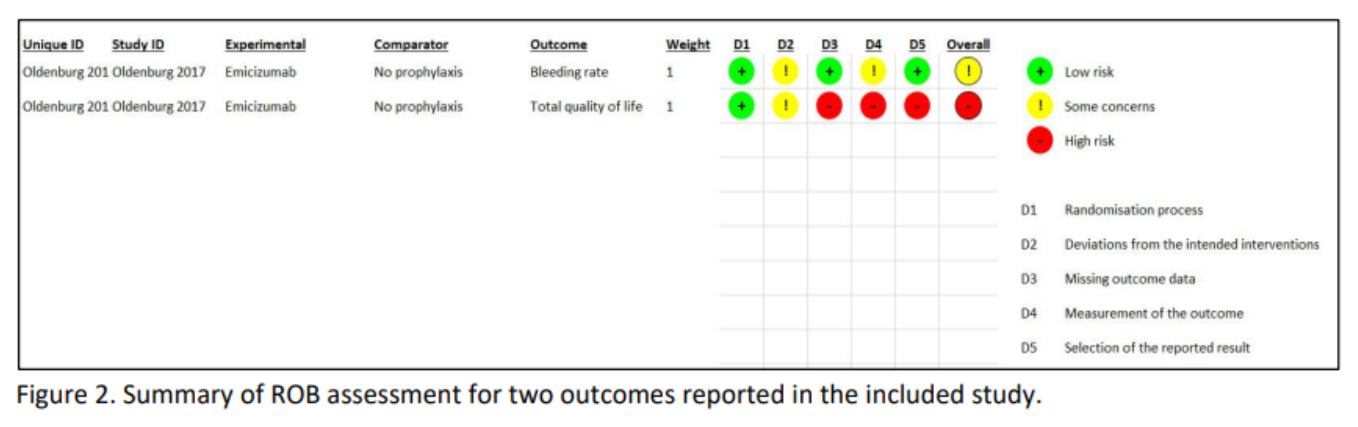 Click on the image to enlarge.
Effects of Intervention
COMPARISON: EMICIZUMAB VS NO PROPHYLAXIS
OUTCOME: BLEEDING EVENTS/RATE
Emicizumab likely reduces bleeding rate (MD -20.4, 95% CI -30.68 to -10.12, 1 trial, 53 participants, moderate certainty of evidence, Summary of Findings Table). The annualized bleeding rate (ABR) was 2.9 events (95% CI = 1.7-5.0) in patients receiving emicizumab prophylaxis (group A, 35 participants) vs 23.3 events (95% CI = 12.3-43.9) among those assigned to no prophylaxis (group B, 18 participants). The observed difference of 87% in favour of emicizumab prophylaxis was significant (p<0.001).
63% (22/35) of patients in group A experienced no bleeding events versus 6% (1/18) in group B.
OUTCOME: HEALTH RELATED QUALITY OF LIFE
Haemophilia Quality of Life Questionnaire for Adults (Haemo-A-QoL)
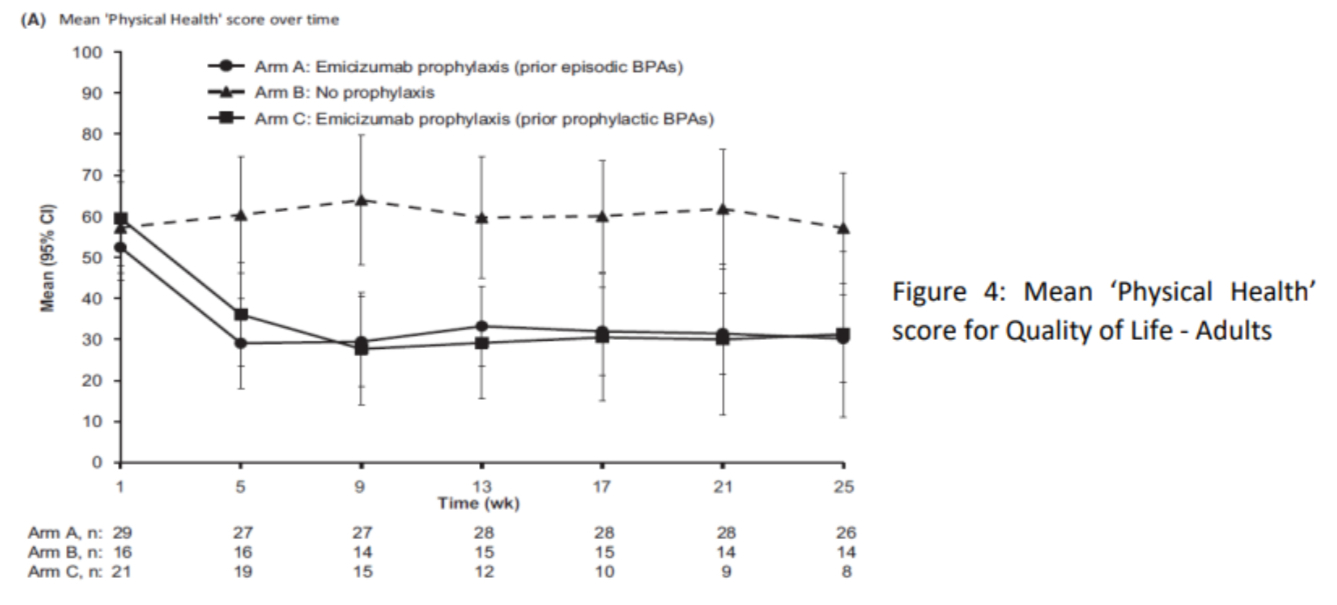
Emicizumab may improve total quality of life (MD -13.2, 95% CI -20.34 to -6.06, 1 trial, 39 participants, low certainty of evidence, Summary of Findings Table). Among participants previously treated with episodic BPAs, the difference in adjusted mean scores between the emicizumab prophylaxis group (Arm A) and the no prophylaxis group (Arm B) at week 25 was statistically significant in favour of emicizumab for both “Total” (Δ = 14.01; 95% CI: 5.56, 22.45; P = 0.0019) and “Physical Health” domain (Δ = 21.55; 95% CI: 7.89, 35.22; P = 0.0029) scores (Figure 3 and 4).
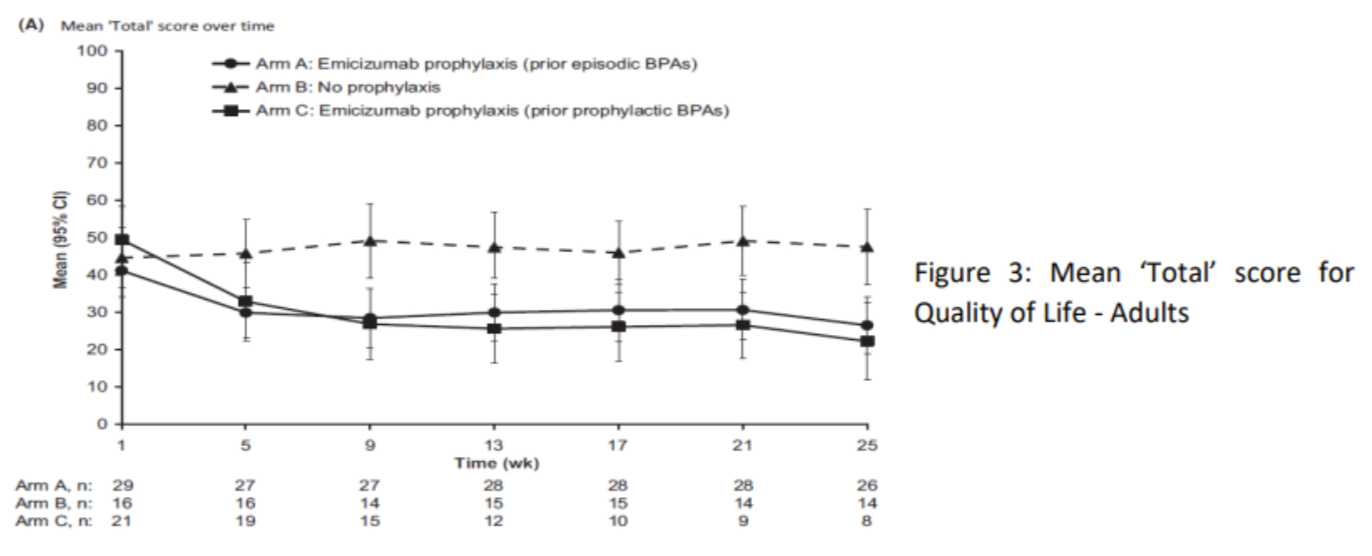 Click on image to enlarge.
 Click on the image to enlarge.
Haemophilia-specific Quality of Life assessment for children and adolescents Short Form (Haemo-QoL SF)
The results for Haemo-QoL SF are only presented for participants previously treated with prophylactic BPAs (Arm C) because too few adolescents completed this questionnaire in Arms A (n = 3) and B (n = 2) for meaningful analysis.
At baseline, mean (95% CI) Haemo-QoL SF “Total” score was 30.7 (24.3, 37.2). At week 25, Total Score had improved by 11.4 points (95% CI -16.6, -6.3).
The mean number of days hospitalized was 1.9 (95% CI 0.0, 5.1) with emicizumab prophylaxis (Arm A), 4.2 (95% CI 0.0, 8.9) with no prophylaxis (Arm B) and 0.7 (95% CI 0.0, 1.5) with emicizumab prophylaxis in participants previously treated with prophylactic BPAs (Arm C).
OUTCOME: Adverse events
In HAVEN 1[8], a total of 198 adverse events (AE) were reported in participants receiving emicizumab prophylaxis; the most frequent events being injection-site reactions (in 15% of participants). Additionally, thrombotic microangiopathy (n=2) and thrombosis (n=2) were reported in the primary analysis, in patients who had received multiple infusions of activated prothrombin complex concentrate for breakthrough bleeding. No antidrug antibodies were detected. Certainty of the evidence The evidence for annualised bleeds was downgraded by 1 (moderate certainty of evidence) and the evidence for quality of life was downgraded by 2 (See Summary of Findings Table).
COST (Update – November 2023)
The cost of emicizumab was considered a significant barrier to access in South Africa thus the TQ ERC recommended a cost-effectiveness analysis be conducted. A comprehensive cost-effectiveness analysis was thus undertaken, refer to full report: ‘Evaluating the cost and intermediary cost-effectiveness of emicizumab prophylaxis in patients with haemophilia A with inhibitors in South Africa.’
The costing model evaluated different scenarios to help address some of the uncertainty around current management of patients. Each scenario had a different threshold for ABRs where emicizumab may be cost-saving. Three out of the four scenarios showed the emicizumab arm to be cost saving, with one favouring the standard of care arm. The scenario favouring the standard of care attempted to replicate the current cost of procurement of bypassing agents in the comparator arm – derived from procurement data.
In order for the scenario to be cost-neutral it was estimated that the price of emicizumab would need to decrease by 17% compared to the state sector price offer, under our assumptions made in this scenario.
Table 3: Cost-neutral price estimate for emicizumab
| Emicizumab price per vial | State sector price offer | Cost-neutral price estimate |
| Emicizumab 30mg/1MI | R8,920 | R7,423 |
| Emicizumab 60mg/0.4MI | R17,840 | R14,847 |
| Emicizumab 105mg/0.7MI | R31,220 | R25,982 |
| Emicizumab 150mg/1MI | R44,601 | R37,117 |
In a sensitivity analysis the emicizumab arm became cost-saving in scenario 4 (replication of procurement data) with an ABR of 16. However, across all scenarios the average per patient cost of those in the emicizumab arm had a relatively narrow range of R1.6-R2.5 million per year.
Refer to full document for details.
August 2024 update: State price offer at cost neutral price received, thus current prices:
| Emicizumab price per vial | Cost-neutral price estimate |
| Emicizumab 30mg/1MI | R7,423 |
| Emicizumab 60mg/0.4MI | R14,847 |
| Emicizumab 105mg/0.7MI | R25,982 |
| Emicizumab 150mg/1MI | R37,117 |
Conclusion
Notwithstanding the lack of long-term data, head-to-head comparisons with bypassing agents used prophylactically and the small patient numbers involved in clinical trials, emicizumab prophylaxis in patients with haemophilia A and factor VIII inhibitors offers an advantage over on-demand bypassing agents. Emicizumab reduced the annualized bleeding rate by 87% (emicizumab = 2.9 events, 95% CI 1.7 to 5.0) when compared with no prophylaxis (23.3 events (95% CI, 12.3 to 43.9; p<0.001).[8] Moreover, emicizumab positively influences health related quality of life when compared with placebo. It is subcutaneously administered and is considered more convenient than treatment with bypassing agents. Cost-effectiveness analysis proposed.
Update November 2023:
Although the cost effectiveness analysis showed that in the majority of scenarios emicizumab was costeffective, the scenario modelling current procurement of bypassing was shown to favour bypassing agents. Thus the cost-neutral price calculated based on procurement data should be used as a reference price guide.
NEMLC Recommendation March 2024:
With limitations around information of management of haemophilia A with inhibitors around the country, and current fiscal state of the country, NEMLC recommended that emicizumab prophylaxis not be considered for inclusion on the essential medicines list for this indication. This can be reconsidered as these factors change.
Reviewers
Roger Wiseman (Liberty Health (Pty) Ltd); Estelle Verburgh (Division of Haematology Department of Medicine, Groote Schuur Hospital, University of Cape Town); Kim MacQuilkan (RTC); Solange Durao (SAMRC, Cochrane*); Jane Riddin (Essential Drugs Programme, National Department of Health).
Declaration of interests
- RW is employed by Liberty Health (Pty) Ltd, a private health insurer operating in South Africa and across the broader African continent, and has nothing to declare with respect to emicizumab.
- EV is a clinical haematologist, running a haemophilia clinic at GSH, with no specific interests with respect to emicizumab to declare.
- KM, SD and JR have no interests to declare.
* SD Affiliation: South African Medical Research Council, Cochrane-South Africa. Funding: Partly supported by the Research, Evidence and Development Initiative (READ-It) project. READ-It (project number 300342-104) is funded by UK aid from the UK government; however, the views expressed do not necessarily reflect the UK government’s official policies.
Appendix 1: Evidence to decision framework
 Click on the image to enlarge.
 Click on the image to enlarge.
Appendix 2: Search strategy
Database: Pubmed
Date of search: 01 February 2023
| Search | Query | Results |
| #7 | Search: (#4) NOT (#5) Filters: Clinical Trial, Meta-Analysis, Review, Systematic Review | 24 |
| #6 | Search: (#4) NOT (#5) | 225 |
| #5 | Search: review[pt] | 3,106,475 |
| #4 | Search: ((#1) AND (#2)) AND (#3) | 312 |
| #3 | Search: ((randomized controlled trial [pt] OR controlled clinical trial [pt] OR randomized [tiab] OR placebo [tiab] OR drug therapy [sh] OR randomly [tiab] OR trial [tiab] OR groups [tiab]) NOT (animals [mh] NOT humans [mh])) | 4,928,359 |
| #2 | Search: emicizumab | 478 |
| #1 | Search: (hemophilia) AND (haemophilia) | 33,131 |
Database: Cochrane Library
Date of search: 01 February 2023
Search strategy
| Search | Query | Results |
| #1 | (emicizumab) (Word variations have been searched) |
82 |
| #2 | Haemophilia | 1875 |
| #3 | #1 AND #2 | 77 |
None included: 1 Cochrane protocol, 1 review not related to the PICO, 75 trials
Appendix 3: Characteristics of studies
Table 1. Characteristics of included documents
 Click on the image to enlarge.
Table 2: Details of documents excluded after TQ ERC discussion
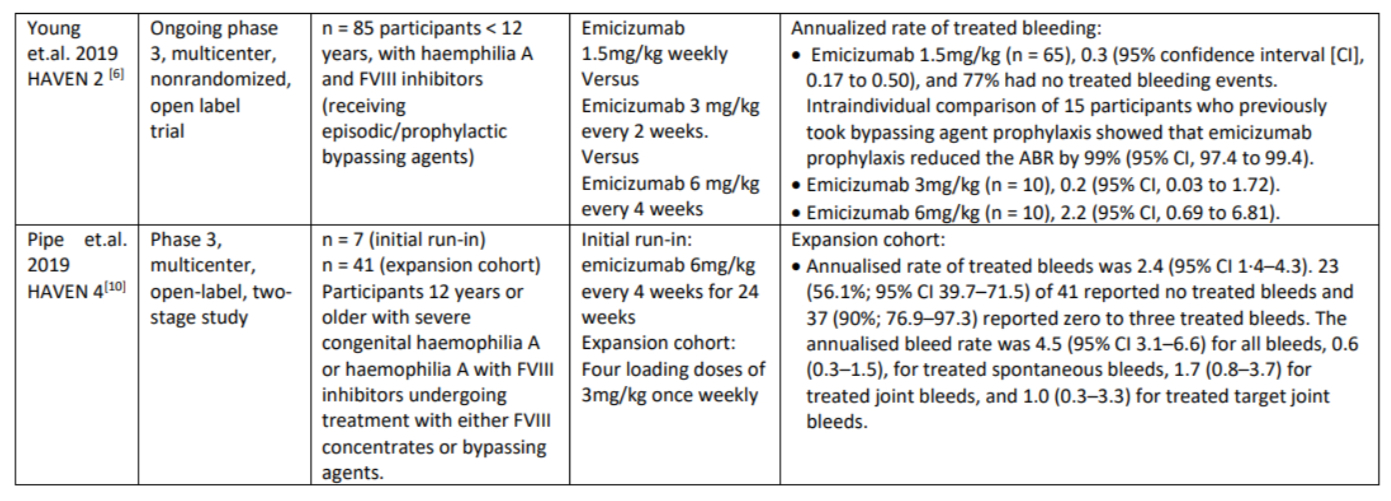 Click on the image to enlarge.
Table 3: Other excluded studies
| Authors | Title | Citation | Reason for exclusion |
| Callaghan et. al.[7] | Long-term outcomes with emicizumab prophylaxis for hemophilia A with or without FVIII inhibitors from the HAVEN 1-4 studies. | Blood. 2021 Apr 22;137(16):2231-2242. doi: 10.1182/blood.2020009217. | Not relevant to the PICO |
| Mahlangu et. al.[11] | Emicizumab Prophylaxis in Patients Who Have Hemophilia A without Inhibitors. | N Engl J Med. 2018 Aug 30;379(9):811-822. doi: 10.1056/NEJMoa1803550. | Not relevant to the PICO |
| Schmitt et. al.[12] | Pharmacokinetics and Pharmacodynamics of emicizumab in persons with Hemophilia A with Factor VIII Inhibitors: HAVEN 1 Study. | Thromb Haemost. 2021 Mar;121(3):351-360. doi: 10.1055/s-0040-1717114. | Pharmacokinetic study |
| Donners et. al[13] | Pharmacokinetics and Associated Efficacy of Emicizumab in Humans: A Systematic Review. | Clin Pharmacokinet. 2021 Nov;60(11):1395-1406. doi: 10.1007/s40262-021-01042-w. | Pharmacokinetic study |
| Shanmukhaiah et. al[14] | Efficacy of emicizumab in von Willebrand disease (VWD) patients with and without alloantibodies to von Willebrand factor (VWF): Report of two cases and review of literature. | Haemophilia. 2022 Mar;28(2):286-291. doi: 10.1111/hae.14491. | Not relevant to the PICO |
| Barg et. al[15] | Emicizumab prophylaxis among infants and toddlers with severe hemophilia A and inhibitors-a single-center cohort. | Pediatr Blood Cancer. 2019 Nov;66(11):e27886. doi: 10.1002/pbc.27886. | Non-randomised |
| Franchini et. al.[16] | Emicizumab for the treatment of haemophilia A: a narrative review | Blood Transfus. 2019 May;17(3):223-228. doi: 10.2450/2019.0026-19. | Review |
| Ogiwara et. al.[17] | Assessment of global coagulation function under treatment with emicizumab concomitantly with bypassing agents in haemophilia A with inhibitor (UNEBI Study): multicentre open-label non-randomised clinical trial. | BMJ Open. 2022 Feb 17;12(2):e056922. doi: 10.1136/bmjopen-2021-056922. | Non-randomised |
| Kotani et. al.[18] | Relative and Absolute Bioavailability Study of Emicizumab to Bridge Drug Products and Subcutaneous Injection Sites in Healthy Volunteers. | Clin Pharmacol Drug Dev. 2019 Aug;8(6):702-712. doi: 10.1002/cpdd.617. | Pharmacokinetics study |
| Matsushita et. al.[19] | AKATSUKI study: a prospective, multicentre, phase IV study evaluating the safety of emicizumab under and immediately after immune tolerance induction therapy in persons with congenital haemophilia A with factor VIII inhibitors. | BMJ Open. 2022 Mar 14;12(3):e057018. doi: 10.1136/bmjopen-2021-057018. | Not relevant to the PICO |
| Shima et. al.[20] | Long-term safety and efficacy of emicizumab for up to 5.8 years and patients' perceptions of symptoms and daily life: A phase 1/2 study in patients with severe haemophilia A. | Haemophilia. 2021 Jan;27(1):81-89. doi: 10.1111/hae.14205. | Not relevant to the PICO |
| Wagle et. al.[21] | Intraindividual Comparisons to Determine Comparative Effectiveness: Their Relevance for G-BA's Health Technology Assessments. | Value Health. 2021 May;24(5):744-752. doi: 10.1016/j.jval.2020.11.016. | Not relevant to the PICO |
| Chapman et. al.[22] | Does Cost-Effectiveness Analysis Overvalue Potential Cures? Exploring Alternative Methods for Applying a "Shared Savings" Approach to Cost Offsets. | Value Health. 2021 Jun;24(6):839-845. doi: 10.1016/j.jval.2021.02.008. | Not relevant to the PICO |
| Reyes et. al.[23] | Efficacy of emicizumab prophylaxis versus factor VIII prophylaxis for treatment of hemophilia A without inhibitors: network meta-analysis and sub-group analyses of the intra-patient comparison of the HAVEN 3 trial. | Curr Med Res Opin. 2019 Dec;35(12):2079-2087. doi: 10.1080/03007995.2019.1649378. | Not relevant to the PICO |
| Shima et. al.[24] | A multicentre, open-label study of emicizumab given every 2 or 4 weeks in children with severe haemophilia A without inhibitors. | Haemophilia. 2019 Nov;25(6):979-987. doi: 10.1111/hae.13848. | Not relevant to the PICO |
| Uchida et. al.[25] | A first-in-human phase 1 study of ACE910, a novel factor VIII-mimetic bispecific antibody, in healthy subjects. | Blood. 2016 Mar 31;127(13):1633-41. doi: 10.1182/blood-2015-06-650226. | Not relevant to the PICO |
| Shima et. al.[26] | Factor VIII-Mimetic Function of Humanized Bispecific Antibody in Hemophilia A. | N Engl J Med. 2016 May 26;374(21):2044-53. doi: 10.1056/NEJMoa1511769. | Not relevant to the PICO |
| Yoneyama et. al.[27] | A Pharmacometric Approach to Substitute for a Conventional Dose-Finding Study in Rare Diseases: Example of Phase III Dose Selection for Emicizumab in Hemophilia A. | Clin Pharmacokinet. 2018 Sep;57(9):1123-1134. doi: 10.1007/s40262-017-0616-3. | Not relevant to the PICO |
| von Mackensen et. al[28] | Determining meaningful health-related quality-of-life improvement in persons with haemophilia A using the Haemophilia Quality of Life Questionnaire for Adults (Haem-A-QoL) | Haemophilia. 2020 Nov;26(6):1019-1030. doi: 10.1111/hae.14184. | Not relevant to the PICO |
| Schmitt et. al.[29] | Emicizumab dose up-titration in case of suboptimal bleeding control in people with haemophilia A. | Haemophilia. 2023 Jan;29(1):90-99. doi: 10.1111/hae.14679. | Not relevant to the PICO |
Appendix 4: Risk of Bias 2 Assessment
Outcome: Bleeding Rate
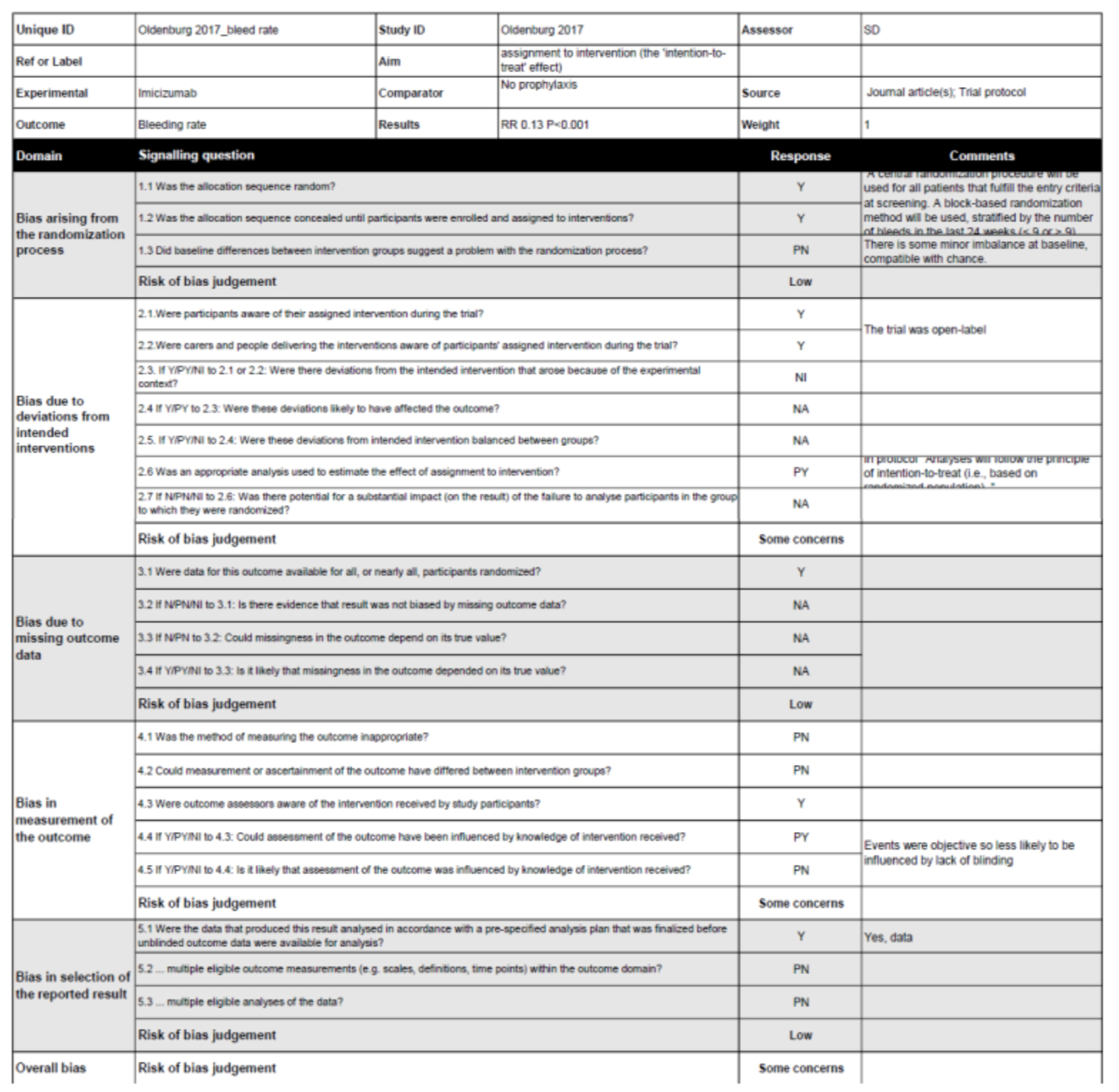 Click on the image to enlarge.
Outcome: Quality of Life
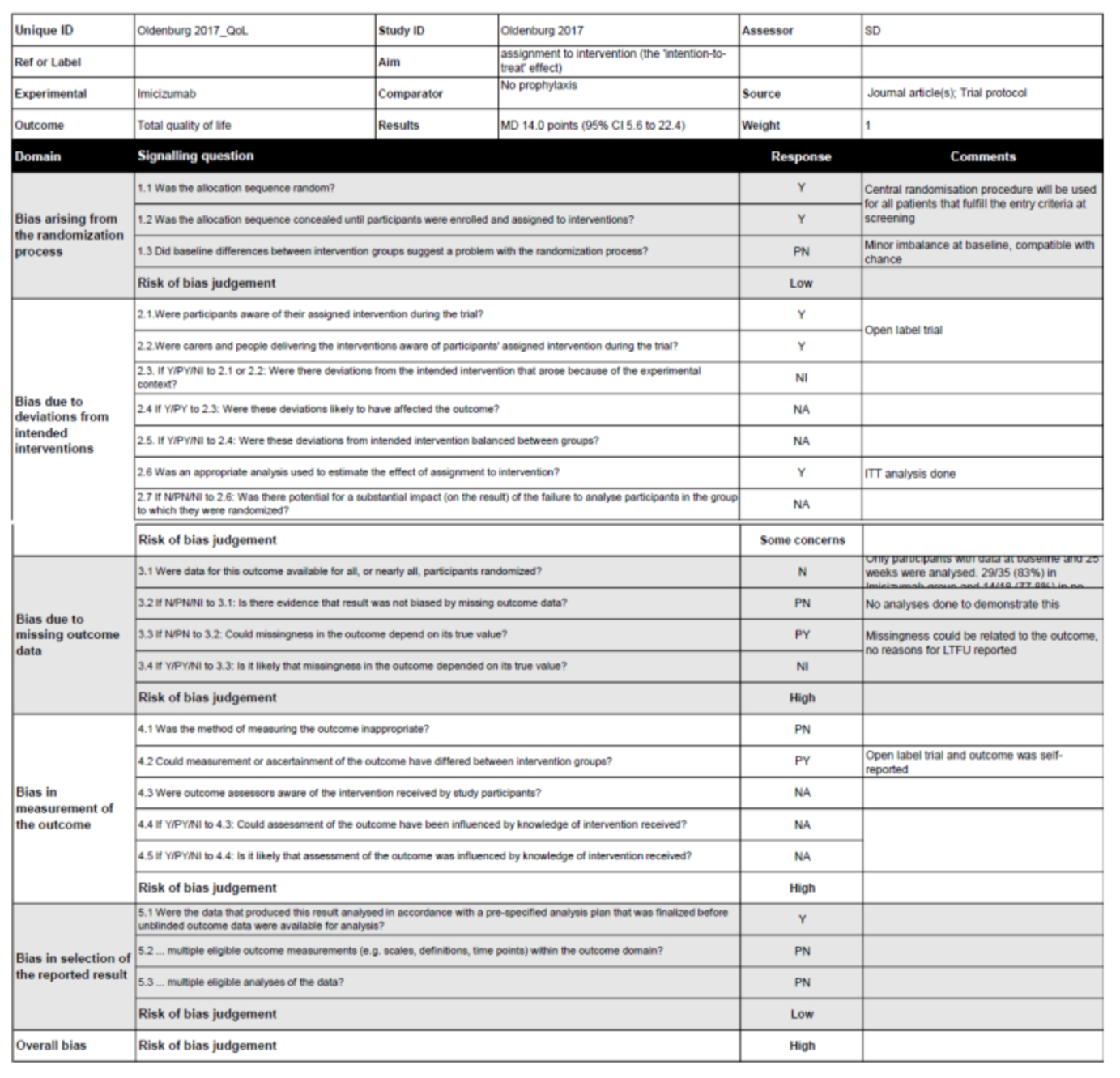 Click on the image to enlarge.
Click here for the pdf.
References
- World Federation of Hemophilia. Report on the Annual Global Survey 2021 Montreal, Quebec: World Federation of Hemophilia; 2022 [1 - 98]. Available from: https://wfh.org/research-and-data-collection/annual-global-survey/.
- Srivastava A, Santagostino E, Dougall A, Kitchen S, Sutherland M, Pipe SW, et al. WFH Guidelines for the Management of Hemophilia, 3rd edition. Haemophilia. 2020;26:1 - 158.
- Hemlibra® (emicizumab) [package insert]. 2014. Gauteng, Republic of South Africa: Roche Products (Pty) Ltd.
- Sterne JA, Savović J, Page MJ, Elbers RG, Blencowe NS, Boutron I, et al. RoB 2: a revised tool for assessing risk of bias in randomised trials. bmj. 2019;366.
- Cochrane Handbook for Systematic Reviews of Interventions Version 5.1.0 [updated March 2011]: The Cochrane Collaboration; 2011.
- Young G, Liesner R, Chang T, Sidonio R, Oldenburg J, Jiménez-Yuste V, et al. A multicenter, open-label phase 3 study of emicizumab prophylaxis in children with hemophilia A with inhibitors. Blood. 2019;134(24):2127-38.
- Callaghan MU, Negrier C, Paz-Priel I, Chang T, Chebon S, Lehle M, et al. Long-term outcomes with emicizumab prophylaxis for hemophilia A with or without FVIII inhibitors from the HAVEN 1-4 studies. Blood. 2021;137(16):2231-42.
- Oldenburg J, Mahlangu JN, Kim B, Schmitt C, Callaghan MU, Young G, et al. Emicizumab Prophylaxis in Hemophilia A with Inhibitors. N Engl J Med. 2017;377(9):809-18.
- Oldenburg J, Mahlangu JN, Bujan W, Trask P, Callaghan MU, Young G, et al. The effect of emicizumab prophylaxis on health-related outcomes in persons with haemophilia A with inhibitors: HAVEN 1 Study. Haemophilia. 2019;25(1):33-44.
- Pipe SW, Shima M, Lehle M, Shapiro A, Chebon S, Fukutake K, et al. Efficacy, safety, and pharmacokinetics of emicizumab prophylaxis given every 4 weeks in people with haemophilia A (HAVEN 4): a multicentre, open-label, non-randomised phase 3 study. Lancet Haematol. 2019;6(6):e295-e305.
- Mahlangu J, Oldenburg J, Paz-Priel I, Negrier C, Niggli M, Mancuso ME, et al. Emicizumab Prophylaxis in Patients Who Have Hemophilia A without Inhibitors. N Engl J Med. 2018;379(9):811-22.
- Schmitt C, Adamkewicz JI, Xu J, Petry C, Catalani O, Young G, et al. Pharmacokinetics and Pharmacodynamics of Emicizumab in Persons with Hemophilia A with Factor VIII Inhibitors: HAVEN 1 Study. Thromb Haemost. 2021;121(3):351-60.
- Donners A, Rademaker CMA, Bevers LAH, Huitema ADR, Schutgens REG, Egberts TCG, et al. Pharmacokinetics and Associated Efficacy of Emicizumab in Humans: A Systematic Review. Clin Pharmacokinet. 2021;60(11):1395-406.
- Shanmukhaiah C, Jijina F, Kannan S, Pai NG, Kulkarni B, Khuba SV, et al. Efficacy of emicizumab in von Willebrand disease (VWD) patients with and without alloantibodies to von Willebrand factor (VWF): Report of two cases and review of literature. Haemophilia. 2022;28(2):286-91.
- Barg AA, Avishai E, Budnik I, Levy-Mendelovich S, Barazani TB, Kenet G, et al. Emicizumab prophylaxis among infants and toddlers with severe hemophilia A and inhibitors-a single-center cohort. Pediatr Blood Cancer. 2019;66(11):e27886.
- Franchini M, Marano G, Pati I, Candura F, Profili S, Veropalumbo E, et al. Emicizumab for the treatment of haemophilia A: a narrative review. Blood Transfus. 2019;17(3):223-8.
- Ogiwara K, Taki M, Suzuki T, Takedani H, Matsushita T, Amano K, et al. Assessment of global coagulation function under treatment with emicizumab concomitantly with bypassing agents in haemophilia A with inhibitor (UNEBI Study): multicentre open-label non-randomised clinical trial. BMJ Open. 2022;12(2):e056922.
- Kotani N, Yoneyama K, Kawakami N, Shimuta T, Fukase H, Kawanishi T. Relative and Absolute Bioavailability Study of Emicizumab to Bridge Drug Products and Subcutaneous Injection Sites in Healthy Volunteers. Clin Pharmacol Drug Dev. 2019;8(6):702-12.
- Matsushita T, Suzuki N, Nagao A, Nagae C, Yamaguchi-Suita H, Kyogoku Y, et al. AKATSUKI study: a prospective, multicentre, phase IV study evaluating the safety of emicizumab under and immediately after immune tolerance induction therapy in persons with congenital haemophilia A with factor VIII inhibitors. BMJ Open. 2022;12(3):e057018.
- Shima M, Nagao A, Taki M, Matsushita T, Oshida K, Amano K, et al. Long-term safety and efficacy of emicizumab for up to 5.8 years and patients' perceptions of symptoms and daily life: A phase 1/2 study in patients with severe haemophilia A. Haemophilia. 2021;27(1):81-9.
- Wagle JA, Flacke JP, Knoerzer D, Ruof J, Merkesdal S. Intraindividual Comparisons to Determine Comparative Effectiveness: Their Relevance for G-BA's Health Technology Assessments. Value Health. 2021;24(5):744-52.
- Chapman RH, Kumar VM, Whittington MD, Pearson SD. Does Cost-Effectiveness Analysis Overvalue Potential Cures? Exploring Alternative Methods for Applying a "Shared Savings" Approach to Cost Offsets. Value Health. 2021;24(6):839-45.
- Reyes A, Révil C, Niggli M, Chebon S, Schlagmüller S, Flacke J-P, et al. Efficacy of emicizumab prophylaxis versus factor VIII prophylaxis for treatment of hemophilia A without inhibitors: network meta-analysis and sub-group analyses of the intra-patient comparison of the HAVEN 3 trial. Current Medical Research and Opinion. 2019;35(12):2079-87.
- Shima M, Nogami K, Nagami S, Yoshida S, Yoneyama K, Ishiguro A, et al. A multicentre, open-label study of emicizumab given every 2 or 4 weeks in children with severe haemophilia A without inhibitors. Haemophilia. 2019;25(6):979-87.
- Uchida N, Sambe T, Yoneyama K, Fukazawa N, Kawanishi T, Kobayashi S, et al. A first-in-human phase 1 study of ACE910, a novel factor VIII-mimetic bispecific antibody, in healthy subjects. Blood. 2016;127(13):1633-41.
- Shima M, Hanabusa H, Taki M, Matsushita T, Sato T, Fukutake K, et al. Factor VIII-Mimetic Function of Humanized Bispecific Antibody in Hemophilia A. N Engl J Med. 2016;374(21):2044-53.
- Yoneyama K, Schmitt C, Kotani N, Levy GG, Kasai R, Iida S, et al. A Pharmacometric Approach to Substitute for a Conventional Dose-Finding Study in Rare Diseases: Example of Phase III Dose Selection for Emicizumab in Hemophilia A. Clin Pharmacokinet. 2018;57(9):1123-34.
- von Mackensen S, Catalani O, Asikanius E, Paz-Priel I, Lehle M, Trask P. Determining meaningful health-related quality-of-life improvement in persons with haemophilia A using the Haemophilia Quality of Life Questionnaire for Adults (Haem-A-QoL). Haemophilia. 2020;26(6):1019-30.
- Schmitt C, Mancuso ME, Chang T, Podolak-Dawidziak M, Petry C, Sidonio R, Jr., et al. Emicizumab dose up-titration in case of suboptimal bleeding control in people with haemophilia A. Haemophilia. 2023;29(1):90-9.