Clinical presentation and risk factors for influenza
Clinical presentation and risk factors for influenza Infection with influenza viruses can give rise to a wide range of clinical presentations, ranging from asymptomatic infection to severe illness and death depending on the characteristics of both the virus and the infected person. In the majority of people, influenza is an uncomplicated illness that is characterised by sudden onset of const
Clinical presentation and risk factors for influenza
Infection with influenza viruses can give rise to a wide range of clinical presentations, ranging from asymptomatic infection to severe illness and death depending on the characteristics of both the virus and the infected person. In the majority of people, influenza is an uncomplicated illness that is characterised by sudden onset of constitutional and respiratory symptoms such as fever, myalgia, cough, sore throat, rhinitis and headache.
Uncomplicated influenza illness resolves after 3-7 days although cough and malaise can persist for >2 weeks. Influenza may be associated with more severe complications including: influenza-associated pneumonia/ LRTI, secondary bacterial or viral infection (including pneumonia, sinusitis and otitis media), multi-organ failure, and exacerbations of underlying illnesses (e.g. pulmonary and cardiac illness). Rare complications include encephalopathy, myocarditis, transverse myelitis, pericarditis and Reye syndrome. For purposes of clinical management, influenza disease can be categorised as follows: [21]
- Uncomplicated influenza: ILI (Influenza-like illness) may present with fever, cough, sore throat, coryza, headache, malaise, myalgia, arthralgia and sometimes gastrointestinal symptoms, but without any features of complicated influenza.
- Complicated/severe influenza: Influenza requiring hospital admission and/or with symptoms and signs of lower respiratory tract infection (hypoxaemia, dyspnoea, tachypnoea, lower chest wall indrawing and inability to feed), central nervous system involvement and/or a significant exacerbation of an underlying medical condition.
1. Clinical presentation of influenza and COVID-19
Both influenza and COVID-19 are respiratory diseases with similar modes of transmission and with some overlapping clinical presentation. The signs and symptoms of uncomplicated influenza overlap with those of mild COVID-19. Complications of these two conditions may be similar. However, the onset of severe-COVID-19 or complications usually occurs later, in the second week of illness, compared to that of influenza, which usually occurs within the first week of illness. Children and pregnant women are more susceptible to severe disease with influenza. Whereas children are not a risk group for severe COVID-19, recent data suggests that pregnant women are also at risk for severe COVID-19.[22, 23]
The table below summarises the clinical presentation and mode of transmission of the two diseases.
Table 1: Clinical, laboratory and radiographic features of COVID-19 and influenza.
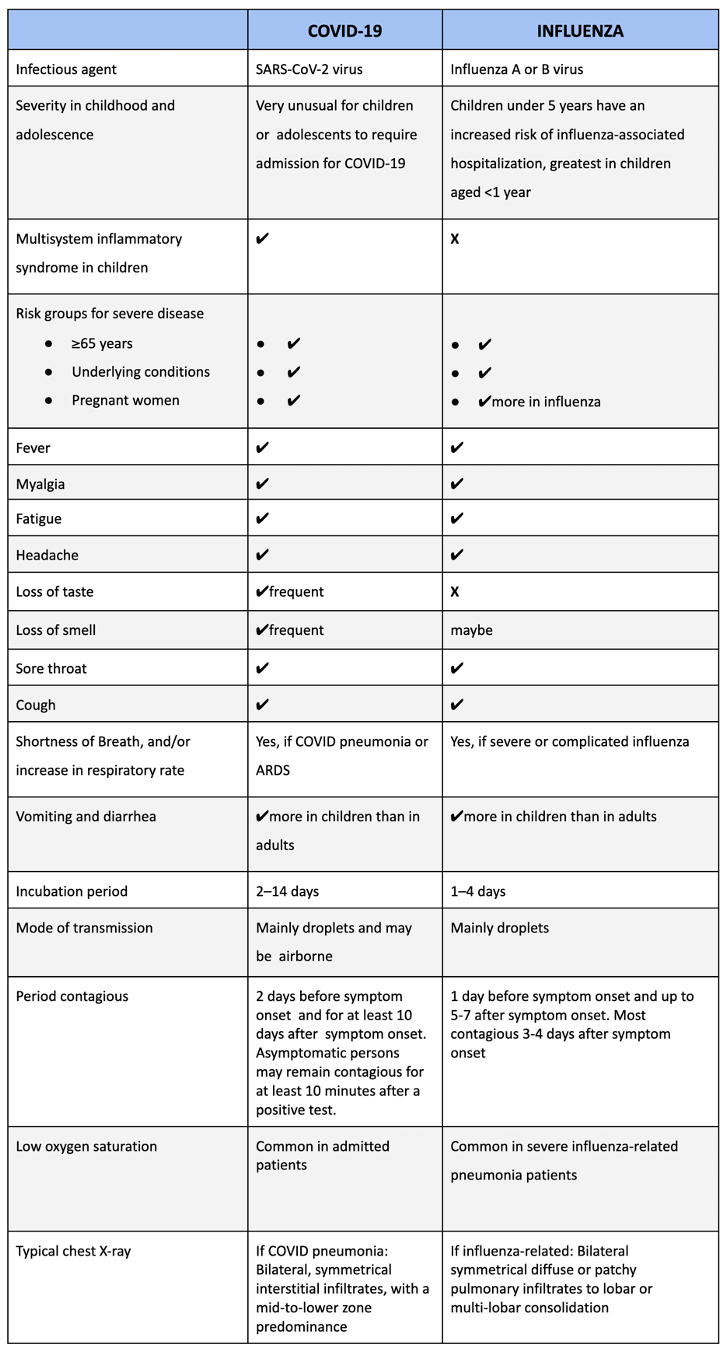 SARS-CoV-2- severe acute respiratory syndrome coronavirus-2; COVID-19- coronavirus disease 2019; ARDS-acute respiratory distress syndrome
Click on the table to enlarge
2. Risk factors for complicated/severe influenza
Certain groups of patients are at higher risk of developing severe or complicated disease following influenza virus infection. However, influenza virus infection can result in severe/complicated illness in previously healthy individuals. Similar to other studies showing increased risk of severe influenza-associated illness in certain individuals, [1, 2, 6, 9, 10, 15, 16, 24, 25] a recent study from South Africa has found that younger and older age (< 5 years, in particular children < 1 year, and ≥65 years) and the presence of chronic underlying medical conditions, HIV infection and pregnancy were associated with increased risk of influenza associated-hospitalization. [14] In addition HIV-infected individuals with severe immunosuppression compared to those with mild immunosuppression had three times increased odds of influenza associated hospitalization. [14]
2.1 Risk groups for severe/complicated influenza disease include:
- Pregnant women (including the post-partum period)
- HIV–infected individuals[14, 26]
- Individuals with tuberculosis[15, 16, 27]
- Persons of any age with chronic disease, including:
- Pulmonary diseases (e.g. asthma, COPD)[28]
- Immunosuppression (e.g. persons on immunosuppressive medication, malignancy)
- Cardiac diseases (e.g. congestive cardiac failure), except for hypertension[28]
- Metabolic disorders (e.g. diabetes mellitus)[29]
- Renal disease
- Hepatic disease
- Certain neurologic and neurodevelopmental conditions, including: disorders of the brain, spinal cord, peripheral nerve, and muscle such as cerebral palsy, epilepsy (seizure disorders), stroke, mental retardation, moderate to severe developmental delay, muscular dystrophy, or spinal cord injury.
- Haemoglobinopathies (e.g. sickle cell disease)
- Persons aged ≥65 years
- Persons ≤18 years receiving chronic aspirin therapy
- Persons who are morbidly obese (i.e. BMI ≥40)[30]
- Young children (particularly <2 years of age)
2.2 Groups at increased risk for severe influenza-illness and COVID-19
There is some overlap in the groups of individuals who are at increased risk for severe influenza illness or complications and severe COVID-19. To ensure optimal control of influenza among these groups, it is essential that these groups are prioritized for influenza vaccination. Groups of individuals at increased risk for both severe influenza illness and severe COVID-19 include:
- Persons aged ≥65 years
- Persons of any age with underlying chronic diseases
- Persons who are morbidly obese (i.e. BMI ≥40)
- Pregnant women
Influenza: NICD recommendations for the diagnosis, management, prevention and public health response, National institute of communicable diseases, 2021