COVID-19 Protocol Version 10 - Charlotte Maxeke Johannesburg Academic Hospital / Gauteng ICU Group
COVID treatment protocol devised at CMJAH and which is being used by the Gauteng ICU group. Version 10
The following document represents the treatment protocol devised at CMJAH and which is being used by the Gauteng ICU group. This schema is subject to change as new evidence emerges.
EMGuidance confirms that it is not the owner of the information provided, nor does it intend to present it as such.
The Gauteng ICU group: Therapy of CoVID 19 - Version 10 (14 July 2020)
*** UPDATED REFRACTORY HYPOXAEMIA AND CORTICOSTEROID DOSE RECOMMENDATIONS ***
Prophylaxis: we believe there is no value in chloroquine prophylaxis.
There may be value in nutritional supplementation.
- Vitamin D 4 000 IU daily or 50 000 weekly x 4 then monthly
- Nicotinic acid 25-50mg daily
- Zinc 20-50mg daily
Have added colchicine though small study and uncertain benefit- however we have been using it for a while.
We believe that the benefit of dexamethasone is a class effect and that it doesn’t matter which steroid issued:
Dexamethasone comes in 8mg ampoules:
8mg dexamethasone = 30mg methylpred= 40mg mg prednisone = Hydrocortisone 200mg daily
The tocilizumab or polygam will be for a small percentage of patients that are not improving despite Standard of care but in particular corticosteroids and anticoagulation. Tocilizumab use is off label and requires patient or family consent. If used, the Roche form for off label use must be filled in and please can Brian Levy brian@plexsys.co.za be informed as he is collecting data retrospectively
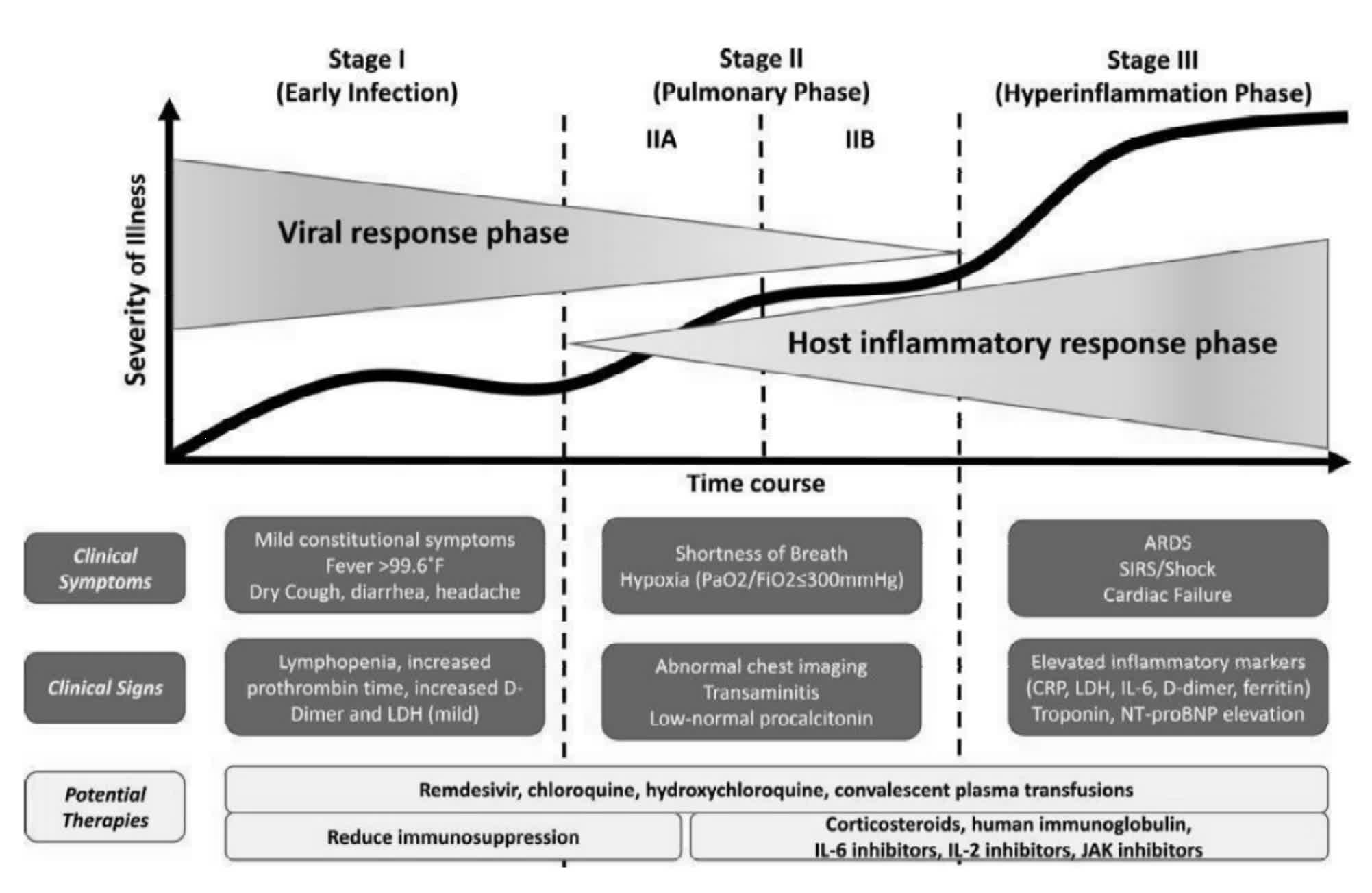
| Asymptomatic | |
| Presentation | - |
|
Supportive treatment
|
None: Monitor
|
| Antiviral treatment | None |
| Anti-inflammatory symptoms | - |
| URT Symptoms | |
| Presentation | Fever, sore throat, cough; no dyspnea or tachypnea; saturation normal |
| Supportive treatment | Vitamin D 50 000 units stat Zinc 20 - 50mg daily x 5 days Nicotinic 25mg - 50mg daily Vit C 500mg tds Thiamine 100mg daily |
| Antiviral treatment | None |
| Anti-inflammatory treatment | Paracetamol |
| URT symptoms +age>65 ± comorbidity OR LRT symptoms ±pneumonia on CXR |
|
| Presentation | Fever, dyspnea, tachypnea, crackles saturation <90% P/F ratio <300 Hypokalaemia |
|
Supportive treatment
|
Supportive treatment as above Oxygen therapy |
| Antiviral treatment | Plasmoquine is unlikely to be of any benefit |
| Anti-inflammatory treatment |
Paracetamol
Full anticoagulation - Factor Xa guided (0.6-0.8) Corticosteroid: Hydrocortisone 100mg stat then 50mg 6hrly OR Dex 8mg BD x 1 then 8mg dly OR Methylpred 40mg BD x 1 then 40mg dly OR Prednisone 40mg BD x 1 then 40mg daily Colchicine 1.5mg stat then 0.5mg BD Consider heparin/dornase nebs |
| Severe symptoms | |
| Presentation | Tachypnea, cyanosis, saturation< 90%, P/F ratio < 200; Mechanical ventilation Hypotension, Hypokalaemia, organ dysfunction CRP >150 and rising; D-Dimer rising Il-6 > 80 if available IL-6 (pg/ml) / lymphocyte (106/ml) ratio> 50 APACHE II >17 |
| Supportive treatment | Supportive treatment as above ICU: High flow nasal Try self proning Mechanical ventilation ECMO if resources allow - Mostly will not be possible |
| Antiviral treatment | Remdesivir when available |
| Anti-inflammatory treatment | Therapy as above If deteriorating: CRP rising; sats worsening or requires intubation on admission consider in addition to above: Tocilizumab 400mg IVI over 60 mins x one dose Or if unavailable Polygam 24g x 1-2 days Review with expert group |
| Cardiac failure / myocarditis | |
| Presentation | Gallop Reduced EF Troponin elevated |
| Supportive treatment | As for severe symptoms above |
| Antiviral treatment | As for severe symptoms above |
| Anti-inflammatory treatment | Polygam 24g daily x 3 Methylprednisone 250 daily x 3 |
Refractory Hypoxaemia:
Aim to reduce FiO2 which may increase reactive oxidant production and cause pulmonary fibrosis
If on HFN and resp rate >26 or sat <90% consider mechanical ventilation
- With persistently elevated CRP/IL-6: If infection excluded
Increase dose of steroid dose-methylprednisolone 125mg 8hrly x 2 days and assess response
Consider adding heparin nebs 5000U BD (monitor Xa and aPTT) - With low inflammatory markers:
Consider adding heparin nebs 5000U BD with physio and aggressive suctioning
Consider bronchoscopy to assess if plugs
NB
- Not all therapy is evidence based
- Correct hypokalaemia which is common and may be exacerbated by CHQ
- Resources may restrict availability of ventilated beds
- Initiate corticosteroids early in all with pneumonic changes and hypoxaemia to avoid mechanical ventilation if possible
- If mechanical ventilation required: distress, acidosis, cognitive deterioration, progressive decline in sats, etc. do not withhold it on the assumption that it may do harm
Limit fluid intake but maintain nutrition - avoid oedema (sacral)
Assist control
Initiate with PEEP 10
Peak pressure 26
FiO2 to maintain sat > 90%
If still hypoxaemic or FiO2 > 0.6
Prone patient and increase mean airway pressure
PEEP may be higher if obese or considerable extrathoracic effect on compliance
Maximal Peak pressure 30 or if obese 34
OR
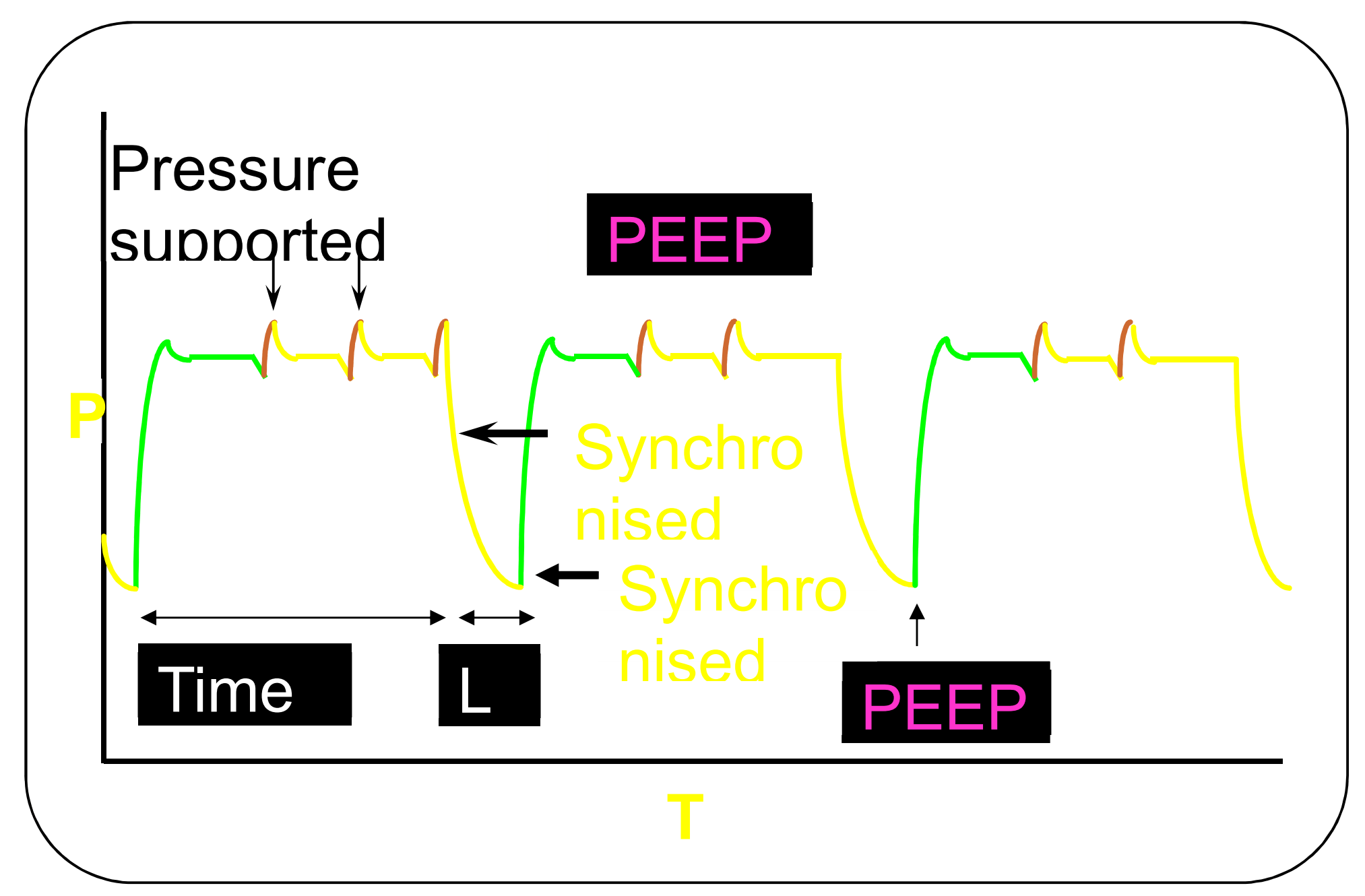
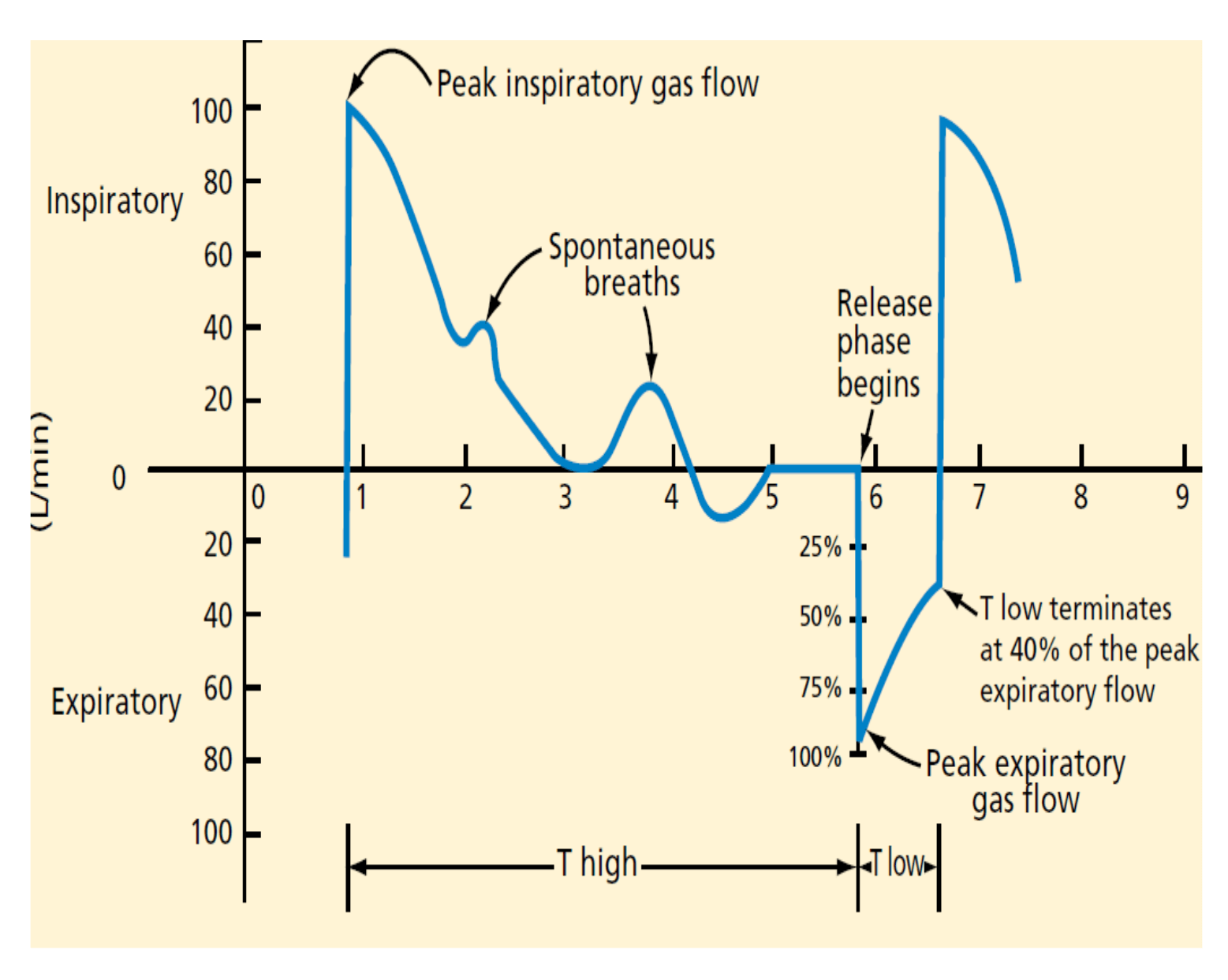
APRV: (Our preferred mode)
Pressure high 26-30
Pressure low 0
Time high 4 secs
Time low set on the flow tracing- inspiration occurs at 40% of Peak expiratory flow: usually 0.8secs; shorter may create excessive autoPEEP with an increase in pCO2 and decrease in PaO2
No Pressure support
Allow spontaneous respiration: Trigger should be at the lowest setting.
If pCO2 elevated to the extent that pH drops to < 7.3 shorten time high to 3- i.e. increasing the respiratory rate
NOTE: sedation is usually not necessary on this mode unless the tube is critical and extubation would rapidly be fatal
GA Richards Emeritus Professor Critical Care
M Mer Associate Professor Critical Care
Click here for the ORIGINAL document
Version 10 (14 July 2020)