Delirium in Critical Care
Description General measures Medicine treatment ICD-10 code: F05 Description The risk of delirium is increased in patients with severe illness, with a prevalence of 40-60% in non-ventilated patients, and 50-80% in mechanically ventilated patients. Diagnosing delirium can be difficult due to its highly variable presentation. Symptoms may fluctuate over the course of a day with periods of reduced a
ICD-10 code: F05
Description
The risk of delirium is increased in patients with severe illness, with a prevalence of 40-60% in non-ventilated patients, and 50-80% in mechanically ventilated patients. Diagnosing delirium can be difficult due to its highly variable presentation. Symptoms may fluctuate over the course of a day with periods of reduced attention, awareness, and other features of cognitive dysfunction, along with periods of lucidity. Patients may present with agitated, disruptive and/or uncooperative behaviour (hyperactivity), sluggishness, lethargy, stupor (hypoactivity), or a mixture of these features. This variability is further complicated by the influence of analgo-sedatives and medical and surgical interventions. Delirium is associated with increased duration of mechanical ventilation, length of ICU and hospital stay, long-term cognitive impairment, and mortality.
Risk factors for delirium include: advanced age; pre-existing dementia; history of coma and/or other neurological disorders, hearing and visual impairment, pre-ICU emergency surgery or trauma, blood transfusions; and increased severity of underlying illness. Precipitating factors include sleep deprivation, pain, environmental insults (e.g., noise, physical restraint use, catheters), and psychoactive medicine use (e.g., benzodiazepines).
General Measures
Prevention, early recognition, and non-pharmacological management steps are recommended while the underlying critical illness is treated.
Strategies to prevent delirium include:
- regular patient reorientation
- minimize use of sedative medicines
- noise reduction
- early mobilization
- cognitive stimulation
- adequate hydration
- visual and hearing aids
- Recognise delirium early with daily clinical assessment and screening using a validated tool (See CAM-ICU 7 screening tool in Table 23.5).
- Be alert to hypoactive delirium, where the patient may be poorly responsive to questions.
- Screen for delirium in the absence of sedative effects.
- Use screening to explain what the symptoms mean and to reassure the patient and their relatives.
- Exclude:
- Alcohol withdrawal delirium.
- Psychosis, mania, or depression (either new onset or related to discontinuation of chronic medicines).
General management includes:
- Searching for, and correction of, precipitating factors.
- Intensified preventative strategies, particularly:
- Pain control.
- Minimising sedation.
- Maintaining a calm, containing environment.
- Re-orientating and explain all procedures to the patient.
- Educating visitors (encourage visits).
- Maintaining normal circadian rhythm.
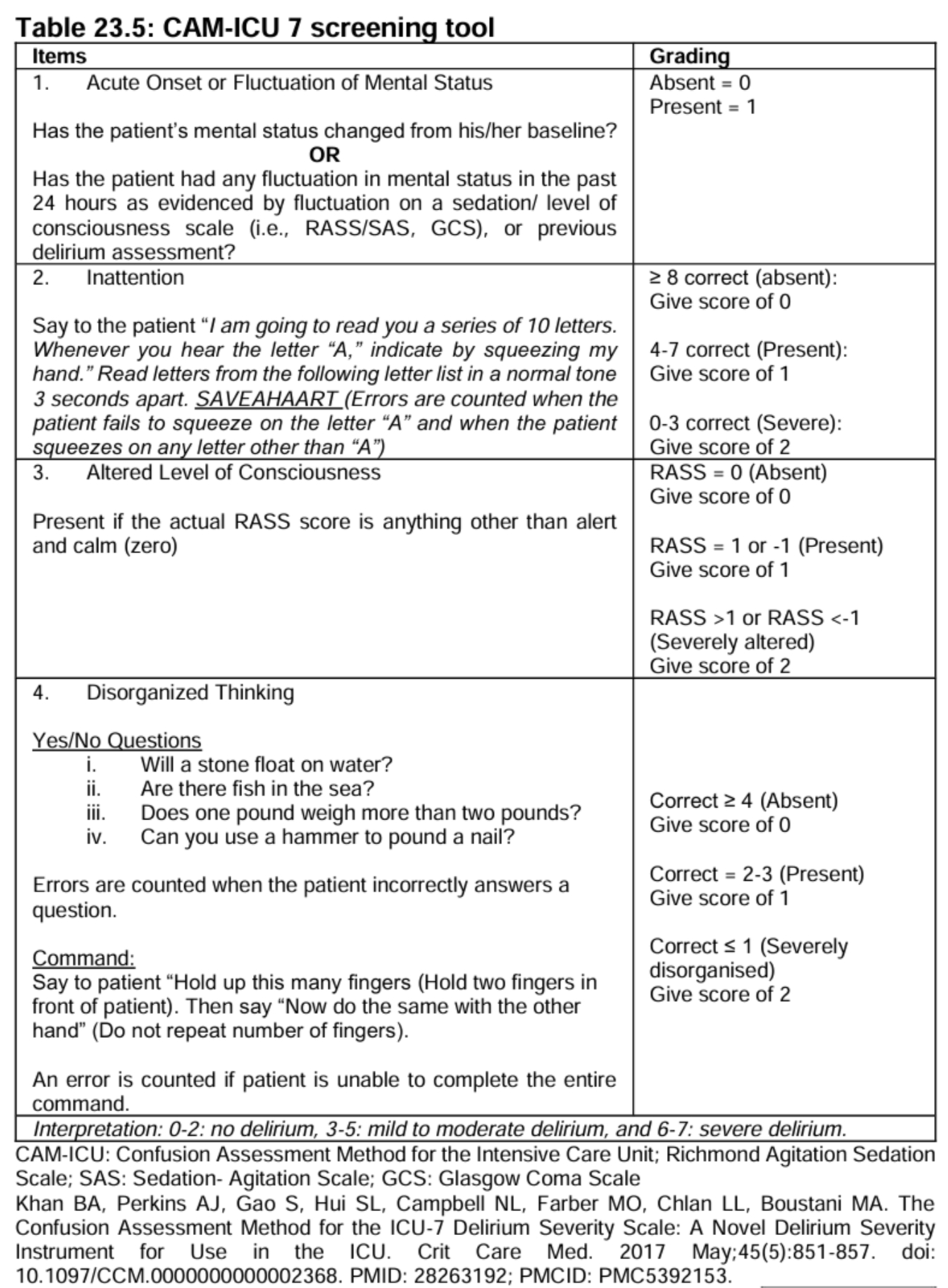
Click on the image to enlarge
Medicine Treatment
For treatment recommendations, see Delirium with perceptual disturbances.
For delirium with severe agitation and/or aggression: See: Aggressive disruptive behaviour in adults.
Note:
- Antipsychotic medicines may reduce agitated behaviour and distress, but there is no evidence that they treat the delirium itself.
- For alcohol withdrawal see: Alcohol Withdrawal Delirium (Delirium Tremens).
Standard Treatment Guidelines and Essential Medicines List for South Africa Adult Hospital _Chapter 23: Adult Critical Care_NEMLC Medicine Recommendations Review Cycle_ 2020_2023