GuidelinesOther guideline
Dental and Oral Emergencies: Introduction / Approach
Dental and Oral Emergencies
Using this section in practice:
Immediately go to the flowcharts and follow the paths as set out.
(In your own time – study the detail of the section and the specific conditions and their treatments.)
- Make sure that the contact details of the closest dentist/s are available
- The contact details of the closest maxillo-facial and oral surgeon should also be available.
- Where is the nearest place to have an Orthopantomogram (“Panorex”) radiograph taken.
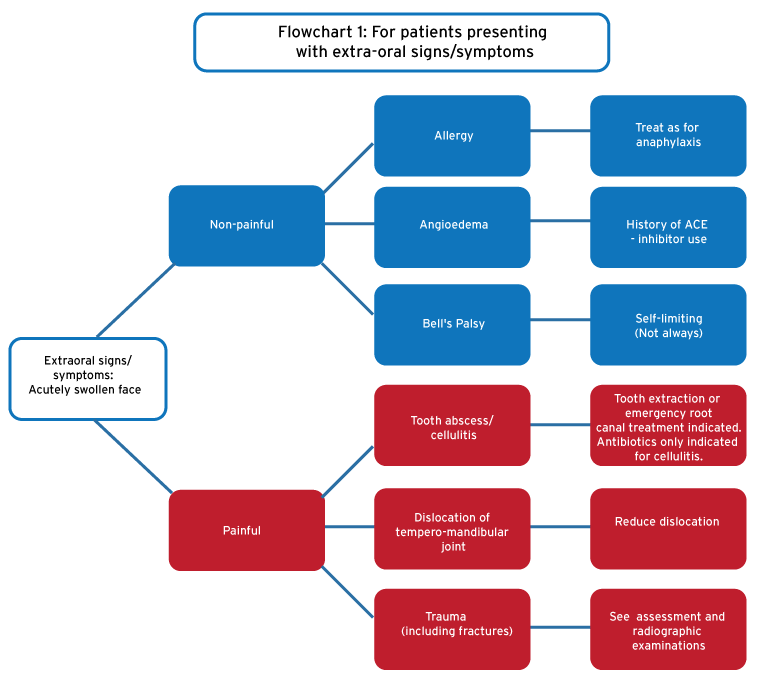
- External oral signs/symptoms: Acute swelling of the mouth (Non-painful and painful).
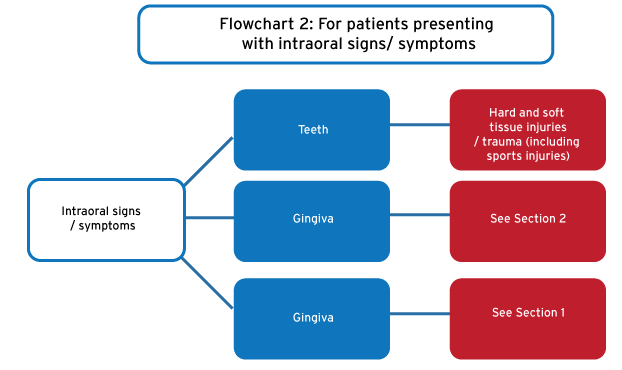
- Intraoral signs / symptoms signs: Teeth, gingival and mucosa
- Presenting with pain without visible signs and symptoms
- Child abuse vs trauma (orofacial manifestations) and recognising and reporting of suspected cases of abuse
Flowchart 1: For patients presenting with extra-oral signs/symptoms
Flowchart 2: For patients presenting with intra-oral signs/ symptoms