GuidelinesIMCI
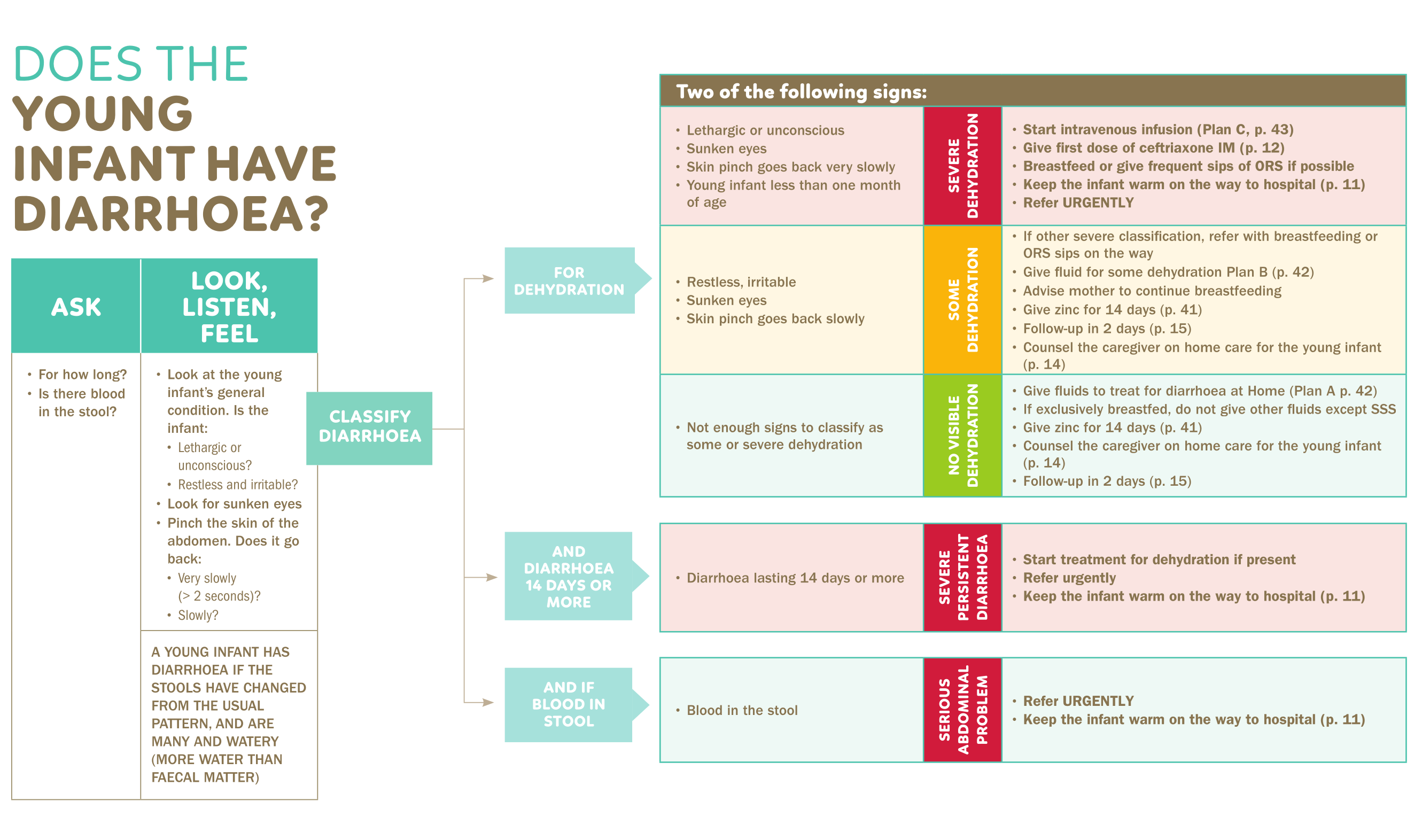
Diarrhoea (Birth up to 2 months)
IMCI - Young Infant (Birth up to 2 months)
Click here to open the above PDF
Ask
- For how long?
- Is there blood in the stool?
Look, Listen, Feel
- Look at the young infant’s general condition. Is the infant:
- Lethargic or unconscious?
- Restless or irritable?
- Look for sunken eyes.
- Pinch the skin of the abdomen. Does it go back:
- Very slowly (>2 seconds)?
- Slowly?
A young infant has diarrhoea if the stools have changed from the usual pattern, and are many and watery (more water than faecal matter)
Classify Diarrhoea
For Dehydration:
| Severe Dehydration | |
Two of the following signs:
|
|
| Some Dehydration | |
Two of the following signs:
|
|
| No Visible Dehydration | |
|
|
Diarrhoea 14 days or more
| Severe Persistent Diarrhoea | |
|
|
If blood in stool
|
Serious Abdominal problem
|
|
|
|
Integrated Management of Childhood Illness 2022; Young Infant (Birth up to 2 months); Assess, Classify and Identify Treatment: Diarrhoea
Last checked for updates: June 2023