ESMOE: Haemorrhage
ESMOE: Haemorrhage
General Management
Causes of bleeding in pregnancy
Manual removal of placenta
Causes of PPH - The 4Ts
Oxytocic drugs
Surgical methods of managing PPH
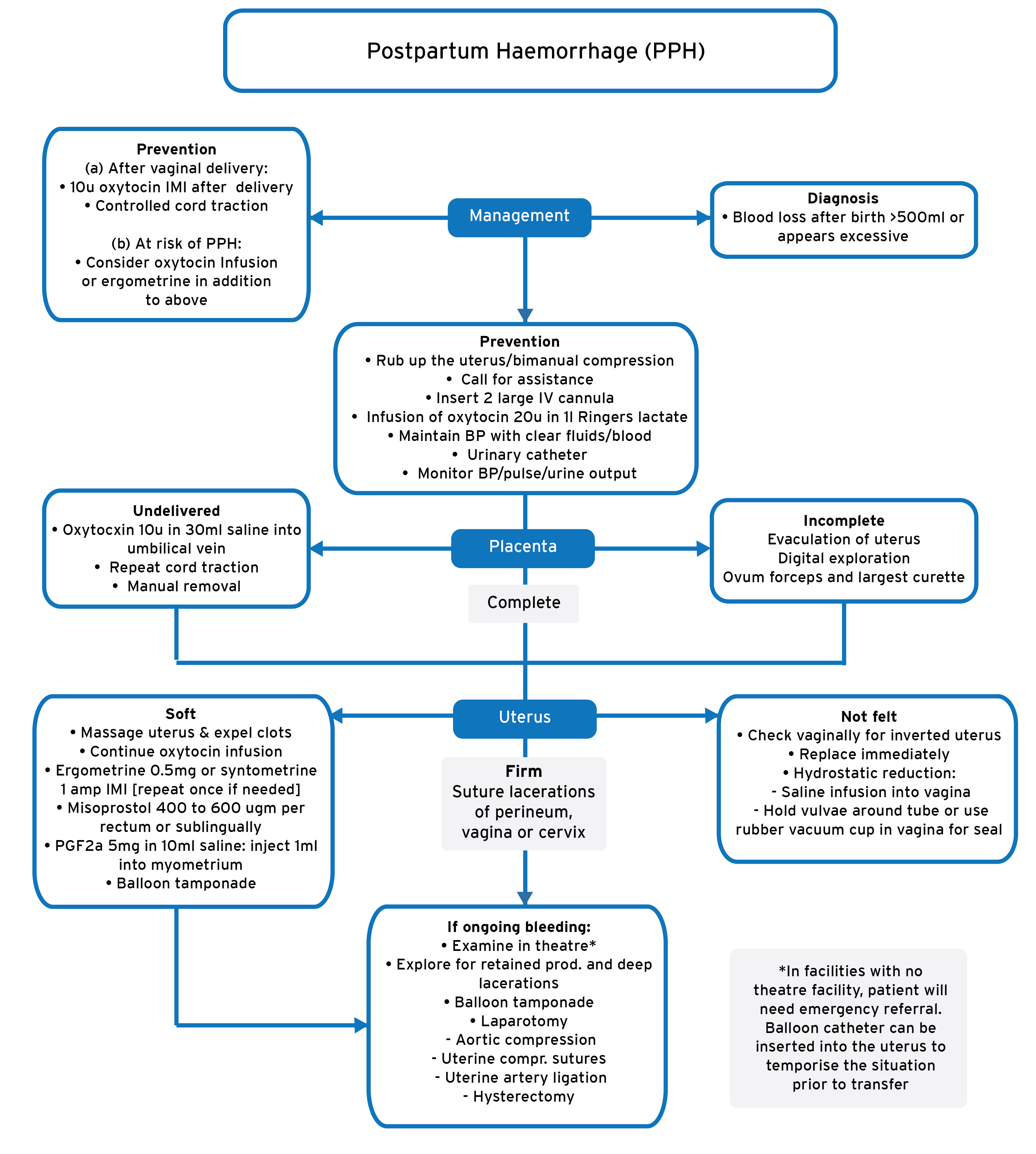
Postpartum haemorrhage (PPH) algorithm
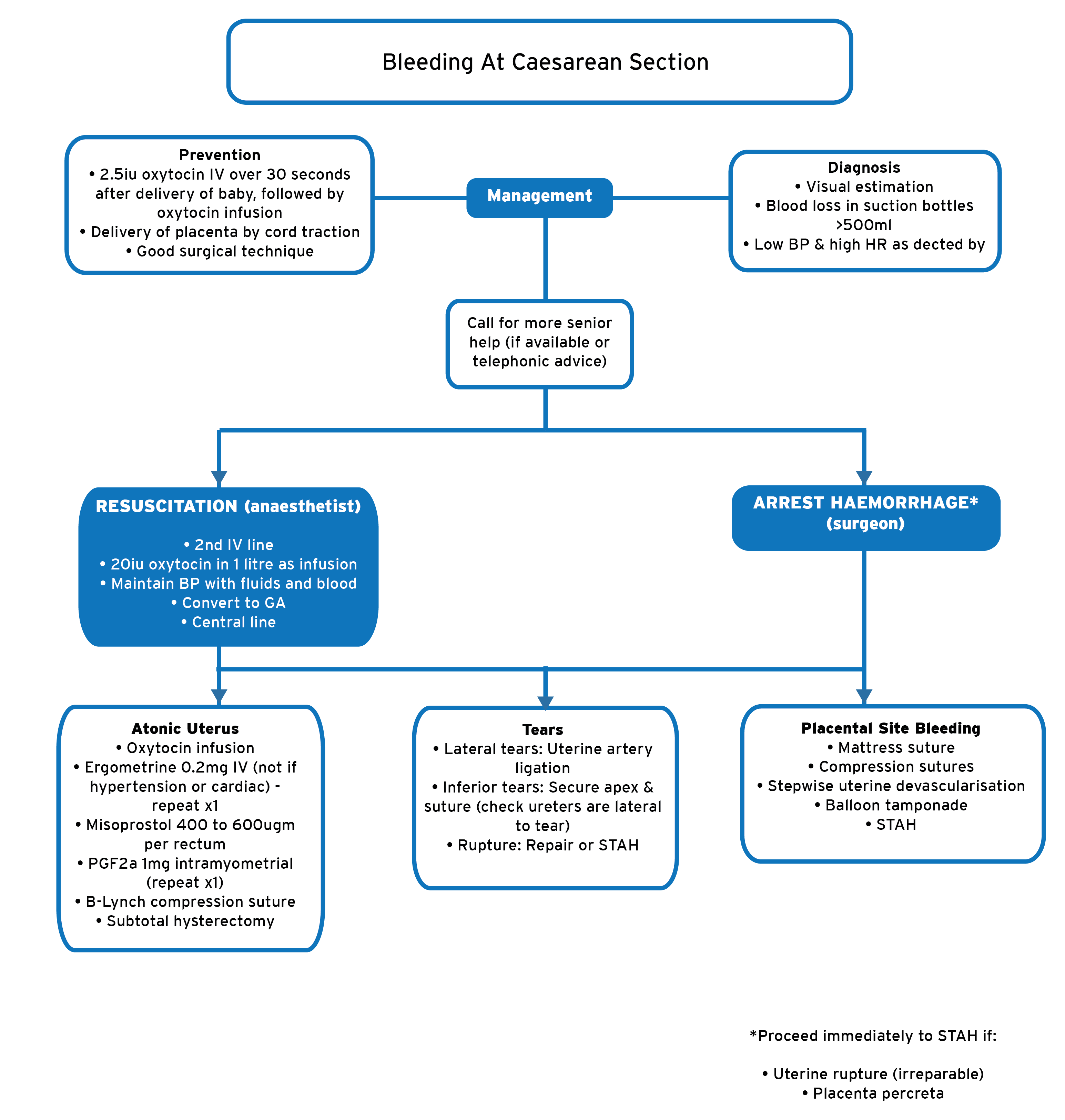
Bleeding at Caesarean section algorithm
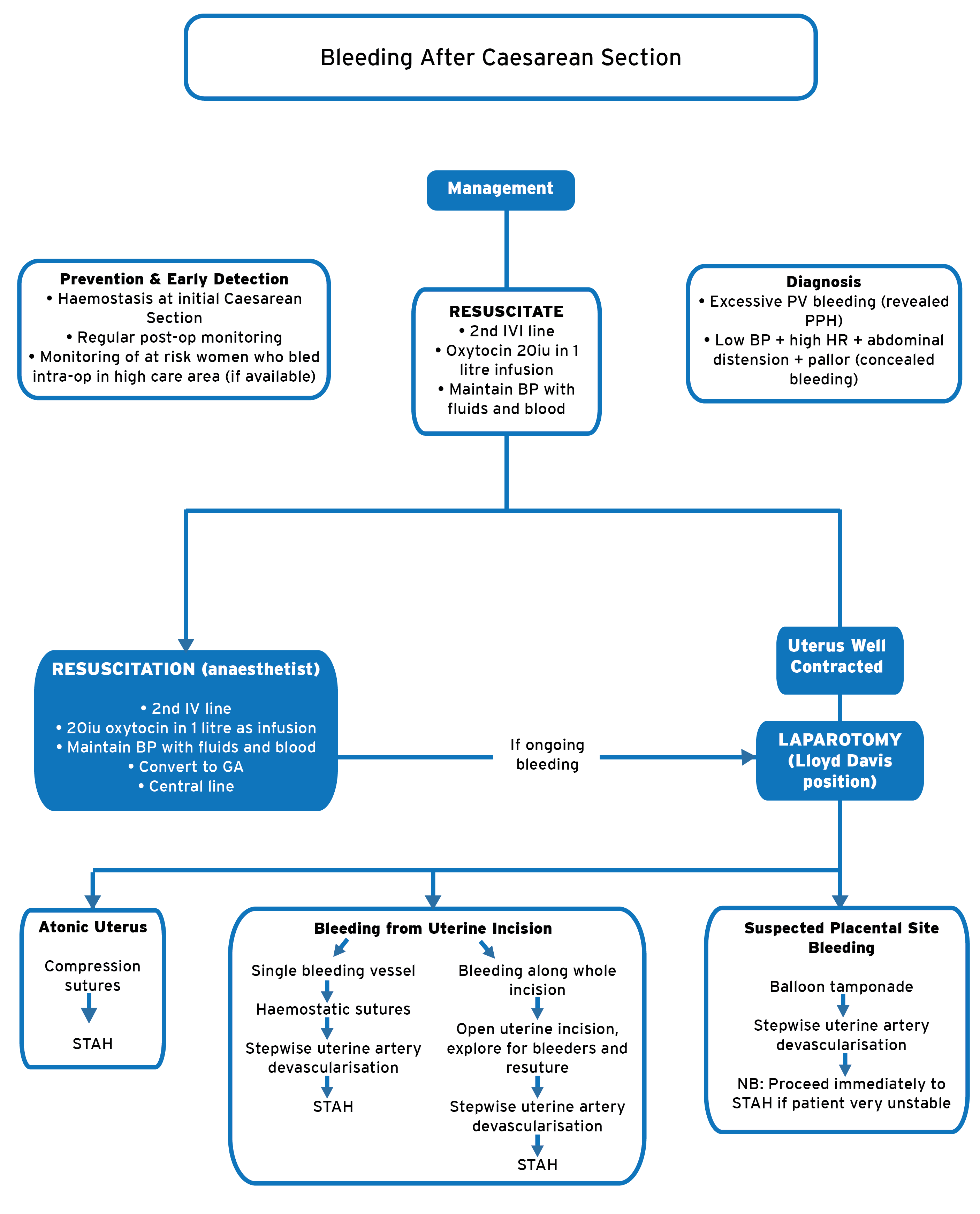
Bleeding after Caesarean section algorithm
General Management
Remember:
"Shake and Shout"
"Call a CAB"
"Big 5"
"Forgotten 4"
"Core 1"
- Assess bleeding by inspection - do not perform VE until placenta praevia has been excluded
- Commence IV fluids immediately
- Take blood for haemoglobin and cross=matching
- Empty uterus; deliver fetus if not delivered; remove placenta or retained products of conception
- Massage and bi=manual compression of uterus
- Give ocytocics
- Repair of genital tract injury
Causes of bleeding in pregnancy
- Early pregnancy
- Abortion
- Ectopic pregnancy
- Pregnancy
- Placental abruption
- Placenta praevia
- Ruptured uterus
- Labour
- Placental abruption
- Placenta praevia
- Ruptured uterus
- After delivery
- Ruptured uterus
- Uterine atony
- Trauma (cervical, vaginal or labial tears)
- Retained placenta
- Retained products
Manual removal of placenta
Required if placenta undelivered after 30 minutes or if heavy bleeding
- Emergency transfer if required
- Anaesthesia (preferably regional)
- Empty the bladder
- Give prophylactic antibiotics
- Aseptic technique
- Enter one hand into uterus with the other hand on the fundus
- Follow the umbilical cord to the placenta and uterine wall
- When placenta is fully detached extract controlled the fundus with the other hand
- Explore the cavity and examine placenta to ensure is complete
- Massage the uterus and give oxytocin infusion
Causes of PPH - The 4Ts
- Tone (uterine atony)
- Trauma (uterine, cervical, vaginal etc.)
- Tissue (retained)
- Thrombin (coagulopathy)
If available, blood should be given when losses exceed 1.5L.
Blood should be warmed, even in hot countries.
Active management of the third stage of labour reduces the risk of PPH
Oxytocic drugs
- Ergometrine 0.2mg IV (0.5mg IM)
- Syntocinon infusion (10 unites/hour)
- prostaglandin F2α 0.25 mg IM (or intramyometrial 5mg in 10ml N. saline)
- Misoprostol 400-600 micrograms orally or rectally
Surgical methods of managing PPH
- Balloon uterine tamponade
- Laparotomy
- B-Lynch procedure
- Uterine artery ligation
- Ovarian artery ligation
- Internal iliac artery ligation
- Sub/Total Hysterectomy
Postpartum haemorrhage (PPH) algorithm
Bleeding at Caesarean section algorithm
Bleeding after Caesarean section algorithm