GuidelinesIMCI
Expressing Breastmilk & Cupfeeding
IMCI - Counsel the Mother or Caregiver on Infant and Young Child Feeding
Storing and Using Expressed Breastmilk
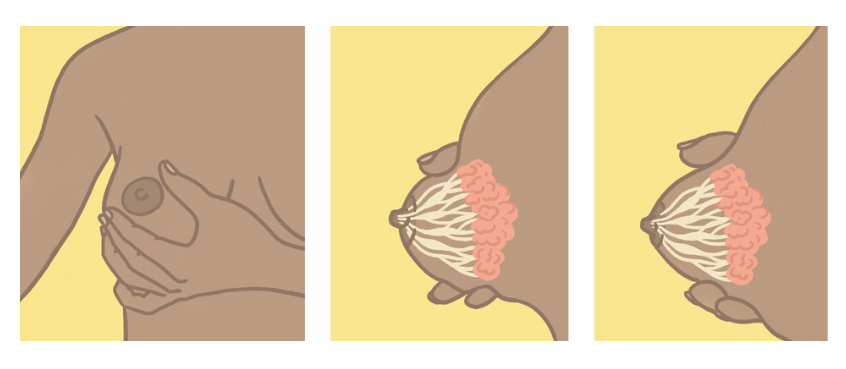
Expressing Breastmilk
- Wash hands with soap and water
- Make sure mother is sitting comfortably – a little forward
- Show her how to cup the breast just behind her areola
- Squeeze the breast gently, using thumb and the rest of fingers in a C shape. This shouldn’t hurt(don’t squeeze the nipple directly as you’ll make it sore and difficult to express)
- Release the pressure then repeat, building up a rhythm. Try not to slide the fingers over the skin
- At first, only drops will appear, but if she keeps going this will help build up her milk supply. With practice and a little time, milk may flow freely
- When no more drops come out, let her move her fingers round and try a different section of the breast
- When the flow slows down, swap to the other breast. Keep changing breasts until the milk drips very slowly or stops altogether
- If the milk doesn’t flow, let her try moving her fingers slightly towards the nipple or further away, or give the breast a gentle massage
- Hold a clean (boiled) cup or container below the breast to catch the milk as it flows
Storing and Using Expressed Breastmilk
- Fresh breastmilk has the highest quality.
- If breastmilk must be stored, advise the mother and family to:
- Use either a glass or hard plastic container with a large opening and a tight lid to store the breastmilk
- Boil the container and lid for 10 minutes before use
- If the mother is literate, teach her to write the time and date the milk was expressed (or morning, afternoon, evening) on the container before storing
- Defrost frozen breastmilk in a fridge or at room temperature over 12 hours or by letting the container with frozen breastmilk stand in cold water to defrost
- Make sure that the person who will feed the baby has been taught to cupfeed correctly (see below)
How long can breast milk be stored
| Temperature |
Duration |
| Room temperature | Up to 8 hours |
| Fridge | Up to 6 days |
| Ice box freezer (-18°C) | 3-6 months |
Cup Feeding (for giving expressed breastmilk or replacement feeds)
- Hold the baby sitting upright or semi-upright on your lap
- Hold a small cup of milk to the baby’s mouth
- Tip the cup so that the milk just reaches the baby’s lips
- The cup rests lightly on the baby’s lower lip and the edge of the cup touches the outer part of the baby’s upper lip
- The baby will become alert
- Do not pour milk into the baby’s mouth
- A low birth weight baby starts to take milk with the tongue
- A bigger / older baby sucks the milk, spilling some of it
- When finished the baby closes the mouth and will not take any more
- If the baby has not had the required amount, wait and then offer the cup again, or offer more frequent feeds.
- Give volumes as per guideline
Click here to open the above content in the original PDF view
Integrated Management of Childhood Illness 2022; Young Infant (Birth up to 2 months); Counsel the Mother or Caregiver on Infant and Young Child Feeding (Birth up to 2 months);Support on Expressing Breastmilk and Cup Feeding
Last checked for updates: June 2023