GuidelinesIMCI
First-Line ART Regimens in Children / Starting ART for Children
IMCI - Anti-retroviral therapy (ART)
All children should receive three drugs in their ART regimen Click here for initiating ART in children
Abacavir (ABC)
Give once or twice daily
- Tablets (except 60mg) must not be chewed, divided or crushed. They should be swallowed whole, with or without food
- A hypersensitivity (allergic) reaction to abacavir may occur in a very small number of children. This usually happens in the first six weeks of treatment
- Symptoms tend to worsen in the hours immediately after the dose, and worsen with each subsequent dose
- Common side-effect symptoms include fever and rash (usually raised and itchy), gastrointestinal symptoms (nausea, vomiting, abdominal pain) and respiratory symptoms (dyspnoea, sore throat, cough)
- If the child has at least 2 of the above, do NOT stop the medicine but call for advice or refer urgently
- If a hypersensitivity reaction is confirmed, abacavir will be stopped
- A child who has had a hypersensitivity reaction must never be given abacavir again. Make sure that the reaction is recorded, and that the patient knows that he/ she should never take abacavir again
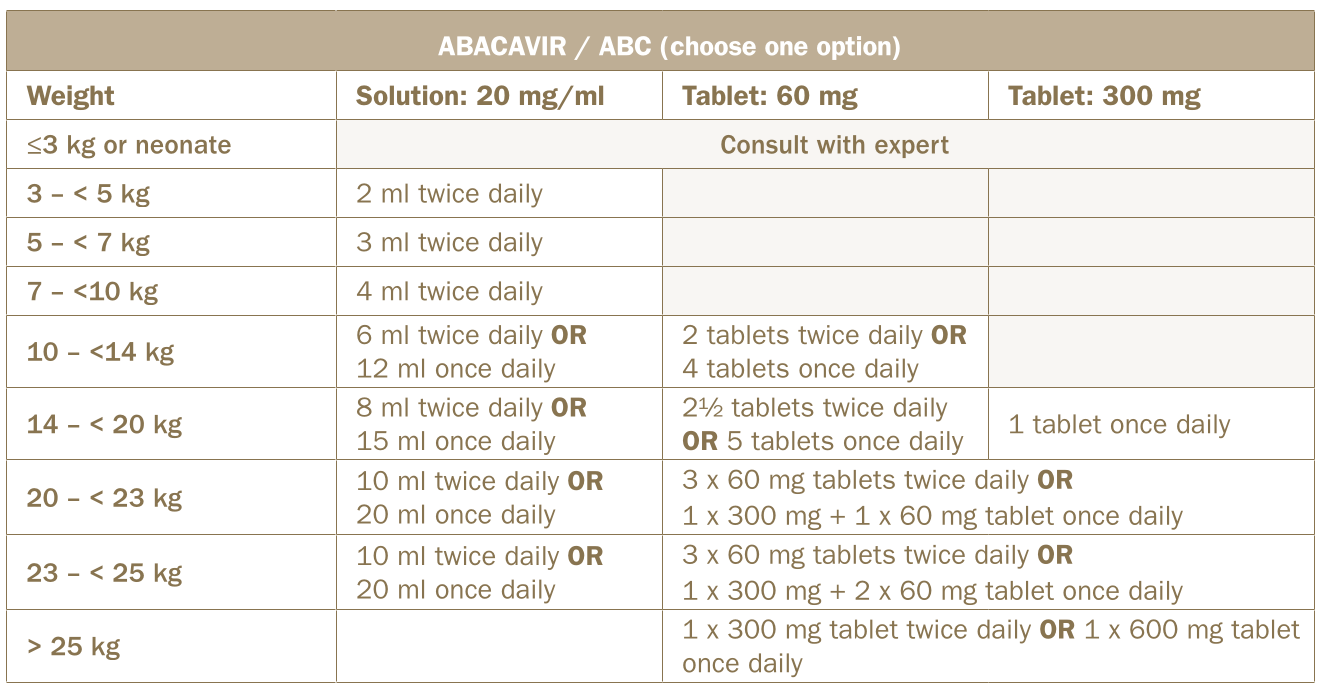
Click here to open the above content in the original PDF view
Lamivudine (3TC)
Give once or twice daily
- Lamivudine is very well tolerated and can be taken with our without food
- Tablets are scored and can be easily divided. They may be crushed and mixed with a small amount of water or food—if this is done they must be given immediately
- Side-effects are minimal ,but include headache, tiredness, abdominal pain and red cell aplasia
- If side-effects are mild continue treatment
- If the child has severe symptoms, refer urgently
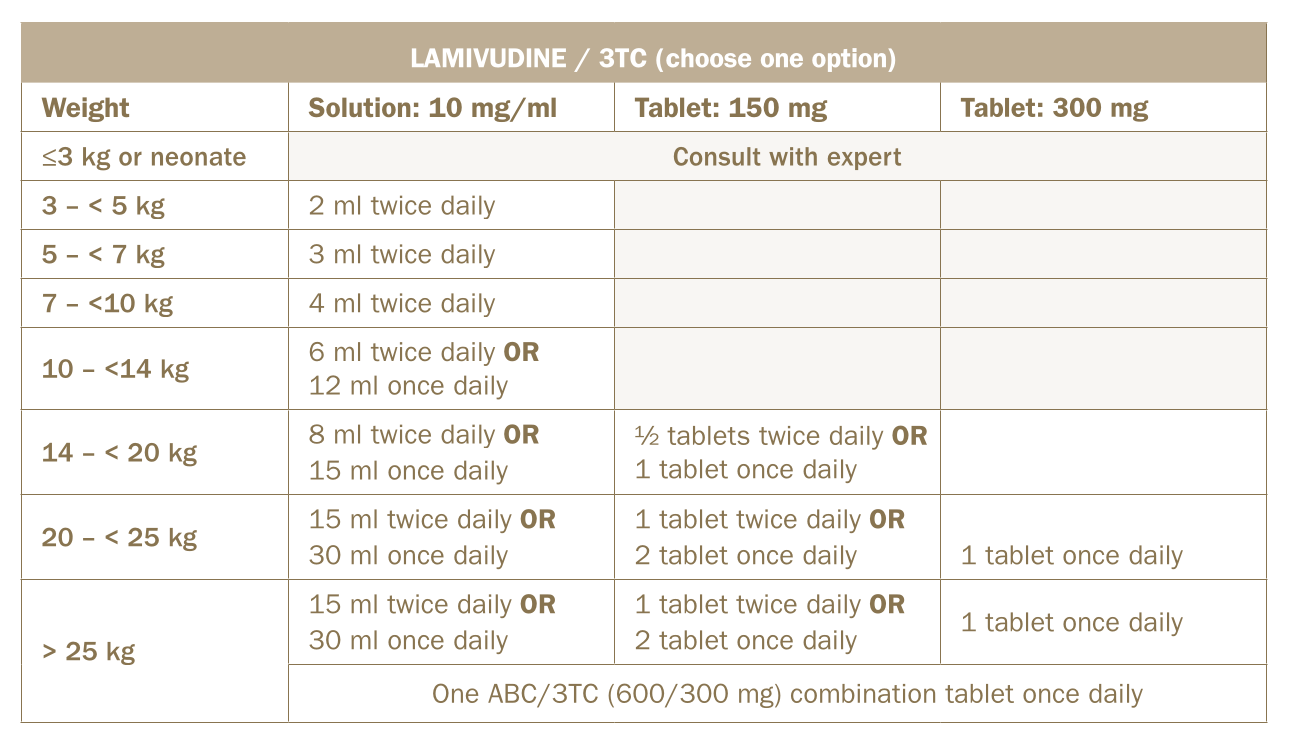
Click here to open the above content in the original PDF view
Lopinavir/ Ritonavir (LPV/R)
Must be given twice daily
- The solution should be stored in a fridge. However it can be stored at room temperature up to 25oC for up to 6 weeks
- Give with food (a high-fat meal is best)
- May need techniques to increase tolerance and palatability: coat mouth with peanut butter, dull taste buds with ice, follow dose with sweet foods
- Tablets must not be chewed, divided or crushed. Swallow them whole, with or without food
- Side-effects include nausea, vomiting and diarrhoea. Continue if these are mild
- There are many drug interactions, and doses must be adjusted for children on TB medicines.(e.g. TB drugs)
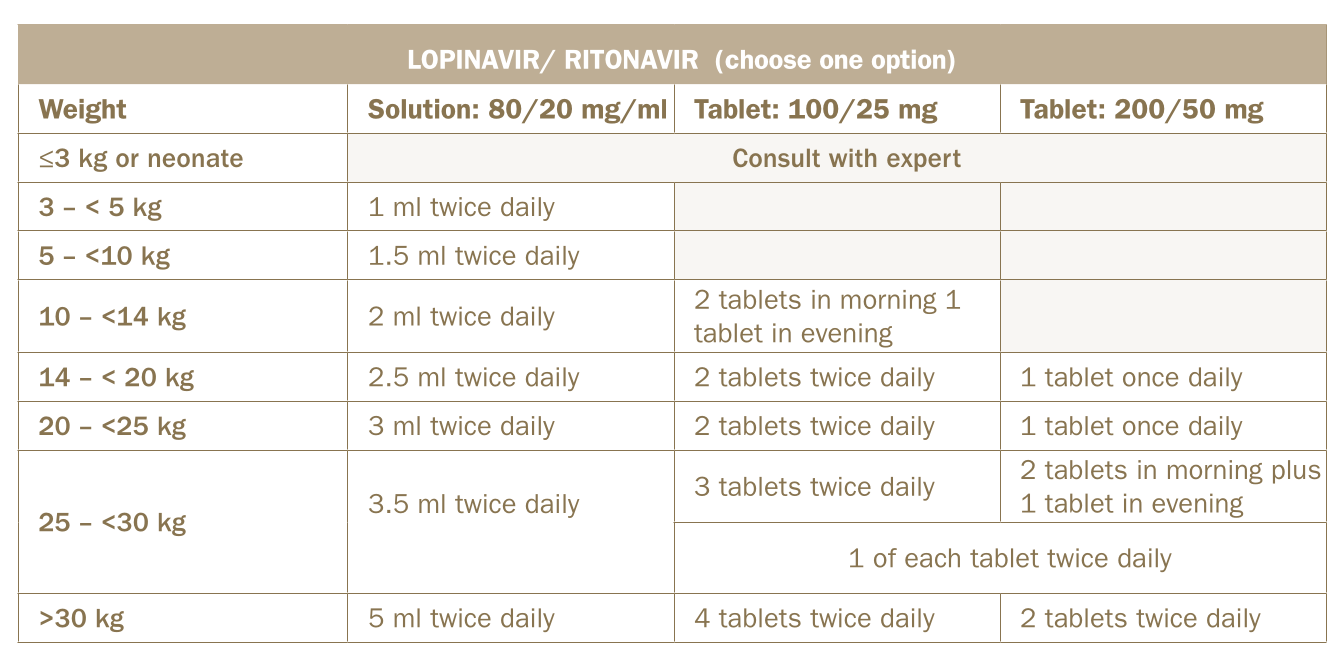
Click here to open the above content in the original PDF view
Dolutegravir (DTG)
Give once daily
- Dolutegravir belongs to a ARV drug class called integrase inhibitors
- It is not recommended for children and adolescents weighing <20 kg
- Dolutegravir is well tolerated and can be taken with or without food
- Can be taken in the morning or in the evening according to preference, but if the patient develops insomnia it should be taken in the morning
- Side-effects are usually mild and self-limiting, but may include insomnia, headache, central nervous system (CNS) effects, gastrointestinal effects, and weight gain
- There is a possible association between Dolutegravir and increased risk of neural tube defects (NTD) if taken in the first six weeks of a pregnancy. Extra care must be taken among girls/women living with HIV desiring pregnancy or who may be at risk of pregnancy for any reason
- Standard Dose:
- Children ≥20kg and <35kg regardless of age: 50 mg daily (combined with ABC and 3TC)
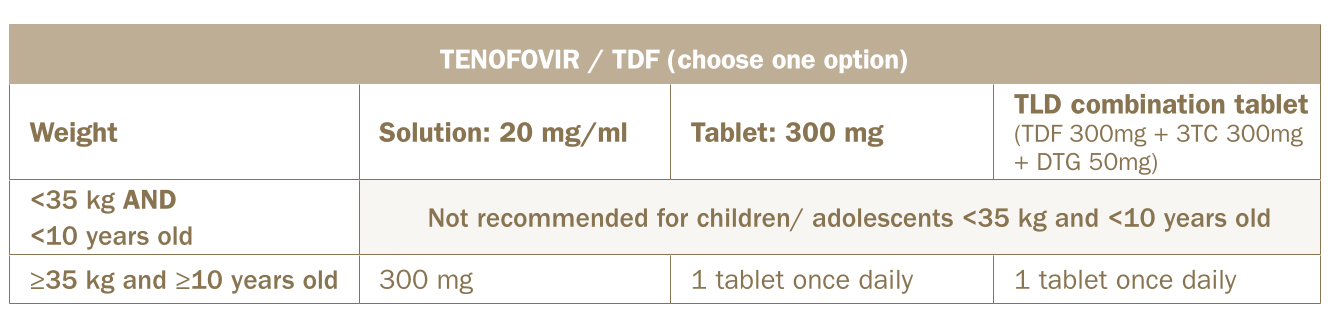
- Children/ adolescents ≥35kg and ≥10 years of age: 50 mg daily (combined with TDF and 3TC in the fixed dose formulation TLD)
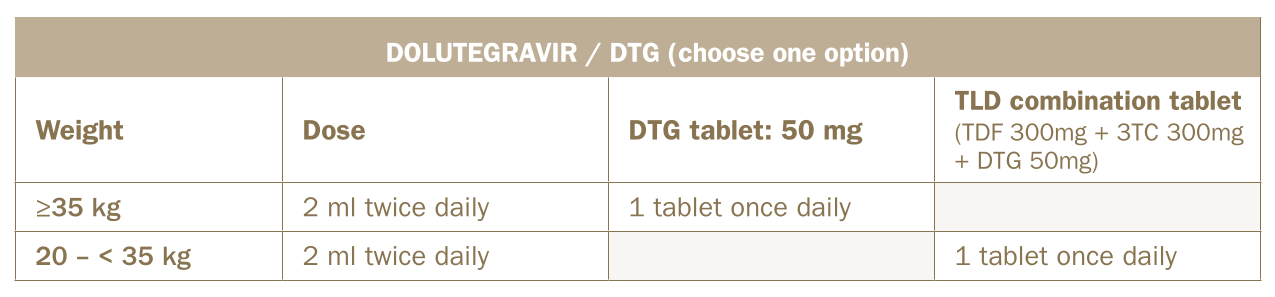
Click here to open the above content in the original PDF view
Tenofovir (TDF)
Give once daily
- Tenofovir is not recommended for children/ adolescents <10 years old and weighing < 35kg
- Tenofovir is well tolerated can be taken with or without food in the morning or in the evening
- Uncommon but important side effects of Tenofovir include reduced bone density and reduced kidney function
- Creatinine and estimated GFR are done before starting Tenofovir and then monitored at month 3, 6 and 12, and thereafter every 12 months
- If eGFR <80 ml/min: start or change to ABC in place or TDF and refer
- Estimated GFR will need to be calculated for children/ adolescents 10-<16 years:
eGFR (ml/min) = height [cm] x 40 x creatinine [μmol/l]
Click here to open the above content in the original PDF view
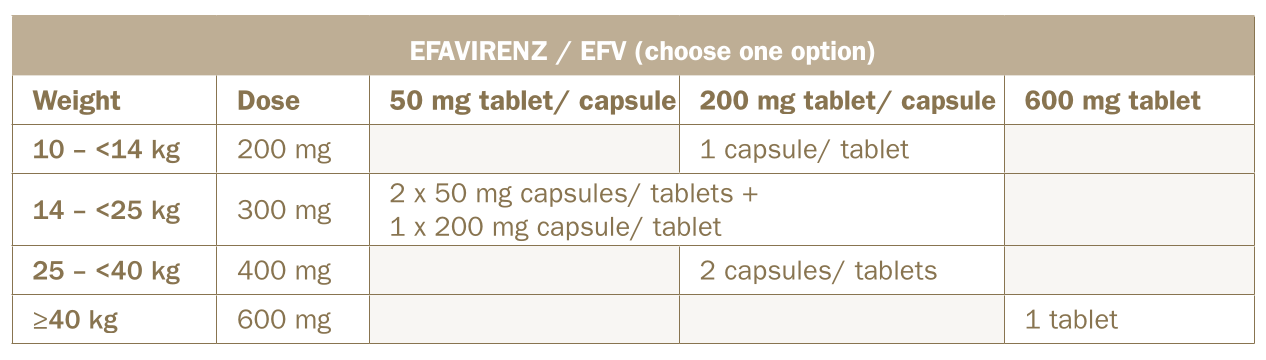
Efavirenz (EFV)
Give once daily at night
- Efavirenz is not recommended in children < 3 years and weighing <10 kg
- Can be taken with our without food, but avoid giving with fatty foods
- Tablets must not be chewed, divided or crushed. They should be swallowed whole
- Capsules may be opened and powder content dispersed in water or mixed with a small amount of food (e.g. yogurt, to disguise peppery taste) and immediately ingested
- Side-effects include skin rash, sleep disturbances and confusion/abnormal thinking. Refer children who develop these symptoms
- Best given at bed time to reduce central nervous side effects, especially during the first two weeks
Click here to open the above content in the original PDF view
Integrated Management of Childhood Illness 2022; Anti-Retroviral Therapy; Initiating ART in Children: First-line ART Regimens for Children
Last checked for updates: June 2023