GuidelinesOther guideline
Gastroenteritis 1: Assessment and Summary Algorithm
Paediatric Gastroenteritis Guidance
Summary Algorithm
History
Examination
Summary Algorithm
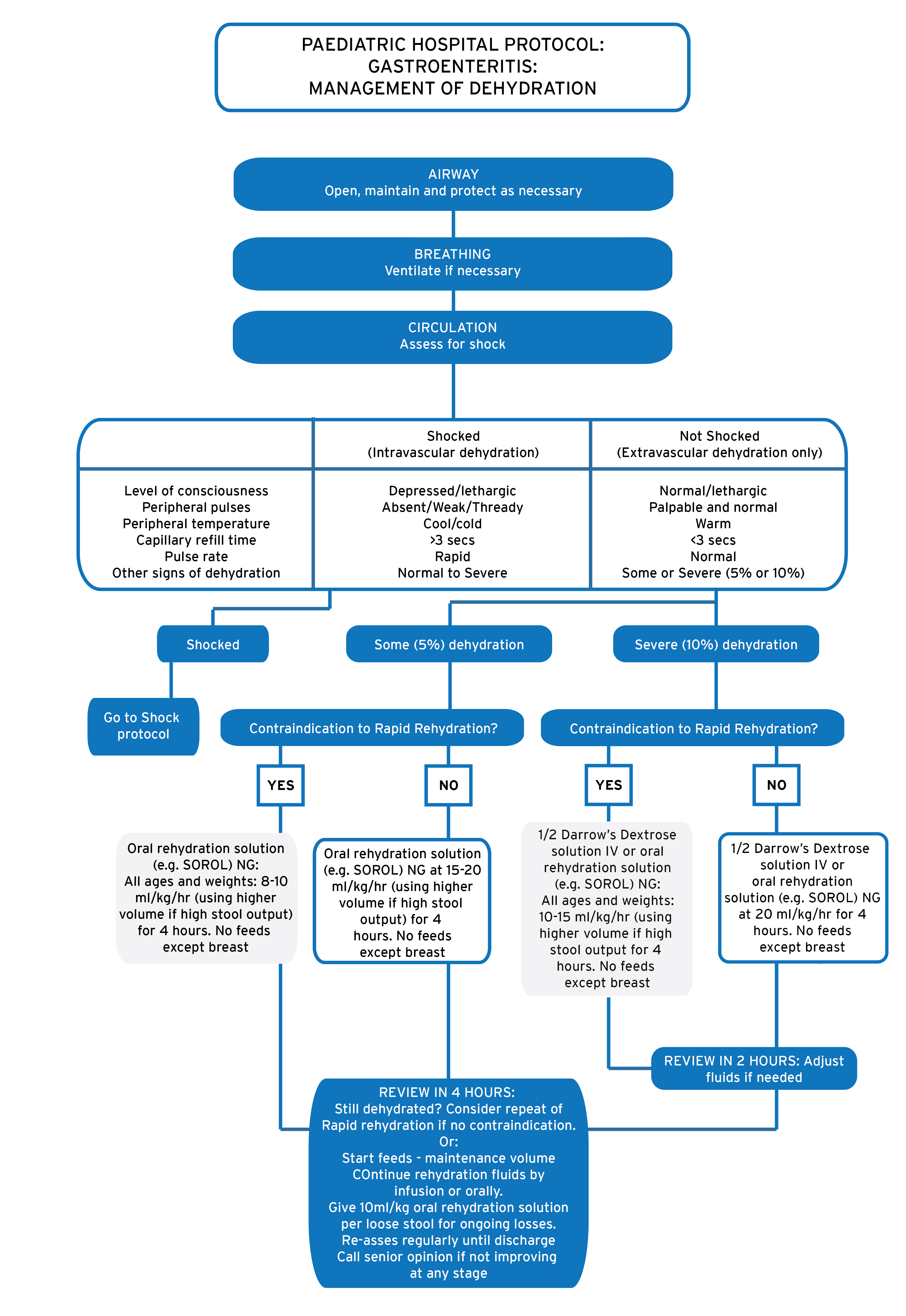
Click on image to enlarge
History
Essential history must be obtained while simultaneously assessing vital signs and hydration
- Is the child vomiting; how much?
- When was the last oral intake?
- Stools: blood, mucus, amount, consistency (watery is worst), frequency
- Diet: malnutrition risk
- Other systems: especially heart/lung disease (affects decisions re fluids)
- Use of oral rehydration solution
- Length of history (if > 10 days of loose stools, manage for ‘persistent’ or ‘chronic’ diarrhoea)
Examination
- Assess airway and breathing
- Always assess for shock next (intravascular dehydration) as it is a leading cause of death from gastroenteritis:
| Assessment of Shock | ||
| Assessment | Shocked (Intravascular Dehydration) | Not Shocked (Extra-vascular Dehydration |
| Level of Consciousness | Depressed / Lethargic | Normal or Lethargic |
| Peripheral Pulses | Absent, Weak or Thready | Palpable and Normal |
| Peripheral Temperature | Cool or Cold | Warm |
| CRT | > 3 sec | < 3 sec |
| Pulse Rate | Very rapid | Normal or Rapid |
| Signs of Dehydration | Normal to Severe | Some or Severe |
If the child is shocked, urgent fluids are required. Institute therapy immediately
3. If the child is not shocked, check for (extra-vascular) dehydration:
| Assessment of Hydration Status | |||
| Criterion | Severe Dehydration | Some Dehydration | No Dehydration |
| Weight Loss | +/‐ 10% | +/‐ 5% | Nil |
| Clinical Signs | Very Sunken eyes Lethargic | Restless or irritable Thirsty or drinks eagerly Decreased urine output Dry mouth Crying without tears Sunken eyes | Nil |
| Skin Pinch | > 2 sec | Slow but < 2 Sec | Normal |
4. Assess nutritional status as this will alter fluid volumes to be administered.
5. Calculate the fluid management according to the guidelines below, initiate the fluids and complete the rest of the clinical examination looking especially for
- Signs that may suggest electrolyte abnormality (e.g. floppiness, seizures)
- Signs of severe acute malnutrition, neurological or cardio‐respiratory disease that may alter your fluid prescription
This guidance is in part taken from:
WC Gastroenteritis Fam Med & Paeds Protocol 2014
&
New Somerset Hosp Paeds Gastro Protocol 2014