Gastroscopy and Colonoscopy
Gastroscopy and Colonoscopy
GP Open Access Gastroscopy Referral Form
Referral Criteria for Direct Access Outpatient Gastroscopy
Indications for colonoscopy
GP Open Access Colonoscopy Referral Form
Referral Criteria for Direct Access Outpatient Gastroscopy
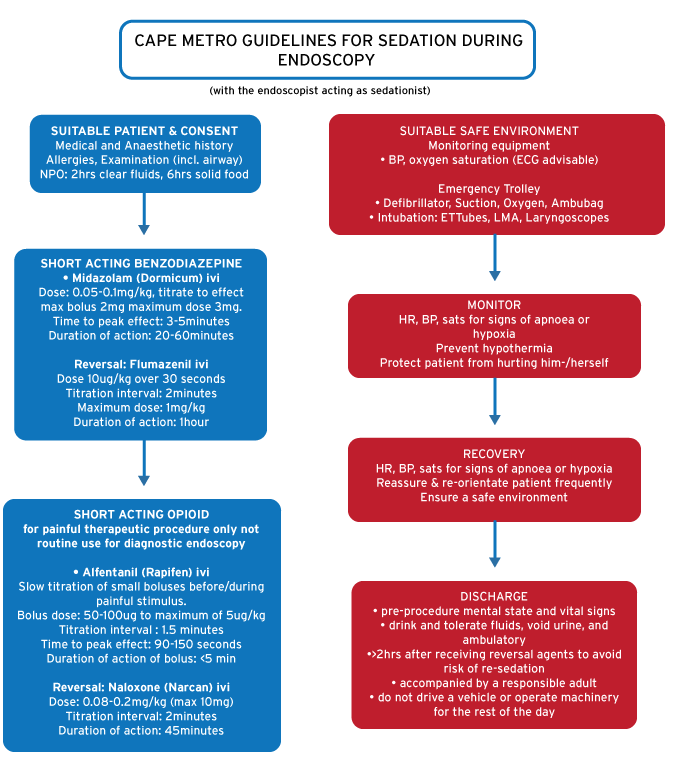
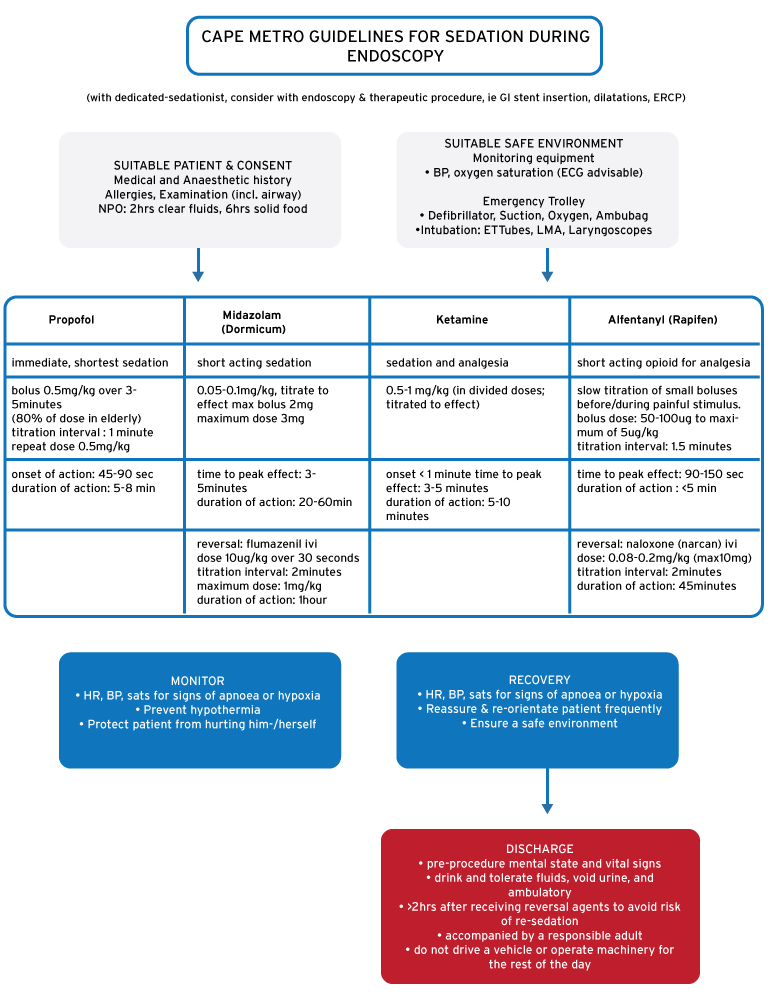
Cape Metro Guidelines for Sedation During Endoscopy
GP Open Access Gastroscopy Referral Form
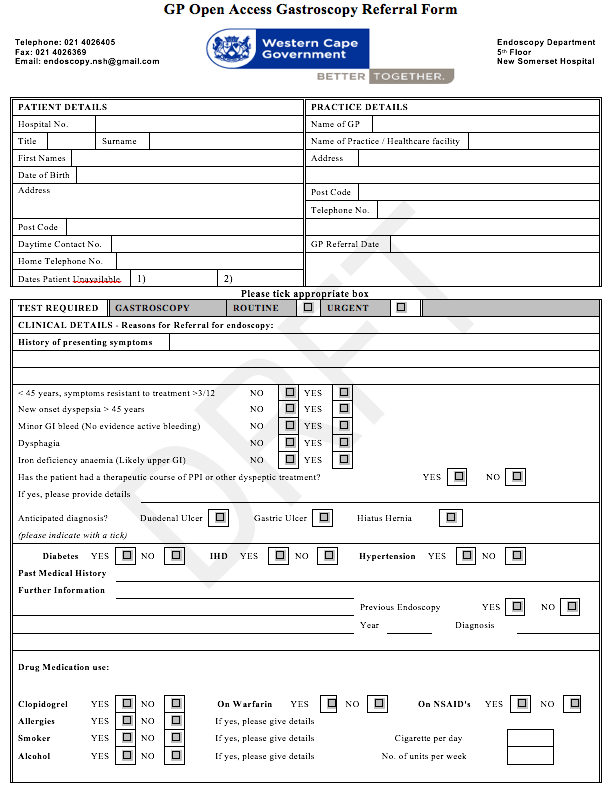
Referral Criteria for Direct Access Outpatient Gastroscopy
These criteria are designed to cover the majority of indications for referral for gastroscopy by general practitioners and non-gastrointestinal specialists.
Gastroscopy services are encouraged to provide direct access to gastroscopy for appropriate patients.
For patients falling outside these criteria, referral for a specialist assessment may need to be considered.
Please note that a referral for a diagnostic gastroscopy does not constitute a full clinical assessment of a patient’s presenting condition. It remains the responsibility of the referring practitioner to undertake this assessment.
In referring a patient for gastroscopy the referrer should:
- Inform the patient about the procedure
- Ensure they are willing to undergo the procedure
- Consider whether the patient being referred will benefit if they are frail, have multiple comorbidities or advanced malignancy (generally referral implies they are well enough to tolerate further treatment)
Urgent / Emergency category (Refer to Surgical Registrar on call)
- Significant acute GI bleeding
Two week category
- History of recent bleed (melaena stools or haematemeses but currently stable and symptoms resolved
- Progressive dysphagia
- Persistent vomiting
- Progressive unintentional weight loss
- Epigastric mass
Elective category
- Upper abdominal distress or dyspepsia that persists despite an appropriate trial of therapy or history of NSAIDs or other ulcerogenic drugs (methamphetamine)
- New-onset dyspepsia in individuals over the age of 45
- Chronic iron deficiency anaemia with the clinical exam suggesting an upper GI source
- Esophageal reflux symptoms that persist or recur despite appropriate therapy
Indications for colonoscopy
Two week category/ urgent | Eight week/ elective |
| Known or suspected CRC (on imaging, or palpable, or visible on rectal examination) Unexplained rectal bleeding (benign anal causes treated or excluded) with iron deficiency anaemia | Altered bowel habit > six weeks duration, aged ≥ 50 years Altered bowel habit > six weeks duration plus unexplained rectal bleeding (benign anal causes treated or excluded), aged 40-50 years Unexplained rectal bleeding aged ≥ 50 years Unexplained iron deficiency anaemia (exclude menstrual and urinary causes first) Family History + altered bowel habit or unexplained rectal bleeding (benign and anal causes treated or excluded), aged ≥ 40 years |
GP Open Access Colonoscopy Referral Form 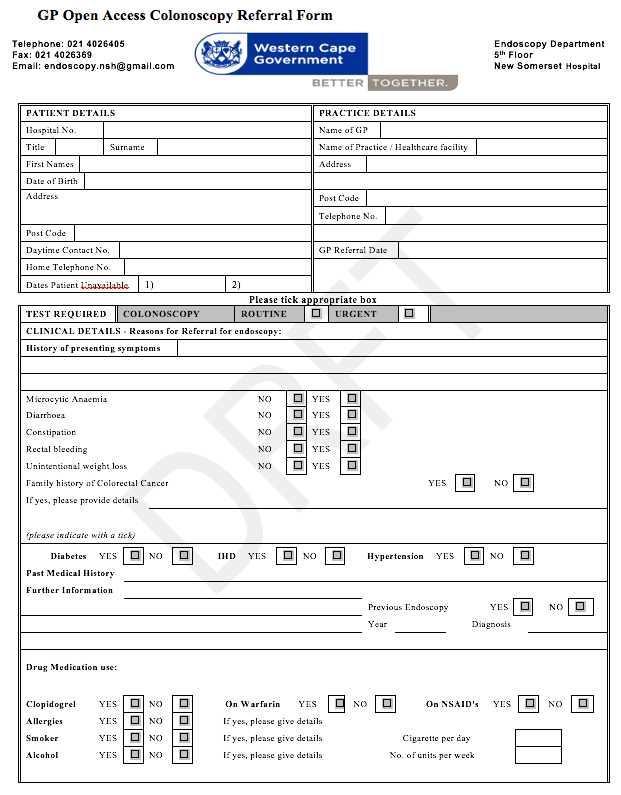
Referral Criteria for Direct Access Outpatient Colonoscopy
- These criteria are designed to cover the majority of indications for referral for colonoscopy by general practitioners.
- Colonoscopy services are encouraged to provide direct access to colonoscopy for appropriate patients.
- For patients falling outside these criteria, referral for a specialist assessment may need to be considered.
- Few symptoms in primary care practice have greater than a five percent positive predictive value for colorectal cancer (CRC).
- Please note that a referral for a diagnostic colonoscopy does not constitute a full clinical assessment of a patient’s presenting condition.
- It remains the responsibility of the referring practitioner to undertake this assessment.
In referring a patient for colonoscopy the referrer should:
- Inform the patient about the procedure
- Ensure they are willing to undergo the procedure
- Consider the ability of the patient to tolerate both the bowel preparation and the procedure
- Consider whether the patient being referred will benefit if they are frail, have multiple comorbidities or advanced malignancy (generally referral implies they are well enough to tolerate further treatment)
- If the patient has had a colonoscopy in the preceding five years, ensure there is a clear indication to repeat the procedure (the ‘miss’ rate of lesions > 1cm following a well performed colonoscopy is approximately six percent).
- Provide bowel preparation prior to the procedure
Two week category
- Known or suspected CRC (on imaging, or palpable, or visible on rectal examination)
- Unexplained rectal bleeding (benign anal causes treated or excluded) with iron deficiency anaemia (haemoglobin below the local reference range)
- Altered bowel habit (looser and/or more frequent) > six weeks duration plus unexplained rectal bleeding (benign anal causes treated or excluded) aged ≥ 50 years
Six to eight week category
- Altered bowel habit (looser and/or more frequent) > six weeks duration, aged ≥ 50 years
- Altered bowel habit (looser and/or more frequent) > six weeks duration plus unexplained rectal bleeding (benign anal causes treated or excluded), aged 40-50 years
- Unexplained rectal bleeding (benign anal causes treated or excluded) aged ≥ 50 years Unexplained iron deficiency anaemia (haemoglobin below local reference range) Menstruation is the commonest cause of iron deficiency anaemia in women - for women aged less than 55 years a menstrual history should be obtained prior to referral. Urinary loss should also be excluded.
- Family History plus one or more of altered bowel habit (looser and/or more frequent) > six weeks duration plus unexplained rectal bleeding (benign and anal causes treated or excluded), aged ≥ 40 years
- Family History plus one or more of altered bowel habit (looser and/or more frequent) > six weeks duration plus unexplained rectal bleeding (benign and anal causes treated or excluded), aged ≥ 25 years
- Suspected/assessment inflammatory bowel disease
Not accepted
- Acute diarrhoea < six weeks duration - likely infectious aetiology and self-limited
- Rectal bleeding aged less than 50 years (normal haemoglobin) consider flexible sigmoidoscopy if no anal cause
- Irritable bowel syndrome (may require specialist assessment)
- Constipation as a single symptom
- Uncomplicated computed tomography (CT) proven diverticulitis without suspicious radiological features
- Abdominal pain alone without any ‘six to eight week category’ features
- Decreased ferritin aged < 50 years with normal haemoglobin
- Abdominal mass - refer for appropriate imaging
- Metastatic adenocarcinoma unknown primary - six percent is due to CRC and in the absence of clinical, radiological, or tumour marker evidence of CRC, colonoscopy is not indicated.
Cape Metro Guidelines for Sedation During Endoscopy