Guideline Development
Guideline working group Clinical research questions Electronic Delphi process Review and research Round-table meeting (and Delphi 2 and 3) Formulation of recommendations The development of the document involved a multi-step process (Fig. 1). Guideline working group Experts in the field of critical care and those with an interest in blood management were invited by the primary authors to participa
Round-table meeting (and Delphi 2 and 3)
Formulation of recommendations
The development of the document involved a multi-step process (Fig. 1).
Guideline working group
Experts in the field of critical care and those with an interest in blood management were invited by the primary authors to participate after they had been tasked to co-ordinate a round table meeting at the CCSSA Congress of 2018. An effort was made to ensure representation from all major centres across SA, to include intensivists with different baseline specialities, and to have participants from both the public and private sectors. Owing to the nature of critical illness, specific input from the target population was not sought; however, the guideline will be made freely available for public comment.
Clinical research questions
A literature review was performed by the primary study authors to identify existing PBM guidelines. Relevant guidelines were selected from this, and the clinical research questions were derived following a review of the extensive Australian Critical Care Patient Blood Management Guidelines (Module 4) of 2012 and the British Committee for Standards in Haematology Guidelines of 2012. Additional questions were added, based on local clinical experience. All questions were compiled in a survey format that was tested among a group for ambiguity and clarity.
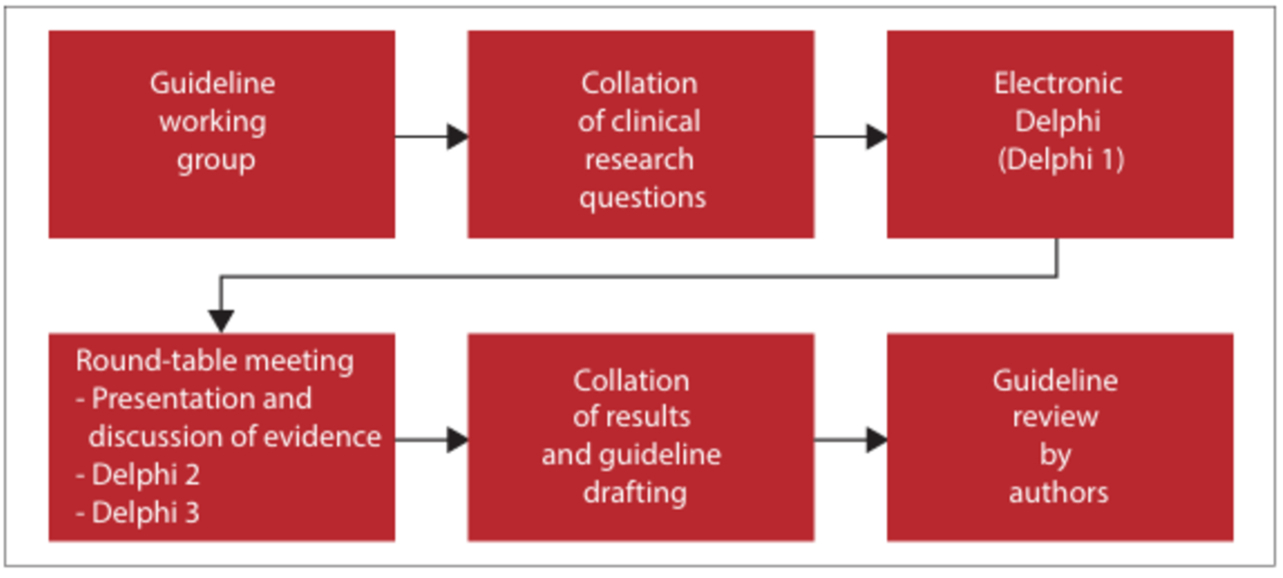
Fig. 1. Flow diagram depicting the multi-step process of the guideline development.
Click on the image to enlarge.
Electronic Delphi process
An electronic Delphi process was conducted using the questions developed above. The threshold for consensus was set at 80%. Results were collated and, where consensus was not reached, the questions were selected for further review and research.
Review and research
Questions where consensus was not reached in the electronic Delphi process were divided among the working group. Each question was allocated to two members who were tasked with researching the question further, collating the available data on the topic and presenting a summary of the data at the round table meeting.
Round-table meeting (and Delphi 2 and 3)
The data on the questions where consensus was not reached were presented at a round table meeting held in Durban on 22 August 2018. Following this, a second Delphi process was completed. The questions where consensus was still not reached were discussed further, and a third and final Delphi process was completed. Where consensus was still not reached but there was consensus within a narrow range, this was noted. If no consensus was possible, this was also noted.
Formulation of recommendations
The results of the three Delphi rounds and data syntheses from the members of the working group were collated to form the backbone of the current guidelines. Each recommendation is derived directly from the responses to the clinical research questions from the expert working group. Consensus was achieved for all but one recommendation, and the recommendations thus represent a synthesis of the best available current research evidence and the practical experience of SA intensive care clinicians. The draft guideline was prepared by the first two authors and sent to all other members of the working group for review and comment, after which the draft was modified, and sent to all members for a second review process. The final version of the guideline was then adopted after this second review process.
Critical Care Society of Southern Africa Adult Patient Blood Management Guidelines: 2019 - Round-table meeting, CCSSA Congress, Durban, 2018_SAJCC_July 2020, Vol. 36, No. 1