GuidelinesOther guideline
Head Injury: Initial Assessment
Head Injury: Initial Assessment
Assess and stabilise
Calculate the GCS
Ask about and record
Measure and record the vital signs
Examine patient
Initial management post-examination and stabilisation
All patients presenting with a head injury should be assessed by a trained member of staff within a maximum of 15 minutes of initial contact.
GOAL: To determine if high or low risk for brain and cervical spine injury
Assess and stabilise
- Airway
- Breathing
- Circulation
Calculate the GCS
If < 4 years old, use the Children’s GCS.
Ask about and record
- Type of head injury (e.g. MVA, stab)
- How it happened
- Alcohol, drugs
- Amnesia for events
- Vomiting
- Previous brain surgery
- Medications (especially warfarin)
Measure and record the vital signs
BP, pulse, respiratory rate
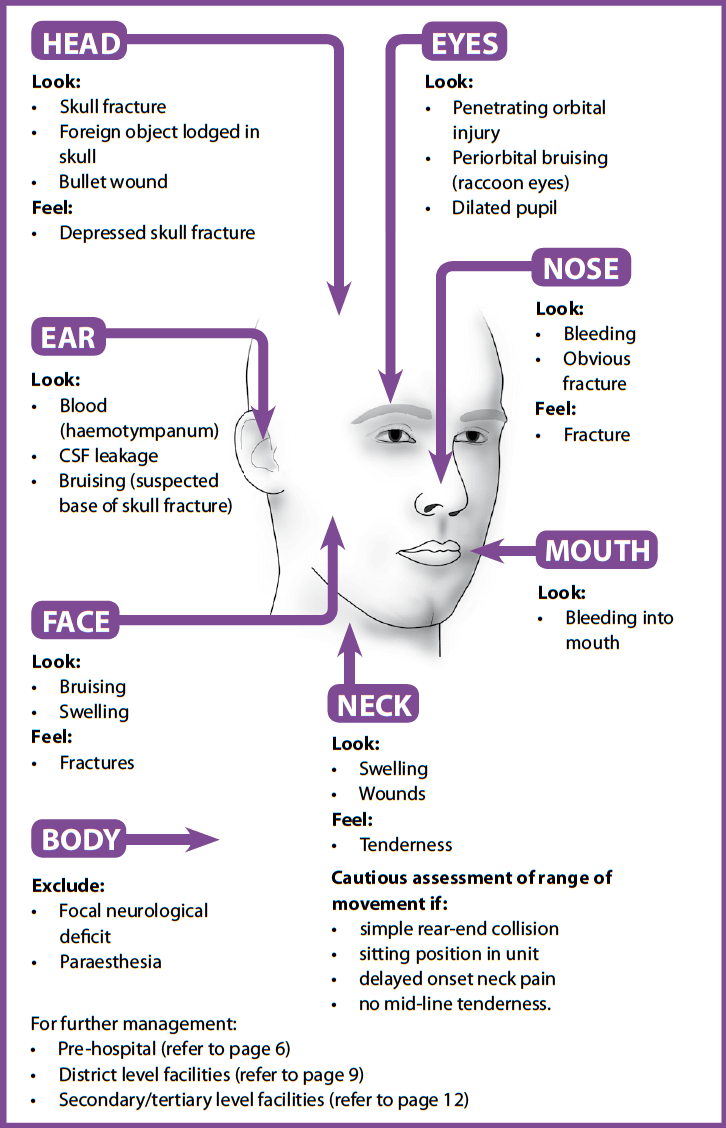
Examine patient
Look for signs of significant head injury (refer to page 5)
Initial management post-examination and stabilisation
- Immobilise the c-spine (if not already done) if: GCS <15, Neck pain or tenderness, Focal signs, Paraesthesia or if not able to test for range of motion
- Monitor every 15 minutes: GCS, pupil size and reactivity, limb movement, HR, RR, BP, O2 sats
- Skull and c-spine x-rays as appropriate