HIV in Adolescence
ICD-10 codes: B20-24 DESCRIPTION Adolescence encompasses the period of physical and psychological development from the onset of puberty to maturity. HIV in adolescents may be due to: Vertical infection in infancy that presents as long term non-progressors; or Sexually acquired HIV from unprotected intercourse. Increasing numbers of perinatally infected infants are surviving to adolescence. Adoles
ICD-10 codes: B20-24
DESCRIPTION
Adolescence encompasses the period of physical and psychological development from the onset of puberty to maturity. HIV in adolescents may be due to:
- Vertical infection in infancy that presents as long term non-progressors; or
- Sexually acquired HIV from unprotected intercourse.
Increasing numbers of perinatally infected infants are surviving to adolescence.
Adolescence is a high risk period for non-adherence to therapy. Mood disorders, denial, peer pressure, self-esteem and suicide risk are more common and patients may need to be referred for psychological support.
Education about sexual and reproductive health should be commenced early. Every encounter with the adolescent needs to be maximally utilised to discuss condom and contraception use to protect against unplanned pregnancies and STI transmission including HIV is essential. Schools should be taking an active role in this education. Sexually active youth need to be screened for STI symptoms and managed appropriately.
Consent
The current acts and regulations should be followed for testing, treatment and disclosure.
Disclosure
All adolescents need to be aware of their HIV status. This should be handled sensitively. In addition, disclosure of diagnosis has ramifications for adherence. Disclosure should be planned with the caregiver and usually takes place over 2–3 visits. Disclosure should start in childhood using non-specific terms such as ‘germ’ and ‘medicine’, building up to full disclosure around 10 years of age. Intervention by a social worker is useful where appropriate, although skilled counsellors often manage disclosure. Determine what the adolescent already knows and discuss with the caregiver who should disclose it and where.
Dosage of ARVs
In children over the age of 10 years and over 30 kg use adult dosage regimes – consult ART guideline1.
The transition from paediatric ART regimens to adolescent/adult regimens:
- Adolescents with an undetectable VL (< 50 copies/mL) and no side effects on ABC + 3TC + DTG can remain on the same regimen until the patient becomes eligible for the TDF + 3TC + DTG (TLD FDC) at 10 years of age and weighing ≥ 30 kg.
- When an adolescent reaches 10 years of age and is ≥ 30 kg, a creatinine level, calculation of the estimated glomerular filtration rate (eGFR) using a standard formula, and urine strip test should be performed.
- If the eGFR is > 80 mL/min and there is no proteinuria on a urine strip test, the patient can be switched to TDF + 3TC + DTG (TLD FDC).
- If the eGFR is < 80 mL/min or there is > 1+ proteinuria on a urine strip test, then refer to an expert for advice before switching.
Transition from child to adolescent regimen
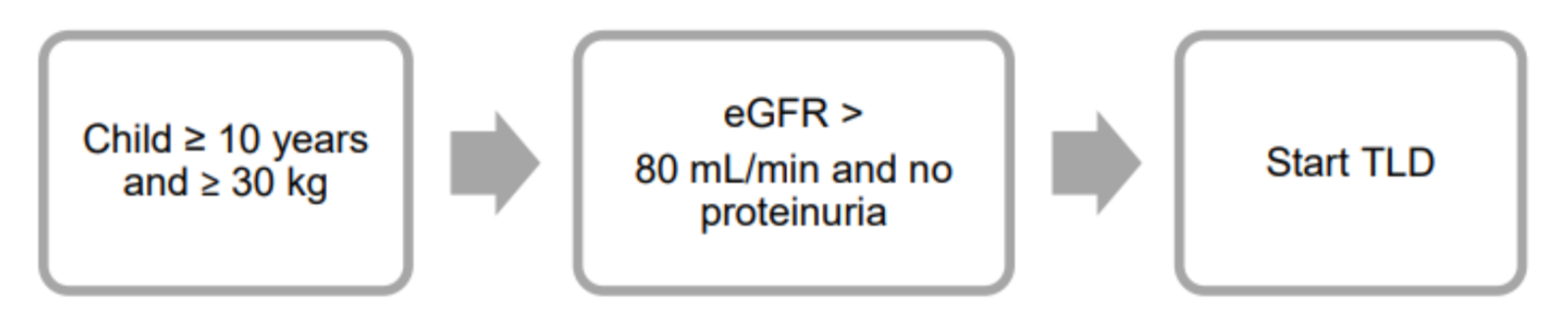
Click on image to enlarge
Contraception in HIV infected adolescents on ART
Hormonal contraceptives and IUCDs do not prevent sexually transmitted infections. Additional use of condoms is required.
- Intra-uterine contraceptive device (IUCD): HIV is not a contraindication to IUCD use and may be used in adolescents on ART, e.g. 380 mm2 copper – standard type.
- Progestogen-only subdermal implant contraceptive, e.g. levonorgestrel, 150 mg, subdermal two-rod implant.
Note:
Progestogen-only subdermal implant should NOT be used in patients on efavirenz. Additional non-hormonal contraception is required during and for up to 28 days after discontinuation of enzyme-inducing agents, including rifampicin, efavirenz, and many anticonvulsants (e.g. carbamazepine, phenobarbital, phenytoin).
- Injectable contraception: e.g. medroxyprogesterone acetate (longacting), IM, 150 mg, 12 weekly.
Note:
It is unnecessary to shorten the dosage interval for women taking concomitant enzyme-inducing drugs, e.g. rifampicin, antiretrovirals and anticonvulsants.
- Combined oral contraceptives (COCs) are indicated for motivated patients where adherence is more likely but are associated with drug-drug interactions.
Standard Treatment Guidelines and Essential Medicines List for South Africa, Hospital Level, Paediatrics, 2023 Edition
Chapter 9: Human Immunodeficiency Virus Infections, 9.5 HIV In Adolescence