Intra-abdominal Infection
This guideline aims to assist healthcare workers with antibiotic prescribing for common clinical syndromes in adult patients in South Africa, utilizing Local and International guidelines, key publications, and expert opinion.
Alternative antibiotic regimens
Definitions and causes
Infections in the abdomen can be divided into the following main groups:
- Infections of the biliary system, including cholecystitis and cholangitis
- Infections of the bowel, including appendicitis and diverticulitis
- Intra-abdominal collections or abscesses
- Peritonitis, including bowel perforations and spontaneous bacterial peritonitis (SBP) related to liver disease
Common aetiologies
Empiric antibiotic therapy for community-acquired intra-abdominal infections should cover all of the following organisms:
- Enteric gram‐negative bacilli: E. coli, K. pneumoniae
- Anaerobic organisms
- Enteric streptococci
Other possible causes in health care-associated infections or severely ill patients include:
- Enterococci
- Candida
- MRSA
Tests
Most cases will require abdominal imaging (either ultrasound or CT), unless there is a clear indication for urgent laparotomy.
- Blood culture is recommended for patients with sepsis syndrome and suspected intra‐abdominal infection.
- Culture of infected material is generally not helpful but is recommended in the following situations:
- HCAI
- SBP
- Infections with incomplete source control (e.g. inability to clear liver abscess)
- Re-do laparotomies
Diagnosis and management
1. Spontaneous bacterial peritonitis
Diagnosis:
- Ascitic fluid aspirate with WCC > 250 cells/mm3
- Positive ascitic fluid culture (low sensitivity; high specificity if sample taken properly)
Management:
- Ceftriaxone 1 g IV daily for 5 days
- Add ampicillin 1 g QID in the following situations only:
- Cholestatic liver disease
- Fulminant liver failure (encephalopathy with coma)
- Not responding to ceftriaxone after 48 hours
2. Most other intra-abdominal infections
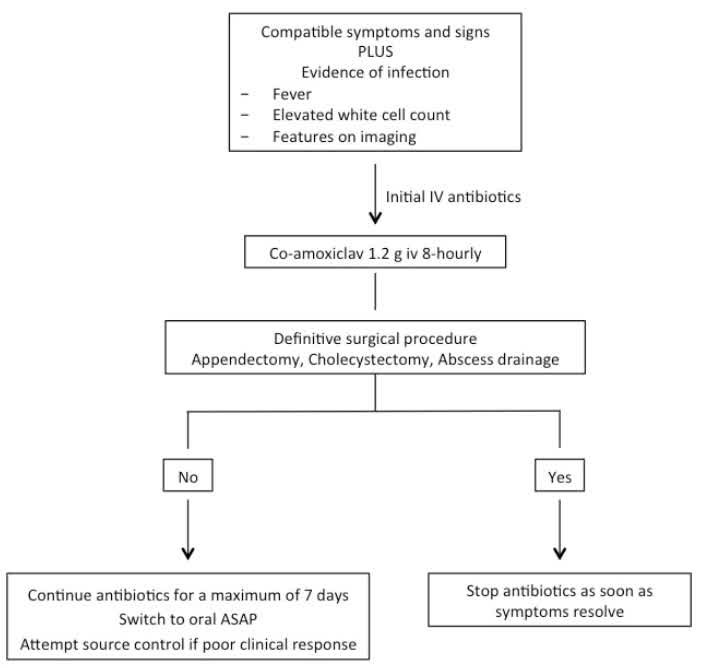
Alternative antibiotic regimens
- Co-amoxiclav unavailable:
- Ampicillin 1 g IV 6 hourly PLUS gentamicin 6 mg/kg/day PLUS metronidazole 500 mg IV 8‐hourly OR
- Ceftriaxone 1 g daily PLUS metronidazole 500 mg 8-hourly
- Severe penicillin allergy:
- Ciprofloxacin 400 mg IV 8-hourly PLUS metronidazole 500 mg IV 8-hourly