Lower Respiratory Tract Infection
This guideline aims to assist healthcare workers with antibiotic prescribing for common clinical syndromes in adult patients in South Africa, utilizing Local and International guidelines, key publications, and expert opinion.
Acute bronchitis
Acute Exacerbation of COPD (AECOPD)
Pneumonia
ACUTE BRONCHITIS
Definition
Self‐limited inflammatory process involving large and mid‐sized airways
Common aetiologies
- Respiratory viruses (> 90%)
- Influenza
- Parainfluenza 3
- Respiratory syncytial virus
- Human metapneumovirus
- Non-viral (<10%)
- Suspect if prolonged cough, longer incubation period, local outbreaks
- Mycoplasma pneumoniae
- Chlamydia pneumoniae
- Bordetella pertussis
- No association with S. pneumoniae or H. influenzae in patients without evidence of underlying lung disease
- Suspect if prolonged cough, longer incubation period, local outbreaks
Tests
No investigations are required in the vast majority of cases:
- Gram stain not recommended
- Nasopharyngeal swab for influenza PCR not recommended for uncomplicated influenza‐like illness
Diagnosis and management
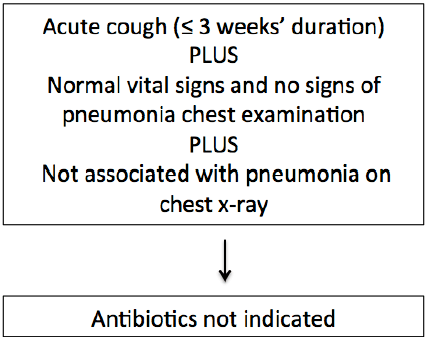
*Chest X-‐rays are not necessarily indicated for all patients with acute bronchitis and should be performed only if likely to influence management
ACUTE EXACERBATION OF COPD (AECOPD)
Definition
Acute increase in baseline dyspnoea, cough and/or sputum above the normal day‐to‐day variations, requiring a change in medication. Up to 80% of AECOPD have an infectious aetiology.
Common aetiologies
- Viral (up to 50%) – more common in winter months
- Rhinoviruses
- Parainfluenza
- Coronavirus
- Influenza (in non-‐vaccinated)
- RSV
- Bacterial
- H. influenzae
- S. pneumoniae
- M. catarrhalis
- Enterobacteriaceae (frequent hospitalisation and antibiotic use)
- Atypical bacteria are not implicated in AECOPD
Tests
|
Mild |
Moderate (Requiring hospitalisation) |
Severe (Requiring high care/ICU) |
|
|
|
Diagnosis and management
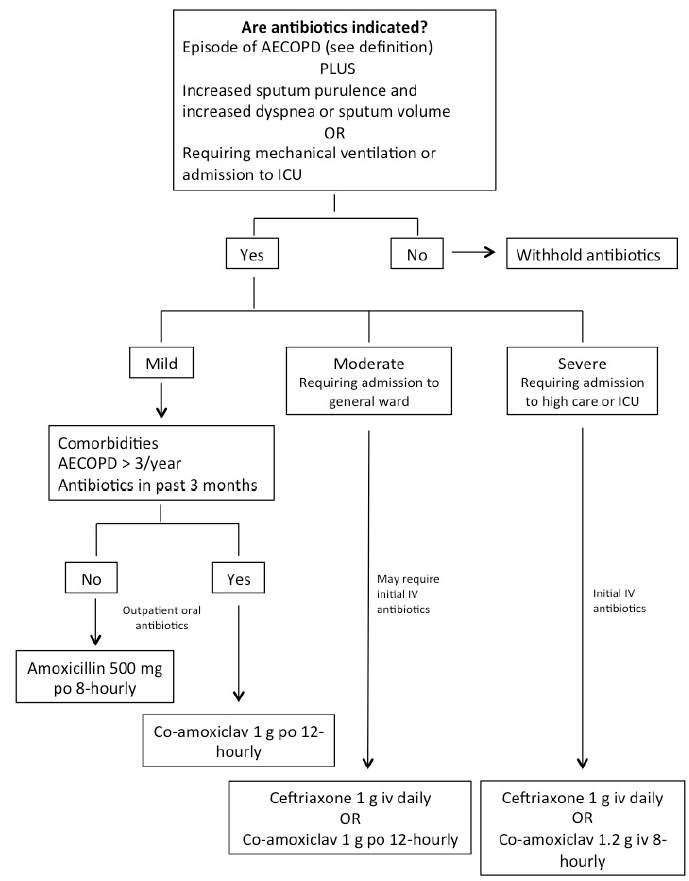
Prevention
- Annual influenza vaccine recommended for all patients with COPD
- Pneumococcal polysaccharide (PPSV23) vaccine is recommended for all individuals over 65 years of age and anyone with COPD
- Antiviral chemoprophylaxis is not recommended
PNEUMONIA
Definition
Pneumonia is acute infection of lung parenchyma distal to the terminal bronchiole and causes consolidation.
Common aetiologies of community acquired or health care associated pneumonia
| CAP | HCAP | |
| Agent | Comments | Increased risk for infection with MDR pathogens
|
| S. pneumoniae | Most common cause | |
| H. influenzae | More common in COPD | |
| Tuberculosis | More common in HIV | |
‘Atypical organisms’
|
Not cultured No specific clinical/ radiological features Suspect if risk factors or non-‐response to beta-‐ lactams |
|
| Oral anaerobes | Risk factors: alcoholism, aspiration, lung abscess | |
| P. jirovecii | HIV, bilateral infiltrates, desaturation on minimal exertion, poor response to beta-‐lactams |
|
| Respiratory viruses | Seasonal Risk factors: pregnancy, elderly, co-‐morbidities |
|
Tests
| CAP | HCAP |
| Only perform if likely to influence empiric management decisions Mild (CRB-65 score ≤ 2)
|
Always send specimens prior to initiation of empiric antibiotics In all cases
|
NP = Nasopharyngeal, DFAT = direct fluorescent antibody test
*Chronic cardio‐pulmonary disease, alcohol abuse, immune suppression (excluding HIV), CKD, cirrhosis
Diagnosis and management
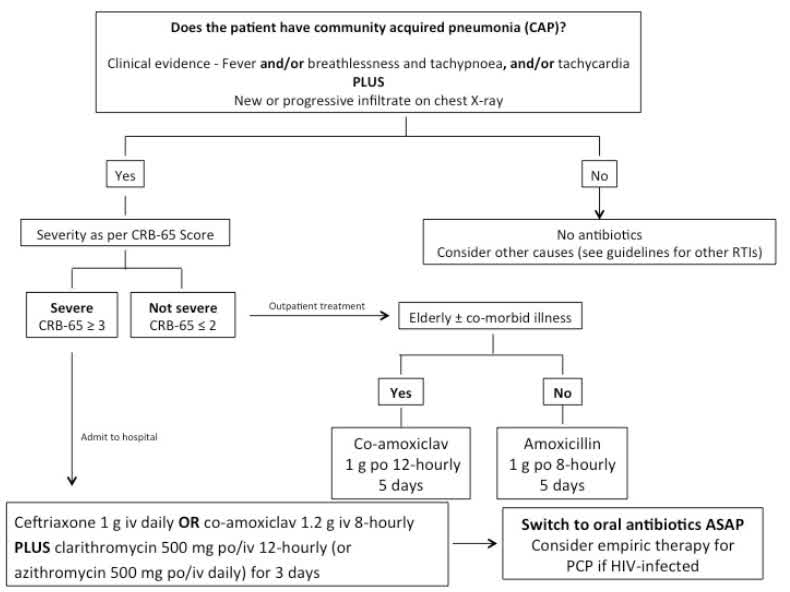
SPECIAL CIRCUMSTANCES
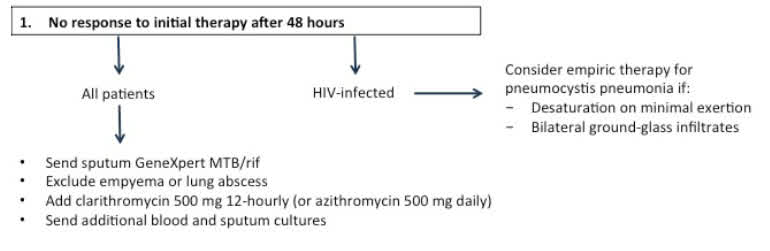
2. Health care associated pneumonia
- Send blood and sputum cultures prior to initiating broad spectrum antibiotics
- Consult microbiologist or infectious diseases specialist about choice of appropriate empiric antibiotic
3. Penicillin allergy
- Moxifloxacin 400 mg po/IV daily or levofloxacin 500mg po 12‐hourly (750mg IV 12‐hourly in severe pneumonia)