GuidelinesOther guideline
Major Incident Management: Communication
CSCATT = "ABC's" of a Major Incident
CSCATT - ABCs of a Major Incident
CSCATT = "ABC's" of a Major Incident
Deal with any scene in the following sequence:
- Command & control
- Safety
- Communication
- Assessment
- Triage
- Treatment
- Transport
Communication
- Communication is the most common failure at the scene of a Major Incident.
- When pre-hospital staff arrive on scene they report and transmit information to the Control Room in a structured fashion.
- This information is given in the form of a METHANE report.
M - My call-sign, or name & appointment
- Major incident STANDBY or DECLARED
E - Exact location
- Grid reference / GPS
T - Type of incident
- Number/type of vehicles (heavy vs light motor vehicle)
H - Hazards, present & potential
- E.g. Fire, hazardous waste, traffic, bystanders
A - Access to scene & egress route
- Potential heli landing site location
N - Number & severity of casualities
- Not a formal triage - estimated only
E - Emergency services currently present & required
- Incl. EMS, Fire, Traffic, SAPS, Rescue
Communication Methods
- Radio
- Cellphone
- Runners
- Hand signals
- Face to face
Radio use
- Air time should not be used unnecessarily.
Radio messaged should be:
- Clear = rhythm should be steady, speed should be just slightly slower than normal speech, volume should not be a whisper or a shout, pitch not too high or low.
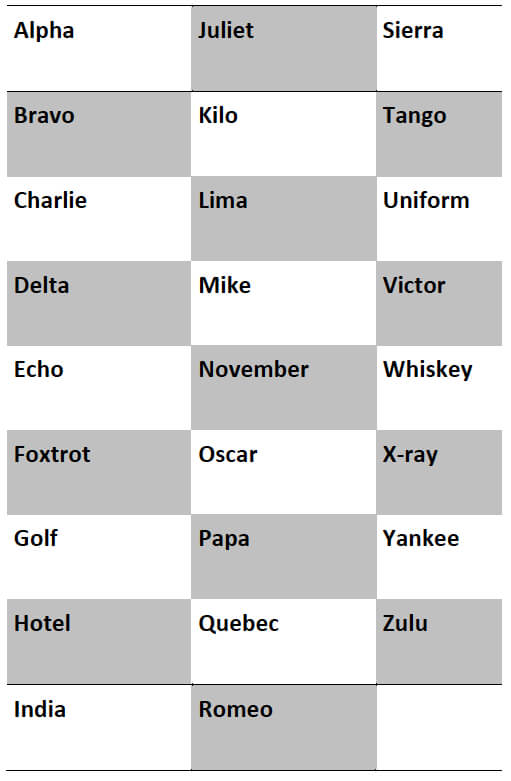
- Accurate = use Nato phonetic alphabet