Management of Children with COVID-19 - Version 2: 27/07/2020
Version 2: 27/07/2020
Version 2: 27/07/2020
Western Cape Paediatric COVID-19 Clinical Working Group
(In alphabetical order: Ilse Appel, Adrie Bekker, Heloise Buys, Samantha Camp, Baljit Cheema, Willem Breytenbach, Louise Cooke, Angela Dramowski, Rowan Dunkley, Mary-Ann Davies, Arnoldus Engelbrecht, Kat Evans, Grant Felix, Diana Hardie, Michael Hendricks, Marvin Hsiao, Marian Jacobs, Tracey Josephs, Tamara Kerbelker, Stephen Korsman, Marlize Kunneke, Sa’ad Lahri, Michael Lee, David Le Roux, Sindi Makate, Elmarie Malek, Prinetha Moodley, Erna Morden, Jaco Murray, Shirani Naidoo, Mosedi Namane, James Nuttall, Natasha O’Connell, Helena Rabie, Verushka Ramanjam, Andrew Redfern, Natasha Rhoda, Shamiel Salie, Gill Schermbrucker, Liezl Smit, Graeme Spittal, Steve, Swartz, Hafsah Tootla, Ben van Stormbroek, John Villet, Azeem Walele, Mark Wates, Thandi Wessels, and other individuals who contributed.)
Acknowledgement: This guideline was originally adapted from the KZN DOH provincial plan for the management of children with COVID-19
Click here for the original document
Outline
Clinical Manifestations (Including Laboratory & Imaging Features)
Case Classification & Disease Severity
Organisation of Health Care Facilities for Children with Suspected & Confirmed COVID-19
Management of Suspected & Confirmed Cases
Appendix 1: Testing for SARS-CoV-2
Appendix 2: Personal Protective Equipment
Appendix 3: Overall Management Process at Primary Care Level
Appendix 4: Overall Management Process at Hospital Level
Appendix 5: Intubation of a Suspected / Confirmed COVID-19 Patient
Appendix 6: Guidelines for Mothers/Caregivers of Children with Suspected COVID-19
Appendix 7: Simple Terminology / Concepts
1. INTRODUCTION & EPIDEMIOLOGY
Our current understanding of the SARS-CoV-2 infection resulting in coronavirus disease-2019 (COVID-19) is that the vast majority of individuals with severe disease that need hospitalization and intensive care are adults. The Department of Health’s response is focused on preventing primary infection and strengthening adult and critical care services. The evidence regarding the disease in children is rapidly evolving. Children have accounted for less disease and less disease severity compared to adults but asymptomatic or mildly symptomatic children are likely to contribute to transmission of infection to others.
- Children account for far fewer persons diagnosed with SARS-CoV-2 infection than adults:
- Up until 7 June 2020, 6% of laboratory-confirmed cases notified in SA were <18 years of age (median age 11.4 years, interquartile range 5.7-15.6 years).
- Children have less severe COVID-19 than adults:
- The majority of children are either asymptomatic or have mild disease
- Up until 7 June 2020, individuals <18 years of age accounted for 3.3% (230/6353) of hospitalisations in SA although with significant variation between provinces.
- Up until 19 June 2020, only 4 individuals <20 years of age are reported to have been admitted to an intensive care unit in the Western Cape
- Deaths are rare
- A paediatric inflammatory multisystem syndrome temporally associated with SARS-CoV-2 infection (PIMS-TS), also known as multisystem inflammatory syndrome in children (MIS-C), and including severe Kawasaki-like disease, toxic shock syndrome or mycocarditis, has been described.
- Children appear to be predominantly infected at home and early post-partum mother-to-child transmission can occur
- The majority of infected children report a household contact
Plans for the management of COVID-19 in children therefore need to provide guidance on inpatient outpatient, intensive care management and transport of:
- babies born to mothers with COVID-19 or asymptomatic SARS-CoV-2 infection
- children with suspected COVID-19
- children with confirmed COVID-19 / SARS-CoV-2 infection
- children living with adults with COVID-19 / SARS-CoV-2 infection
2. CHALLENGES
There are at least 5 significant challenges in developing a response to COVID-19 in children:
- Unknown number of infected children: there is no certainty regarding how many children will be infected or, more importantly, how many will have moderate or severe disease requiring admission to hospital or critical care services. Services therefore need to be developed with the worst-case scenario in mind.
- Delay in diagnostic confirmation of COVID-19: There is both limited laboratory capacity and a substantial turnaround time to receive the results, this time may increase significantly for rural hospital where delays in delivering specimens may contribute further to this lag. A significant number of children with suspected infection will need to be managed as though they are infected.
- Emergency Medical Services (EMS): There are a finite number of ambulances with a limited capacity to transport children between healthcare facilities. In addition, children with COVID-19 may present particular infection prevention and control challenges to EMS. Services to manage COVID-19 in children need to be created in all healthcare facilities and EMS capacity should be reserved for the transfer of sicker children to higher levels of care.
- Home isolation: The living circumstances of most children in the province are poor and the ability to implement safe or effective home isolation is extremely limited. As a result, a large proportion of children with suspected, asymptomatic or mild disease will not be able to self-isolate at home and provincial health departments will need to create safe spaces for families to self-isolate together.
- Imminent seasonal respiratory syncytial virus (RSV) and influenza: Winter is associated with RSV and influenza season amongst children. Increased admission rates for lower respiratory tract infection due to one or both of these organisms is likely to increase the requirement for COVID-19 testing.
3. CLINICAL MANIFESTATIONS (INCLUDING LABORATORY & IMAGING FEATURES)
Clinical pattern
- May be asymptomatic.
- General features: fever, poor feeding, fatigue, headache.
- Respiratory features: pharyngitis, cough, rhinitis, shortness of breath.
- Gastrointestinal features: diarrhoea, vomiting.
Unusual presentations (not fulfilling the NICD COVID-19 case definition)
Paediatric inflammatory multisystem syndrome temporally associated with SARS-CoV-2 infection (PIMS-TS) / multisystem inflammatory syndrome in children (MIS-C) may manifest several weeks following diagnosed or undiagnosed SARS-CoV-2 infection. Symptoms and signs include persistent fever, abdominal pain, confusion, conjunctivitis, cough, diarrhoea, headache, lymphadenopathy, mucous membrane changes, neck swelling, rash, respiratory symptoms, sore throat, swollen hands and feet, syncope, vomiting. Hypotension and an oxygen requirement may be present
Special investigations
Special investigations and imaging should not be done if there is no specific indication, particularly in mild disease. In moderate and severe disease, investigations to identify or exclude alternative causes of respiratory illness may be needed and include, but are not limited to, respiratory viral PCR panel, blood culture, HIV testing, GeneXpert and culture for TB.
| Full blood count & differential count | White cell count & differential count | normal or reduced with reduced neutrophil& lymphocyte counts |
| Platelet count | may be reduced | |
| Inflammatory biomarkers | CRP | normal / low except in severe disease |
| PCT | normal / low | |
| Liver enzymes | LDH | may be abnormal in severe disease |
| Clotting | D-dimers | increased in severe disease |
| Imaging | Chest X-ray | bilateral patchy nodular / speckled ground-glass opacities |
In children with symptoms and signs compatible with PIMS-TS, special investigations include:
- Imaging and ECG: chest X-ray (patchy symmetrical infiltrates, pleural effusion), abdominal ultrasound (colitis, ileitis, lymphadenopathy, ascites, hepatosplenomegaly), echocardiogram (myocarditis, valvulitis, pericardial effusion, coronary artery dilatation), ECG, CT chest
- Laboratory: Commonly - abnormal fibrinogen, absence of other potential causative organisms, high CRP, high D-Dimers, high ferritin, hypoalbuminaemia, lymphopaenia, neutrophilia. In some patients – acute kidney injury, anaemia, coagulopathy, proteinuria, raised CK, raised LDH, raised triglycerides, raised troponin, thrombocytopaenia, transaminitis
4. CASE DEFINITION
Clinical case definitions of COVID-19 were initially developed for the purposes of deciding who should be tested and have changed over time as the epidemic has progressed. Children have frequently been diagnosed with SARS-CoV-2 infection despite meeting few or none of the clinical criteria in the suspected COVID-19 case definition which is largely based on the presenting features in adults.
Suspected COVID-19 case definition (NICD, 25 May 2020):
Any person presenting with an acute (≤14 days) respiratory tract infection or other clinical illness compatible with COVID-19, or an asymptomatic person who is a close contact1 of a confirmed case2.
- Symptoms include ANY of the following respiratory symptoms: cough, sore throat, shortness of breath, anosmia (loss of sense of smell) or dysgeusia (alteration of the sense of taste), with or without other symptoms (which may include fever, weakness, myalgia, or diarrhoea)
- Note: asymptomatic close contacts should not be routinely tested despite meeting the suspected case definition. However, testing may be indicated in certain circumstances (e.g. institutions such as care homes)
1 Close contact: A person having had face-to-face contact (≤1 metre) or been in a closed space with a confirmed case for at least 15 minutes. This includes, amongst others, all persons living in the same household as a case, and people working closely in the same environment as a case. Healthcare workers or other people providing direct care for a case, while not wearing recommended personal protective equipment or PPE (e.g. gowns, gloves, N95 respirator, eye protection). A contact in an aircraft sitting within two seats (in any direction) of the case, ravel companions or persons providing care, and crew members serving in the section of the aircraft where the case was seated.
2 Confirmed case: a person with laboratory confirmation of SARS-CoV-2 infection (using RT-PCR assay), irrespective of clinical signs and symptoms. Symptomatic cases are considered infectious from 2-3 days before symptom onset to 14 days after symptom onset.
More recently, the W Cape moved to a targeted testing policy mostly as a result of constrained laboratory testing capacity, focusing on high-risk symptomatic individuals, patients requiring admission to hospital, and healthcare workers who are symptomatic and/or have close contact with a confirmed COVID-19 case. Laboratory testing turnaround times have subsequently improved.
Case definitions of the paediatric inflammatory multisystem syndrome temporally associated with SARS-CoV-2 (PIMS-TS) / multisystem inflammatory syndrome in children (MIS-C) have been developed by WHO, CDC and the Royal College of Paediatrics and Child Health in the United Kingdom.
The NICD has included PIMS-TS/MIS-C as a notifiable medical condition (NMC) using a modified version of the WHO preliminary case definition:
All 6 criteria must be met:
- Age 0 to 19 years
- Fever for ≥3 days
- Clinical signs of multisystem involvement (at least 2 of the following):
- Rash, bilateral non-purulent conjunctivitis, or mucocutaneous inflammation signs (oral, hands, or feet),
- Hypotension or shock,
- Cardiac dysfunction, pericarditis, valvulitis, or coronary abnormalities (including echocardiographic findings or elevated troponin/BNP),
- Evidence of coagulopathy (prolonged PT or PTT; elevated D-dimer),
- Acute gastrointestinal symptoms (diarrhea, vomiting, or abdominal pain - Elevated markers of inflammation (e.g., ESR, CRP, or procalcitonin)
- No other obvious microbial cause of inflammation, including bacterial sepsis and staphylococcal/streptococcal toxic shock syndromes
- Evidence of SARS-CoV-2 infection
Any of the following:
- Positive SARS-CoV-2 RT-PCR;
- Positive serology;
- Positive antigen test;
- Contact with an individual with COVID-19
The WHO preliminary case definition is available via:
https://www.who.int/publications/i/item/multisystem-inflammatory-syndrome-in-children-and- adolescents-with-covid-19
A provincial consensus PIMS-TS/MIS-C guideline including clinical features and proposed management to be discussed with is available via the following link:https://docs.google.com/document/d/1N0dZi6UBpwWhWkpBBL9sMPU8SilKwLFvxiNqhLV5Zsc/edit?us p=sharing. Cases should be discussed with a paediatric rheumatologist, immunologist or infectious diseases specialist.
5. TESTING FOR SARS-CoV-2
The testing strategy within regions will vary according to the stage of the pandemic and laboratory testing capacity.
Refer to Appendix 1 for details on collection of various respiratory samples used for testing, transportation of samples to the virology laboratory and forms that must be completed and accompany the sample to the virology laboratory.
It is essential that the person collecting respiratory samples makes use of appropriate personal protective equipment (PPE) and has been trained in the correct process for putting on (“donning”) and taking off (“doffing”) PPE. Refer to Appendix 2 for details, including a video demonstration link.
6. CASE CLASSIFICATION AND DISEASE SEVERITY OF RESPIRATORY DISEASE
Simplistically, there are six categories of children infected or affected by COVID-19:
- Uninfected
- Suspected infection
- Newborns of SARS-CoV-2 infected mothers (suspected or confirmed)
- Asymptomatic / mild disease
- Moderate disease
- Severe disease.
- COVID-19-associated inflammatory illnesses
Table 1. Criteria for the classification of the severity of respiratory disease (not all criteria are required in order to be classified in a certain category)
| Mild | Moderate | Severe |
| Mental Status | ||
| Normal | Restless | Irritable/lethargic |
| Feeding | ||
| Finishes feed | Does not finish feed | Unable to feed |
| Talking | ||
| Full sentence | Interrupted sentence | Unable to talk |
| Respiratory rate (breaths/min) | ||
| <40 if under 1yr <30 if 1 – 5 years <20 if over 5 years | 40-60 if under 2 months 40-50 if 2 – 12 months 30-40 if 1 – 5 year 20-30 if over 5 years | >60 if under 2 months >50 if 2 – 12 months >40 if 1 – 5 year >30 if over 5 years |
| Respiratory signs | ||
| No distress | Lower chest wall indrawing | Grunting and/or severe lower chest wall indrawing |
| Pulse oximetry | ||
| ≥92% in room air | <92% in room air | <92% in room air Central cyanosis |
Visualisation of the upper airway (routine ENT examination) should be avoided, and if required (e.g. upper airway obstruction suspected to be due to adeno-tonsillar hypertrophy or suppurative conditions including retropharyngeal or peritonsillar abscess) should preferably be performed by an ENT specialist or senior paediatric staff member with full PPE including a N95 respirator and eye protection (Refer to Appendix 2).
Information on the classification and disease severity of COVID-19-associated inflammatory illnesses is available via the following link to a provincial consensus guideline: https://docs.google.com/document/d/1N0dZi6UBpwWhWkpBBL9sMPU8SilKwLFvxiNqhLV5Zsc/edit ?usp=sharing
7. ORGANISATION OF HEALTH CARE FACILITIES FOR CHILDREN WITH SUSPECTED & CONFIRMED COVID-19
SARS-CoV-2 can spread in the healthcare setting affecting other patients, adult caregivers and staff. It is important to provide daily screening of staff and adult caregivers who are in hospital with any child with a COVID-19 symptom questionnaire and temperature screen using a thermal scan. Adults accompanying children with COVID-19 should preferably not be elderly or have significant co-morbid illness.
In order to prevent hospital transmission patients should be isolated and cohorted and PPE used appropriately. Refer to Appendix 3 for an overall management algorithm taking account cohorting and severity of disease.
As there are three broad groups of children, each hospital needs to create THREE in-patient areas, one for each category:
- Non-COVID-19 children
- Suspected COVID-19 children (patients under investigation, PUI’s)
- Confirmed COVID-19 children
Surveillance testing: when community transmission is widespread, surveillance testing of all pre- surgical or all hospital admissions may occur. Consider allocation of an area for children whose status is not known yet, and who are not suspected cases, within non-COVID areas (separate from areas of other PUI’s/suspected cases to avoid risk of transmission).
Each area needs to be totally separate and enclosed with its own equipment and staff. Ablutions should ideally be separate, or bed pans used if separation is not possible.
Where children and adults will be screened and/or PUI’s cohorted together in the same area, provision should be made for appropriate paediatric emergency equipment and staffing in the screening area. Consideration should also be given to the provision of high-care for very sick children that could be in any of the three categories (i.e. hospitals providing high-care to children will need to have high-care beds in each of the three categories).
Options for creating three areas include:
- Dedicated cubicles in a children’s ward – if the ward has cubicles.
- Dedicated children’s wards – if the hospital has 2 or more children’s wards. If there are 2 children’s ward it is suggested that one is used as a non COVID-19 ward and the other as a COVID-19 ward split into two sections – suspected and confirmed.
- Dedicated hospital COVID-19 wards for both adults and children
In this circumstance it is important that:- Children are preferably placed IN THE SAME ROOM AS A PARENT in a female ward or
- Are accommodated together in a single cubicle/corner/section of the ward.
The relative size and number of beds in each area will change as the South African epidemic evolves. The preferred option will therefore be dictated by the structures of the facility and the number of children needing accommodation.
In light of the imminent RSV and influenza season the number of suspected paediatric cases is expected to be high and any impulse to use underutilized children’s wards for adult services should be avoided.
1. Uninfected
Children requiring admission for any non-respiratory illness MUST be kept apart from children with suspected or confirmed SARS-CoV-2 infection unless they have a strong epidemiological risk factor e.g. close contact of a confirmed COVID-19 case, in which case they may be an asymptomatic carrier and should be cohorted separately or with other PUIs.
2. Suspected infection (PUI)
Every child with an acute respiratory infection;
Apply a face cover, preferably a surgical mask, to the child and caregiver to cover the nose and mouth;
Place in an isolation room / separate area in OPD / A&E. If none is available keep apart from other patients;
Assess severity of disease (mild, moderate or severe as per Table 1 above);
Test for SARS-CoV-2 infection – wearing PPE and with appropriate precautions (Refer to Appendices 1 and 2);
Manage according to severity of disease and level of health care system (Appendices 3 and 4):
- Asymptomatic or mild disease can self-isolate at home when home circumstances allow, if not then they must be admitted to the “suspected COVID-19” area in the children’s ward.
- Children with moderate or severe disease need to be admitted to the “suspected COVID-19” area of the children’s ward.
- If the child needs transferring to another facility for further investigation or care – see Emergency Medical Services (EMS) Section 8
Systems must be established to fast-track the processing of tests by the laboratory of hospitalized children with suspected COVID-19.
Make sure that arrangements are made to check results and provide these to the child’s family.
- Children with confirmed SARS-CoV-2 infection can be moved to the “confirmed COVID-19” area.
- Children who test negative for COVID-19 may have been infected during their stay in hospital. If any child with whom they were cohorted had a positive COVID-19 test or test results are outstanding, then they:
- Must remain in the “suspected COVID-19 / PUI” area of the ward until discharge.
- On discharge, must be quarantined for two weeks and perform self-monitoring within their household
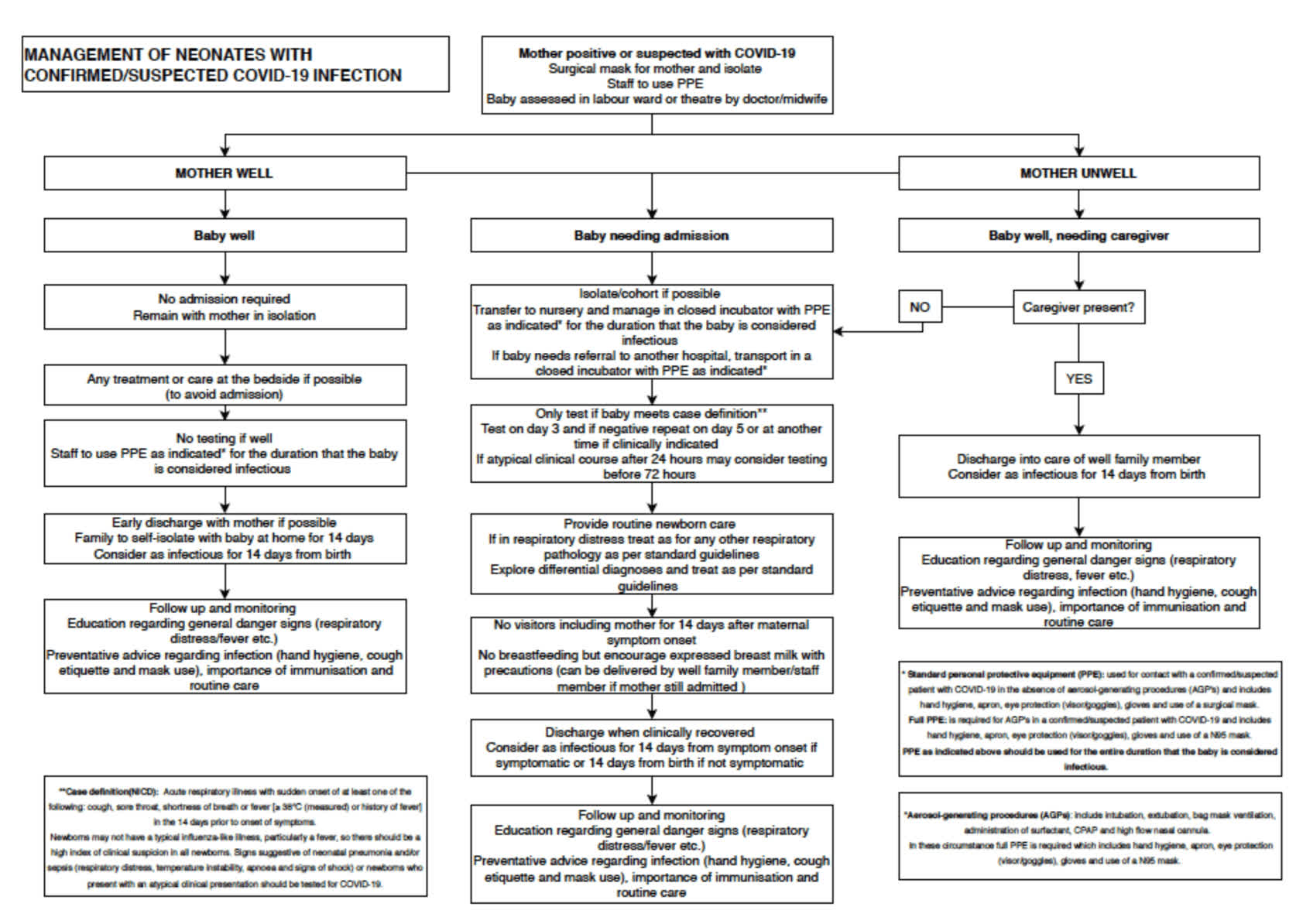
3. Newborn babies born to SARS-CoV-2 infected women (suspected or confirmed infection)
Provision must be made in the maternity unit and nursery for the care of pregnant women with COVID-19 and their babies. Nurseries should screen mothers for symptoms. Access to the nursery MUST be restricted and the following people must be excluded: all visitors and non-nursery staff. Mothers with COVID-19 must be accommodated in a safe area. The safety of EMS staff performing transfers of mothers and babies must also be considered and they must be informed about the COVID-19 status of the mother and baby.
There are 3 scenarios that hospitals must prepare for:
- Delivery and resuscitation;
- Well baby of mother with suspected or confirmed COVID-19;
- Sick or small baby of mothers with COVID-19
Delivery and resuscitation
Maternity units must establish a dedicated delivery room / suite with a neonatal resuscitaire, access to oxygen (wall outlet or cylinder) and vacuum (wall outlet or portable) and neonatal resuscitation pack including commonly used resuscitation equipment and a pulse oximeter.
Deliveries that are high-risk for obstetric reasons, should be attended by a senior clinician wearing appropriate PPE (Refer to Appendix 2). Management of the baby should be in line with normal neonatal care. The first examination should occur in the delivery room / suite. If the baby needs to be moved to any other unit in the hospital this MUST be done with the baby in a closed incubator.
Well baby
All well babies MUST remain with their mother. If mom is unable to care for the baby, he/she should room-in in a closed incubator. Breast feeding is safe and must be encouraged.
Mom must wear a face cover, preferably surgical mask, and follow strict hand hygiene when holding or feeding her baby.When it is not possible for the baby to remain with his/her mother they should be admitted to a closed incubator in a side ward of the nursery and treated as an infected individual with appropriate staff PPE.
Well babies do NOT require routine COVID-19 tests.
Baby should be discharged as soon as possible – preferably with mom but if this is not possible then to a family member.
3. Sick or small baby
Avoid admission to the nursery as far as possible so try to give routine additional care (IVI, antibiotics, observations) in the postnatal ward, in a separate room.
If this is not possible then the baby must be treated as an infected individual:
- Admitted to an isolation cubicle, side ward or smallest cubicle in the nursery;
- If the baby and/or mother need to be transferred to another facility, refer to the EMS section for guidance on how to book and prepare for transfer.
- Perform COVID-19 testing for all sick newborns at 72 hours of age (Refer to Appendix 1);
- Nursed in a closed incubator at ALL times;
- Designated staff must attend to the baby and they MUST wear PPE at all times (Refer to Appendix 2).
Neonatal management, discharge and follow up must be in line with normal protocols.
Click on image to enlarge
Click here for the pdf of this image
8. EMERGENCY MEDICAL SERVICES (EMS) TRANSPORT OF SUSPECTED & CONFIRMED COVID-19 PAEDIATRIC & NEONATAL PATIENTS
- Stable patients 021-937-0500 (normal operational ambulance)
- Critically ill patients 021-937-0300 (SPRINT) – all intubated, CPAP, severe cases
Booking transport – 5-Step Process
When booking transport give EMS control centre the following information:
- Tell them clearly that the child is a confirmed or suspected Covid-19 patient
- State if the parent or carer who is accompanying the child is also a confirmed or suspected Covid-19 person
- Classify into:
a. Clinically stable – will not require interventions during transport
b. Clinically unstable – may require interventions during transport
If you are unsure of how to classify – please discuss with the EMS control centre staff – this may result in a discussion with the EMS doctor on call – who will ascertain risk-level based on potential interventions required during transport - Advise of medical equipment requirements e.g. oxygen, route of administration of oxygen, monitoring, syringe driver, infusion pumps, incubator, CPAP, ventilator etc.
- Give the name and mobile phone number of the healthcare contact person at the facility, who will be able to answer any further questions EMS may have, and who will be notified of arrival time of EMS crew
Receiving EMS & escorting them out of the facility
- Parking must be cleared at the nearest entrance to the patient location
- Ensure the route to & from the patient location is cleared of obstacles
- If a lift is needed to get to the patient–have someone hold the lift and clear other people from the lift area
Preparing the patient & carer
- Patient must be wearing patient ID bracelet
- Place a facemask (or other suitable covering) over the nose and mouth of the patient
- Carer should be informed that EMS in full PPE will be transporting the child
- Carer must be given a facemask to wear during transport
- Ensure all the patient paperwork is ready to go–including referral letter & results
- Have any infusions needed drawn up – with labels on syringes detailing contents and concentration. In addition, please ensure the details (drug name, how many micrograms/milligrams/grams , volume of diluent) of all infusions needed during transfer, are clearly documented in the transfer letter
- If on CPAP place a HME filter on the expiratory limb of the circuit
- If a HME filter has been used on a self-inflating bag, during intubation or resuscitation, for this patient then give the HME filter to EMS to put on their bag
Preparing the receiving facility
Whenever possible, the receiving facility should have advance warning of the patient’s arrival, and should be ready to direct the patient straight to the suspected COVID-19 testing area or suspected/confirmed COVID-19 ward
9. MANAGEMENT OF SUSPECTED AND CONFIRMED CASES
Appropriate supportive management, especially oxygen, improves the outcome of all children with pneumonia. Prompt recognition of pneumonia and supportive care as well as testing for SARS-CoV-2 will allow for appropriate additional care and improve guidance on self-isolation and appropriate use of PPE to ensure staff safety. If the patient needs to be transferred to another facility, refer to the EMS section for guidance on how to book and prepare for transfer.
Mild disease
Home care and self-isolation for all children is preferred but if not possible, alternatives outside of the hospital should be considered and as a last resort hospitalization
Requirements for self-isolation at home include:
- The whole household should self-isolate
- Household must practice strict hand hygiene
- All high-touch surfaces should be cleaned frequently – at least twice a day
- Child must be assisted to cover coughing and sneezing
- Cloth masks should be worn by all family members
- Child must have own / dedicated household items (cup; eating utensils)
- Other children and adults must keep a distance of 1.5-2 metres as much as possible, if possible, use a separate bedroom
- Use the bathroom last after everyone else, and the toilet (including the outside of the toilet) should be cleaned after use. Flush toilet with the lid down, if possible, use a separate bathroomSupportive care / symptomatic treatment:
Paracetamol for symptomatic relief of fever or pain rather than nonsteroidal anti-inflammatory drugs (NSAIDs)
Maintenance fluids and feeds with additional oral rehydration solution (ORS) if child has diarrhoea. If necessary, use a metered-dose inhaler (MDI) with a spacer to provide B2-agonists.Caregiver must be given:
Appropriate information so that they can detect deterioration in the condition of their child; Details of whom to contact / how to respond should the child’s condition deteriorate;
A patient information sheet on home care and preventing transmission of SARS-CoV-2 (Appendix 6).
Moderate disease
Children with moderate disease MUST be admitted for in-patient care.
- Supportive care:
Monitor 3 - 4 hourly for respiratory deterioration; reduce frequency once child improving. Supplementary oxygen using nasal prong oxygen at 1-2 L/min to keep SpO2 >92%.
Progress as required from nasal cannula to face mask to face mask with reservoir bag.
If unable to keep SpO2 > 92% on face mask with reservoir bag re-classify as severe and contact the designated nearest paediatric high-care unit (HCU) or paediatric intensive care unit (PICU).
Maintenance intravenous fluids: 5% dextrose / 0.9% saline at two-thirds of normal requirements. Normal maintenance fluids and feeds with additional ORS if child has diarrhoea.
Provide symptomatic relief with paracetamol.
If wheezing, provide B2-agonist with an MDI and spacer, assess response, stop if not responding - Procedures / interventions
Try to minimise procedures or interventions that may result in crying or coughing which may increase aerosolization of respiratory secretions. Where possible, try to bundle procedures together e.g. insert nasogastric tube, intravenous cannula and take blood samples at same time as taking respiratory samples for COVID-19 testing while using appropriate PPE (Appendix 2). Blood tests only as needed, including arterial blood gases. Capillary gases and pulse oximetry can be used to monitor severity. Avoid nebulization where possible, use metered dose inhaler (MDI) and spacer. Do not share spacers between patients. - Treatment:
Antibiotics as per community-acquired pneumonia guidelines.
Amoxicillin 45 mg/kg/dose 12 hourly orally for 5 days; OR
Ampicillin 50 mg/kg/dose intravenously 6 hourly AND Gentamicin 6 mg/kg intravenously daily for 5–10 days.
Routine use of corticosteroids is not recommended.
Severe disease and intensive care for children with severe disease
The same principles regarding supportive care treatment and procedures/interventions described above apply to children with severe disease.
Children with severe disease should be admitted to a paediatric HCU or PICU. Regional HCU/PICU bed occupancy should be monitored to allocate beds as needed.
Children with suspected or confirmed COVID-19 MUST be accommodated apart from those without the infection.
- Non-invasive respiratory support in children with severe disease (high-flow nasal cannula (HFNC) oxygen and nasal continuous positive airway pressure (NCPAP)
Both HFNC oxygen and NCPAP are considered to be aerosol-generating and as such represent a potential high-risk for transmission of SARS-CoV-2 to health care workers. The indication for HFNC / NCPAP should be carefully considered and initiated only after discussion with a specialist.
All staff working with these patients should wear full protection against airborne transmission (Appendix 2)
Consider incorporating other measures to mitigate the risk of transmission such as placing an HME filter on the expiratory limb of the CPAP circuit, using the lowest possible flow rate with HFNC oxygen therapy to achieve clinical effect, placing a mask or cloth over the high-flow prongs if tolerated, and isolating the child in a negative pressure / single room where possible. - Intubation (refer to Appendix 5):
Must be undertaken by the most senior member of staff on site;
Full airborne precaution PPE with N95 respirators and eye protection must be worn (Refer to Appendix 2);
A modified rapid sequence intubation is preferred: Pre-oxygenate with nasal prong O2 and face mask with reservoir – try to minimize/avoid bag mask ventilation
If possible, this should occur under a plastic sheet
Cuffed tubes should be used;
AVOID or minimize suctioning before or after intubation Use in-line suctioning to limit aerosolization
IV fluids should be restricted to 2⁄3 of maintenance requirements.
Further ICU management is similar to that for any other child with severe pneumonia.
Management of paediatric inflammatory multisystem syndrome / multisystem inflammatory syndrome in children
A provincial consensus management guideline is available via the following link and is likely to be updated as more clinical experience and evidence becomes available:https://docs.google.com/document/d/1N0dZi6UBpwWhWkpBBL9sMPU8SilKwLFvxiNqhLV5Zsc/edit ?usp=sharing
Discussion with paediatric rheumatology, immunology or infectious diseases specialists is strongly recommended prior to initiating treatment.
10. USE OF PERSONAL PROTECTIVE EQUIPMENT (PPE)
Appropriate use of PPE should follow institutional/provincial policy.
Each institution should have a detailed plan for the appropriate use and provision of PPE in order to ensure that staff are always adequately protected for the duration of the pandemic.
Many aspects of routine care in children could be considered to be potentially aerosol-generating (see Appendix 2). There is very limited evidence to quantify the risk of viral transmission associated with various procedures/interventions. Risk for an individual procedure is likely to be affected by a number of factors.
As a minimum, all medical, nursing and assistant staff working in suspected or confirmed COVID areas should wear a surgical mask, eye protection, gloves and apron. Face shields which cover the eyes and mask are ideal, as they reduce potential contamination of the mask.
In addition to this, staff working in higher risk areas e.g. on HFNC/CPAP or where multiple aerosol- generating procedures are performed, should don an N95 respirator (in addition to eye protection, gloves and apron or gown) when going into the room/cubicle.
Good hand hygiene and regular environmental cleaning are key aspects in reducing risk of transmission.
11. DE-ISOLATION
Most patients with mild COVID-19 continue to shed virus from their upper airways for approximately 7-12 days but it is important to appreciate that the presence of detectable virus does not necessarily imply infectiousness. Virus cultures have been shown to be positive for 8-9 days after the onset of symptoms.
Patients with more severe COVID-19 may continue to shed virus at higher levels for longer periods that patients with mild disease and the duration of infectiousness is less well established. Revised guidelines on de-isolation of patients who have tested positive for SARS-CoV-2, recommend the following:
- Asymptomatic patient: 10 days from date of positive test
- Mild disease: 10 days from date of onset of symptoms
- Severe disease: 10 days from date of being clinically stable (no longer requiring supplemental oxygen).
Children admitted to hospital can complete their isolation at home once they are well enough to be discharged provided their home circumstances support self-isolation (Refer to Appendices 3-6).
APPENDIX 1: TESTING FOR SARS-CoV-2
Principles
- This is an aerosol-generating procedure so use appropriate PPE
- Be calm and gentle, children will be frightened by the process
- Make use of an assistant, preferably the adult that came with the child
- Consider covering the mouth with a mask
- Explain what will happen to care giver and child where appropriate
- Be calm and reassuring, it is not necessary to sedate the child
Types of samples:
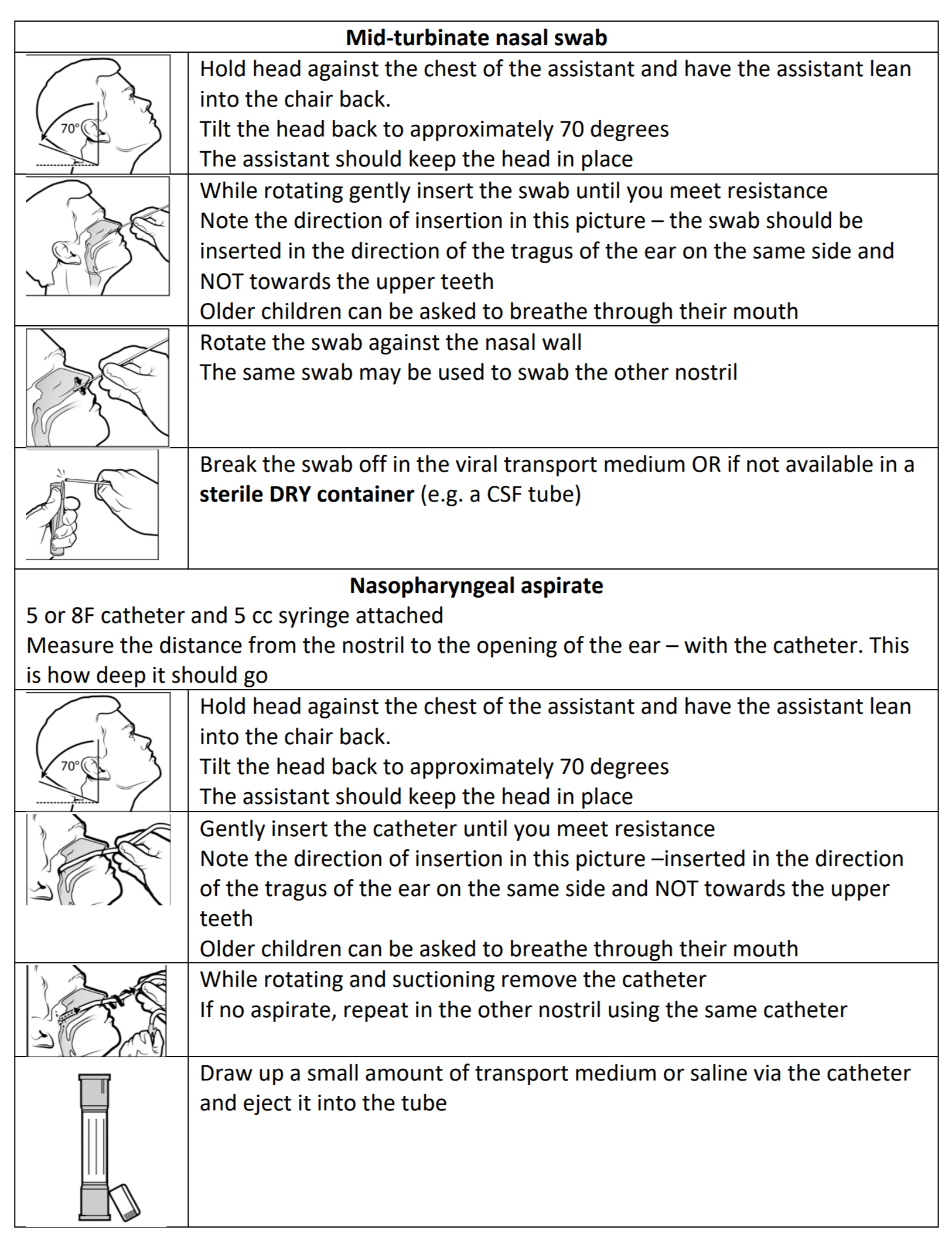
- Mid-turbinate nasal swab (MTNS) - this is preferred, particularly for younger children
- Nasopharyngeal swab (NPS) or nasopharyngeal aspirate (NPA)
- Sputum
- For intubated patients: tracheal aspirate (TA) or bronchoalveolar lavage (BAL)
Types of swab:
- Flocked (thin plastic or wire) are preferable but often unavailable
- Normal dry pus swab (asses the nostril size): tip to be cut off or broken off and placed into tube with viral transport medium or if unavailable into a dry sterile container e.g. CSF tube (not the gel- containing tube)
- Sputum, NPS, NPA, TA and BAL do not require viral transport medium and may be submitted to the laboratory in a sterile container
Procedure
- Apart from the normal equipment you need a chair with a back for the adult assistant
- If you are going to do an NPA you also need a nasogastric tube and a syringe
- Ask the adult with the child to wipe excessive nasal secretions away with a tissue and have them discard the tissue into contaminated waste bin.
- The adult accompanying the child should sit on the chair facing the examiner leaning back into the back of the chair
- A small child should sit on the adult’s lap, older children can stand between the legs of the adult.
- The legs of the child are held in-between the thighs of the seated adult.
- One hand of the assistant holds the child’s hands across his chest while the other hand stabilises the child’s head against their chest (as for throat examination of the uncooperative child)
- Refer to next page or watch https://www.youtube.com/watch?v=lTyBvZhLL04 for a video demonstrating how MTNS samples should be collected.
Sample transportation to the virology laboratory
- Once the sample has been collected, it must be “double-bagged”, preferably using a biohazard bag, to enable easy identification by laboratory staff and to help prevent an inadvertent laboratory exposure
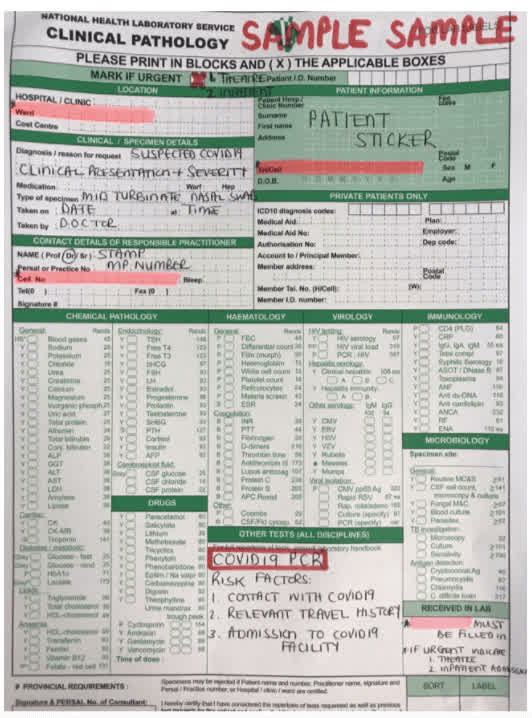
Forms to be completed by the clinician collecting the sample
- This may vary between institutions therefore check with the local testing centre and laboratory
- NHLS Clinical Pathology request form to accompany specimen to laboratory (refer to picture of sample completed form)
- NICD PUI form for coronavirus disease 2019 (COVID-19) and contact line list (may be kept in patient’s folder for actioning if test result is positive)
- Results of tests are made available on TrakCare and positive results will be communicated from the laboratory to the Department of Health
Click on image to enlarge
Click on image to enlarge
2: PERSONAL PROTECTIVE EQUIPMENT (PPE)
Click here for the pdf version of Appendix 2
CLINICAL STAFF (nurses, doctors, EMS) Providing direct care to COVID-19 patients or patients with respiratory symptoms | NON-CLINICAL STAFF (admin staff, catering staff) Coming into distant contact with COVID-19 patients and contaminated surfaces | NON-CLINICAL STAFF (cleaners) Coming into distant contact with COVID-19 patients and contaminated surfaces |
| Gloves | ||
| Non-sterile gloves Change between patients | Non-sterile gloves. Change when leaving COVID-19 area | Reusable long rubber utility cleaning gloves (ideally up to elbow) Change after completed cleaning contaminated area |
| Face Cover Type | ||
| Surgical Mask for general care of COVID-19 patients N95 respirator for aerosol generating procedures* on COVID-19 suspects/cases** | Surgical mask when within <1m of a patient with respiratory symptoms (one per shift, if integrity maintained) | Surgical mask when within <1m of a patient with respiratory symptoms |
| Aprons or gowns | ||
| Change between patients | Change when leaving COVID-19 area | After each work session (in absence of clinical contact) |
| Face shields, or visors, or goggles, or other eye covers | ||
| Wash clean, disinfect and reuse | None | Wash clean, disinfect and reuse |
| PATIENTS with or without RESPIRATORY symptoms |
| Gloves: None Surgical mask: worn when in contact with others Apron or Gown: None Face shields, or visors, or goggles, or other eye covers: None |
* Aerosol-generating procedures in children include: collection of nasopharyngeal and oropharyngeal swabs for SARS-CoV-2 testing, clinical examination of the pharynx, nebulization, nasal/oral/tracheostomy suctioning, insertion of a nasogastric tube, blood-taking & intravenous cannula placement in young children, chest physiotherapy, non-invasive CPAP or HFNC ventilation, manual bag-mask ventilation, endotracheal intubation, tracheal aspirate, bronchoalveolar lavage, bronchoscopy, endoscopy, ENT procedures, dental procedures, maxillo-facial procedures and cardiopulmonary resuscitation.
** N95 respirator must still be used for all other non-COVID-19 indications (e.g. when attending to a patient with confirmed or suspected TB)
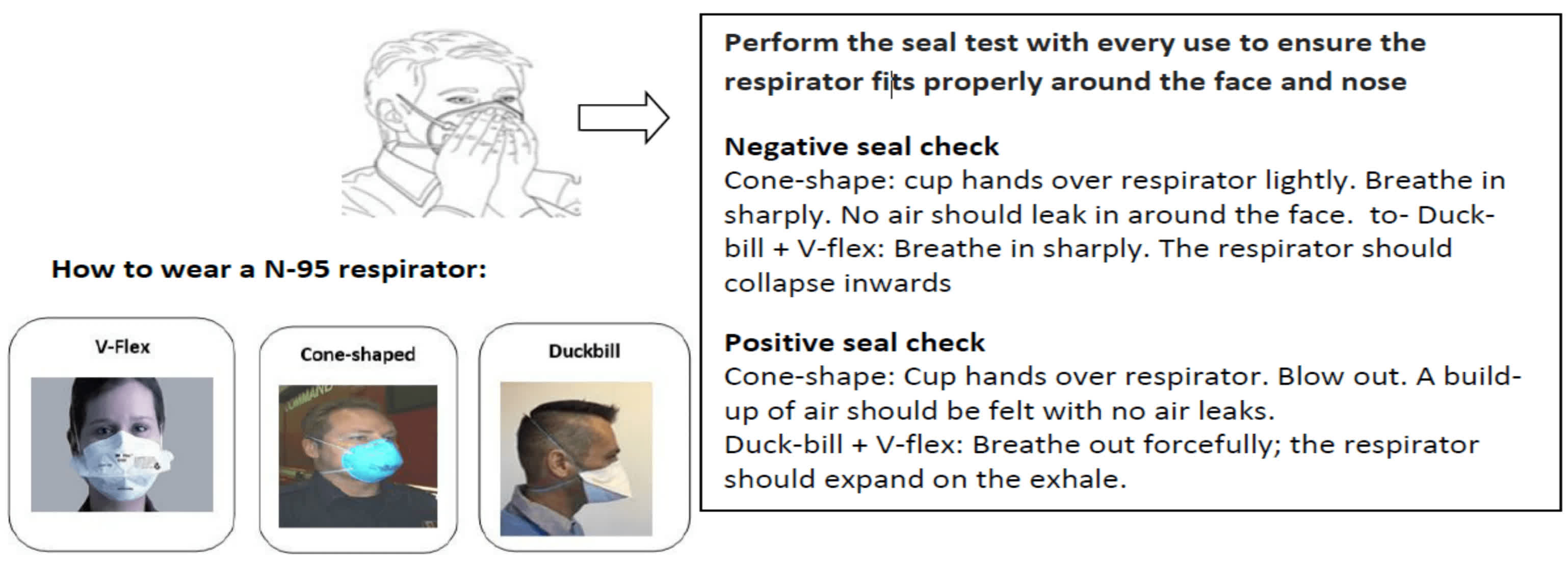
GUIDELINES FOR USE OF A N95 RESPIRATOR FOR COVID-19 FOR AER0SOL GENERATING-PROCEDURES ONLY
- Seal tests should be performed each time a N95 respirator is used (i.e. when it is first put on)
Click on image to enlarge
- The N95 respirators should ideally be used once only and should be discarded once safely removed. However, as there is a global shortage of N95respirators, reuse is strongly encouraged and is preferable to having no respirator.
- If HCWs are performing aerosol-generating procedures (e.g. sample collection) on several COVID-19 patients sequentially, they may use the same N95respirator and eye protection for the session; they must however change apron and gloves between patients.
- As the outside surface of the N95 respirator will become heavily contaminated with the virus during aerosol-producing procedures, HCWs should take great care not to touch the outside surface and must perform careful hand hygiene after removing it.
- For reuse, carefully remove the N95 respirator using a clean paper towel and store the respirator in a clean paper bag. The paper bag must be labelled with the staff member’s name. Do not crush or crumple. It can be reused for up to 1 week.
- Do NOT attempt to disinfect the N95 respirator as that destroys its integrity.•
- Note that obviously damaged and visibly contaminated respirators cannot be reused.
GUIDELINES FOR SURGICAL MASK USE FOR COVID-19
- At any time if surgical masks are touched by unwashed hands, get wet, are soiled, or are removed from the face, they will become contaminated and will no longer provide effective protection. They should then be discarded.
- Masks that are not wet, were not touched by unwashed hands and were not removed from the face, can be worn for up to 8 hours.
- COVID-19 patients when inside a dedicated COVID-19 ward, where staff are wearing PPE, do not need to wear masks.
- COVID-19 patients when outside a dedicated COVID-19 ward must always wear a surgical mask. The mask can be used for up to 8 hours.
FOR HOW LONG CAN PPE BE USED?
TYPE OF PPE | CLINICAL HCW | NON-CLINICAL HCW | SYMPTOMATIC PATIENTS |
| Gloves | Change after each clinical contact | End of work session | N/A |
| Surgical Face Masks | Mask can be used up to the end of a shift if it remains dry and has not been removed from the face | Mask can be used up to the end of a shift if it remains dry and has not been removed from the face. | When in contact with others |
| N95 respirator | As long as integrity is maintained and it is safely stored, it can be reused for up to 1 week | N/A | N/A |
| Aprons | Change after each clinical contact | After each work session (in absence of clinical contact) | N/A |
| Face shields / visors | Clean and disinfect before reuse | N/A | N/A |
| Goggles | Clean and disinfect before reuse | Cleaners may use same googles for each work session. Clean and disinfect before reuse | N/A |
VIDEO DEMONSTRATION OF DONNING AND DOFFING OF PPE
A demonstration video for safely putting on and taking off PPE (donning and doffing of PPE) is available here
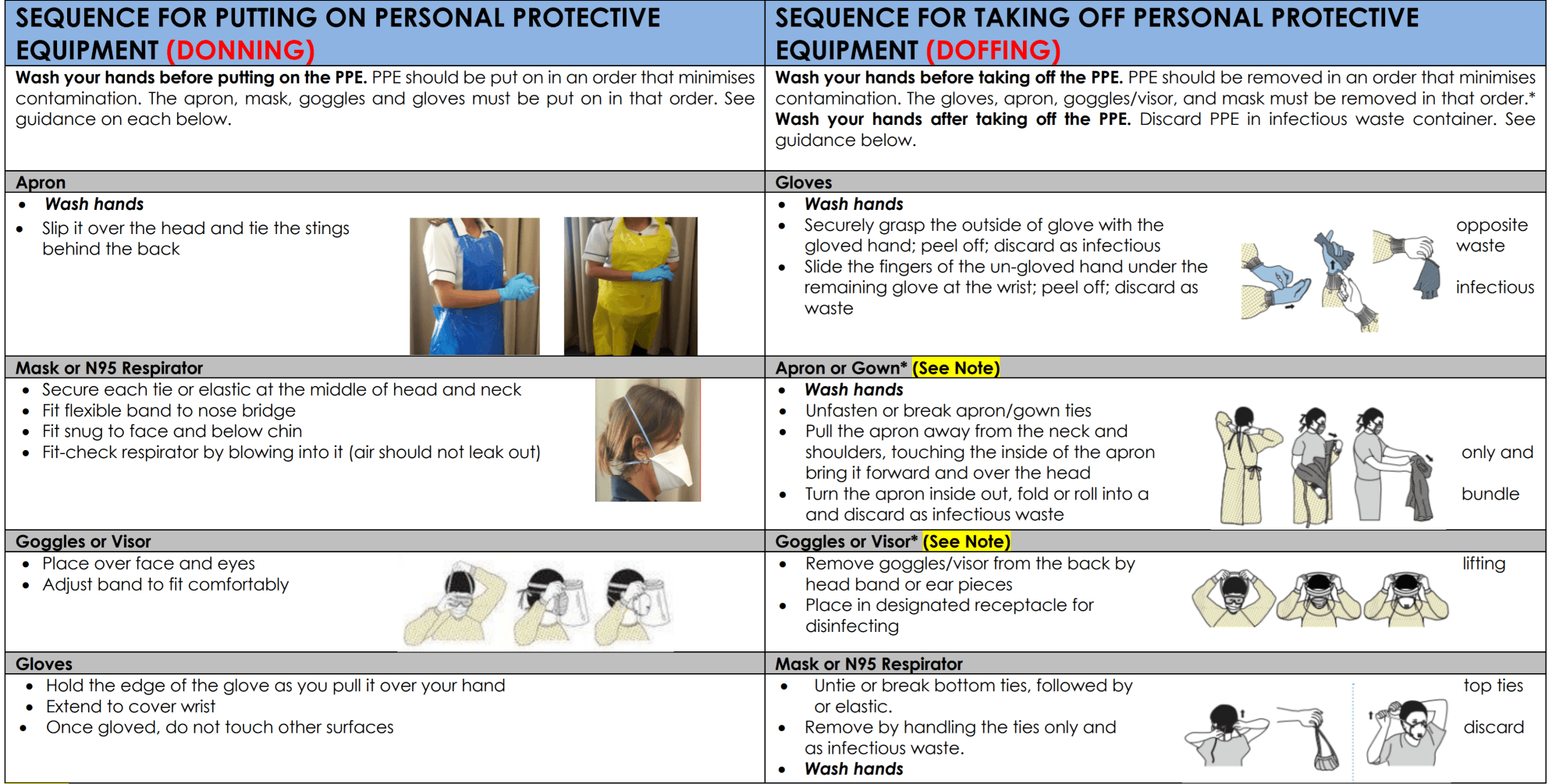
INSTRUCTIONS FOR PUTTING ON AND TAKING OFF PPE (DONNING AND DOFFING PPE)
Click on image to enlarge
*Note: When it is practically difficult to remove the apron/gown before the visor/goggles, then the visor/goggles may be removed before the apron/gown.
Dispose of all PPE in an infectious waste container.
WASH HANDS OR USE AN ALCOHOL-BASED HAND SANITISER AFTER REMOVING GLOVES AND AFTER REMOVING ALL PPE
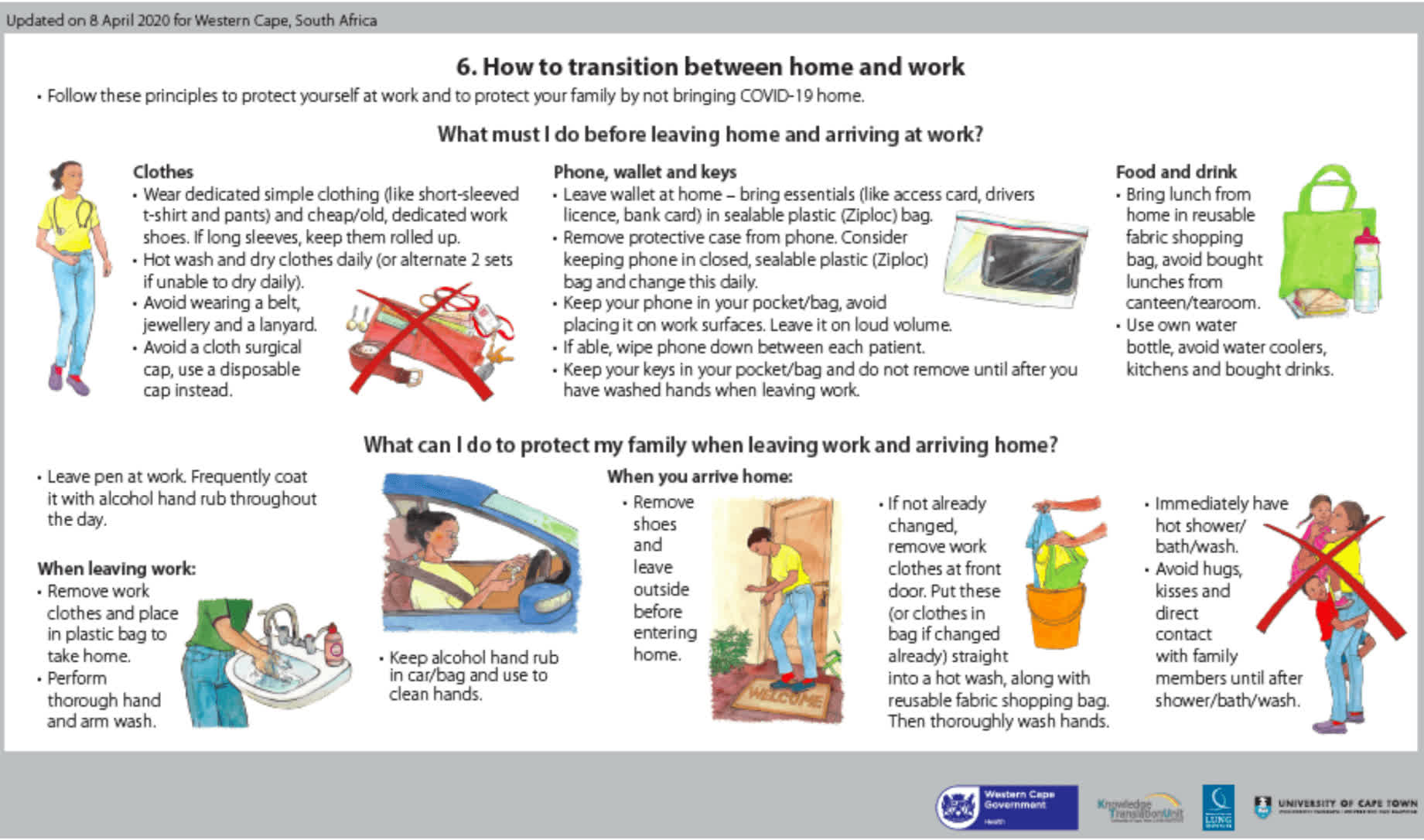
Click on image to enlarge
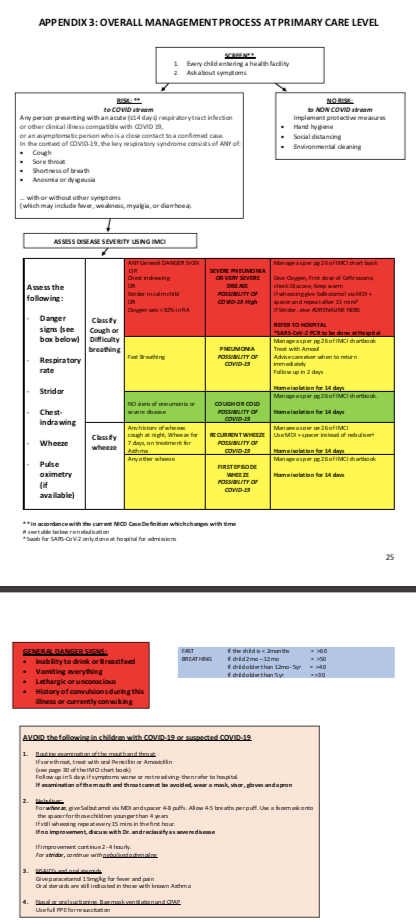
APPENDIX 3: OVERALL MANAGEMENT PROCESS AT PRIMARY CARE LEVEL
Click on image to enlarge
SCREEN**
- Every child entering a health facility
- Ask about symptoms
| If there is a RISK **, proceed to COVID Stream | If NO RISK , proceed to NON COVID Stream |
| Any person presenting with an acute (≤14 days) respiratory tract infection or other clinical illness compatible with COVID 19, or an asymptomatic person who is a close contact to a confirmed case. In the context of COVID-19, the key respiratory syndrome consists of ANY of:
| Implement protective measures
|
DISEASE SEVERITY USING IMCI | ||
Assess the following: - Danger signs (see below) - Respiratory rate - Stridor - Chest in drawing - Wheeze - Pulse oximetry (if available) | ||
Classify Cough or Difficulty breathing | ||
ANY General DANGER SIGN OR Chest in drawing OR Stridor in calm child OR Oxygen sats <92% in RA | SEVERE PNEUMONIA OR VERY SEVERE DISEASE POSSIBILITY OF COVID-19 High | Manage as per pg 26 of IMCI chart book Give Oxygen, First dose of Ceftriaxone, Check Glucose, Keep warm If wheezing give Salbutamol via MDI +spacer and repeat after 15 mins# If Stridor, give ADRENALINE NEBS REFER TO HOSPITAL SARS-CoV-2 PCR to be done at Hospital |
Fast Breathing | PNEUMONIA POSSIBILITY OF COVID-19 | Manage as per pg 26 of IMCI chartbook Treat with Amoxil Advise caregiver when to return immediately Follow up in 2 days Home isolation for 14 days |
NO signs of pneumonia or severe disease | COUGH OR COLD POSSIBILITY OF COVID-19 | Manage as per pg 26 of IMCI chartbook. Home isolation for 14 days |
Classify wheeze | ||
| Any history of wheeze, Cough at night, Wheeze for 7 days, On treatment for Asthma | RECURRENT WHEEZE POSSIBILITY OF COVID-19 | Manage as per pg 26 of IMCI Use MDI + spacer instead of nebuliser# Home isolation for 14 days |
| Any other wheeze | FIRST EPISODE WHEEZE POSSIBILITY OF COVID-19 | Manage as per pg 26 of IMCI chartbook Home isolation for 14 days |
** in accordance with the current NICD Case Definition which changes with time
# see table below re nebulisation
*Swab for SARS-CoV-2 only done at hospital for admissions
GENERAL DANGER SIGNS Inability to drink or breastfeed Vomiting everything Lethargic or unconscious History of convulsions during this illness or currently convulsing |
FAST BREATHING If the child is < 2months = >60 If child 2mo – 12mo = >50 If child older than 12mo- 5yr = >40 If child older than 5 yr = >30 |
| AVOID the following in children with COVID-19 or suspected COVID-19: 1. Routine examination of the mouth and throat: If sore throat, treat with oral Penicillin or Amoxicillin (see page 30 of the IMCI chart book) Follow up in 5 days if symptoms worse or not resolving- then refer to hospital. If examination of the mouth and throat cannot be avoided, wear a mask, visor, gloves and apron 2. Nebuliser: For wheeze, give Salbutamol via MDI and spacer 4-8 puffs. Allow 4-5 breaths per puff. Use a facemask onto the spacer for those children younger than 4 years If still wheezing repeat every 15 mins in the first hour. If no improvement, discuss with Dr. and reclassify as severe disease If improvement continue 2- 4 hourly. For stridor, continue with nebulised adrenaline 3. NSAID’s and oral steroidsGive paracetamol 15mg/kg for fever and pain Oral steroids are still indicated in those with known Asthma 4. Nasal or oral suctioning, Bag mask ventilation and CPAP Use full PPE for resuscitation |
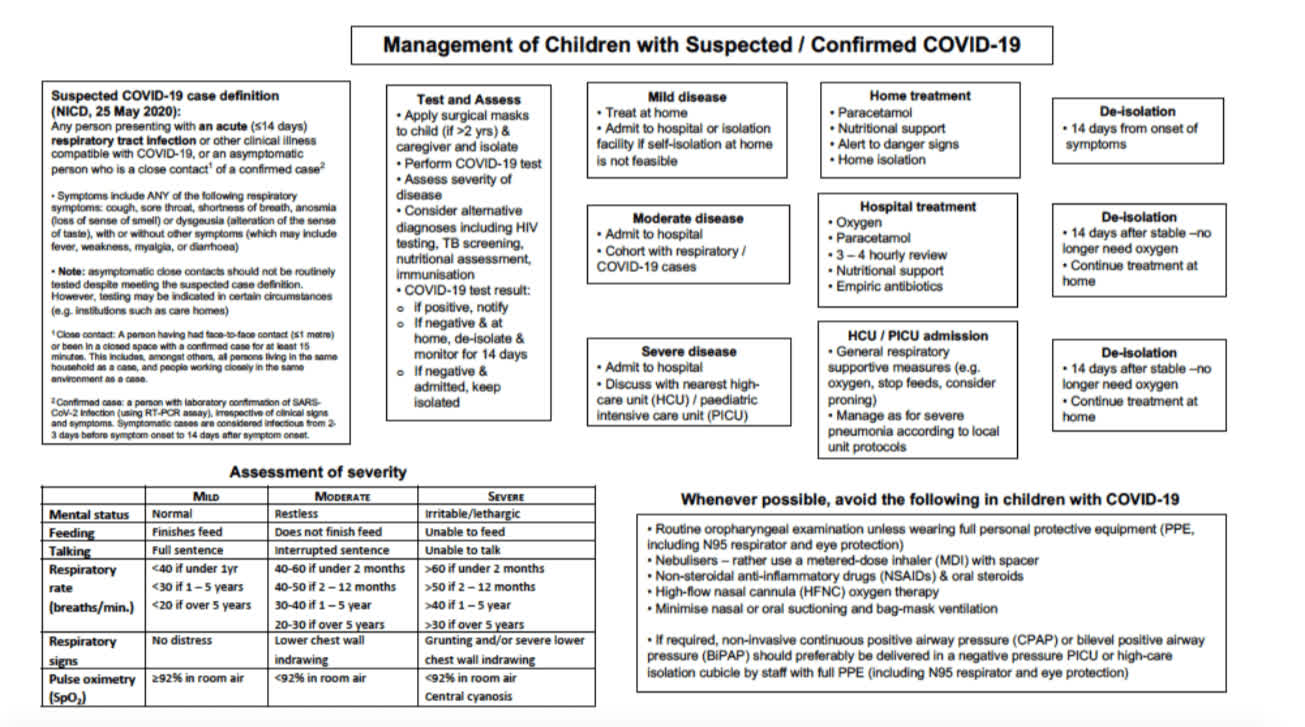
APPENDIX 4: OVERALL MANAGEMENT PROCESS AT HOSPITAL LEVEL
Click on image to enlarge
APPENDIX 5: INTUBATION OF A SUSPECTED/CONFIRMED COVID-19 PATIENT
Plan and Prepare
- Your personal protection is the priority
- Identify isolation precautions AND PPE (N95 mask, surgical gown, gloves, cap and eye protection, visors if available)
- Pay close attention to avoid self-contamination
- Go through Intubation checklist / identify senior personnel / allocate roles
- Communicate well to the team inside the room and the team outside. Limit personnel in room.
- Extra items to remember:
- filters, cuffed ETT, plastic to cover patient
- video laryngoscope where available
- in-line suctioning
- All extra ETT/suction catheters that are not opened/used should be kept in a clear plastic bag on the trolley to avoid contamination
Allocation of roles:
- Doctor A: Most experienced person to perform intubation
- Doctor B: Help with bagging, connection to ventilator, confirm ETT position and inflate ETT cuff
- Nurse A: Gives induction drugs and help with monitoring
- Nurse B: Should be outside the isolation room in PPE with red resuscitation trolley to pass any other equipment if needed (This is to avoid contamination of red trolley)
Intubation:
- Must have NGT in place, to empty stomach
- Most experienced person available to perform intubation
- Most children can be intubated with Ketamine and Rocuronium
- Preoxygenate with 100% O2 to avoid manual ventilation – this can be done on CPAP/NPO2 whatever was used prior to intubation
- Cuffed ETT with in-line suction connected and manometer to inflate cuff
- Use video laryngoscopy if available
- Plan for modified rapid sequence induction with skilled assistant
- Consider using a two-person bag-mask technique to get a good seal
- Use plastic bag to intubate under to limit droplet spread
- Intubate and connect ventilator and in-line suctioning immediately
- Avoid bagging patient
- Confirm ETT position: use EtCO2 and check chest rise and auscultate for equal air entry
- Try not to disconnect the ventilator if the patient desaturates
- Higher ventilator pressure may be needed initially/temporarily to recruit the lung and maintain saturations
- If Intubation attempt unsuccessful or patient desaturates during the intubation attempt: Start Bag-mask ventilation using small tidal volumes. Ensure filter between face mask and bag, if you use a T- piece – a filter is crucial
- Attempt intubation again once patient adequately oxygenated.
Post intubation:
- After leaving isolation area – to wipe down the surfaces and non-disposable items
- Correct PPE doffing procedure
Disposable equipment should be placed in disposable plastic bag at end of procedure and disposed of in the red bins inside the isolation room.
APPENDIX 6: GUIDELINES FOR MOTHERS/CAREGIVERS OF CHILDREN WITH SUSPECTED COVID-19
Self-isolation
- You should quarantine yourself with the child at home. Don’t go to work, avoid unnecessary travel, and as far as possible avoid close interactions with other people.
- You should clean your hands and the child’s hands with soap and water frequently.
- Do not have visitors in your home, including family who do not live with you, or have other children to play. Only those who live in your home should be allowed to stay.
- You and the child should wear facemasks when in the same room as other people in the house (or if you must go out especially in a vehicle).
- At home, you should stay in a specific room with the child with the door closed and window open, only coming out when necessary, wearing a facemask. You and the child should use your own bathroom (if possible), or the bathroom should be fully cleaned before others use it and the windows opened. Disposable nappies must be put in a plastic bag and carefully sealed before throwing them away.
- You should practice good cough and sneeze hygiene and teach the child or help the child to do the same, by coughing or sneezing into a tissue, discarding the tissue immediately afterwards in a lined trash can, and then wash hands immediately. If you do not have tissues, you should cough or sneeze into your elbow
- You should avoid sharing household items like dishes, cups, eating utensils and towels. After using any of these, the items should be thoroughly washed with soap and water.
- All surfaces like table-tops, counters, toilets, that you may have touched or that you touch frequently should be appropriately and frequently cleaned, with soapy water or disinfectant. This includes carefully cleaning phones, computers, etc. if others will touch them.
- All used and dirty laundry (sheets, clothes) must be washed at the highest temperature possible using laundry detergent. (This should be above 60° C, If possible). Clean all surfaces and the area around the washing machine. Wash your hands thoroughly with soap and water after handling dirty laundry.
- Dry clothes in the sun (or tumble dry) and iron everything well using the highest setting you can.
- Monitor your symptoms and those of the child - Seek prompt medical attention if your illness is worsening, for example, if you have difficulty breathing, or if the person you are caring for symptoms are worsening. If it’s not an emergency, call your doctor or healthcare facility at the number below. If it is an emergency and you need to call an ambulance, inform the call handler or operator that you are being tested for SARS-CoV-2.
Breastfeeding: women who are breastfeeding should continue to do so regardless of COVID 19 status
- Wear a mask during breastfeeding. Where medical masks are not available, wear a home-made mask. Wash the mask in soapy water after every feed and dry in sunshine
- Wash hands with soap and water before feeding
- Keep breasts and nipples clean by washing with soap and water
- Disinfect all surfaces they have touched with 4 teaspoons of bleach in 1 litre of water
Child-care in general:
Do:
- Wash children’s hands frequently with soap and water
- Eye contact and smiling and games from a safe distance of 1.5-2 meters will help to keep contact with children
- Wear a face mask when in contact with a child (i.e. less than 1.5-2m) especially if you have a cough, and if you are together in a small closed room
- Keep windows or doors open as much as possible to keep the air clean and fresh
Don’t:
- Don’t use hand sanitizer on babies and children’s hands
- Don’t kiss babies and children
- Don’t touch the child’s eyes, put fingers into child’s mouth or blow in child’s face
Feeding guidelines
- Continue usual feeding practices, encourage child to eat in spite of anorexia
- Ensure food utensils are clean and not shared
Watch for Symptoms: explain to parents/caregivers about the symptoms
- Symptoms of COVID-19 similar in children and adults - Cold- like symptoms such as fever, runn nose and cough. Sometimes vomiting and diarrhoea
- Check for danger signs such as fast breathing, not eating, vomiting everything, fever, shaking/fits, swollen ankles
- Extra care must be taken with children who have chronic health conditions and low immunity
What to do when your child has symptoms: advise parents/caregivers to contact or attend their health facility or doctor or helpline for advice and inform them they have been in contact with someone with COVID-19.
APPENDIX 7: SIMPLES TERMINOLOGY / CONCEPTS
There are a variety of terms or concepts that patients and their family need to understand in dealing with COVID-19.
CLOSE CONTACT
Contact with a person with confirmed or suspected COVID-19 in the following context:
- Face-to-face contact (within 1 metre) or in a closed environment for more than 15 minutes;
- Living in the same household;
- Working closely together;
- Any healthcare worker not wearing PPE.
HAND HYGIENE
This is a preventive and protective measure. There are 2 modalities of hand hygiene:
- Hand washing:
- Washing with soap and running water;
- For 20 seconds;
- Both surfaces of hands and forearms and between all fingers;
- At least twice daily; when soiled; before preparing food; before eating; after using the toilet.
- Fingernails should be kept short
- Sanitising with alcohol-based hand rub (at least 60% alcohol):
- When unable to wash with soap and water;
- After contact with frequently touched surfaces.
SOCIAL DISTANCING (PHYSICAL DISTANCING)
This is a preventive and protective measure.
- Staying at home as much as possible;
- Staying at least 1.5 – 2 metres from other people;
- NOT hugging, kissing or shaking hands;
- Avoiding groups
- Avoiding contact with frequently touched surfaces such as door-knobs.
SELF-QUARANTINE
Applies to a person who has had close contact with another person with suspected or confirmed COVID-19. This entails the following:
- Staying at home for 14 days
- Minimising contact with other household members
- Not sharing household items
SELF-MONITOR
Applies to a person who has had close contact with another person with suspected or confirmed COVID-19 and is in self-quarantine. It involves looking out for early signs of COVID-19:
- Check temperature twice a day or monitor for feeling feverish
- Watch for symptoms:
- Respiratory illness–cough, shortness of breath;
- General ill health–excessive tiredness, muscle aches and pains.
SELF-ISOLATION
This applies to an individual with confirmed COVID-19 and entails the following:
- Staying at home for 14 days;
- As far as possible, using separate bedroom and bathroom;
- Minimising contact with other household members;
- Not sharing any household items.