Management of HIV-Infected Children (<10 years)
Update - 20 June 2025 Links not working not linked out - https://www.nacosa.org.za/wp-content/uploads/2016/11/IntegratedAdherence-Guidelines-NDOH.pdf
Please click on the link below to access the most up-to-date version of this guideline. The content on this page is currently being updated to align with the latest publication. Always check the version number at the bottom of the screen to confirm which version you are using.
Click here to access the Primary Health Care - PHC Chapter 11: Human Immunodeficiency Virus and Acquired Immune Deficiency Syndrome (HIV and AIDS) - 26 February 2026
Description
General and Supportive Measures
Standardised National Monitoring for Infants & Children with HIV
Medicine Treatment
B24
DESCRIPTION
HIV-infected child: An infant/child in whom HIV infection has been confirmed with two age-appropriate tests. See The HIV-exposed infant.
GENERAL AND SUPPORTIVE MEASURES
- Identify a caregiver who can supervise the child’s treatment.
- Link HIV interventions to regular well infant visits/nutritional care. Ensure the road to health booklet is correctly completed and used to reflect and guide care.
- Counselling is a vital part of the successful care of children with HIV infection and their families. Specific matters requiring attention are:
- The implications of the disease to the family.
- Implications of treatment and understanding of the condition and its care.
- The disclosure process within the family and extended family should be encouraged. Besides the caregiver, help from the family is often useful.
- Disclosure to the child as appropriate to age and maturity, with the parents’ support:
- Find out what the child understands of their illness and what they would like to know.
- Disclosure should be child-led in terms of information required, language used, and educational/emotional readiness.
- Anticipate the effects of disclosure on the child, family, and other contacts such as friends and school colleagues.
- Ensure that in disclosure, the child is constantly reassured of the parents’/caregivers’ love.
Treatment of mothers, caregivers and other family members:
- Always ask about the caregiver’s health, and the health of other family members.
- Ensure that mothers and other family members have timeous access to medical care including ART.
- Encourage breastfeeding in all mothers with HIV-infected children, with introduction of complementary foods from 6 months of age.
- At every visit ask about TB contacts and symptoms in children and their caregivers.
STANDARDISED NATIONAL MONITORING FOR INFANTS & CHILDREN WITH HIV
| AT INITIAL DIAGNOSIS OF HIV | PURPOSE |
| Verify HIV status. | To ensure that national testing algorithm has been followed. |
| Document weight, height, head circumference (< 2 years of age) and development. | To monitor growth and development. |
| Screen for TB symptoms. | To identify TB and HIV co-infection. |
| Do CD4 count. | Determine eligibility for cotrimoxazole prophylaxis (CPT): < 1 year: CPT irrespective of CD4 count. 1–5 years: CPT if CD4 count < 25% or WHO Stage 3 and 4. > 5 Years: CPT if CD4 count < 200 cells/mm3 or WHO Stage 3 and 4. |
| Hb or FBC if available. | To detect anaemia or neutropaenia. |
| AT INITIATION OF ART (BASELINE) | PURPOSE |
| Hb or FBC. | If < 8 g/dL: Manage appropriately. |
| CD4 count (if not performed in last 6 months). | Baseline assessment. |
| ALT (If jaundiced or on TB treatment). | To detect liver dysfunction. |
| ON ART | PURPOSE |
| Height, weight, head circumference (if child < 2 years) and development. | To monitor growth and development. Adjust dosing at each visit according to weight gain. |
| Clinical assessment including medicine-related adverse events. | To monitor response to ART and detect adverse effects. |
| CD4: At 1 year on ART, and then every 6 months until meets criteria to stop cotrimoxazole. Thereafter stop CD4 count monitoring if patient remains virologically supressed. If not virologically supressed monitor CD4 count every 6 months. | To monitor response to ART. Stop cotrimoxazole prophylaxis if indicated. |
| Viral load: At month 3 on ART, after 12 months on ART, then every 12 months if virologically suppressed. |
To monitor viral response to ART. To identify treatment failure and adherence problems. |
| More frequent monitoring (3–6 monthly) recommended in patients with treatment failure. | For management of an elevated VL, see algorithm, below: Monitoring and management of viral loads. |
| Hb or FBC at months 3 and 6 if on AZT. Thereafter, repeat if clinically indicated | To identify AZT-related anaemia. |
| If on PI-based regimen: Cholesterol + triglyceride at month 3. If above acceptable range, do fasting cholesterol and TGs; and if still above acceptable range consult with doctor/specialist. |
To monitor for PI-related metabolic side effects. |
Table 1: Monitoring for infants and children with HIV on ART
LoE:IIIb49
MEDICINE TREATMENT
Prophylaxis for opportunistic infections
See Opportunistic infections, prophylaxis in children.
Immunisation, deworming and vitamin A programme
- Continue deworming and vitamin A programme as in the HIV-uninfected child.
- Continue immunisation as per the SA-EPI (See Vaccines for routine administration). If signs of HIV infection present, defer the BCG vaccination.
Nutritional support
Treat specific nutritional deficiencies appropriately.
Antiretroviral therapy
Initiation of ART in well infants shown to be PCR-positive should be carried out at PHC level.
The preparation of the child and family to start ART is critical to the success of the treatment. Failure to achieve adherence and understanding may lead to resistance and adversely affect the prognosis of the child.
Eligibility for ART
Clinical criteria
- Confirmation of diagnosis of HIV infection, irrespective of CD4 count/percentage or WHO clinical stage.
LoE:IIIb50
AND
- No indications for deferral (e.g. major organ dysfunction). If medical contraindications are present, refer to hospital for rapid review and planning.
Social issues that must be addressed to ensure successful treatment
These are extremely important for success and impact on adherence. Social challenges should be overcome and not be barriers to care. Disclosure to another adult living in the same house is encouraged so that there is someone else who can assist with the child’s treatment. However, absence of disclosure should not preclude ART initiation.
- Mandatory component: At least one identifiable caregiver able to supervise the child and/or administer medication. All efforts should be made to ensure that the social circumstances of vulnerable children (e.g. orphans) be addressed to facilitate treatment.
- Adherence:
- High levels of adherence are required for adequate virological response and prevention of viral resistance. This can be achieved with regular education and support.
- All efforts to encourage this level of adherence should be made.
- Viral load measurements are useful for monitoring adherence.
- Sensitive, age-appropriate disclosure facilitates adherence.
- Mother and other family members should be assessed and treated.
Counselling before ART is initiated
The health care worker should ensure the caregiver/s understanding of HIV, ART and the importance of virological suppression and train caregivers on practical skills to adhere to ART.
ART regimens
- Treatment regimens are chosen according to age, weight, expected adverse effects, efficacy, and prior antiretroviral exposure.
- Adjust the dosage of ART according to weight during follow-up visits. Assess weight gain and the need for adjustment at each visit.
- Do not change regimens or move to an alternative regimen without clear guidance from a paediatric expert, as unnecessary loss of effective regimens can shorten life expectancy. Address adherence problems thoroughly before switching to an alternative regimen.
- Single medicine substitutions may only be made when medicine-specific adverse effects are encountered, on condition that virological suppression is documented and the matter is discussed with a practitioner experienced in child ART.
| First-line ART regimens for infants and children: ALD1: Clients on a DTG-containing regimen, having never failed a previous regimen (old ‘first-line’ terminology). ALD2: Clients on a DTG-containing regimen, who have failed a previous regimen (old ‘second- line’ terminology). |
ALD: abacavir, lamivudine, dolutegravir.
General ART comments
- Switch to tablets or capsules from pellets, syrups or solutions as soon as possible.
- Fixed-dose combinations are preferred to single agents.
- If available, use daily dose regimens.
Side effects:
In patients being considered for an AZT-containing regimen, monitor for anaemia prior to initiation of ART.
A small proportion of patients initiated on ABC are at risk of abacavir hypersensitivity reaction, which presents with fever, rash and gastrointestinal disturbances. If this reaction is suspected, consult an expert.
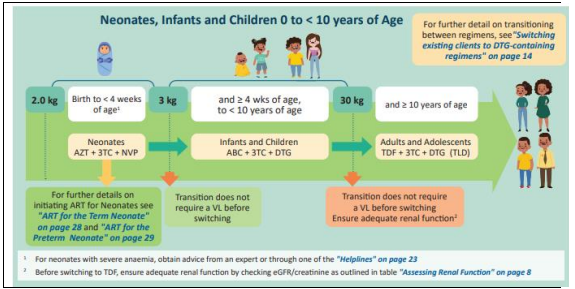
Figure 1: First-line paediatric ART-switching algorithm for neonates/infants/children (adopted from the NDoH 2023 ART Clinical Guidelines for the Management of HIV in Adults, Pregnancy and Breastfeeding, Adolescents, Children, Infants and Neonates).
Click on image to enlarge
LoE:IIIb51
Transition from ABC/3TC/LPV/r to DTG based regimens
- Children < 10 years or weight < 30 kg
- On PI based regimen for < 2 years: switch to DTG based regimen (no VL required)
- On PI based regimen for ≥ 2 years: review VL results, manage as per algorithm in figure 2, below
For patients not eligible for transition to DTG based regimen
- Consider switching to ABC/3TC/LPV/r 4-in-1 formulation and repeating HIV VL in 3 months. If HIV VL < 1000 copies/mL, change to ABC/3TC/DTG and if > 1000 copies/mL, perform an HIV drug resistance test (DR).
- Perform an HIV DR if 4-in-1 formulation not available.
- If NRTI mutations on the HIV DR show:
- No mutations or only M184V – switch to ABC/3TC/DTG.
- M184V + other mutations – discuss with an experienced practitioner in child ARV medicine.
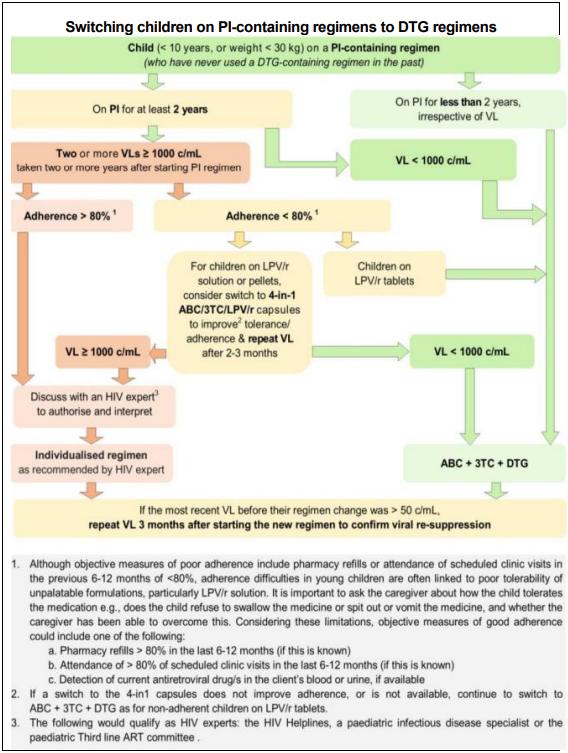
Figure 2: Switching children on PI-containing regimens to DTG regimens (adopted from the NDoH 2023 ART Clinical Guidelines for the Management of HIV in Adults, Pregnancy and Breastfeeding, Adolescents, Children, Infants and Neonates).
Click on image to enlarge
Treatment failure
The HIV viral load is the most sensitive method to detect failure of response to ART.
Virological failure can be defined as a measurable viral load despite optimal adherence and dosage over 4 months. Treatment failure is primarily defined by viral loads, as waiting for clinical or immunological failure increases the chances of increasing viral resistance to other available antiretroviral agents.
Poor adherence is the most common cause of treatment failure. Adherence issues should be assessed and then implement strategies to improve adherence.
*For guidance on the step-up adherence package, refer to the National adherence guidelines. https://www.nacosa.org.za/wp-content/uploads/2016/11/IntegratedAdherence-Guidelines-NDOH.pdf
Third-line (patients failing ALD2)
Discuss with expert
- Application forms for third-line antiretroviral therapy (patients failing ALD2) can be accessed at the following link: https://www.sahivsoc.org/Files/Application%20for%20Third%20Line%20Antiretrovirals_2017.pdf
- Important information to assist in applying for third-line antiretrovirals can be found at www.righttocare.org/what-we-do/third-line-art/
Applications can be emailed to TLART@health.gov.za
LoE:IIIb52
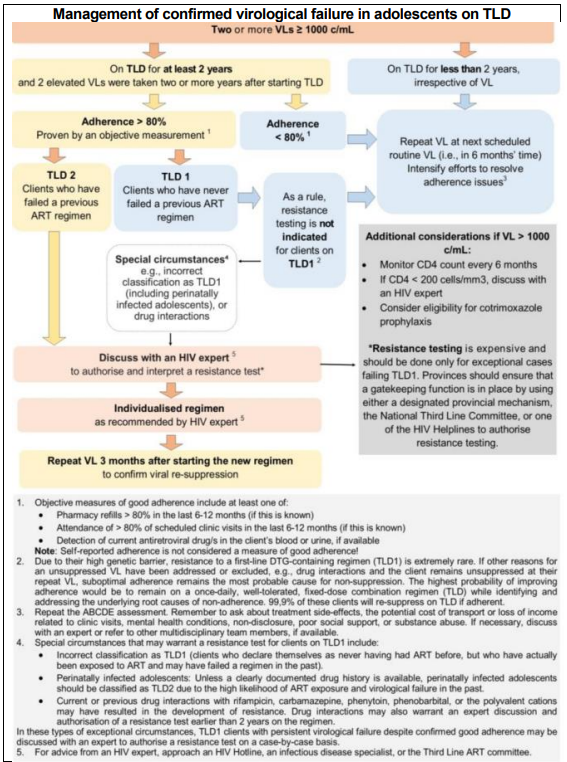
Figure 3: Management of confirmed virological failure in adolescents on TLD (adopted from the NDoH 2023 ART Clinical Guidelines for the Management of HIV in Adults, Pregnancy and Breastfeeding, Adolescents, Children, Infants and Neonates).TLD1 = TLD as a first line ART regimen and TLD2 = TLD in patient who has failed a previous ART regimen
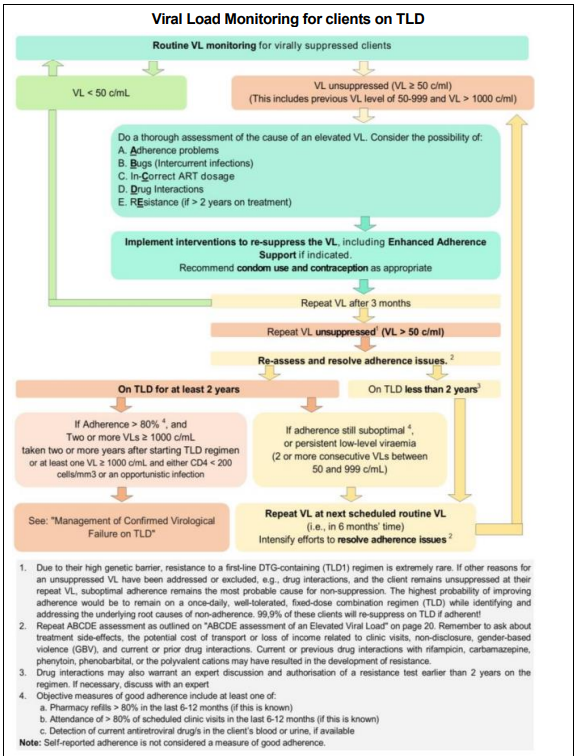
Figure 4: Viral load monitoring for clients on TLD (adopted from the NDoH 2023 ART Clinical Guidelines for the Management of HIV in Adults, Pregnancy and Breastfeeding, Adolescents, Children, Infants and Neonates).
ART dosing tables for infants and children
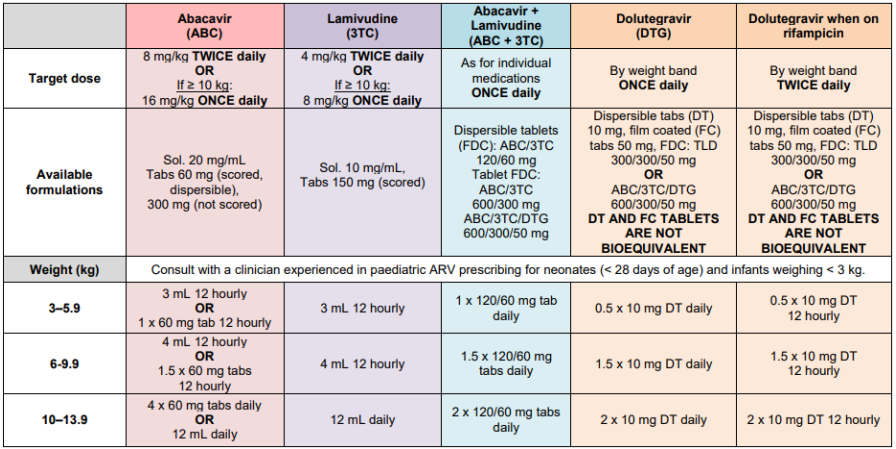
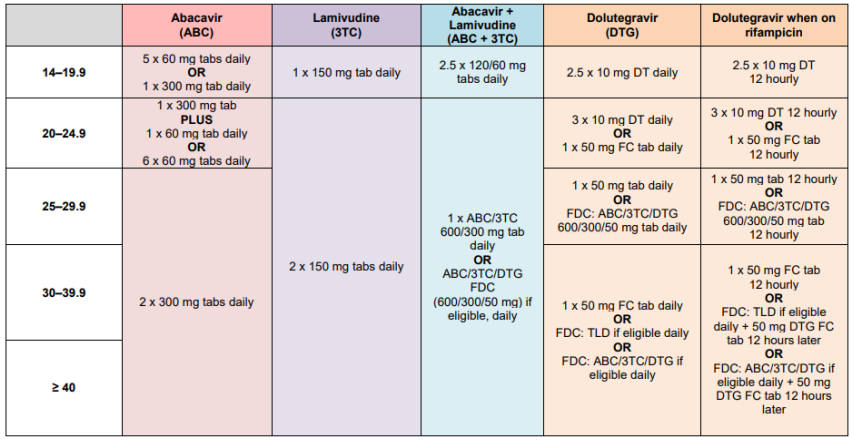
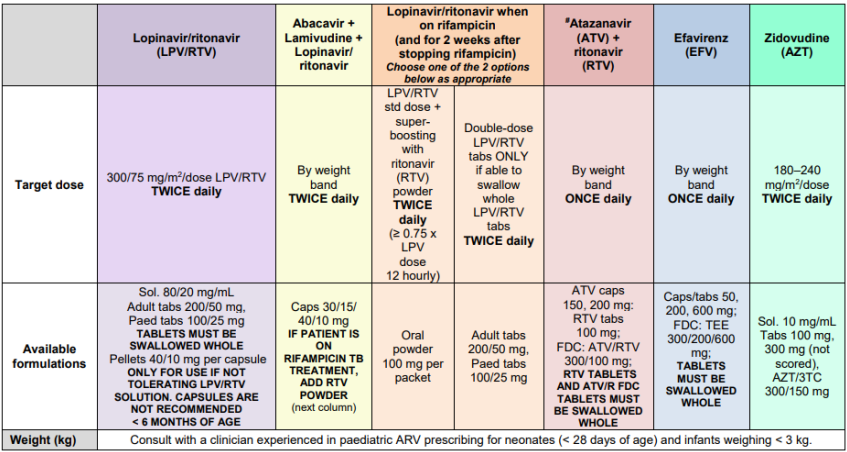
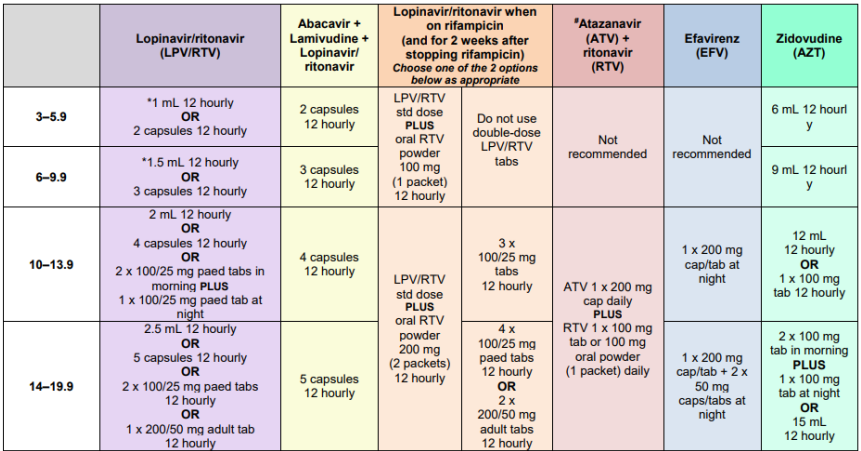
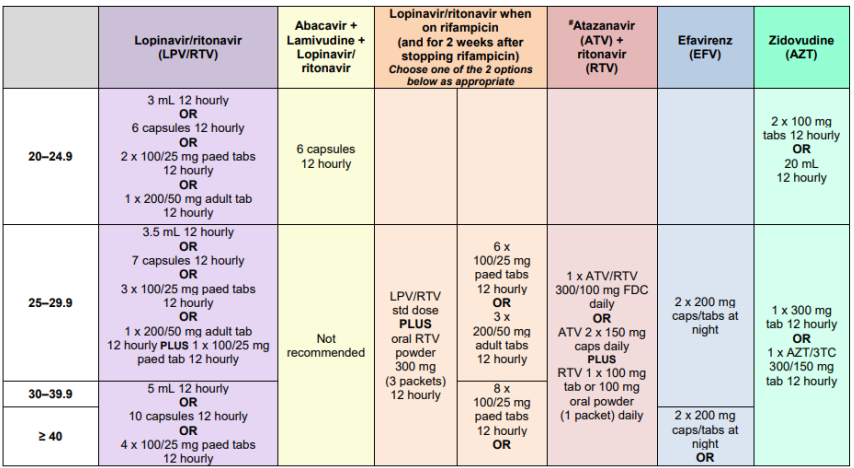
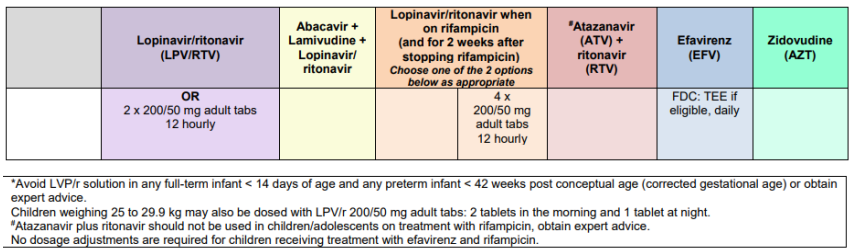
Table 2: ART dosing tables for infants and children (adopted from the NDoH 2023 ART Clinical Guidelines for the Management of HIV in Adults, Pregnancy and Breastfeeding, Adolescents, Children, Infants and Neonates).
Instructions to administer LPV/r pellets to children are:
- Hold the capsule at both ends and, twisting in opposite directions, pull apart to pour out the pellets inside the capsule.
- Add the pellets (from the required number of capsules) to a spoonful of food a little at a time. For example, porridge can be used (must be at room temperature).
- Do not stir, crush, or dissolve the pellets; rather sprinkle over the food.
- Use only a small amount of food, to ensure child can consume all the pellets. Discard food with pellets after 2 hours.
- The capsule can be discarded with usual waste.
LoE:IIIb53
Standard Treatment Guidelines and Essential Medicines List for South Africa, Primary Healthcare, 2020-2024_Version 2.1_09 December 2024
Chapter 11: Human Immunodeficiency Virus and Acquired Immune Deficiency Syndrome (HIV AND AIDS)_ 11.6 Management of HIV-infected Children (<10 years)