Monitoring and Evaluation
Data collection tools Data flow processes and reporting Cascade analysis at facility level Proposed data elements Monitoring is the periodic assessment of programme activities to determine whether they are proceeding as planned. It provides managers with continuous feedback on implementation, to make informed decisions regarding service delivery and ensure effective and efficient use of resources
Data flow processes and reporting
Cascade analysis at facility level
Monitoring is the periodic assessment of programme activities to determine whether they are proceeding as planned. It provides managers with continuous feedback on implementation, to make informed decisions regarding service delivery and ensure effective and efficient use of resources for maximum impact. Evaluation, on the other hand, is a periodic in-depth time-bound analysis which aims to assess performance and overall impact of the programme systematically and objectively.
Data collection tools
Patient record folder - this is a standard record where all patient clinical information is recorded for each visit. It serves as a source document for capturing in the electronic register.
Primary healthcare (PHC) tick register - this register is used to collect the data elements needed to compile routine monthly statistics. This includes information on TB screening, eligibility and initiation of TPT.
TB identification register – this register is used to record all presumptive TB patients.
TIER.Net - This is an electronic information system used to capture patients started on treatment and to monitor outcomes.
Data flow processes and reporting
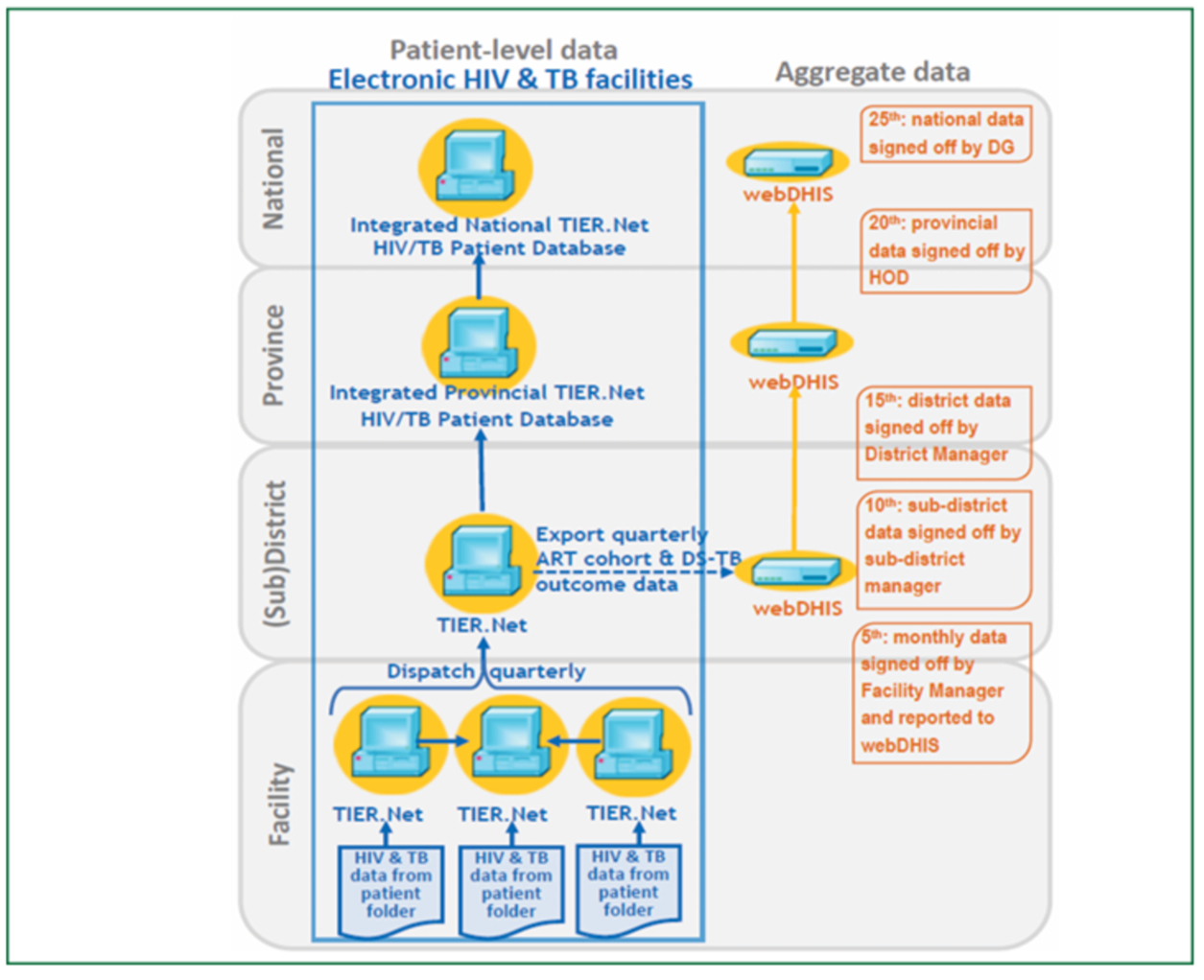
- Facilities, districts and provinces are expected to report according to the District Health Management Information System (DHMIS) Policy and processes illustrated in Figure 6.
- With facility level digitisation, data from the patient folders is captured directly into the three interlinked electronic registers (TIER) system at facility level daily. It is then dispatched to the next level on a monthly or quarterly basis.
- At each level the data should be checked and signed off by the manager before reporting to the next level.
Figure 6. Illustration of the data flow process from the facility to national level and reporting timeline
Click on the image to enlarge
Cascade analysis at facility level
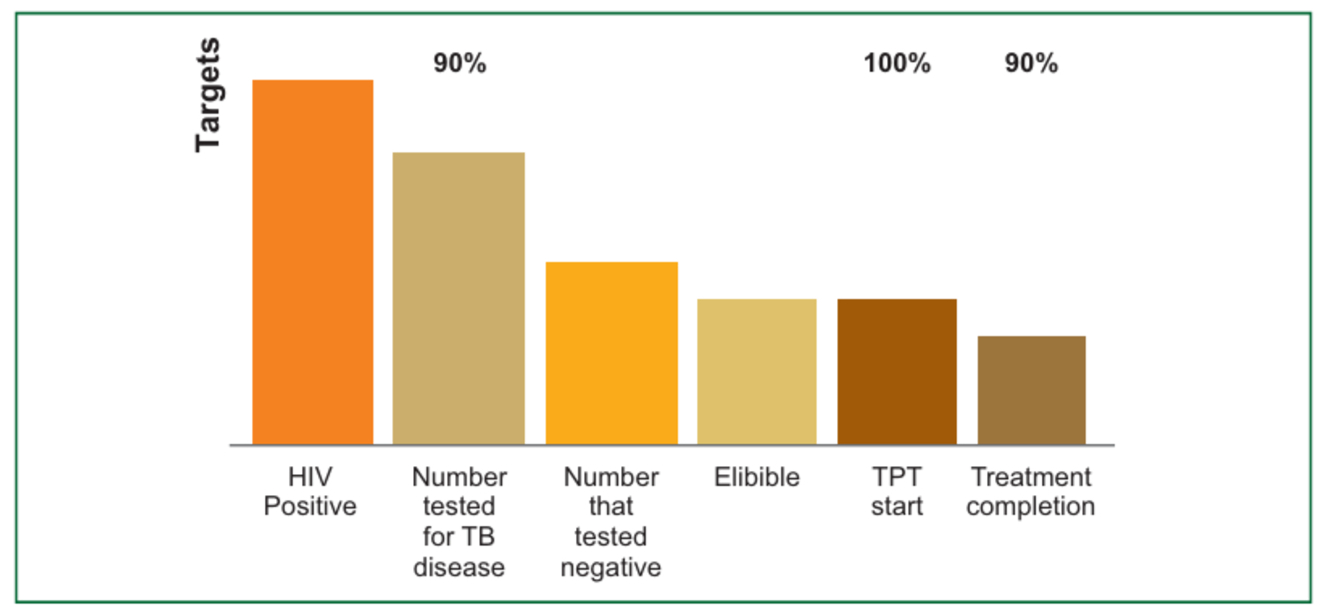
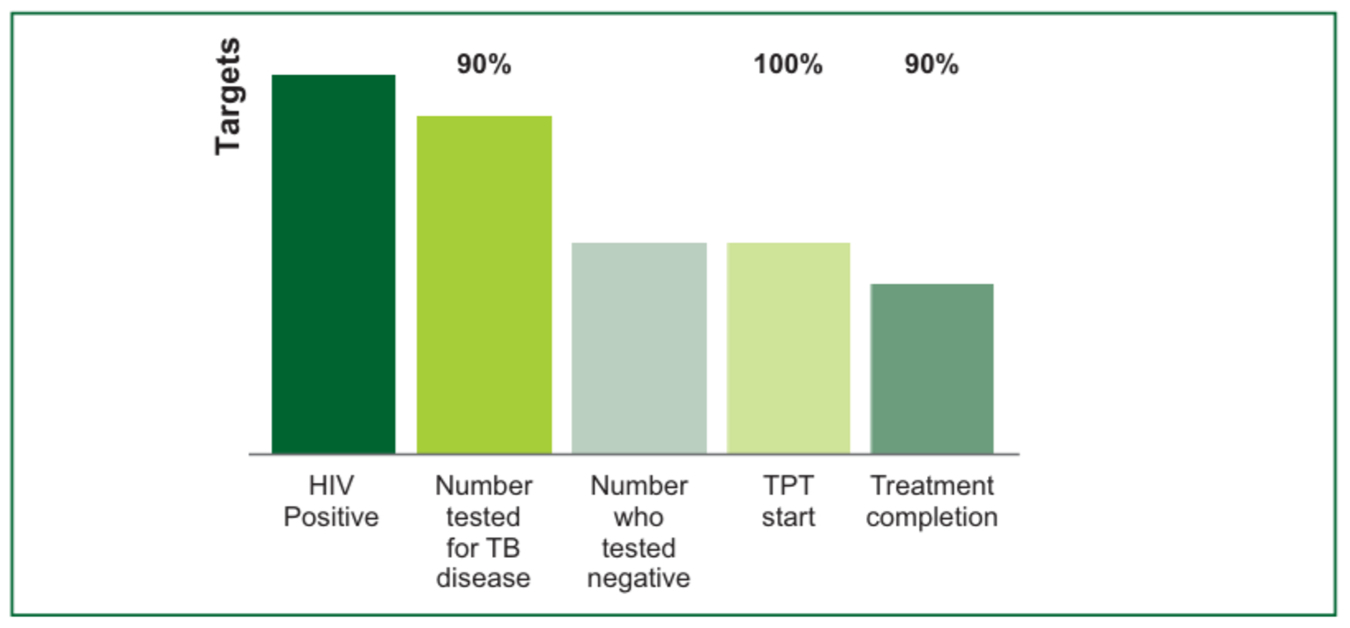
- Facilities must conduct a care cascade analysis of aggregated data from screening to treatment outcomes. This will help to identify gaps/leakages within the cascade and develop plans to address the gaps using the quality improvement methodology. Examples of TB evaluation cascades for HIV-positive clients and contacts of TB index patients are illustrated in Figures 7 and 8.
- District, provincial and national levels must monitor progress against their cascades. The managers at these levels should identify facilities, districts and provinces that are struggling to meet targets using the dashboards and develop plans to provide intensive support.
Figure 7. Illustration of a cascade for HIV-positive clients
Click on the image to enlarge
Figure 8. Illustration of a cascade for contacts
Click on the image to enlarge
Proposed data elements
- Number of individuals eligible for TPT.
- Number of individuals started on TPT.
- Number of individuals who successfully completed treatment.
- Number of individuals lost to follow-up during treatment.
- Number of individuals who died during treatment.
National Guidelines on the Treatment of Tuberculosis Infection, February 2023
Monitoring and Evaluation