Monitoring Patients on RR-TB Treatment
Monitoring Schedule for a patient on a BPaL-L/BPaL 6 month regimen Principles for monitoring and management of adverse events Safety monitoring Adverse event screening questionnaire Active drug safety monitoring activities Monitoring Schedule for a patient on a BPaL-L/BPaL 6 month regimen An example of the schedule of baseline, routine, and post-treatment monitoring examinations for the BPaL-L/BP
Monitoring Schedule for a patient on a BPaL-L/BPaL 6 month regimen
Principles for monitoring and management of adverse events
Adverse event screening questionnaire
Active drug safety monitoring activities
Monitoring Schedule for a patient on a BPaL-L/BPaL 6 month regimen
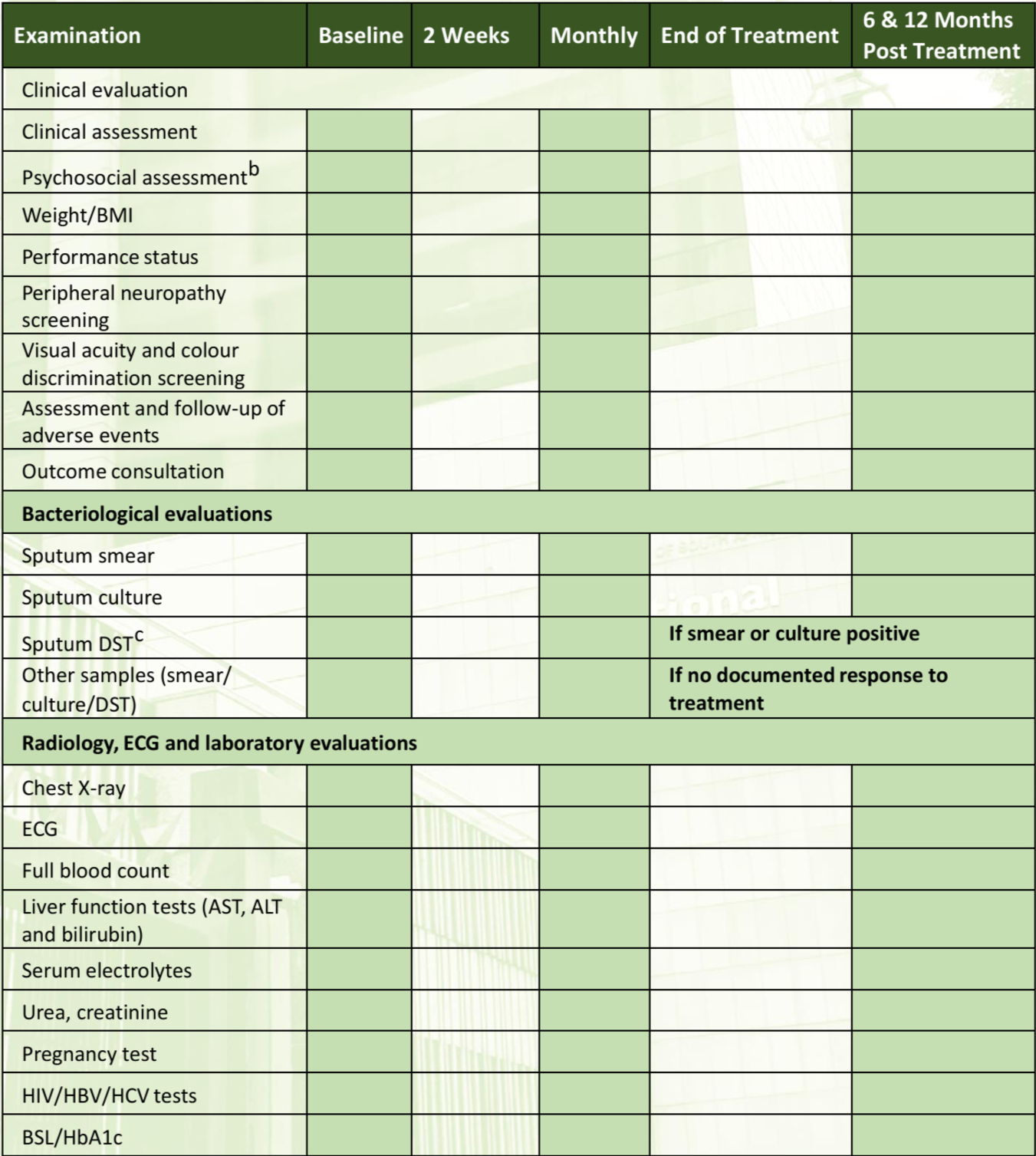
An example of the schedule of baseline, routine, and post-treatment monitoring examinations for the BPaL-L/BPaL regimen.
Click on the image to enlarge.
ALT: alanine aminotransferase; AST: aspartate aminotransferase; BMI: body mass index; BPaL: bedaquiline, pretomanid and linezolid; BPaL-L: bedaquiline, pretomanid, linezolid and levofloxacin; BSL: blood sugar level; DST: drug susceptibility testing; ECG: electrocardiography; HbA1c: glycosylated haemoglobin; HBV: hepatitis B virus; HCV: hepatitis C virus; HIV: human immunodeficiency virus; TB: tuberculosis; WHO: World Health Organization.
a Vital signs, TB symptom screen, pain, nausea, appetite and nutrition, diarrhoea and candidiasis. Clinical assessment should focus on monitoring the response to treatment and addressing common symptoms associated with TB treatment and long-term antibiotic use, with the goal of supporting adherence.
b Food security, housing, mental state and substance use. Psychosocial assessment should offer an opportunity to assess supportive factors for treatment adherence and should be directly linked to relevant interventions wherever possible, as per country-specific questionnaires.
c Ideally, the patient should at baseline have a WHO-recommended rapid molecular test (for rifampicin and fluoroquinolone resistance). Other investigations, if available, include culture-based second-line DST, next-generation sequencing and DST for the BPaL-L component drugs.
Principles for monitoring and management of adverse events
- All persons with RR-TB need baseline assessments and monthly monitoring during treatment. This includes assessment for substance use and mental health.
- Persons on either regimen need monthly samples sent for smear and culture for therapeutic decision-making.
- Increased attention needs to be given to monitoring for linezolid toxicity (full blood count with differential, visual acuity testing, screening for peripheral neuropathy) and for QT interval prolongation (ECG at 2 weeks then monthly thereafter) in addition to previous monitoring.
- Management of adverse events is essential for improving chances of treatment success, and medications to treat adverse events should be provided free of charge.
- Recording adverse events and their management in clinical records is crucial, as is reporting serious, severe, or unexpected adverse events.
- Specific guidance for managing anaemia, QT interval prolongation, peripheral neuropathy, and hepatotoxicity are included in the guidelines.
- Young children may need tailored monitoring since the ability to rely on symptom screening in this population is limited.
Safety monitoring
See: Safety monitoring
Adverse event screening questionnaire
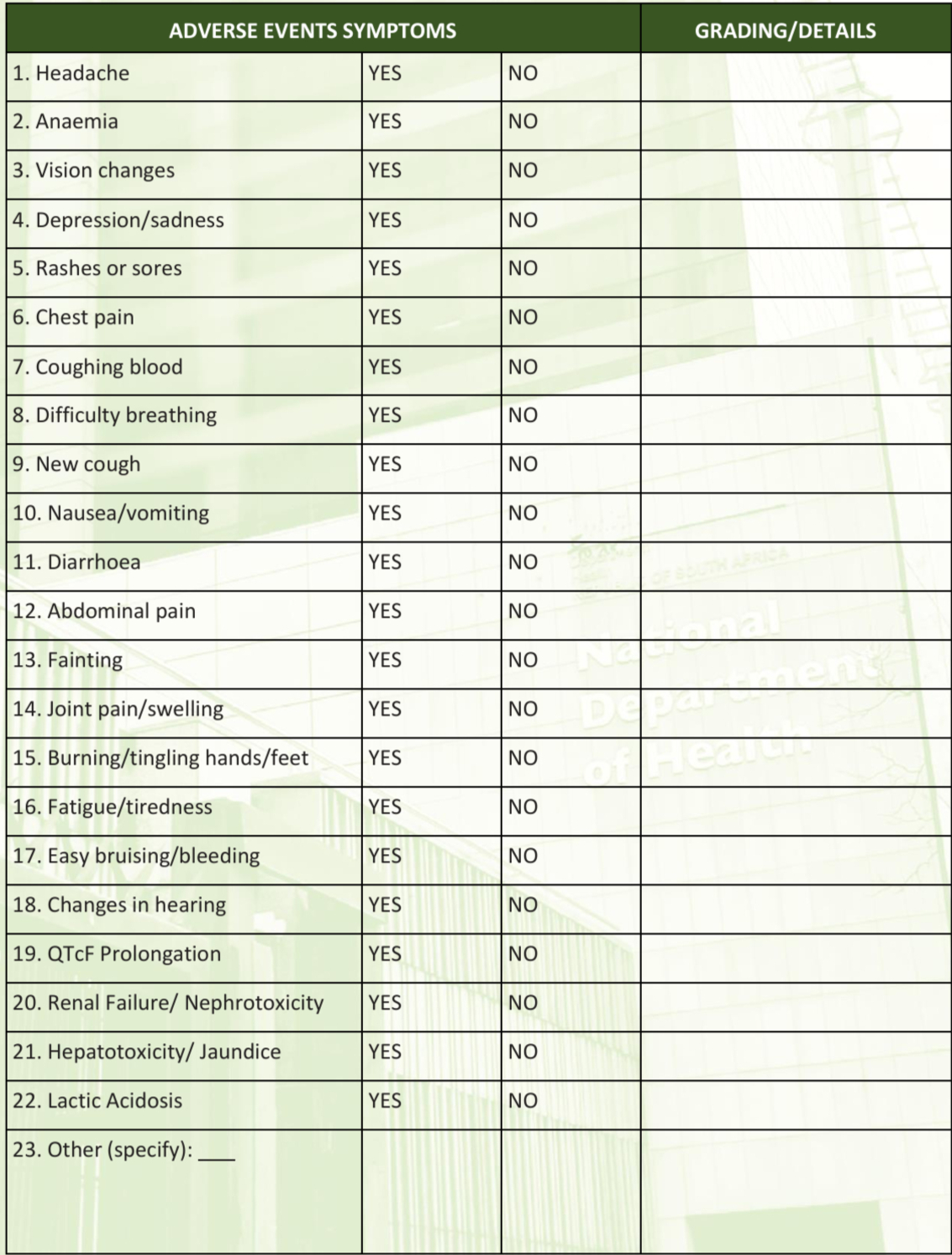
This checklist should be completed at each follow up visit for anyone receiving RR-TB treatment, regardless of the regimen. Any “yes” answers should be followed up for more details.
Ask the patient: “Since your last visit, have you experienced any of the following symptoms?”
Click on the image to enlarge.
Active drug safety monitoring activities
See: Active drug safety monitoring activities
National Department of Health Clinical Management of Rifampicin-Resistant Tuberculosis, September 2023
Monitoring Patients on RR-TB Treatment