Neonatal Endotracheal (ET) Tube: Length and Fixation
Management guidelines for students, interns and registrars on a variety of routine and emergency situations in our neonatal service at Tygerberg Children’s Hospital. Published in 2014.
Orotracheal tube
Endotracheal intubation through the mouth is used for acute resuscitation (labour ward) if nasotracheal intubation is not possible.
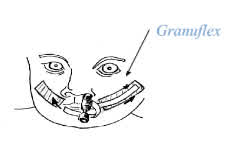
It should be fixed in position against the lip and hard palate, using zinc oxide plaster over Granuflex strips if necessary. See below.
Length (cm) of orotracheal ET tube placement (ET tube tip to baby’s upper lip) = Weight (kg) + 6
Add 1 cm for nasotracheal ET tube. Confirm ET tube position on CXR.
ET tube tip should be at the level of the medial ends of the clavicles.
WEIGHT (kg) | DEPTH (cm) of Orotracheal ET tube (ET tip to upper lip) | DEPTH (cm) of Nasotracheal ET tube (ET tip to nostril) |
| 1 | 7 | 8 |
| 2 | 8 | 9 |
| 3 | 9 | 10 |
| 4 | 10 | 11 |
Nasotracheal tube
The newborn’s skin is moist and delicate at birth.
In order to overcome this problem a strip of Granuflex is placed on each cheek. (Alternatively, the baby’s upper lip and cheeks are covered with Friar's balsam and allowed to dry.) Tape 2 strips (±10 cm each) of zinc oxide plaster to the ET tube and stick to the Granuflex as indicated in the sketch.