Obesity in Pregnancy
Obesity in Pregnancy
Management at High Risk Clinic for BMI 40 kg/m2 and more
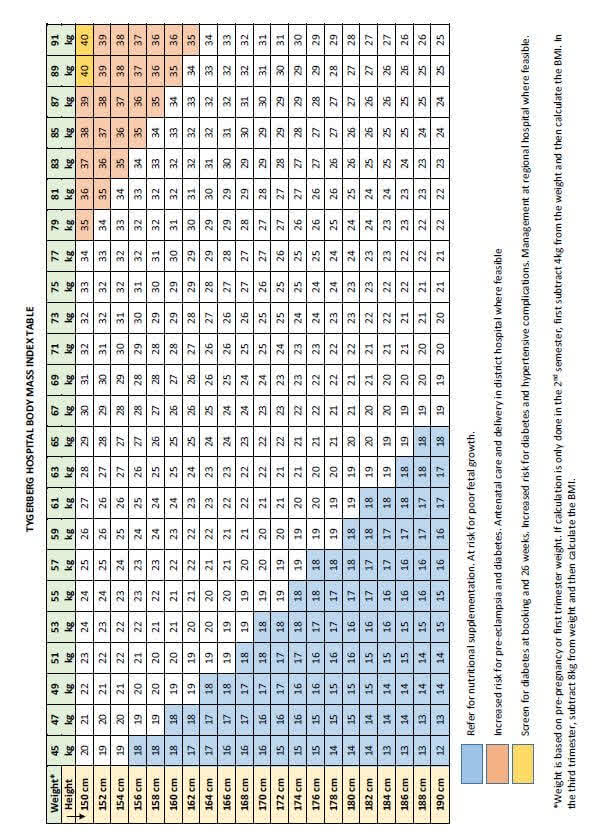
Tygerberg Hospital Body Mass Index Table 45kg - 91kg
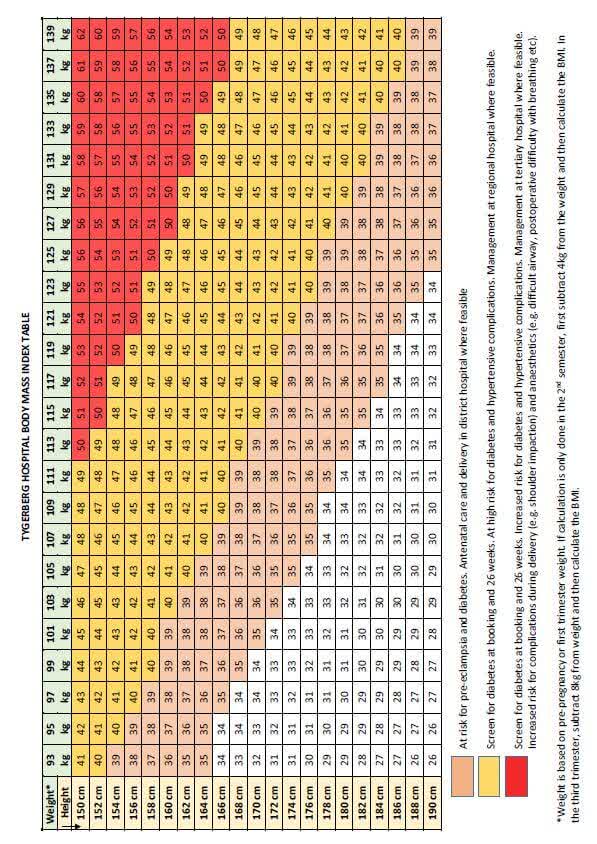
Tygerberg Hospital Body Mass Index Table 93kg - 139 kg
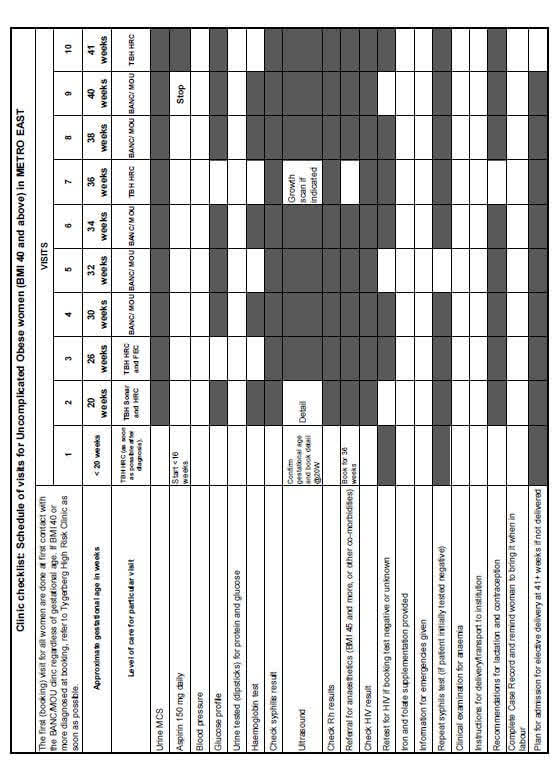
Clinic Checklist: Schedule of visits for Uncomplicated Obese Women
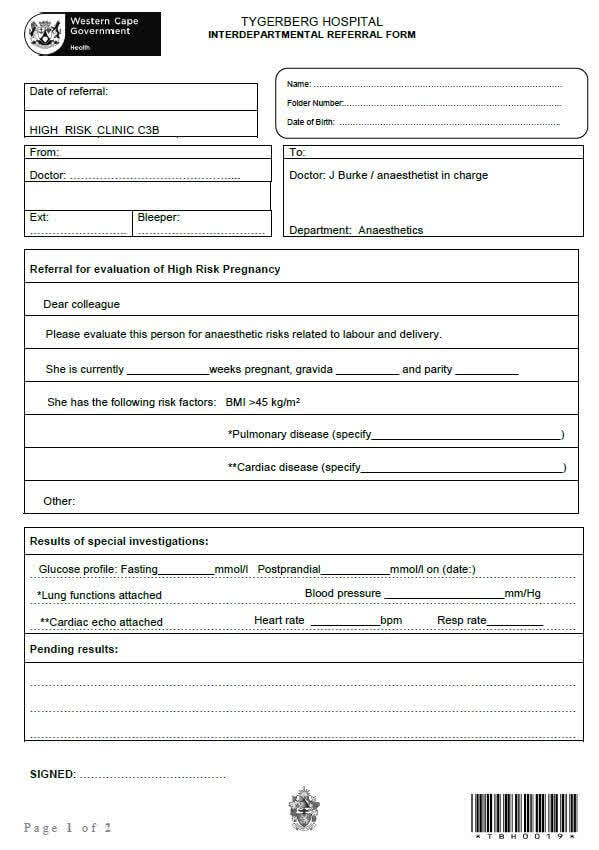
Tygerberg Hospital Interdepartmental Referral Form
Introduction
The health risks of obese women are increased during pregnancy, labour and in the peripartum period. According to the UK confidential enquiries in to maternal deaths, 35% of all women who died were obese (50% more than the general population). The corresponding figure for South Africa is not known, as a Body Mass Index (BMI) is not routinely recorded on all antenatal cards. As MUAC does not give information on the challenge of obesity for obstetric and anaesthetic care, the PGWC recommendation is to calculate both BMI and MUAC at booking. As obesity is associated with increased maternal and neonatal morbidity, and therefore increased health costs, a routine BMI also helps in the planning of health service delivery.
Morbid obesity is associated with a 5-7 times higher incidence of hypertensive disorders in pregnancy and of gestational diabetes. There is a much higher incidence of Caesarean section and of perineal trauma. The main concern is with obstetric anesthesia, as all aspects of oxygenation and ventilation are
affected.
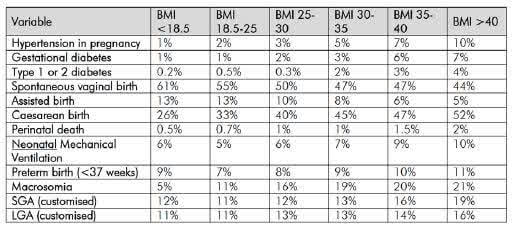
The risks stratified according to BMI are shown below (from the RANZCOG guideline on obesity in pregnancy)
Definition
- The World Health Organization defines
- Normal weight as a body mass index (BMI) of 18.5-24.9 kg/m2
- Overweight (pre-obese) as a BMI of 25-29.9 kg/m2
- Obesity as BMI > 30 kg/m2
- Class I obesity: BMI 30-34.9 kg/m2
- Class II obesity: BMI 35-39.9 kg/m2
- Class III obesity: BMI 40 and above (morbid obesity) kg/m2
Calculating the BMI
- BMI should be recorded on the antenatal card at the first visit using the pre-pregnancy weight (if available). Use the tables or a BMI calculator.
- If a client books in the first trimester, use the first trimester weight to calculate the BMI.
- If a client books in the second trimester, subtract 4kg from the weight and then calculate the BMI.
- If a client books in the third trimester, subtract 8kg from the weight and then calculate the BMI.
Referral Routes
- Patients with a booking BMI of < 35 kg/m2 can be managed at a MOU or BANC+ clinic if otherwise low risk.
- Patients with a booking BMI of 35-39 kg/m2 should ideally be managed at a district hospital if otherwise low risk.
- All patients with a booking BMI of 40 kg/m2 or more should ideally be referred for specialist care to a regional hospital or specialist outreach clinic according to this protocol.
- All patients with a booking BMI of > 50 kg/m2 will need management and delivery at a tertiary institution. If the pregnancy is otherwise uncomplicated and managed at level 2, refer to a level 3 (sub-specialist) clinic/combined anaesthetic clinic at 36 weeks.
- An anaesthetic referral should be done prior to induction of labour, elective caesarean section or vaginal delivery on any client with a body mass index of 45 kg/m2 or more. Ideal gestation for this evaluation is around 36 weeks.
Make an appointment at a high risk clinic around 26 weeks (BANC+ as well as routine ultrasound done before then); ensure the patient is fasting on the morning of the appointment. Inform the patient that care will be shared between the BANC+ clinic/MOU and the specialist hospital, but that she must deliver at a specialist hospital.
Management at High Risk Clinic for BMI 40kg/m2 and More
1. First Visit at High Risk clinic
- Recalculate the BMI to ensure it was done correctly (re-measure and re-weigh the patient if BMI is close to 40 kg/m2 to ensure accuracy)
- Do glucose profile to exclude pre-existing diabetes
- Refer for gestational scan (if not done already) to calculate gestational age
- Book for detail sonar at 20 weeks where the capacity exists (BANC/MOU/District hospital sonographer)
- Do standard risk assessment
- Adjust level of care on antenatal card and mark off scheduled future HRC visits
- Refer to dietician (can be at local clinic if available)
- Identify women with chronic hypertension, pre-existing or newly diagnosed diabetes or previous adverse pregancy outcome - they are at risk for more complications and need referral to High Risk clinic within 2 weeks.
- Give prophylactic iron and folate
- Request midstream urine sample for culture and sensitivity
2. Second visit at ~20 weeks (High Risk Clinic)
- Check result of detail scan – correct EDD if needed
- Routine visit
- Plan next visit at 26 weeks at a HIGH RISK clinic
- Depression is a well-known key determinant of weight gain and obesity - screen for mental health
3. Third visit at 26 weeks (High Risk Clinic)
- Screen for GDM if first screening was negative
- Request UAD at FEC and check results – arrange follow up as indicated
- Evaluate maternal abdomen to determine if fetal growth can be monitored clinically (SF/clinical weight estimation) and indicate on gravidogram if a growth scan will be needed at 36 weeks (impossible to measure baby clinically)
- If all well, book next clinic visit at Tygerberg for 36 weeks and also book an anaesthetic clinic appointment for the same day. Write a referral for anaesthetics and leave it in the case record.
- Book 2-weekly visits from 30 weeks to 34 weeks at BANC/MOU clinic (shared care) if no other problems (no hypertension, no diabetes, normal UAD). Otherwise scheduled visits at Tygerberg.
4. Fourth visit at 30 weeks (MOU/Clinic)
- Blood pressure and urine dipsticks only (use obese blood pressure cuff)
- Not necessary to measure SF height
5. Fifth visit at 32 weeks (MOU/Clinic)
- Blood pressure and urine dipsticks only (use obese blood pressure cuff)
- Not necessary to measure SF height
6. Sixth visit at 34 weeks (MOU/Clinic)
- Blood pressure and urine dipsticks only (use obese blood pressure cuff)
- Not necessary to measure SF height
7. Seventh visit at 36 weeks (Tygerberg High Risk clinic)
- Do growth scan to evaluate fetal growth, if not possible to evaluate fetal size clinically
- Ensure patient is seen by the anaesthetist (if BMI ≥ 45 kg/m2) before 12h00
- Remind woman that delivery is at Tygerberg and that she must arrange for transport in time when in labour.
- If good fetal growth, no anaesthetic concerns, no GDM, no hypertension, no complications and no elective delivery required, book follow up visits at 38 and 40 weeks at BANC/MOU and give a date for 41 week’s visit at Tygerberg (if still undelivered).
8. Eighth visit at 38 weeks (BANC+/MOU)
- Blood pressure and urine dipsticks only (use obese blood pressure cuff)
- Not necessary to do SF
9. Ninth visit at 40 weeks (BANC+/MOU)
- Blood pressure and urine dipsticks only (use obese blood pressure cuff)
- Not necessary to do SF
10.Tenth visit at 41 weeks at Tygerberg (if still undelivered)
- Review delivery plan
- Do stretch-and-sweep of membranes
- Arrange for elective delivery before 42 weeks
Remember:
- IOL only for obstetric indications
- VBAC may be less successful - counsel appropriately
- At CS - suturing of subcutaneous fat if >2cm
- Give thromboprophylaxis for all women with BMI > 40 kg/m2 up to 1 week after birth
Tygerberg Hospital Body Mass Index Table 45 kg - 91 kg
Tygerberg Hospital Body Mass Index Table 93kg - 139kg
Clinic Checklist: Schedule of visits for Uncomplicated Obese Women
Tygerberg Hospital Interdepartmental Referral Form
Click here to open the above content in the original PDF view
Tygerberg Hospital, Department of Obstetrics and Gynaecology; Obesity in pregnancy - 2019 update (replaces the 2018 protocol) Protocol for calculating the BMI, for referral to more specialised levels of care and Management during the antenatal period; Version: May 2013; Last checked for updates by EMGuidance: Oct 2023