Paediatric colistin dosing
KEY POINTS TO REMEMBER: Loading doses must be administered to all patients initiated on colistin. Maintenance doses must be adjusted in patients with renal impairment. All patients on colistin must have frequent renal function monitoring. Colistin, also known as polymyxin E, is available as an intravenous preparation, colistimethate sodium (CMS). CMS is a prodrug that is hydrolyzed in plasma to a
KEY POINTS TO REMEMBER:
- Loading doses must be administered to all patients initiated on colistin.
- Maintenance doses must be adjusted in patients with renal impairment.
- All patients on colistin must have frequent renal function monitoring.
Colistin, also known as polymyxin E, is available as an intravenous preparation, colistimethate sodium (CMS). CMS is a prodrug that is hydrolyzed in plasma to active colistin. [1] Colistin exerts its antimicrobial activity by strongly interacting with phospholipids within the cell membrane and causes disruption of the cell membrane structure and integrity.[1]
What are the indications and antibiotic policy for prescribing colistin?
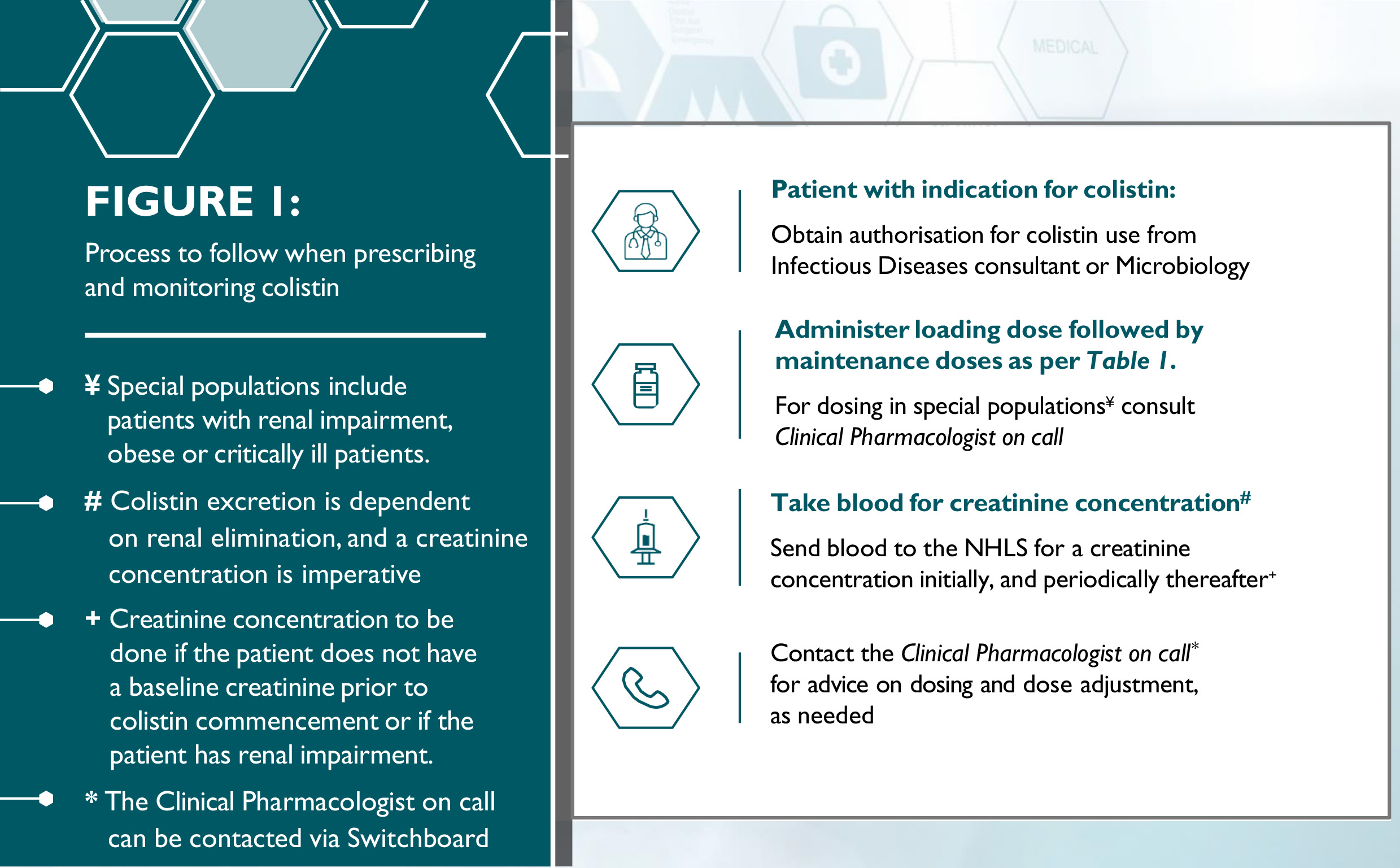
A decision to commence colistin should be made in consultation with Infectious Diseases (ID) and every patient must be discussed on the antimicrobial stewardship rounds. Every colistin prescription requires a Section 21 application and an ID specialist or microbiologist authorization and/or signature.
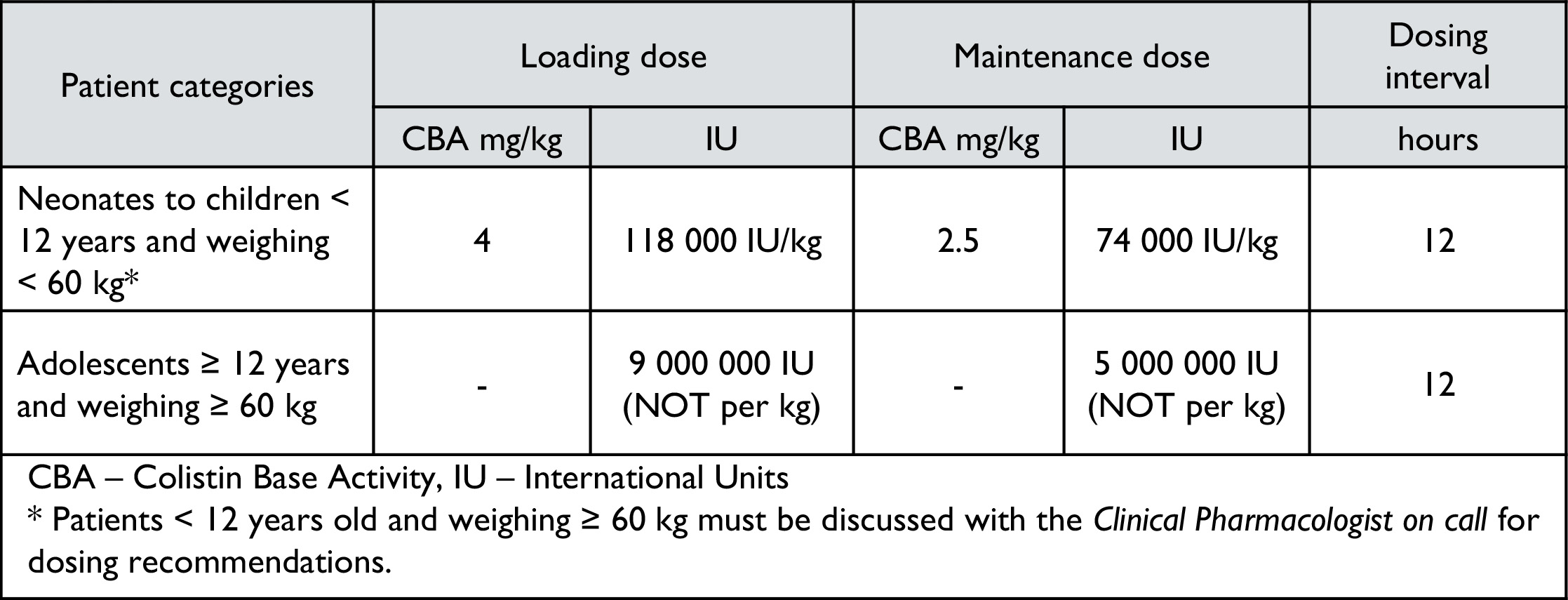
Table 1: Colistin dosing recommendations in paediatrics
Click on image to enlarge
Click on image to enlarge
How should colistin be dosed?
The pharmacokinetic/pharmacodynamic parameters related to colistin efficacy is area-under-the-concentration-time-curve (AUC)/Minimum inhibitory concentration (MIC). For isolates with an MIC ≤ 2 mcg/mL, an AUC0-24 of 50 mg.h/L is considered acceptable to achieve adequate efficacy. This is extrapolated from adult data since there is a lack of data in the paediatric population. In the absence of a loading dose colistin exposures are inadequate.[2–4] Hence, to achieve optimal colistin exposures, a loading dose is recommended. Table 1 represents proposed colistin dosing in the paediatric population at Tygerberg Hospital.
How should colistin be monitored?
Therapeutic drug monitoring of colistin is not routine due to assay complexities. Nephrotoxicity is associated with colistin use. Regular monitoring of renal function is mandatory. Patients with renal impairment require dose adjustments. Refer to document on Acute Kidney Injury and Antimicrobials for further information on assessment of acute kidney injury. For colistin dose adjustments in patients with renal impairment consult the Clinical Pharmacologist on call.
How should colistin be administered?
CMS is available as a powdered solution. Each CMS vial contains 1 million international unit (IU) which constitutes approximately 34 mg colistin base activity, or 80 mg CMS. The contents of the vial can be reconstituted and administered as a slow bolus injection over 5 – 10 minutes.[5] Refer to the Colistin administration in paediatrics for a practical, stepwise approach to colistin administration in paediatric wards.
References
- Brunton LL, Hilal-Dandan R, Knollmann BC. Goodman & Gilman’s The Pharmacological Basis of Therapeutics. 13th editi. McGraw-Hill Education; 2018.
- Nakwan N, Usaha S, Chokephaibulkit K, et al. Pharmacokinetics of Colistin Following a Single Dose of Intravenous Colistimethate Sodium in Critically Ill Neonates. Pediatr Infect Dis J 2016;35(11):1211–1214. https://doi.org/10.1097/INF.0000000000001263
- Wacharachaisurapol N, Phasomsap C, Sukkummee W, et al. Greater optimisation of pharmacokinetic/pharmacodynamic parameters through a loading dose of intravenous colistin in paediatric patients. Int J Antimicrob Agents 2020;55(6):105940. https://doi.org/10.1016/j.ijantimicag.2020.105940
- Mesini A, Loy A, Gattorno M, et al. Colistin Area Under theTime–Concentration in Children Treated With Intravenous Loading Dose and Maintenance Therapy. Clin Infect Dis 2018;66(5):808–809. https://doi.org/10.1093/cid/cix757
- Pharmaceuticals B. Colistimethate Sodium 1 Million I.U. Powder for Solution for Injection. Https://WwwMedicinesOrgUk/Emc/Product/5648 2018;1–10.
Click here to view PDF version of this bulletin