Pain Assessment in Children
Pain history Pain behaviours Pain assessment tools Children are able to reliably articulate pain from approximately 5 years of age. However, at this age, localisation of pain is still poor, which explains the frequent reports of abdominal pain, despite the actual source. Localisation of pain becomes reliable only at approximately 7 years of age. Pain history Self-reporting is the gold standard of
Children are able to reliably articulate pain from approximately 5 years of age. However, at this age, localisation of pain is still poor, which explains the frequent reports of abdominal pain, despite the actual source. Localisation of pain becomes reliable only at approximately 7 years of age.
Pain history
Self-reporting is the gold standard of pain assessment and the child should be engaged at a developmentally appropriate level. Where the child is nonverbal, a collateral history from the caregiver is important. Make every effort to get information regarding the type, severity and localisation of pain, as well as any associated symptoms. Enquire about the impact of pain on daily activities, including sleep, school attendance and performance, as well as interaction with peers, play and participation in sport. Explore pain descriptors; allow the child to use their own words in their home language.
Pain behaviours
The expression of pain is influenced by the interplay between bio-psycho-social factors (see Figure 2). In children, previous experiences and fear are important drivers of pain behaviour.
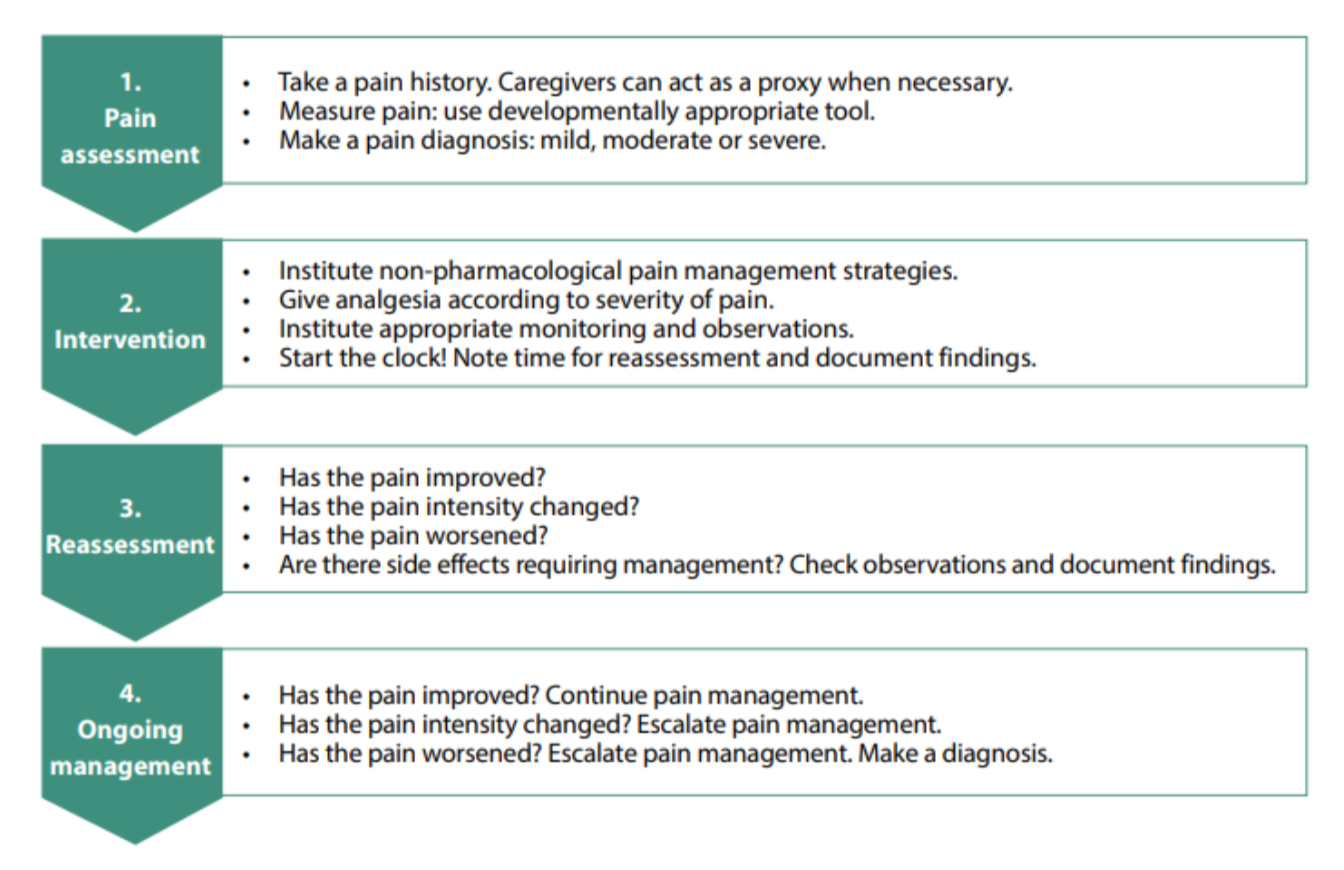
Figure 1: Pain assessment and management in children algorithm
Click on the image to enlarge
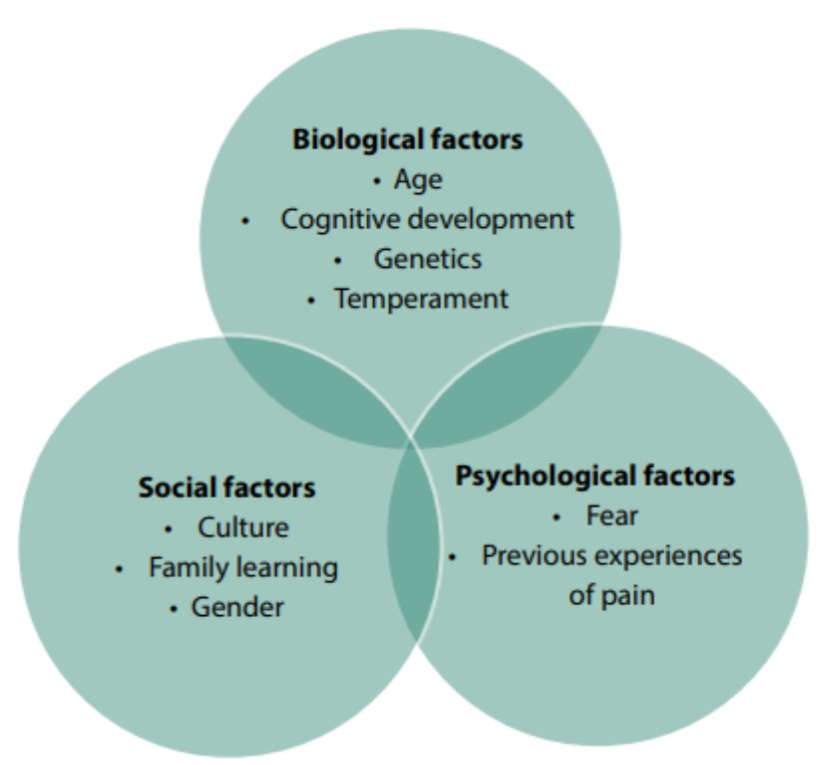
Figure 2: A bio-psycho-social model of pain behaviour
Click on the image to enlarge
There is no scientific evidence to suggest that gender affects pain, but societal norms and pressures often regulate how boys behave when they are in pain.
Pain assessment tools
The routine use of pain scoring tools is strongly encouraged, as it is associated with better pain management. Three kinds of pain assessment tools are used, namely physiological, behavioural and self-report. If the practitioner cannot rely on self-report, behavioural tools should be used. Physiological variables such as heart rate, blood pressure and respiratory rate (RR) are unreliable indicators of either the presence or the absence of pain. Choose an appropriate pain assessment tool depending on the child’s age and cognitive development. This facilitates the quantification of pain so that a pain diagnosis can be made. Pain is diagnosed as mild, moderate or severe.
Neonates: behavioural pain assessment tool
The Neonatal Infant Pain Scale (NIPS) is used in neonates and infants up to 2 months of age. The patient is observed for 1 minute and each is then parameter scored.
Table I: Neonatal Infant Pain Scale
| 0 | 1 | 2 | |
| Facial expression | Relaxed | Contracted | |
| Cry | Absent | Mumbling | Vigorous |
| Breathing | Relaxed | Different than basal | |
| Arms | Relaxed | Flexed/stretched | |
| Legs | Relaxed | Flexed/stretched | |
| Alertness | Sleeping/calm | Uncomfortable |
Two months to 18 years old: behavioural pain assessment tool
The revised FLACC tool can be used in children aged 2 months to 18 years, and includes descriptors for cognitively impaired children. It allows for the diagnosis of pain with a sensitivity of 87% and specificity of 80%. The clinician assigns a score to each characteristic and tallies a score out of 10. The final score is used to diagnose mild, moderate or severe pain, which must then be treated accordingly.
Table II: Revised FLACC tool
| 0 | 1 | 2 | |
| Face | No particular expression/smile | Occasional grimace/frown Withdrawn or disinterested Appears sad/worried |
Constant grimace/frown, quivering chin, clenched jaw Looks distressed, expression of fright/panic |
| Legs | Normal position or relaxed | Uneasy, restless, tense Occasional tremors |
Kicking or legs drawn up Spasticity, constant tremors, jerking |
| Activity | Lying quietly, normal position, moves easily | Squirming, shifting back and forth, tense, mildly agitated Shallow, splinting respirations, intermittent sighs |
Arched, rigid, jerking Severe agitation Holding breath, gasping, sharp intake of breath Severe splinting |
| Crying | No cry (awake/asleep) | Moans or whimpers, occasional complaint, verbal outburst/ grunt | Crying steadily, screams, sobs Frequent complaints/ outbursts, constant grunting |
| Consolability | Content, relaxed | Reassured by occasional touching, ‘talking to’, hugging Distractible |
Difficult to console/comfort Pushing away caregiver or comfort measures |
From 5–7 years old: self-reporting pain assessment tools
The following are self-reporting tools.
For the FACES pain scale (Figure 3), the child indicates which facial expression correlates best with their level of pain. Younger children sometimes find this tool confusing and tend to choose FACES that are at the extremes of the spectrum.
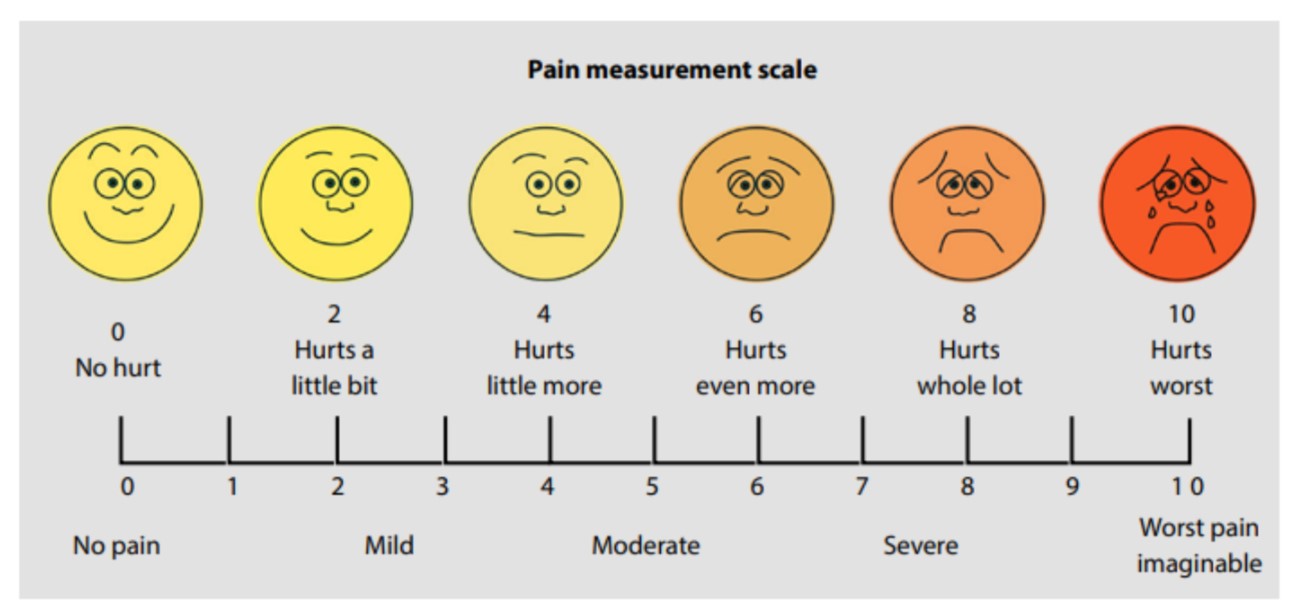
Figure 3: FACES pain scale
Click on the image to enlarge
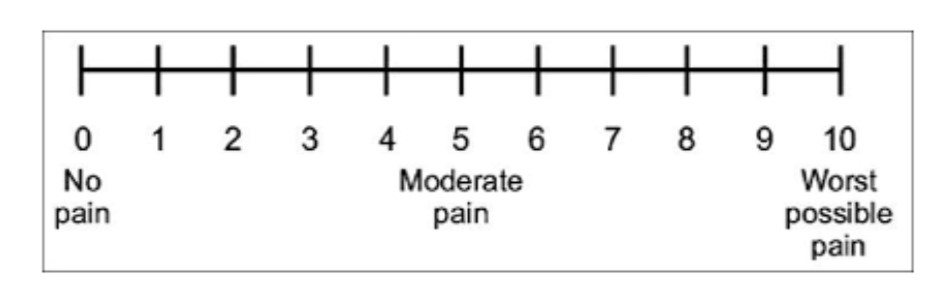
Figure 4: Numeric rating scale
Click on the image to enlarge
Older children are able to use the NRS (Figure 4) which assigns a number to their level of pain. Note that, even though younger children (younger than 7 years) may be able to count to ten, they lack the ability to seriate.
Scores from both the FACES pain scale and the NRS are used to diagnose mild, moderate or severe pain (0 to 10).
For neonates/infants, use the NIPS:
- 0–2 points = no pain
- 3–4 points = moderate pain
- > 4 points = severe pain
For older children, use R-FLACC and NRS:
- 0 = no pain
- 1–3 = mild pain
- 4–7 = moderate pain
- 8–10 = severe pain
Once the severity of pain has been diagnosed, an appropriate level of pain management should be initiated.
South African Society of Anaesthesiologists (SASA) Guidelines for the Management of Acute Pain in Specific Scenarios 2022