Pathophysiology of Birth Asphyxia
National Neonatal Resuscitation Guidelines
Fetal/neonatal response to asphyxia
Definition
Asphyxia refers to progressive lack of oxygen (hypoxia), build-up of carbon dioxide (hypercarbia) and acidosis. If the asphyxia lasts for longer than 10 minutes, it can result in permanent brain damage or even death. The brain is not the only organ affected by asphyxia, other vital organs such as the kidneys, heart, lungs and gut are also involved. For practical purposes, an infant that does not establish respiration at birth, for whatever reason, is regarded and treated as for birth asphyxia.
Causes
Some babies are unable to establish adequate respiration at birth, resulting in hypoxia and hypercarbia.
- Asphyxia during fetal life Asphyxia during labour Preterm labour
- Sepsis
- Blood loss
- Pulmonary diseases e.g. Hyaline Membrane Disease Narcotic drugs given to the mother
- Rare conditions including congenital malformations and neuromuscular diseases
Unless effective ventilation and circulation are established within a few minutes, these babies will become more and more asphyxiated.
Apnoea
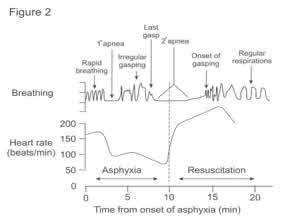
Asphyxiated infants undergo a series of well-described changes (see Figure 2 below). There is an initial period of hyperventilation, which is followed by a period of primary apnoea, if the hypoxia persists. During primary apnoea, the baby will usually start breathing spontaneously if tactile stimulation and oxygen are given. The muscle tone and heart rate decrease as the baby enters the period of primary apnoea. If the asphyxia continues, there is a period of irregular gasping respiration, followed by a period of secondary apnoea. During this phase the heart rate, oxygenation and blood pressure continue to decrease due to worsening hypoxia. A baby in secondary apnoea will not start breathing spontaneously and will die unless resuscitation is started. An infant that was asphyxiated in utero may be delivered in secondary apnoea.
It is not always possible to distinguish clinically between primary and secondary apnoea as in both cases, the baby will not be breathing and the heart rate may be greater than 100 beats/min.
It is therefore important to assume that all apnoeic infants are in secondary apnoea and to start resuscitation immediately. Delay in starting resuscitation will prolong the duration of the asphyxia and increase the chance of brain damage.
Pulmonary circulation
Oxygenation does not only depend on air reaching the alveoli, there must be enough blood flowing through the capillaries in the lungs, so that oxygen can be taken up from the alveoli and distributed to the rest of the body. In the presence of hypoxia and acidosis, the arterioles in the baby’s lungs remain constricted (pulmonary vasoconstriction) and the fetal pattern of circulation (which bypasses the lungs) is maintained.
The blood flow through the baby’s lungs remains poor, resulting in inadequate oxygenation. This results in a worsening cycle of hypoxia and acidosis with further pulmonary vasoconstriction. The ongoing hypoxia and acidosis also results in other organ damage, including depressed cardiac function with diminished cardiac output. This will result in further acidosis and hypoxia due to poor perfusion.
It is important to start resuscitation as soon as possible in an asphyxiated infant to prevent severe pulmonary vasoconstriction. In mildly asphyxiated infants, it may be possible to increase pulmonary blood flow by ventilation alone. Severely asphyxiated infants may not respond to ventilation, but may need correction of hypovolaemia, acidosis and the use of other agents as well.
Fetal / neonatal response to asphyxia
The asphyxiated baby (or fetus) has a mechanism that protects the vital organs. After an asphyxial episode, arterioles supplying blood to the gut, skin, kidneys and muscle constrict, redistributing blood to the heart and brain. In ongoing asphyxia, however, the blood flow to the heart and brain decreases and there is progressive multi organ damage.
The organs most commonly damaged in asphyxia are the brain and kidney, although the gut and heart may also be affected.