Patient-Level Interventions
Supporting the Antimicrobial Resistance Strategy Framework and the Guidelines on Implementation of the Antimicrobial Strategy in South Africa: One Health Approach and Governance, 2018
Examples of different AMS strategies
The core components of AMS practice
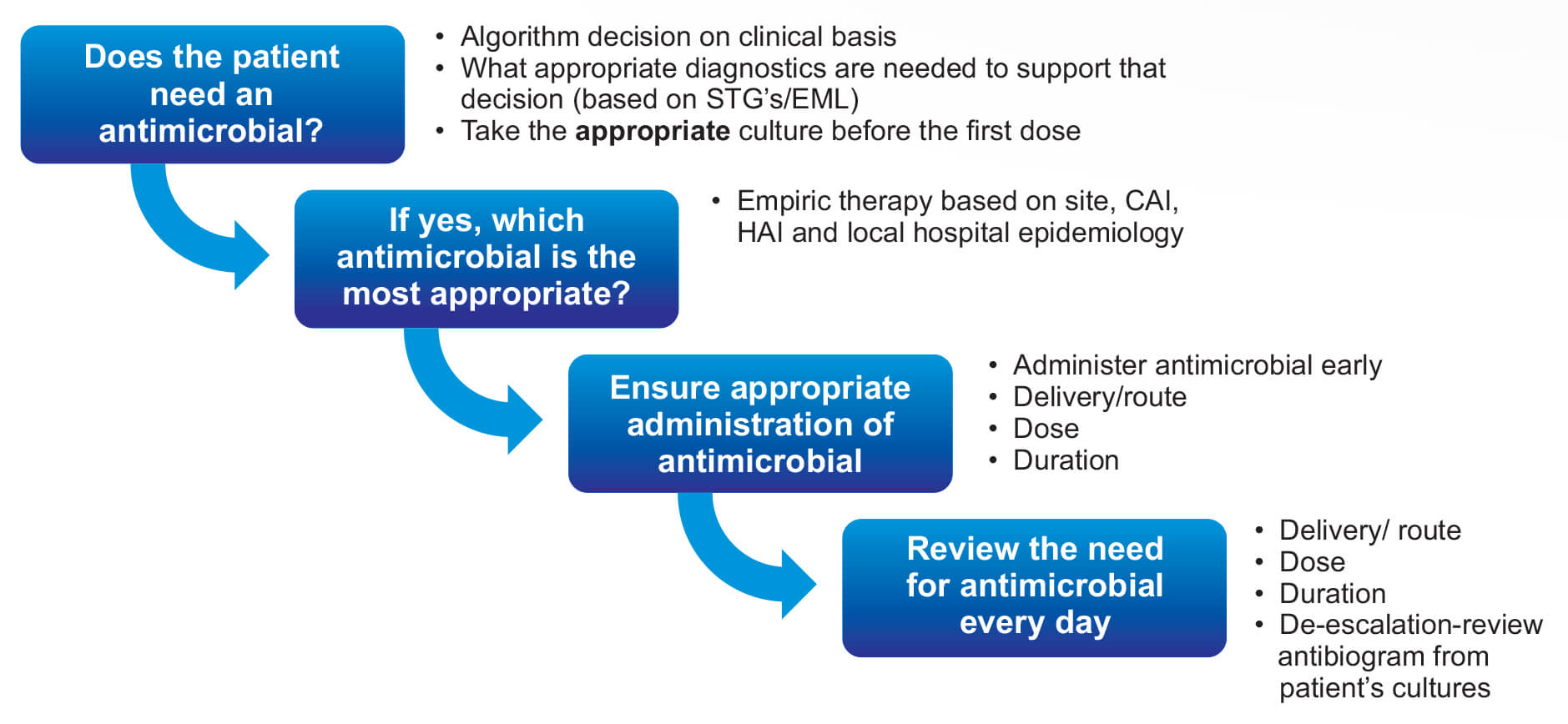
- Step 1: Does the patient need an antimicrobial?
- Step 2: If an antimicrobial is indicated, what is the most appropriate empiric choice?
- Step 3: Ensure optimal administration of antimicrobial
- Step 4: Review the need for antimicrobials every day
Accessing and interpreting results of diagnostic and drug-susceptibility tests
This is the primary activity of the AMS team. There are various models (see Examples of different AMS strategies) for implementing patient-level AMS, and each facility will need to adopt a strategy that is appropriate for the available resources and needs. The standard model is the AMS ward round, where the AMS team is joined by the prescriber/clinician caring for the patient and each antimicrobial prescription is reviewed as a team. This forms part of a PAF strategy, and has a number of benefits, including skills transfer and sustainable stewardship practices. However, this approach is labour-intensive, and may not be feasible in many settings. Other approaches include limited AMS ward rounds (either in terms of frequency or location, for example focussing on a different ward every week), folder reviews with or without feedback sessions, or identifying focussed interventions to target (for example, ensuring the correct administration of pre-operative antibiotic prophylaxis).
Examples of different AMS strategies
|
Model
|
Comments
|
|
AMS bedside rounds
|
• Evidence-based, supports skills transfer and behaviour modification, part of PAF strategy.
• Labour-intensive, requires buy-in from clinicians.
• Can be performed by any member of the AMS team, but usually clinician-led.
|
|
Regular chart reviews
|
• Can support PAF, but no direct engagement with clinicians or patients.
• Can be performed by any member of the AMS team, particularly well-suited to pharmacists.
|
|
Targeted interventions for
quality improvement (see Tiered approach to interventions)
|
• This can be done together with another global AMS strategy or as a single strategy.
• Potentially high impact for the chosen intervention. Requires clear strategy and dedicated team to implement and measure.
|
The core components of AMS practice
Regardless of the strategy adopted by each facility, the practice of AMS requires a standard approach as depicted in the figure below. The section below describes each step of these core AMS practices.
Standard approach to conducting AMS
Click on image to enlarge
STEP 1:
Decide if an antimicrobial is indicated
AMS is almost always a retrospective exercise, and besides PPA and education, it may be difficult to intervene prior to antimicrobial prescription. However, it is still critical to review the initial and on-going indication for an antimicrobial, which can often be done retrospectively after more diagnostic information has become available. There is limited evidence for discontinuing therapy based on lack of clinical or microbiological evidence of infection, but AMS ward rounds are an important opportunity to emphasise the importance of diagnostic decision-making to prescribers. Clinicians, in consultation with prescribers, should perform this aspect of AMS.
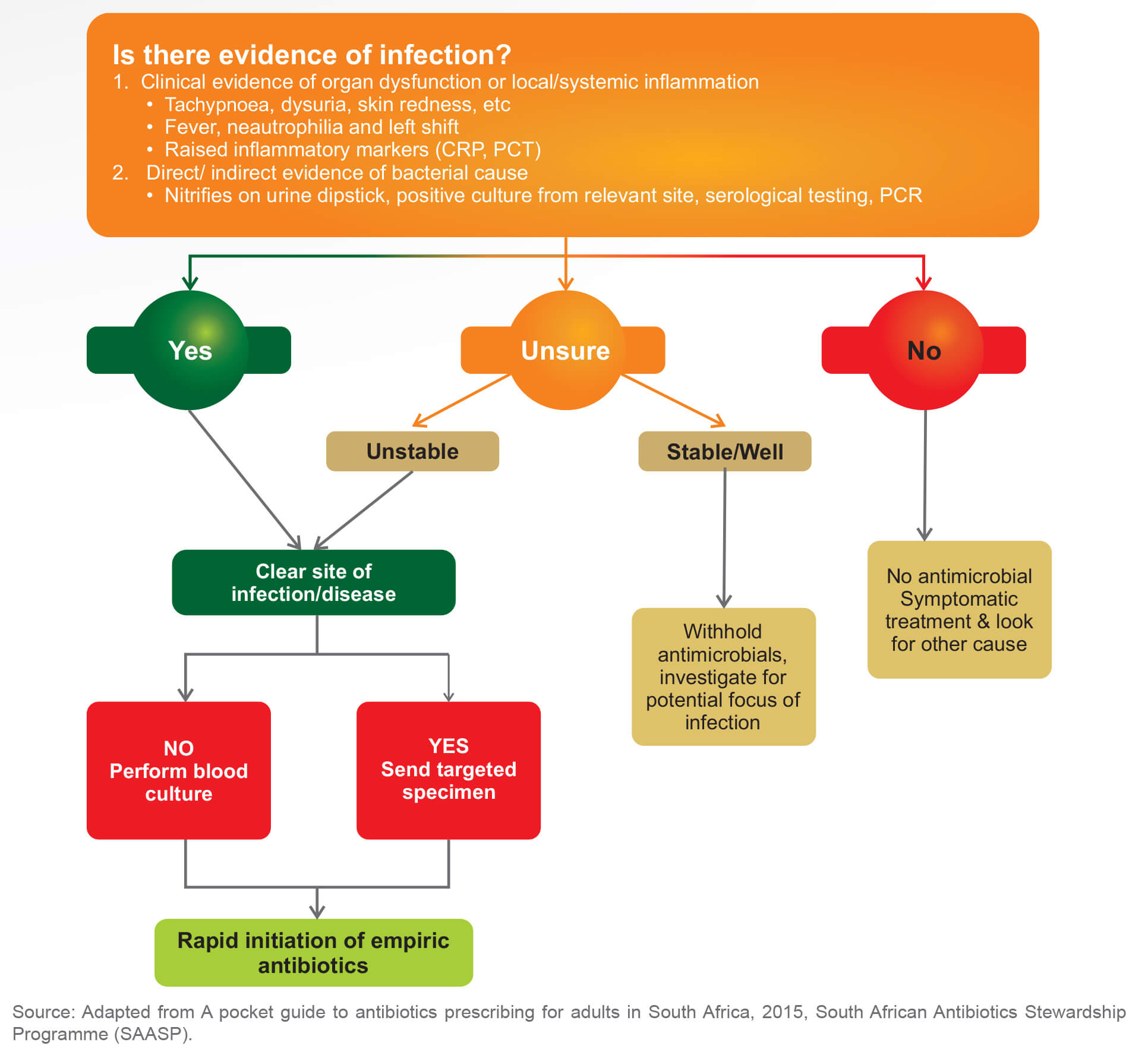
The Decision algorithm for antimicrobial prescribing summarises the key decision pathways and areas for AMS intervention prior to prescribing antimicrobials.
|
The primary decision of which antimicrobial is indicated is a clinical one whereby the patient’s condition provides an indication of whether a bacterial or fungal infection is present or not.
|
Decision algorithm for antimicrobial prescribing
Click on image to enlarge
Appropriate diagnostic tests
If there is evidence or suspicion of bacterial or fungal infection, an appropriate diagnostic test should be performed to support or exclude the diagnosis of infection.
Specimens for “diagnostic” purposes are usually submitted to identify causative organisms, rather than to confirm a clinical diagnosis. For example, a patient will present with symptoms of a lower respiratory tract infection (LRTI), and sputum and/or blood culture may help identify which organism is responsible. However, the presence of the organism does not confirm the diagnosis of LRTI. Conversely, the absence of an organism does not exclude the diagnosis of LRTI.
Types of diagnostic tests include:
- Cultures from sterile (blood, cerebral spinal fluid, urine, tracheal aspirate) and nonsterile sites (pus swabs, sputum, etc.);
- Non-culture-based tests such as peripheral white blood cell counts and C-reactive protein (to confirm the presence of inflammation) or a urinary dipstick.
The type of specimen and test would be informed by local guidelines and policies, as well as the likely site of infection (e.g. pneumonia41 and meningitis42 guidelines).
| Key AMS interventions: • Clinical decision on evidence of bacterial or fungal infection. • Performance of appropriate diagnostic tests to support (or exclude) diagnosis of infection. • Performance of appropriate culture before the first dose of antimicrobial is administered. |
Some general principles include:
- Sterile site samples are preferred to non-sterile site samples;
- Specimens should be submitted prior to antibiotic administration if at all possible;
- The information that a specimen has been collected must be documented in the patient notes.
The specimen collection practices and submission to the laboratory is essential and this guidance can be found in the local laboratory handbook, which should be available in all clinical areas, and where applicable, appropriate specimen collection guidelines, such as the South African Medical Journal Blood Culture guidelines should be followed.43 (See Annexure H for more guidance.)
STEP 2:
If an antimicrobial is indicated, what is the most appropriate empiric choice?
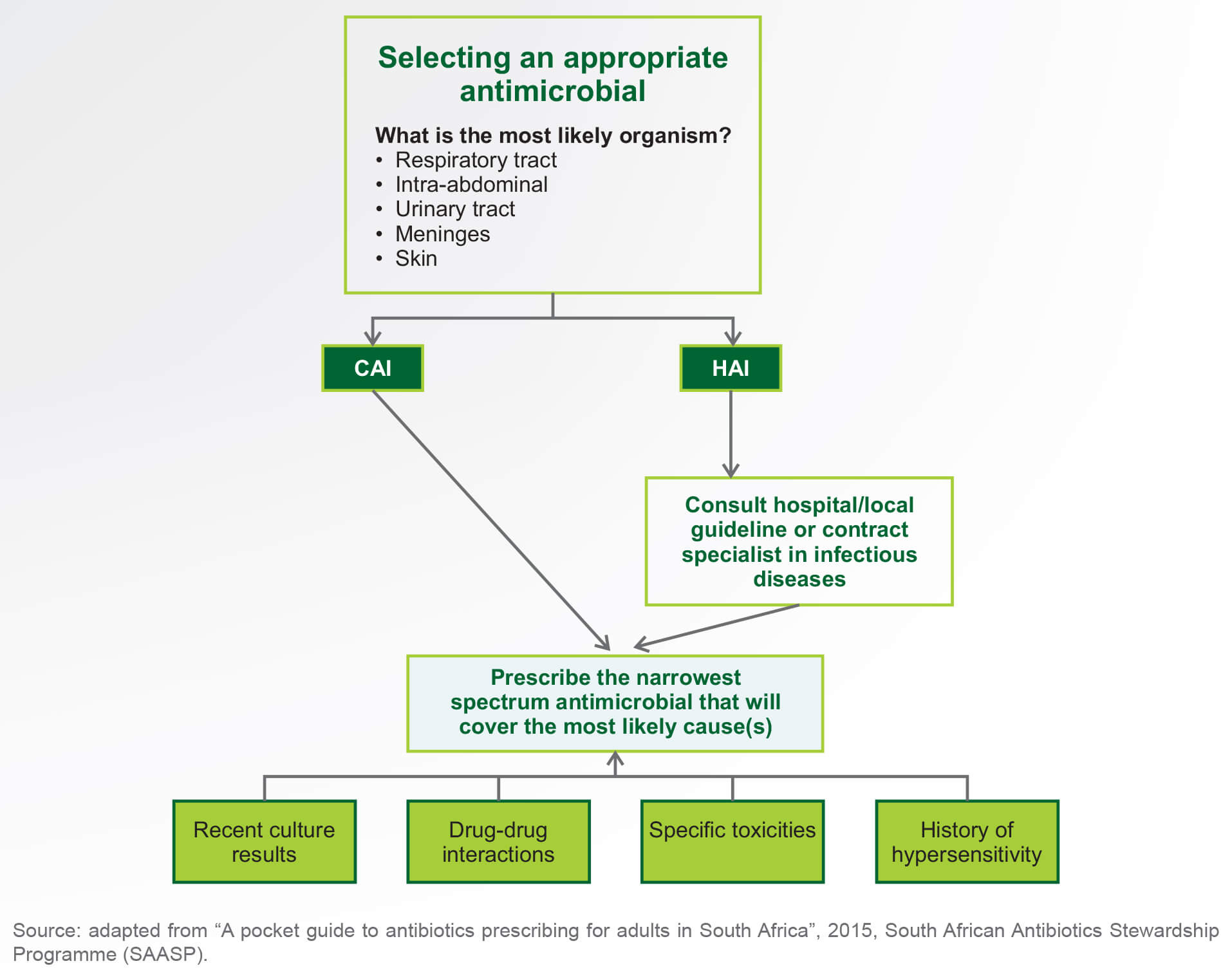
This decision is influenced by the likely pathogens for the presumed site of infection, whether the infection was acquired in the community or a healthcare setting, local drug susceptibility profiles, and whether there are any recent culture results. The use of local guidelines will enhance the adequacy of empiric antibiotic prescribing and support this AMS activity.
Preferably, each hospital should have their own antibiogram, which describe the antimicrobials sensitivity rates for organisms cultured in that facility (as described in Facility-Level Interventions and Annexure F). Should a hospital not be able to generate one then accessing the NICD AMR dashboard44 will provide the regional antibiotic and antifungal resistance data, which may help inform local guidelines.
Other important considerations when selecting an antimicrobial are a history of allergy to that specific drug or class, and any drug-drug interactions or specific toxicities that may preclude use. Note that a drug allergy is manifested by hypersensitivity reactions, and other forms of intolerance (such as gastrointestinal upset) are not necessarily contraindications to a drug. The figure below summarises this.
Selecting an appropriate antimicrobial
 Click on image to enlarge
| Key AMS interventions: • Clinical decision on evidence of bacterial or fungal infection. • Performance of appropriate diagnostic tests to support (or exclude) diagnosis of infection. • Performance of appropriate culture before the first dose of antimicrobial is administered. |
STEP 3:
Ensure optimal administration of antimicrobial
Once an appropriate antibiotic is selected, its administration needs to be optimised to improve patient outcomes and reduce risk of resistance selection.
The administration of antibiotics is a critical driver of antibiotic resistance and presents a complex set of challenges that is by no means a linear process. Administration of antibiotics includes seven steps (see Steps in administration of antimicrobial below), namely
(i) early administration of a correct antibiotic,
(ii) the correct dose,
(iii) the appropriate route of delivery,
(iv) the correct duration,
(v) the correct frequency,
(vi) the correct patient and
(vii) the correct documentation.
Several role players are involved in each of these steps and hospitals should measure whether their staff are compliant to these on a regular basis as part of basic nursing care.
Steps in administration of antimicrobial
| STEP |
ACTION
|
| Early administration | Timeous administration of antimicrobial after a diagnosis of possible/probable/confirmed bacterial or fungal infection is made. |
| Correct dose | The prescribing clinician should determine correct dosing in terms of weight and renal function. Many antimicrobials require weight-based dosing, and weight needs to be documented for each patient to ensure optimal dosing. Renal function can profoundly influence the exposure of renally excreted antimicrobials. In the case of renal impairment, there is an increased risk of toxicity. In augmented renal function (e.g. critical care patients) there may be increased risk of treatment failure as the drug is more rapidly eliminated. For concentration-dependant drugs (e.g. gentamicin), it is especially important to ensure the correct dose is given to mitigate AMR. Both the pharmacist and the professional nurse administering the antimicrobial needs to make sure that the correct dose is prescribed. Professional nurses responsible for reconstituting antimicrobials should familiarise themselves with the appropriate mixing solution, volume required and administration time. It is recommended that professional nurses assigned to medication administration in the ward be supported in their roles to minimise distractions and interruptions during medication rounds (for example do not assign extra roles such as ward rounds, preparation for surgery etc. to these nurses). |
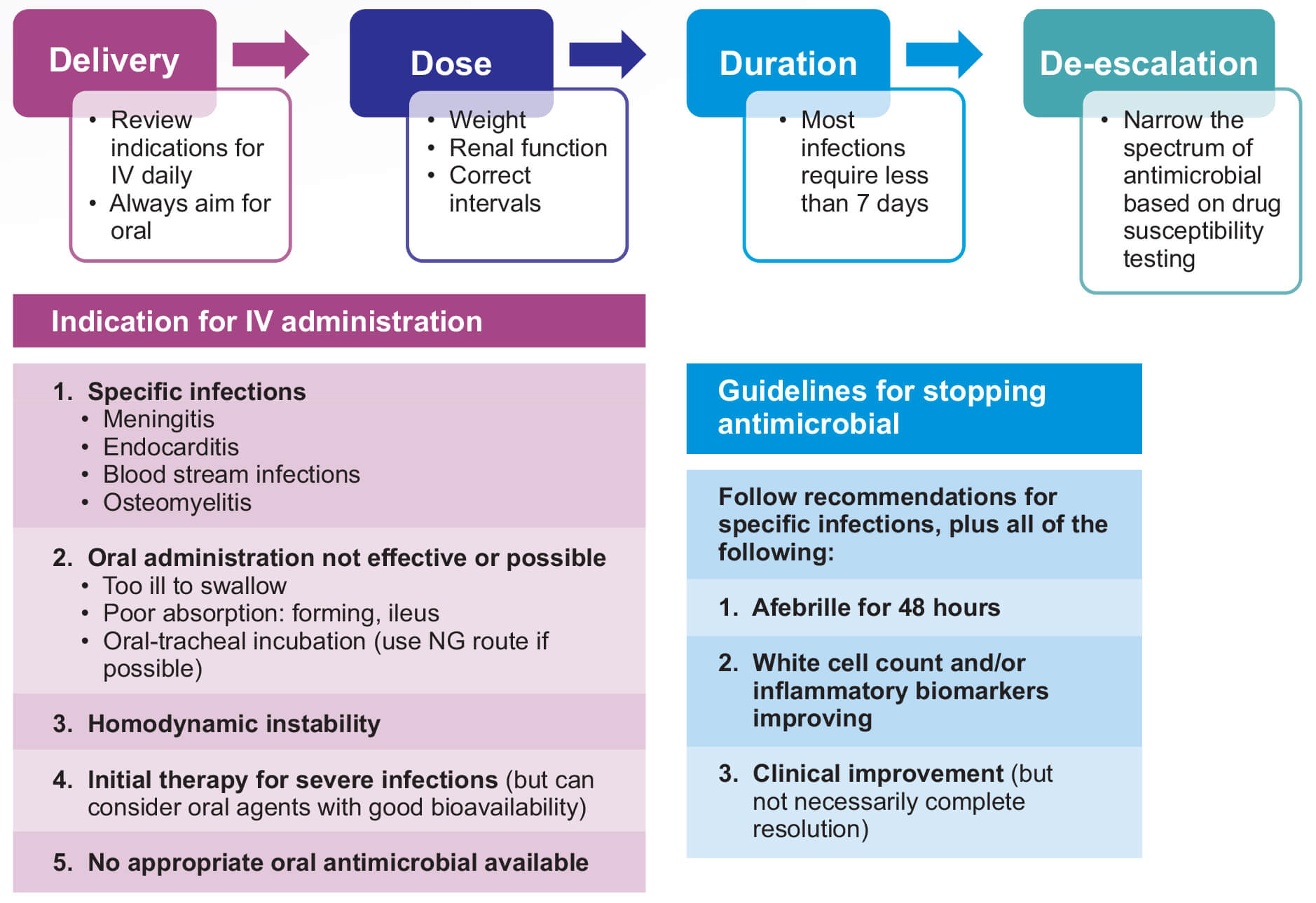
| Appropriate route of delivery | Most infections, even for hospitalised patients, do not require IV antimicrobials. See the indications for IV administration below. |
| Correct duration | Empiric antibiotic therapy should be reviewed every 48-72 hours. Most infections require fewer than 7 days of antimicrobials. Unnecessary additional exposure may lead to adverse events and contribute further to selection of AMR. Prescribers should consult with local guidelines on the correct duration for a particular condition. Duration of the antimicrobial should be documented on the prescription chart. Members of the healthcare team can provide support in this action by asking/reminding the prescriber when the suggested duration is exceeded |
| Correct frequency |
Antimicrobials should be administered within the times prescribed. Late administration of time-dependant antibiotics (e.g. amoxicillin) results in concentration of drug below the minimum inhibitory concentration, which may lead to AMR. If administered too early, the patient may experience more side-effects. Missed doses (doses given at the incorrect time) or omitted doses (doses not given at all) should be reported to the prescriber and noted on the prescription chart. |
| Correct patient | The prescriber, professional nurse and pharmacist need to check prescription charts with laboratory findings and patient identifiers before administering the antimicrobial. |
| Correct documentation | It is recommended that the length of administration of all antimicrobials be clearly visible on the prescription chart. Any side-effects/adverse events should be recorded and reported immediately. |
STEP 4:
Review the need for antimicrobials every day
Each of the above aspects of antimicrobial administration need to be reviewed during AMS activities, whether on ward rounds or during record reviews. These activities are summarised in the Figure below (Review need for antimicrobials daily)
Key questions that should be asked every day are:
- Can the antimicrobial be stopped?
- Can the drip come out?
- Can the catheter come out?
|
Key AMS interventions:
• Administer antimicrobials early after diagnosis.
• Aim for oral administration.
• Ensure correct dosing for weight and renal function.
• Do not prescribe antimicrobials > 7 days (unless specific indication).
|
Review need for antimicrobials daily
Click on Image to enlarge
An additional aspect of the daily review is de-escalation of therapy, which refers to narrowing of definitive antimicrobials therapy once the results of drug susceptibility testing are available (see Figure 18). This practice has a mortality benefit45, and forms a critical component of AMS activities.
|
Key AMS interventions:
• Aim for oral administration.
• Ensure correct dosing for weight and renal function.
• Do not prescribe antimicrobials > 7 days (use evidence-based duration guidelines).
• Review culture results and de-escalate to narrower spectrum definitive antimicrobials.
|
Accessing and interpreting results of diagnostic and drug-susceptibility tests
There should be an effective two-way communication system between the microbiology laboratory and clinical services and results should be checked for every day (preferably using an electronic laboratory information system), until a final result is provided. (NOTE: due to the nature of microbiology laboratory work, provisional results may be amended or added to on a daily basis until finalised).
The results must be documented in the patient’s file and appropriately interpreted. Some key points related to interpreting microbiology results include:
- Is the specimen appropriate for the suspected infection?
- How was the specimen collected, and is it a sterile or non-sterile specimen?
- Is/are the organism/s isolated likely to be pathogenic? For example:
- Coagulase negative staphylococci from non-sterile samples (and sometimes from sterile samples) are often skin flora;
- Candida species isolated from lower respiratory tract specimens are usually colonisers of the oropharynx (or in some cases, a cause of mucosal candidiasis) but rarely pathogens causing lower respiratory tract infections;
- Many non-fermenting Gramnegative bacilli are environmental and are uncommon pathogens (except for A. baumannii, P. aeruginosa and to a lesser degree B. cepacia and S. maltophilia);
- Enterococci are recognised pathogens from urinary tract infections and intra-abdominal sepsis, but very rarely causes of lower respiratory tract infections.
- Results of in-vitro susceptibility testing reflect the likely clinical response, but this may be influenced by site of infection, age of patient, severity of illness.
- Not all antimicrobials that are tested are necessarily reported – laboratories will often display the most appropriate agents based on how resistant the organism is. If an organism is resistant to 1st line antibiotics, then 2nd or 3rd line agents will be displayed.
- Antibiotics or antifungals to which the organism is intrinsically resistant, or which have poor in-vitro efficacy, are usually not tested or reported. Common examples include:
- Macrolides, lincosamides and glycopeptides for most Gramnegative organisms;
- Colistin for Gram-positive organisms;
- Fluconazole for Candida krusei.
- Results of certain antibiotic or antifungal susceptibility results can be used to predict susceptibility to other agents:
- S. aureus susceptible to oxacillin (cloxacillin) is regarded as susceptible to all beta-lactamase stable beta lactams;
- S. aureus resistant to oxacillin (cloxacillin) (MRSA) is regarded as resistant to all beta lactams with the exception of some of the newer 5th generation cephalosporins;
- S. pneumoniae susceptible to penicillin is regarded as susceptible to cephalosporins;
- Candida susceptible to anidulafungin or micafungin is considered susceptible to caspofungin.
| When in doubt how to interpret the diagnostic results, phone the laboratory and speak to the microbiologist for guidance. |
41 Boyles TH, Brink A, Calligaro GL et al. South African guideline for the management of community-acquired pneumonia in adults. J Thorac Dis 2017;9(6):1469-1502
42 Boyles TH, Bamford C, Bateman K Et al. Guidelines for the management of acute meningitis in children and adults in South Africa. South Afr J Infect Dis 2013;28(1):5-15
43 N Ntusi, L Aubin, S Oliver et al. Guidelines for the optimal use of blood cultures. S Afr Med J 2010;100(12): 839-43
44 NICD AMR Dashboard. Available from http://www.nicd.ac.za/
45 Schuts EC, Hulscher MEJL, Mouton JW, Verduin CM, Stuart JWTC, Overdiek HWPM, et al. Current evidence on hospital antimicrobial stewardship objectives: a systematic review and meta-analysis. The Lancet Infectious Diseases 2016;16(7):847-56. doi:10.1016/s1473-3099(16)00065