Peak Expiratory Flow Rates (PEF Charts)
Peak Expiratory Flow Rates
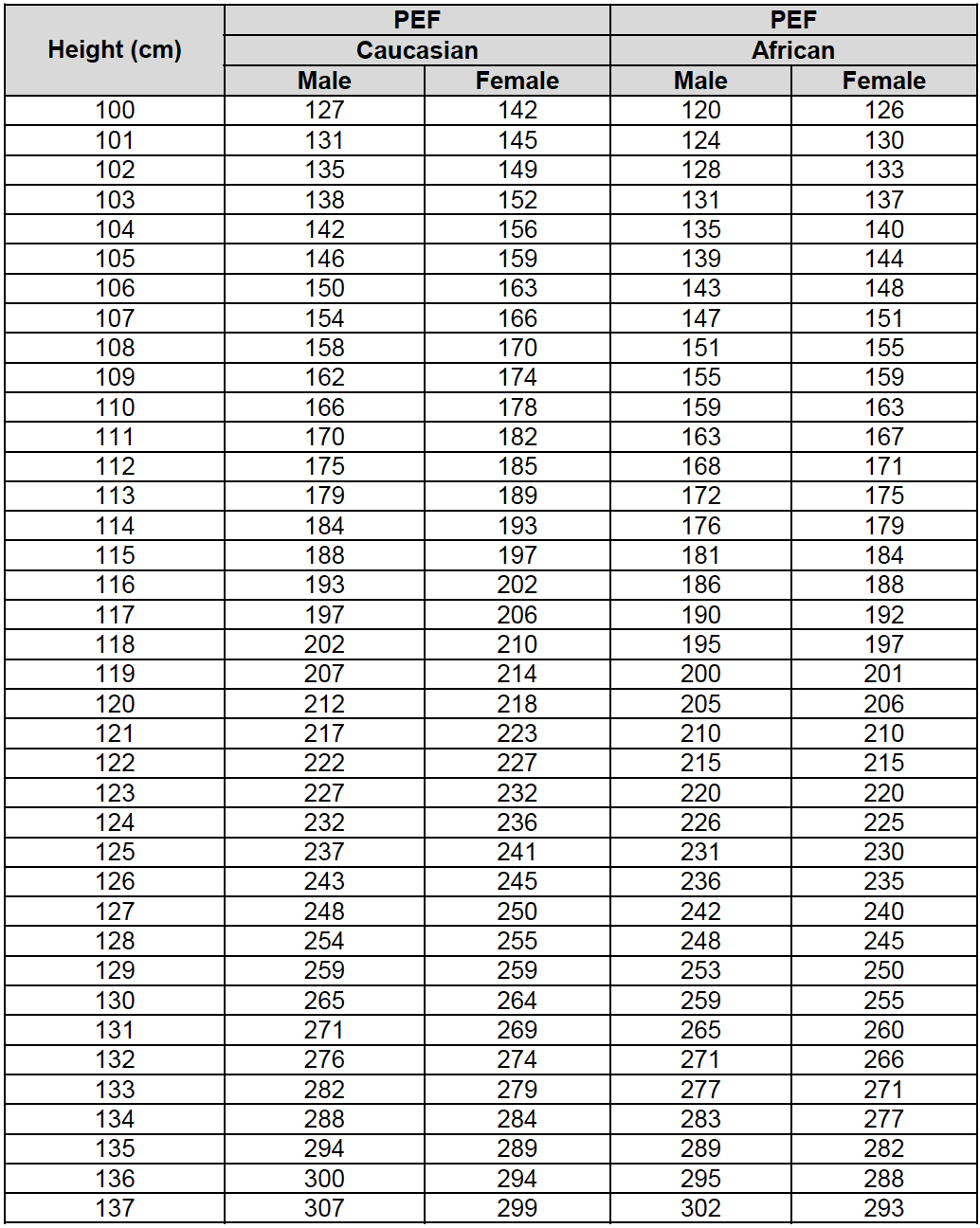
Suggested Reference Peak Expiratory Flow (PEF) Values for Children
Peak Expiratory Flow in Normal Adult Subjects
Calculating % Predicted Peak Flow Rate
Calculating Peak Flow Variability
SUGGESTED REFERENCE PEAK EXPIRATORY FLOW (PEF) VALUES FOR CHILDREN:
PEAK EXPIRATORY FLOW IN NORMAL ADULT SUBJECTS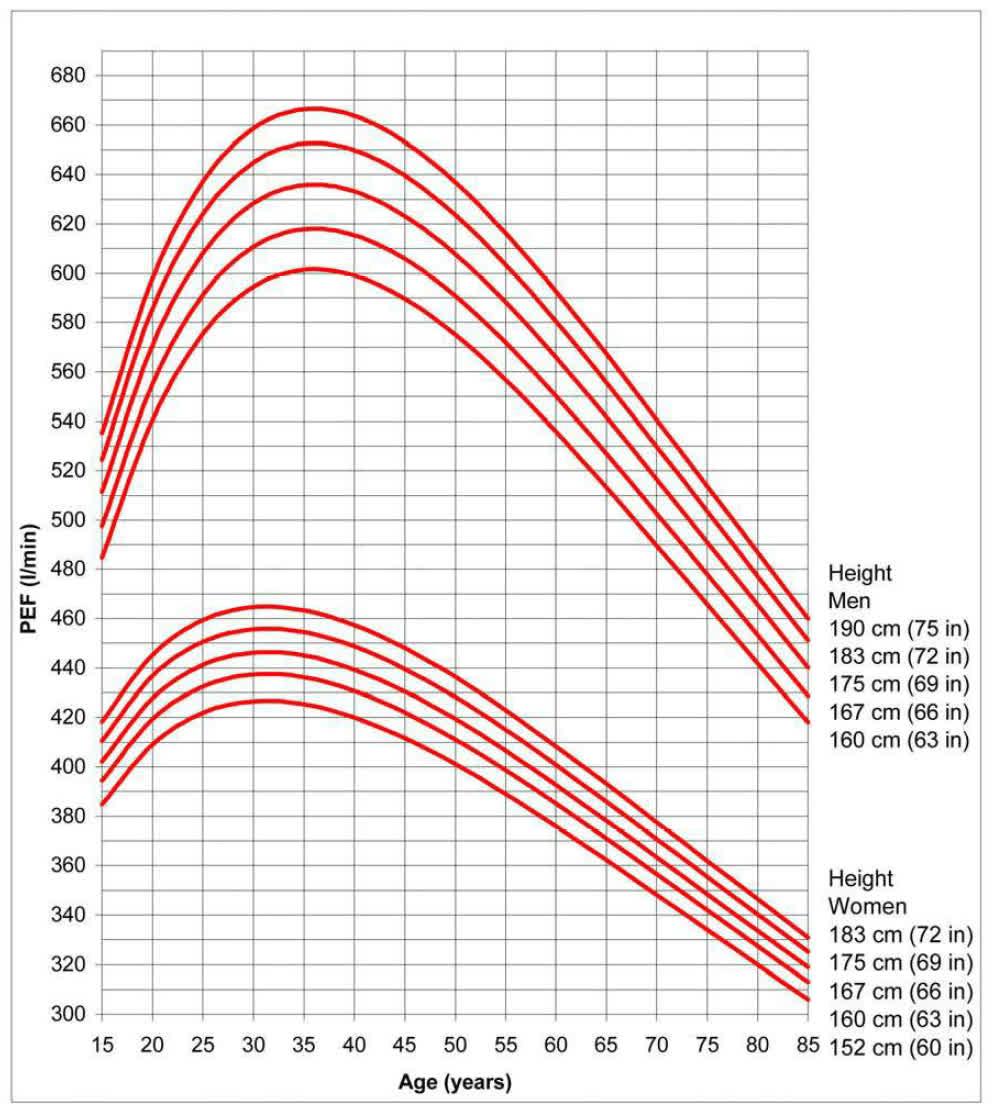 Adapted with kind permission from Nunn AJ Gregg I, Br Med J 1989:298;1068-70 and Clement Clarke International.
CALCULATING % PREDICTED PEAK FLOW RATE
- Take the best of 3 of the patient’s observed peak flow rate:
e.g. 200, 180, 190 performed – so take 200 - Find the patient’s sex, age and height predicted value from nomogram or table:
e.g. 440 for a woman of age 25 years and height 167 cm - Divide patient’s observed peak flow rate over their predicted peak flow rate:
e.g. 200/440 = 0.45 - Multiply by 100:
e.g. 0.45X100 = 45%
So, in this example, the patient’s observed peak flow rate is 45% of predicted.
CALCULATING PEAK FLOW VARIABILITY
There are a number of methods for calculating PEF variability.
One method is described below:
- Subtract the lowest from the highest reading
- Divide by the highest reading
- Multiply by 100
So, in this example, where a patient has readings of 300 to 400, the variability is 25%. If these readings were taken before and after a test dose of salbutamol, asthma is diagnosed. (See Chronic asthma)
Standard Treatment Guidelines and Essential Medicines List for South Africa, Primary Healthcare Level, 2020 Edition