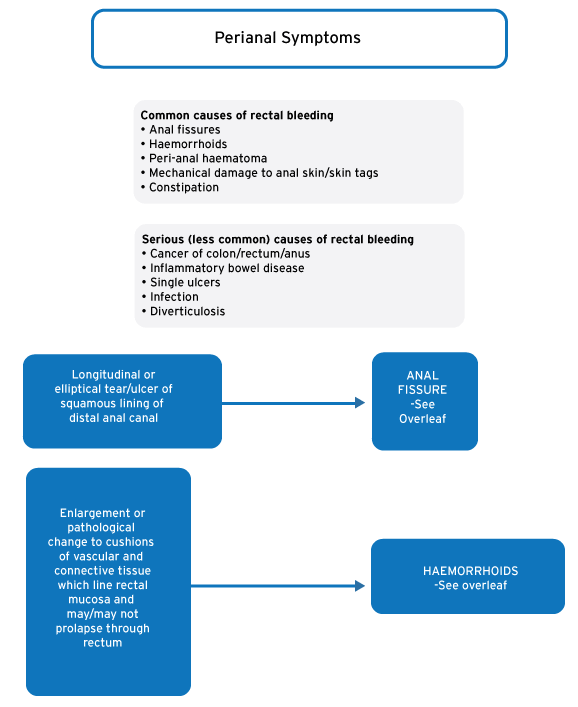
Perianal Symptoms
Elective Surgical Conditions - Perianal Symptoms
Common causes of rectal bleeding
Serious (less common) causes of rectal bleeding
Anal Fissure symptoms
Management
Haemorrhoids
Fistula in ano
Common causes of rectal bleeding
- Anal fissures
- Haemorrhoids
- Peri-anal haematoma
- Mechanical damage to anal skin/skin tags
- Constipation
Serious (less common) causes of rectal bleeding
- Cancer of colon/rectum/anus
- Inflammatory bowel disease
- Single ulcers
- Infection
- Diverticulosis
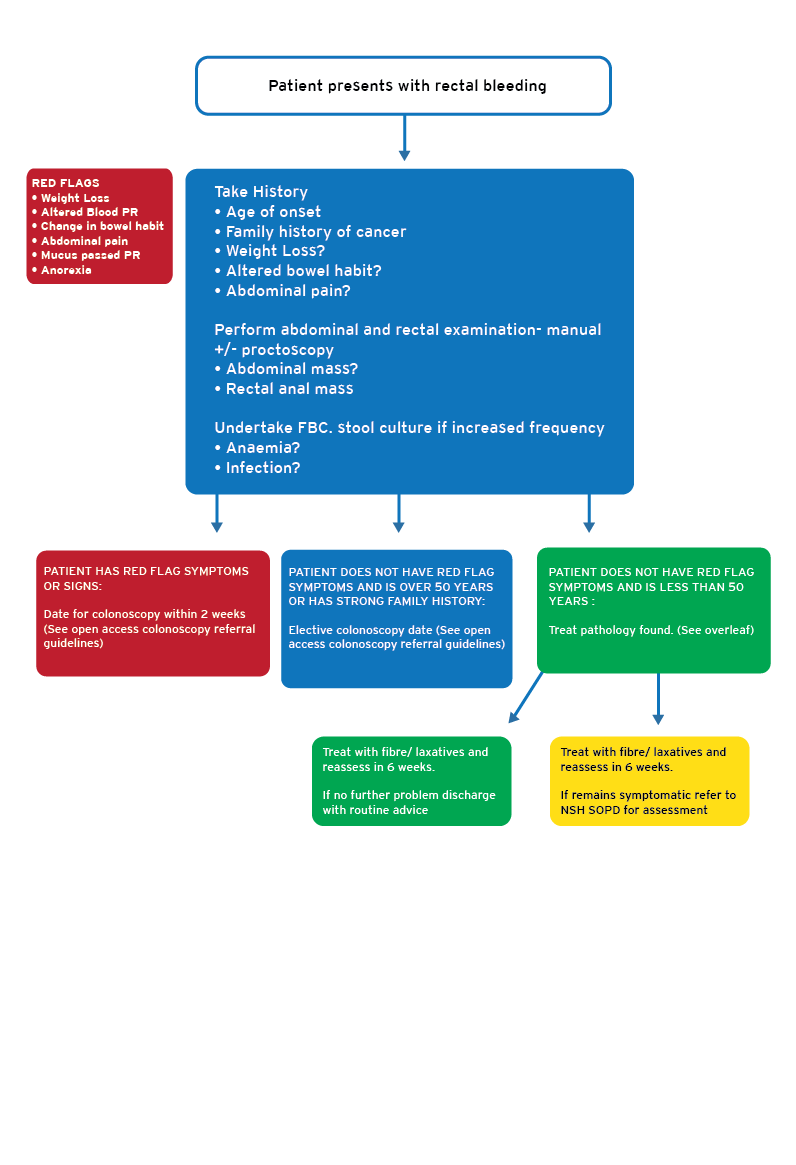
If pathology noted:
Anal Fissure symptoms
- Pain is sharp, searing or burning; often severe. Associated with defecation and may last from a few minutes to a few hours
- Bleeding (bright red, often on toilet paper) is common – but modest and separate from stool
- Discharge and pruritis (because of discharge) may occur
Management
- acute <6 weeks, manage conservatively by increase fluid intake, treating or preventing constipation, and provide pain relief
- Provide dietary advice – give out separate sheet
- Consider bulk forming bowel regulator if constipation present
- Topical 0.2% Glyceryl Trinitrate (must be freshly prepared by the pharmacist)
- Sitz baths – hip bath in hot water for 2-5 minutes followed by cold water for 1 minute, after bowel movement
- chronic >6 weeks
- Increase fluid intake, prescribe topical 0.2% glyceryl trinitrate
- Continue conservative measures (as per acute) – high fibre diet, laxatives if required and warm baths
- Refer if fissure fails to heal (after 8 weeks of GTN)
Haemorrhoids
The diagnosis CANNOT be made by history and digital rectal examination alone. It mandates proctoscopy.
All Grades of Haemorrhoids:
- Increase fluid intake
- Measures to prevent constipation
- High fibre diet
- Sitz baths
- Perianal hygiene
- Avoid straining
- Paracetamol or ibuprofen if painful
- Refer to SOPD to confirm diagnosis and apply banding as proctoscopes not available at outreach hospitals
Fistula in ano
Diagnosis:
- Perianal drainage of pus, mucus, blood or faecal matter.
- Perianal irritation.
- Perianal discomfort.
- Perianal swelling and skin excoriation.
History of anorectal abscess that drained spontaneously or with surgical intervention.
On examination external opening visible on skin around anus. Internal opening may be palpable with digital rectal examination
Management: Refer to surgical outreach clinic for elective date for EUA. Patients with retroviral disease and multiple fistulae should be thoroughly examined to exclude TB as a possible cause.