Pesticide Identification and Reporting
Pesticide Identification and Reporting
Examples of Pesticide Active Ingredients Responsible for Poisonings
Improving Notification of Pesticide Poisonings
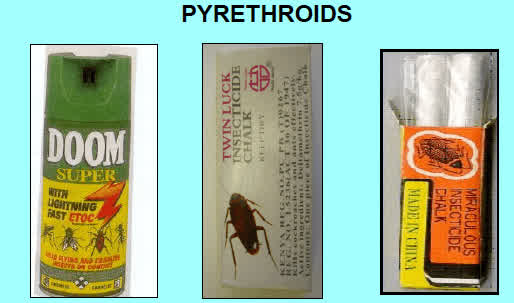
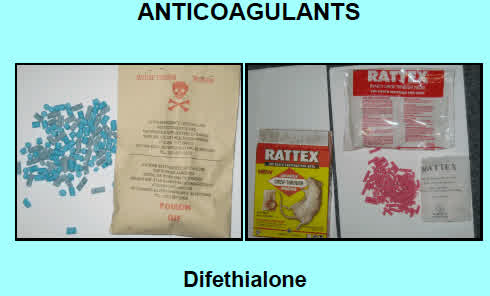
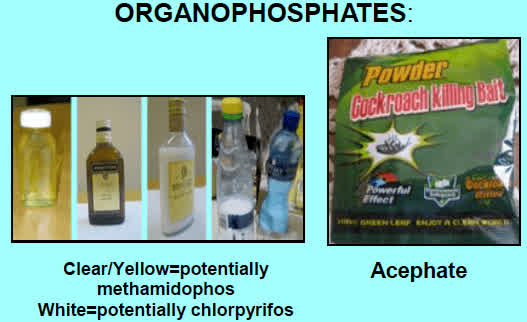
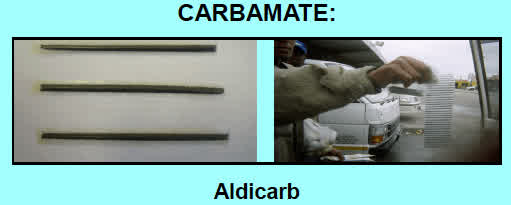
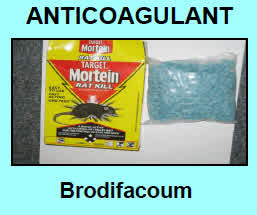
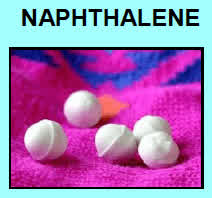
What did the pesticides look like?
Examples of Pesticide Active Ingredients Responsible for Poisonings
For accurate treatment and reporting of pesticide poisonings, it is important to find out the active ingredient of the pesticide—found on the label. If there is no label, use the point chart for potential active ingredients.
Organophosphates:
- Methyl Parathion
- Ethyl Parathion
- Malathion
- Diazinon
- Fenthion
- Dichlorvos
- Chlorpyrifos
- Trichlorfon
Anticoagulants:
- Brodifacoum
- Difethialone
- Chlorofacinone
- Coumachlor
- Difenacoum
- Diphacinone
- Warfarin
Pyrethroids:
- Allethrin
- Bifenthrin
- Cypermethrin
- Permethrin
- Deltamethrin
Organochlorines:
- Lindane (lice shampoo)
Carbamates:
- Aldicarb
- Carbofuran
- Oxamyl
- Methomyl
- Formetanate
- Methiocarb
- Aminocarb
- Mecarbam
- Bendiocarb
- Propoxur
Herbicides:
- Glysophate
- Atrazine
- Nicosulfuran
- Fenoxaprop
- Alachlor
- Pendimethalin
- Halosulfuran-Methyl
- Paraquat
- Triclopyr
- Clopyralid
- Picloram
N,N-Diethyl-meta-toluamide (DEET—mosquito repellent)
For recognition and treatment of pesticide poisonings: http://www.epa.gov/opp00001/safety/healthcare/handbook/handbook.htm
Improving Notification of Pesticide Poisonings
PURPOSE: This document is intended to assist health care professionals and environmental health practitioners in identifying the pesticide involved in suspected pesticide poisoning cases so as to improve on notification.
IDENTIFYING TYPE OF PESTICIDE(S) INVOLVED
The first health care professional to come into contact with a patient presenting with pesticide poisoning is required by law to notify the Department of Health (http://www.doh.gov.za/docs/dns-f.html).
Notify ALL pesticide poisonings regardless of the active ingredient.
Do not report ONLY organophosphate poisonings.
Identify the pesticide involved and provide detailed information in the patient’s file. Use the flow chart below:
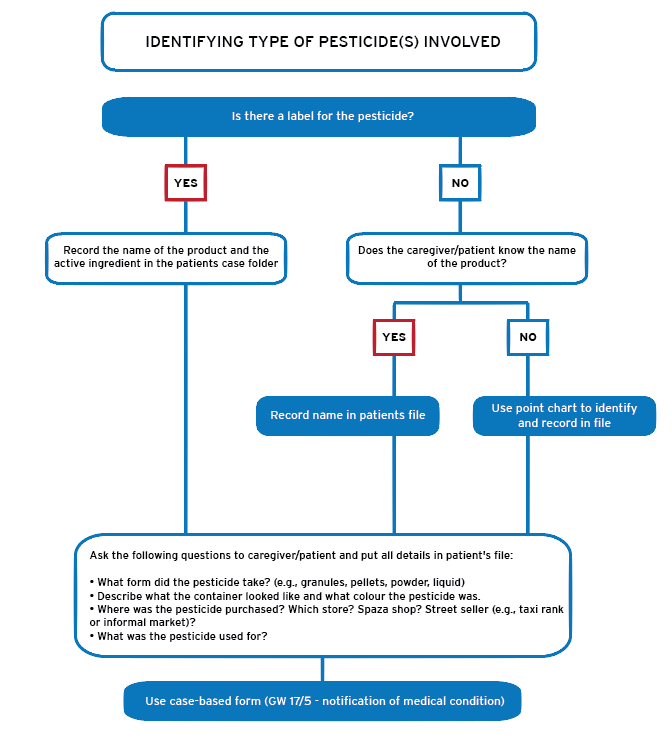
Record all information in as much detail as possible so the National Department of Health (NDOH) can monitor the occurrence of pesticide poisonings, develop and implement intervention strategies and scrutinise the strategies effectiveness
POISON INFORMATION CENTRES:
Red Cross Children’s Hospital Poison Info Centre: (021) 689 5227
Tygerberg Poison Info Centre: (021) 931 6129
Bloemfontein Poison Control Centre: 082 491 0160
What did the pesticide look like?
Ask patient/caregiver to point to product involved