Routes of Systemic Drug Administration: Enteral and Parenteral
Enteral administration Parenteral administration Bibliography Analgesia prescriptions should be individualised based on actual or expected pain severity, patient characteristics and available resources. Attention must be paid to both the effectiveness and the adverse effects of analgesic agents. Monitoring will be directed by the drug class and route of administration. Analgesics should be prescr
Analgesia prescriptions should be individualised based on actual or expected pain severity, patient characteristics and available resources. Attention must be paid to both the effectiveness and the adverse effects of analgesic agents. Monitoring will be directed by the drug class and route of administration.
Analgesics should be prescribed regularly, rather than on a pro re nata (‘as the thing is needed’) basis.
Enteral administration
Oral route (p.o.)
The cost per dose of oral preparations is usually lower and should be used if possible. No patient who can swallow or who is not vomiting should receive parenteral analgesics. Not only are oral dosage forms usually cheaper, but also no further cost is incurred with infusion sets, IV solutions and time to administer the drugs. Moreover, every time a patient is exposed to an IVI, there is always the risk of introducing microorganisms if aseptic technique is not strictly adhered to.
The efficacy of oral drugs is determined by the following factors:
- GI motility considerations include delayed gastric emptying, nausea and vomiting, and delayed ‘dumping’.
- Drug formulation affects absorption rate as liquids are absorbed faster than capsules, while tablets are absorbed the slowest. The enteric coatings of tablets and capsules delay dissolution until they have left the stomach with its low pH. This protects acid-labile drugs from stomach acid. Enterically coated tablets and capsules should never be crushed or opened, respectively. Slow-release preparations release the active ingredient at a controlled rate at different areas of the gut. This allows for the delivery of a larger dose, with slower onset, longer duration and reduced peak levels, and hence reduced adverse effects. Several slow-release analgesic agents are marketed. They are usually administered 12-hourly. These drugs are most useful for providing baseline analgesia for acute pain, and for the long-term therapy of chronic and cancer pain.
- Hepatic first-pass metabolism occurs with all enteral dosage forms, except sublingual (SL) preparations.
Details about drug classes that are administered orally are given in Drug Listings: Enteral and Parenteral.
Morphine
Oral morphine is available as a liquid (most commonly formulated as 20 mg/5 ml), immediate-release tablets and a slow-release formulation. Oral morphine is effective for acute pain relief at a dose of 20 mg every 30 minutes, until an adequate level of pain relief has been established. Thereafter, 10–20 mg can be administered 4-hourly. The main concern with this therapy, particularly with poorly-staffed wards, is the diversion of the oral morphine to visitors for illicit use.
With longer-term use, the total daily oral morphine use should be quantified. This dose is taken in a slow-release formulation bd. An immediate-release formulation, taken for breakthrough pain, is gradually added to the slow-release dose, while immediate release doses are still available.
Oxycodone
Oxycodone has a similar onset and duration of action to morphine, and is available as an immediate (Oxynorm® 5, 10 or 20 mg) or slow-release (Oxycontin® 5, 10, 20, 40 or 80 mg) preparation. Differences to morphine include reduced first-pass metabolism, which improves oral bioavailability. With longer-term use, daily oral oxycodone use should be quantified. Fifty per cent of the daily requirements is administered as a 12-hourly slow-release formulation, while breakthrough pain is managed with a short-acting tablet (usually 5 mg) administered 4–6-hourly. The newest formulation of oxycodone is Targinact® which combines oxycodone and naloxone in a 2:1 ratio. Naloxone undergoes 97% hepatic first-pass clearance. Therefore, it does not antagonise the analgesic effect of oxycodone, and reduces the GI adverse effects by up to 60%, excluding nausea (which is mediated through a CNS effect).
Hydromorphone (Jurnista®)
Hydromorphone (Jurnista®) is a slow-release preparation used for the management of chronic opioid-responsive pain. This formulation is not suitable for acute pain management. Hydromorphone has five times the potency of morphine, and also contains an active metabolite which is renally excreted and is neuro-excitatory like norpethidine.
Procedural sedation (with analgesia)
This is especially helpful in the paediatric population. The IV formulations of ketamine (containing 50 mg/ml) 5 mg/kg and midazolam (containing 5 mg/ml) 0.2 mg/kg may be combined and added to 20–40 mg/kg paracetamol syrup as a useful oral preparation for procedural sedation in children. (In other words, the child drinks fluid from ampoules intended for parenteral use mixed with a suitable syrup.) The onset time is 20–30 minutes and the duration of sedation is 30–45 minutes.
Secondary analgesics
Clonidine
The available oral formulation (Dixarit®) contains 25 µg clonidine. The dose is 1.5–3.0 µg/kg bd. Hence, the number of tablets required may be as many as 12 per dose.
Rectal route (PR)
Per rectum NSAIDs and paracetamol are commonly used in South Africa.
Absorption from the rectum is slow and may be erratic, especially if the patient is hypovolaemic, and splanchnic blood flow is reduced. Hepatic first-pass metabolism also occurs with rectally administered medications absorbed through the superior rectal veins. Absorption from the inferior veins is directly into the systemic circulation. Local irritation and diarrhoea have been reported after suppository use, and this route is contraindicated if significant lesions (inflammatory and/or neoplastic) of the anorectal area are present.
The division of suppositories to titrate the dose is not recommended as the active drug may be unevenly distributed within the suppository.
Consent to the administration of rectal medication cannot be presumed and must be specifically obtained.
Rectal paracetamol still undergoes hepatic first-pass metabolism; hence, absorption may be slow in hypovolaemic patients with reduced splanchnic blood flow.
The GI adverse effects of NSAIDs include systemic anti-cyclo-oxygenase effects. Therefore, the rectal administration of these agents does not prevent GI adverse effects. Similarly, the renal and antiplatelet effects are independent of the route of administration.
Tramadol is the only opioid available for rectal administration. Dosage adjustment is not necessary. Currently, this preparation is not available in South Africa.
Suppositories may be administered via intestinal stomas. However, the level of the stoma determines the suitability of this application of suppositories; that is, the absorbing surface (small bowel) available, as well as the transit time. Discussion with the surgeon is advised, especially with freshly-formed stomas and complex diversion procedures. This is an unreliable route and its routine use is not advocated.
Sublingual and buccal administration
Drugs administered sublingually are absorbed directly into the systemic circulation. This results in a faster onset and a higher peak level because of direct absorption with no hepatic first-pass metabolism. The SL and buccal routes may be useful when IV administration is not feasible, or in low peripheral perfusion, such as hypothermia or any cause of low cardiac output (e.g. hypovolaemia).
Drugs in an IV formulation may be given sublingually before the establishment of IV access. For drugs that usually require a loading dose (LD) (e.g. dexmedetomidine), buccal administration appears to provide onset of effect, approaching that of an IV LD. In adults, buccal administration (the solution must not be swallowed) of the IV preparation of dexmedetomidine, 2 µg/kg has an absolute bioavailability of 84% and is an effective route of administration if IV access is not available.
In emergency settings, the SL administration of drugs, such as morphine 0.5 mg/kg and fentanyl (100 µg tablets and wafers; neither of which is available in SA), provide adequate analgesia.
Oral transmucosal systems for analgesic administration include fentanyl, formulated as a lollipop and as a rapidly dispersible wafer. Both are associated with intense facial pruritis. Concerns over dependence and addiction issues with the lollipop have been raised, but not validated. However, neither is available in South Africa.
The anti-emetic ondansetron, is available as a rapidly dissolving SL lyophilisate wafer (Zofran Zydis™).
Feeding tubes (orogastric, nasogastric, postpyloric, gastrostomy and enterostomy)
All drugs given orally, except those in a slow-release formulation, may be given via a feeding tube. Liquids or suspensions should be used as a first choice whenever possible for the administration via feeding tubes. The contents of capsules may be removed from the capsule and directly administered via the tube. Crushing is required if a particular medication is available in tablet form only. The powdered medication should be flushed through the tube well to prevent tube occlusion. Slow-release preparations cannot be crushed and are unsuitable for administration via a feeding tube. Enterically coated tablets and capsules should not be crushed or opened, respectively.
Parenteral administration
Noninvasive systemic drug administration
Intranasal (IN) droplets
The IV formulation of morphine, fentanyl, midazolam, dexmedetomidine and ketamine may be given intranasally.
The aim of administering the drug via the nasal mucosa is fast onset and high peak levels of the drug, providing efficacy similar to IV administration. However, more than 70% of medication administered via this route passes through the nasal passage into the nasopharynx and is then swallowed. The swallowed medication is absorbed via the gastrointestinal tract (GIT), with a slow onset and low peak due to hepatic first-pass metabolism, as with any orally administered drug.
Most IV formulations have a bitter taste. Medication passing from the nasopharynx to the oropharynx comes into contact with the posterior tongue, the site of the bitter taste receptors, making the experience extremely unpleasant.
The administration of an opioid (particularly synthetic fentanyl derivatives) via the nasal route is associated with intense pruritis, which may be due to large numbers of degranulated histamine-releasing immune cells in the nasal mucosa when exposed to opioids.
Nasal transmucosal administration
A device known as the LMA (laryngeal mask airway) MAD (mucosal atomisation device) Nasal® (Teleflex Medical, USA), produces a fine mist (droplet size < 0.2 µm) when the medication is injected from a standard syringe through the MAD (Figure 1). More than 90% of the medication in the droplets from the MAD is absorbed by the nasal mucosa, with less than 10% swallowed. The result is that MAD-administered drugs, such as morphine, midazolam and dexmedetomidine, achieve fast onset and high peak levels (equivalent to that achieved with IV administration). There is extensive experience with this method of drug administration in the prehospital environment and for paediatric premedication.
Less than 10% of the drug administered by MAD reaches the oropharynx, so bitter receptors on the posterior tongue are minimally activated. However, nasal pruritis remains a significant adverse effect.
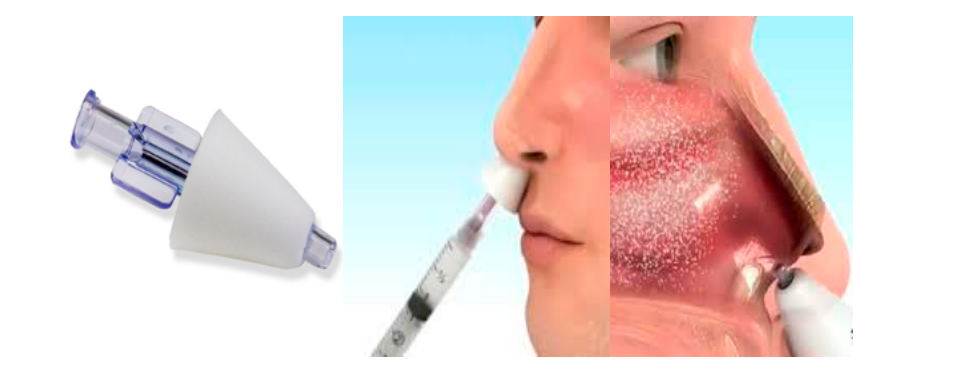
Figure 1: LMA MAD Nasal® (Teleflex Medical, USA)
Click on the image to enlarge
Passive transdermal drug delivery
The transdermal route is not suitable for acute pain management, particularly in opioid-naïve patients. Not only is the onset of action too slow for acute pain relief, but the sustained blood level may induce respiratory depression, coma and death, particularly in opioid-sensitive patients.
Fentanyl and buprenorphine are both available in transdermal delivery systems in South Africa. A transdermal delivery system is available in Europe for the delivery of high-dose capsaicin for the treatment of localised areas of neuropathic pain.
Cutting transdermal patches to reduce the rate of drug delivery in the acute pain setting is a negligent practice which cannot be justified, and that carries significant medicolegal consequences in the event of an adverse outcome.
Transdermal fentanyl or buprenorphine are best suited to the maintenance of opioid analgesia in patients with either chronic or cancer pain. Transdermal fentanyl or buprenorphine does not have a role in acute pain management but must be part of an analgesia plan for patients who are already using these for chronic and cancer pain.
Invasive systemic drug delivery
This includes the subcutaneous (SC), intramuscular (IM), IV and intraosseous (IO) routes.
Apart from adverse and toxic effects of drugs administered via the IV, IM, SC and IO routes, a potentially more serious complication of these routes of administration is infection and sepsis. Nothing should ever be administered through an injection port (including stopcocks) or the skin without proper disinfection. Line sepsis has both a high morbidity and a high mortality. The stopcocks hygiene is extremely important. Injection ports must always be capped; caps must never be removed from the port, kept in the (always contaminated) palm of the hand and then used to cover the injection port as the cap will be contaminated.
A manner in which to avoid contaminating the injection port of a stopcock is the following (for right-handed persons):
Hold the needle-capped syringe containing the solution to be injected in your right hand with the needle pointing downwards. Place the needle in the web between your left thumb and index finger. Remove the capped needle from the syringe by holding it in the web between your left thumb and index finger. Remove the cap from the sterile injection port of the stopcock using your right thumb and index finger. Place the sterile cap onto the open end of the sterile needle between the left thumb and index finger. Stabilise the stopcock with the left hand, still holding the needle capped with the stopcock cap. Insert the syringe nozzle into the sterile injection port and open the injection port with your right hand. Inject the content of the syringe, and close the port with your right hand. Detach the syringe by holding it between the thumb and index finger of your right hand. Remove the stopcock cap from the capped needle using your right hand and replace the cap onto the injection port of the stopcock. Still holding the needle between the left thumb and index finger, put the (still sterile) syringe nozzle onto the (still sterile) needle. QID!
Subcutaneous drug delivery
Analgesics that are formulated for IV use may usually be administered SC if the volume is limited to approximately 1.5 ml. A volume of up to 3 ml is tolerated SC when administered into the abdominal wall. Aqueous solutions formulated for IV administration should ideally also be registered for SC use and indicated on the ampoule label. The acceptability of a solution (pain injection, tissue damage) is determined by excipients (buffers, stabilisers and preservatives), pH and osmolality. SC administration of drugs is unpredictable in patients with poor peripheral perfusion (hypothermia, hypovolaemia, etc.) because a large dose may enter the circulation as soon as perfusion is restored.
Drugs that are formulated for IM administration are not always suitable for SC administration as the volume is excessive and the solution is an irritant (e.g. diclofenac).
An indwelling SC cannula dedicated for analgesic drugs simplifies the administration of analgesics in wards. Patients are spared the pain and inconvenience of multiple injections, while staff are exposed to needles less and the risk of needle-stick injuries is reduced.
In patients undergoing surgery and who are likely to require systemic opioids and/or NSAIDs for postoperative pain relief, the SC cannula should be inserted in the operating theatre intraoperatively. The anterior upper arm area is one of the most comfortable sites for cannula insertion, with optimal consistency in drug absorption.
A 20 or 22 G IV cannula is inserted into the SC tissue and connected to a low-volume extension (approximately 10 cm in length and 1 mm in diameter) with a needle-free injection port. The tubing should be primed with the solution intended for SC administration. The cannula with connection is covered with a clear semi-permeable dressing (e.g. OpSite™ or Tegaderm™), leaving the injection port accessible for drug administration. Sites need to be changed every 2–3 days, as long as the injection site is not painful or infected (redness and swelling).
The rate of SC boluses with infusions (bolus-basal administration) should not exceed 1 ml in a single bolus, or a total volume of 3 ml/hour. At least 30 minutes should be allowed to elapse between 1 ml boluses to allow for drug dispersion and absorption. Smaller boluses may be given more frequently (e.g. every 5–6 minutes) in disposable PCA systems.
SC PCA may be less comfortable, with minor localised burning on injection (sometimes interpreted by patients as an indicator of efficacy), and localised swelling and redness after 24–48 hours, which resolves rapidly on cannula removal and replacement at an alternative site.
The following are a number of advantages to SC PCA administration:
- PCA may be continued when IV access is no longer required or feasible (palliative care).
- Misconnection of the PCA device to the IV line is not possible.
- The efficacy of PCA is independent of the presence of a flowing IV infusion.
- The danger of dead space in IV infusion tubing (which may become filled with PCA solution if the IV infusion is stopped) is removed.
Intramuscular drug delivery
The IM route is a common route of opioid delivery in postoperative patients, despite wellrecognised complications, including drug toxicity from intra- and perivascular injection, inadequate analgesia, nerve damage and injection abscesses. Injection abscess complications are increased with a high injection volume, increasingly irritant injectate and in immunocompromised patients. Two-hourly rather than 4-hourly intervals are required.
Examples of inadequate IM analgesia include the following:
- Inappropriate dosing: morphine is commonly dosed at 10–15 mg, and pethidine at 50–100 mg, both 4–6-hourly. These prescriptions provide adequate postsurgical analgesia in < 50% of patients, but will cause significant respiratory depression in up to 2%.
- Reduced blood muscle and skin flow: this occurs particularly after surgery (hypothermia) and in emergency situations (hypovolaemia). IM drug administration in the emergency management of moderate to severe acute pain is inappropriate.
- Injection into fat or SC tissue.
Intravenous drug delivery
IV drug delivery provides the most rapid onset of action through direct access to the systemic circulation. However, side effects (including overdose) may also be more common.
Principles of safe medication administration should always be followed, regardless of the route of administration, and heightened vigilance is required when using opioids.
Paracetamol and NSAIDs may have more benign acute adverse effects but can also result in lifethreatening complications that require ongoing monitoring. Opioids have the potential to cause respiratory depression and patients should be constantly monitored by trained personnel who are able to identify a reduction in RR and/or tidal volume and level of consciousness, and who have access to naloxone and are trained to administer it. Using pulse oximetry may only alert personnel to respiratory depression at a late stage when desaturation occurs; supplementary oxygen is then unlikely to resolve the true underlying mechanism of respiratory compromise (i.e. hypoventilation or obstructed airway).
Intraosseous drug delivery
An IO needle may be placed in both children and adults, commonly using the tibia or proximal humerus (also femur, iliac crest and sternum). It is unlikely that an IO device will be placed solely for analgesic purposes, but it can be used if in situ. Almost all IV administrations may be given via the IO route. Drugs administered intraosseously have similar bioavailability, posology and pharmacokinetics. The Arrow® EZ-IO® Intraosseous Vascular Access System (Teleflex, USA), is available in South Africa. Many techniques for insertion and attachment are available in the literature. An 18 G Tuohy needle can be used for IO access.
Bibliography
- Anttila M, Penttila J, Helminen A, Vuorilehto L, Scheinin H. Bioavailability of dexmedetomidine after extravascular doses in healthy subjects. Br J Clin Pharmacol. 2003;56(6):691-3. https://doi.org/10.1046/j.1365-2125.2003.01944.x.
- Campiglia L, Cappellini I, Consales G, et al. Premedication with sublingual morphine sulphate in abdominal surgery. Clin Drug Invest. 2009;29 Suppl 1:25-30. https://doi.org/10.2165/0044011-200929001-00004.
- Lim CB, Schug SA, Sunderland VB, Paech MJ, Liu Y. A phase I pharmacokinetic and bioavailability study of a sublingual fentanyl wafer in healthy volunteers. Anesth Analg. 2012;115(3):554-9. https://doi.org/10.1213/ANE.0b013e3182575cbf.
- Usach I, Martinez R, Festini T, Peris JE. Subcutaneous injection of drugs: literature review of factors influencing pain sensation at the injection site. Adv Ther. 2019;36(11):2986-96. https://doi.org/10.1007/s12325-019-01101-6.
- Zecca E, Brunelli C, Centurioni F, et al. Fentanyl sublingual tablets versus subcutaneous morphine for the management of severe cancer pain episodes in patients receiving opioid treatment: a double-blind, randomized, noninferiority trial. J Clin Oncol. 2017;35(7):759-65. https://doi.org/10.1200/JCO.2016.69.9504.
South African Society of Anaesthesiologists (SASA) Guidelines for the Management of Acute Pain in Specific Scenarios 2022