Service Provision and Collaborative Care
The ideal model for palliative care in CKD Critical elements of creating a renal supportive clinic The ideal model for palliative care in CKD [16] Healthcare utilisation in advanced CKD is high [50] . There are limited data on the cost-effectiveness of renal supportive care frameworks [51] ; however, there is more solid evidence for other illness, such as cancer [50] . Supportive care may reduce
The ideal model for palliative care in CKD
Critical elements of creating a renal supportive clinic
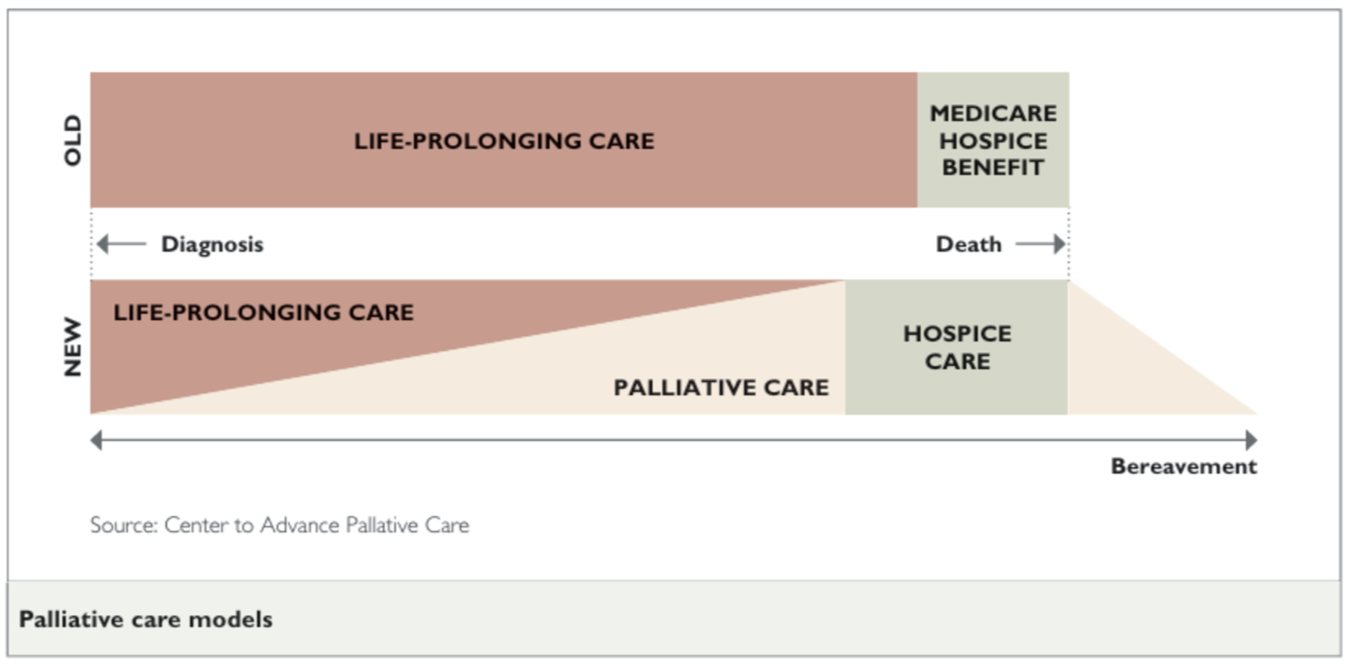
The ideal model for palliative care in CKD [16]
Healthcare utilisation in advanced CKD is high [50]. There are limited data on the cost-effectiveness of renal supportive care frameworks [51]; however, there is more solid evidence for other illness, such as cancer [50]. Supportive care may reduce hospitalisations, intensive care admissions and emergency room visits and result in fewer deaths in acute care facilities [50]. Cost benefit also needs to be analysed in terms of personal cost. The burden experienced by families include physical, emotional, social, and economic dimensions. An integrated service from the start of dialysis until death and into bereavement to support families has been reported as an option to improve clinical care [52].
Click on the image to enlarge.
The current challenges to providing an integrated RSC/ PC service include:
- Disparity of access to renal replacement therapy (RRT) in the public versus private sector
- Lack of integration of care between primary, secondary and tertiary facilities
- Limited palliative care teams and beds in both the private and public sectors
- Under-utilisation of home-based care and communityorientated primary care workers
- Unclear trajectory/prognosis of many patients with advanced CKD.
Critical elements of creating a renal supportive clinic
There are numerous aspects that need to be considered when creating an RSC/PC clinic. First, there needs to be strong collaboration between multiple disciplines, including the nephrologist, primary caregiver (GP), palliative care physician, social worker and nursing staff. Second, there needs to be awareness of all available palliative care options and support structures in both the private, public and NGO sectors. Third, resources need to be appropriately allocated at primary, secondary and tertiary care levels. This will require discussions with government, hospital management and medical insurance companies.
In a resource-limited setting, upskilling staff at all healthcare levels through education and exposure is essential. A multidisciplinary RSC/PC clinic would serve as a platform to expand training, create awareness and upskill across the care continuum. Establishment of this clinic could be done at a tertiary centre, with primary healthcare physicians rotating through this service and nephrologists supporting community health centres with outreach. Once a care plan is formulated, it should be continued at primary level care and community-based services (home-based carers) should be involved.
Improved communication is essential between all healthcare levels. This can be achieved with a simple booklet for patients (a roadmap), which would detail the advanced care plan (ACP) and current treatments. Electronic health platforms are also becoming increasingly common. Technology needs to be used by health professionals to link peripheral teams to the expertise of the multidisciplinary team. A call-in/Skype system could be used during the multidisciplinary clinic to support primary carers with advice on clinical management and symptoms. Web-based information is a cost-effective tool to assist families in providing care. It could offer information to connect family and relatives to resources and support structures in both the private, public and NGO sectors. A study showed that families caring for a dying patient required the following information: knowledge of the condition, information on medication, patient hygiene and nutritional care, contacts for emergency support and support options for the carer [53].
In a cost-constrained environment, the use of the whole team needs to be optimised, which in the South African setting includes home-based care, community nurses and may involve trained volunteers as a possible innovative solution. The literature also states that the presence and availability of nurses was found to be crucial for volunteers,both for support and to achieve integration through collaboration [54]. Upskilling community-based nurse practitioners to train, monitor and supervise lay counsellors and volunteers (or home-based carers) remains a viable option to care within our communities. Table 3 describes possible solutions for creating a renal supportive care clinic.
Table 3. Possible recommendations for creating a renal supportive care clinic.
| Recommendations | Logistics | Adantages | Disdvantages |
| Hospital passport | - Information booklet kept by the patient providing hospital staff with vital information regarding: - Diagnosis - Advanced care directive - Medication - End-of-life plan |
- Improved integration of care between different levels of heathcare provision. - Avoidance of unnecessary investigations and admissions. - Ensure patient’s end-of-life wishes are respected |
- Needs resources to establish the passport |
| Multidisciplinary team at a primary care centre | - Staff: social worker, nursing staff and primary healthcare doctor; access to nephrologist, dietician and palliative care trained physician - Focused on counselling and linking families with social/community networks - Symptom management - Advanced Care Planning (uses healthcare document retained by the patient) |
- Upskilling available staff and knowledge transfer - Integrating existing resources - Holistic continued care and support to families - Support group |
- Requires tertiary staff to come through to primary setting |
| Multidisciplinary renal supportive clinic at a tertiary centre | - Focused, structured visits prior to transfer to primary care - Staff: nephrologist, social worker, nursing staff, primary healthcare doctor; access to palliative care trained physician - Multidisciplinary team discussions - Palliative suppor tive care nurse to co-ordinate care between primary and tertiary care facilities - The focus should be on counselling, and linking families with social/ community networks - Symptom management - Advanced Care Planning (uses healthcare document retained by the patient) |
- Provides suppor t to patients not eligible for renal replacement (formal care plan) to prevent feelings of abandonment - Training platform for doctors, nurses, social workers - Upskilling staff and knowledge transfer - Upskill nephrologists in palliative care - Upskill primary healthcare physicians in preservation of residual renal function and CKD management |
- Cost - Staffing shortages - Needs space - Requires primary carer to go across to tertiary facility |
| Access to medication | - Discussion with Pharmacology and Therapeutics Committees (PTC) and provincial health management | - Advocacy to have access to restricted medications for ESKD symptom management at all levels of care (in public sector) - Advocacy for authorisation of medications from medical insurance - Advantage of improved patient symptom control |
|
| Standardised patient and family information | - Patient information accessible in different languages in a culturally sensitive format - Highlighting information and resources available within communities, e.g. - Internet/government resources list of local CHC - Brochure of NGO resources - Infographics |
- Improved integration of patients with local resources and NGOs | - Cost of set-up |
| Upskilling nurse practitioners | - Funding needed to train and employ nurse practitioners to manage patients in the community | - Ability to supervise volunteers and home-based care sisters - Link a patient into community support - Facilitated by primary care physician supervision |
- Funding to train and employ nurse practitioners |
Wearne, N., Krause, R., Davidson, B., and Brennan, F., 2020. Renal palliative and supportive care in South Africa – A consensus statement. African Journal of Nephrology, 23(1), pp.86-107.