Skin and Soft Tissue Infections
This guideline aims to assist healthcare workers with antibiotic prescribing for common clinical syndromes in adult patients in South Africa, utilizing Local and International guidelines, key publications, and expert opinion.
CELLULITIS
Definition
Acute infection involving skin and subcutaneous tissue
- Commonly precipitated by minor trauma or underlying skin lesion
Diagnosis
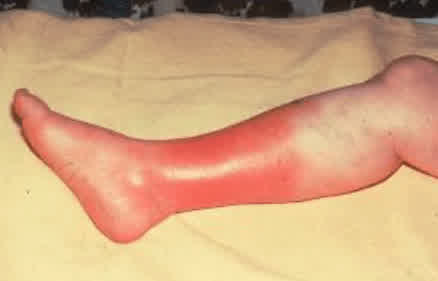
(Image: http://treatmentofcellulitis.net)
Clinical only:
- Redness, tenderness, local heat, non-raised edges
Differentiate from:
| Infectious | Non‐infectious |
| Erysipelas Necrotising fasciitis Gas gangrene |
DVT Insect bites Fixed drug reaction |
Common aetiologies
- Streptococci (usually S. pyogenes)
- S. aureus
Tests
None recommended
- Blood cultures are rarely positive and not generally helpful unless extensive or severe infection.
- Superficial pus swabs are not helpful and should NOT be performed
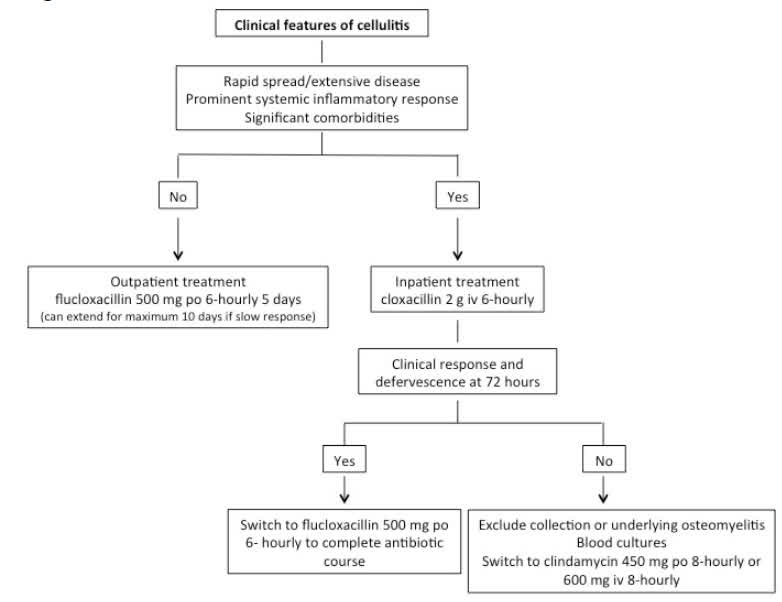
Management
CUTANEOUS ABSCESS
Definition
Deep inflammatory nodule extending into subcutaneous tissue that develops from preceding folliculitis
Common aetiologies
S. aureus
Tests
None
Management
All cases require surgical drainage.
Uncomplicated cases
- No antibiotics required
Complicated cases (surrounding cellulitis, located on face, systemic symptoms)
- Flucloxacillin 500 mg po 6-hourly for 5 days or co-amoxiclav 1g po 12-hourly
- In penicillin allergy use clindamycin 450 mg po 8-hourly
DIABETIC FOOT
Definition
Chronic foot infections in diabetics
- Mild: limited to skin/superficial subcutaneous tissue < 2 cm beyond ulcer margin
- Moderate: cellulitis > 2 cm, deep fascial involvement, gangrene, abscess, osteomyelitis
- Severe: systemic complications
Common aetiologies
- Mild infections or previously untreated
- S. aureus
- Streptococci
- Chronic lesions or previously treated
- Above plus
- Enterobacteriaceae
- Chronic, refractory or prolonged broad spectrum antibiotics
- Above plus
- Pseudomonas
- Anaerobes
- Enterococci
Tests
None required in mild or previously untreated infections. Tissue cultures are recommended in all other scenarios. It is essential to clean and debride the lesion before obtaining specimens for culture. Blood cultures should be performed in severe infections.
Diagnosis and management
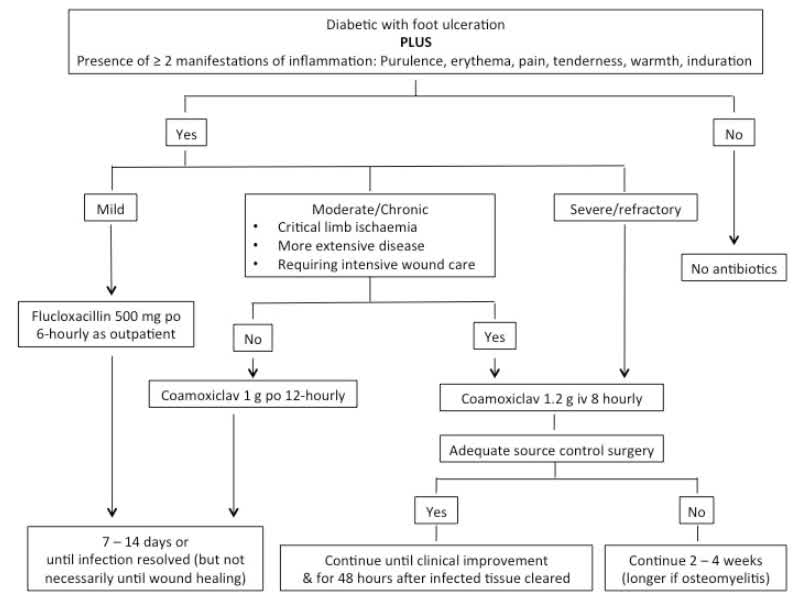
Penicillin allergy:
- Mild/moderate infections:
- Clindamycin 450 mg po 8-hourly (add ciprofloxacin 500mg po 12-hourly if requires admission)
- Severe infections:
- Clindamycin 600 mg iv 8-hourly PLUS ciprofloxacin 400 mg iv 8-hourly
Wound management
Optimal wound care is essential. Surgical consultation is recommended for the following problems:
- Deep abscess
- Bone or joint involvement
- Crepitus
- Gangrene
- Necrotising fasciitis
- Severe vascular insufficiency
NECROTISING FACIITIS
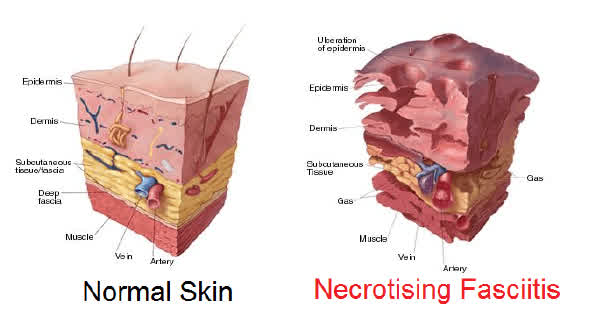
Definition (image: http://medicatoz.com/news/view?id=57)
Acute severe infection involving subcutaneous soft tissues including the fascial layers. Usually precipitated by trauma, surgery, peri‐rectal abscess, bedsores or bowel perforation.
Common aetiologies
Usually polymicrobial infections:
- Streptococci
- Enterobacteriaceae
- Anaerobes
Tests
Blood cultures and surgical tissue specimens.
Diagnosis and management
Necrotising fasciitis is commonly associated with systemic toxicity manifested by fever, leukocytosis and possibly organ dysfunction. It rapidly progresses to cutaneous gangrene. Management involves the following:
- Early and aggressive surgical debridement
- Co-amoxiclav 1.2 g IV 8-hourly; continued until clinical resolution
Alternative antibiotic regimens
- If co-amoxiclav unavailable: ampicillin 1 g 6-hourly PLUS metronidazole 500 mg 8-hourly PLUS gentamicin 6 mg/kg/day, all IV
- For refractory infections and in penicillin allergy: clindamycin 600 mg 8-hourly PLUS ciprofloxacin 400 mg 8-hourly, both IV