Soft Tissue Sepsis and Necrotising Fasciitis
Soft Tissue Sepsis and Necrotising Fasciitis
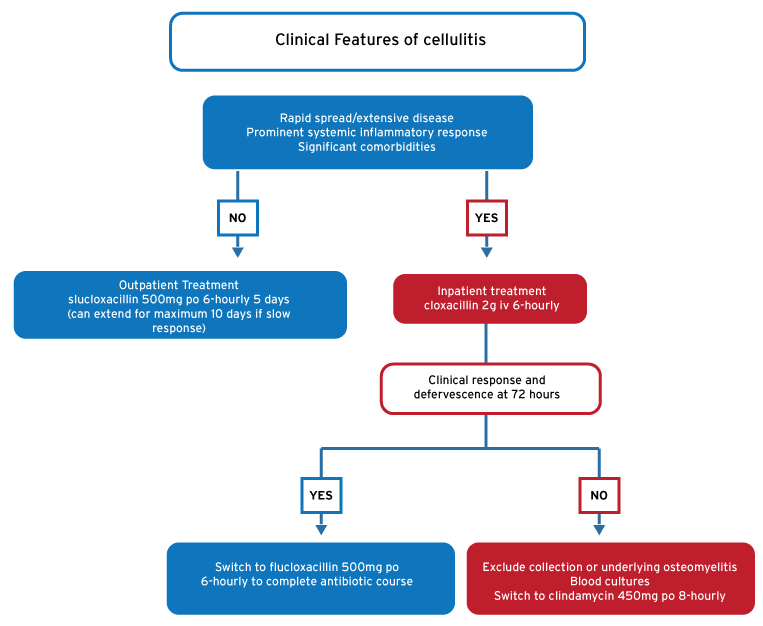
Clinical features of cellulitis
Cellulitis
Cellulitis is an acute infection involving skin and subcutaneous tissue. It is commonly precipitated by minor trauma or underlying skin lesion.
Diagnosis is clinical: Redness, tenderness, local heat, non-raised edges.
Differentiate from:
Infections
- Erysipelas
- Necrotising fasciitis
- Gas gangrene
Non infections
- DVT
- Insect bites
- Fixed drug reaction
- Common aetiologies: Streptococci (usually S. pyogenes) and S. aureus
- The majority of patients with cellulitis respond to oral antibiotics, hydration, limb elevation and rest.
- First line antibiotics are oral Flucloxacillin 500mg quid x 5 days.
- Intravenous antibiotics are indicated in cases of extensive sepsis, inability to take medications parenterally or failure to respond to oral agents.
Clinical features of cellulitis
Necrotising fasciitis
Necrotising fasciitis is less common, but fatal if missed or if treatment is delayed. Suspect this inpatients who are extremely ill, confused, with signs of organ decompensation, DIC, if the pain is extreme. Classic clinical signs include skin necrosis and crepitus, although these may not be obvious in the early stages of presentation. It is essential that these patients are identified early, early aggressive resuscitation, large doses of Co-amoxiclav 1.2 g IV continued until clinical resolution and urgent surgical debridement.
Delay in surgery will have catastrophic consequences.
- Discuss these patients immediately with your senior colleagues and prepare them for theatre straight away.
- Common aetiologies
- Usually polymicrobial infections: Streptococci, Enterobacteriaceae, Anaerobes
- Tests: Blood cultures and surgical tissue specimens.
Diagnosis and management:
Necrotising fasciitis is commonly associated with systemic toxicity manifested by fever, leukocytosis and possibly organ dysfunction. It rapidly progresses to cutaneous gangrene. Management involves the following:
- Early and aggressive surgical debridement
Alternative antibiotic regimens
If co-amoxiclav unavailable: ampicillin 1 g 6-hourly PLUS metronidazole 500 mg 8-hourly PLUS gentamicin 6 mg/kg/day, all iv.
For refractory infections and in penicillin allergy: clindamycin 600 mg 8-hourly PLUS ciprofloxacin 400 mg 8-hourly, both iv.