Staphylococcus Aureus Bacteraemia
This guideline aims to assist healthcare workers with antibiotic prescribing for common clinical syndromes in adult patients in South Africa, utilizing Local and International guidelines, key publications, and expert opinion.
Staphylococcus aureus (S. aureus) bloodstream infection carries a high mortality rate. It is commonly introduced by vascular line infections or other health-care associated interventions, but can result from invasive S. aureus at any site. S. aureus bacteraemia can disseminate to any organ including heart valves, bone and lungs, and therefore requires prolonged intravenous therapy with higher doses of appropriate antibiotics.
Definitions and dosing
Methicillin sensitive S. aureus (MSSA)
- Sensitive to anti-‐staphylococcal beta‐lactam antibiotics
- Cloxacillin is the treatment of choice:
- Initial dose 2 g IV 6-hourly
- Use 3 g IV 6-hourly for endocarditis, prosthetic heart valves or other endovascular material, meningitis and osteomyelitis
Methicillin resistant S. aureus (MRSA)
- Resistant to beta-lactam antibiotics
- Vancomycin is the treatment of choice:
- Loading dose 25 – 30 mg/kg slow infusion
- Thereafter 15 - 20 mg/kg BD (will require lower doses and/or less frequent intervals in renal impairment)
- Measure trough levels before the 4th dose and aim for a target of 15 – 20 mg/L
Management
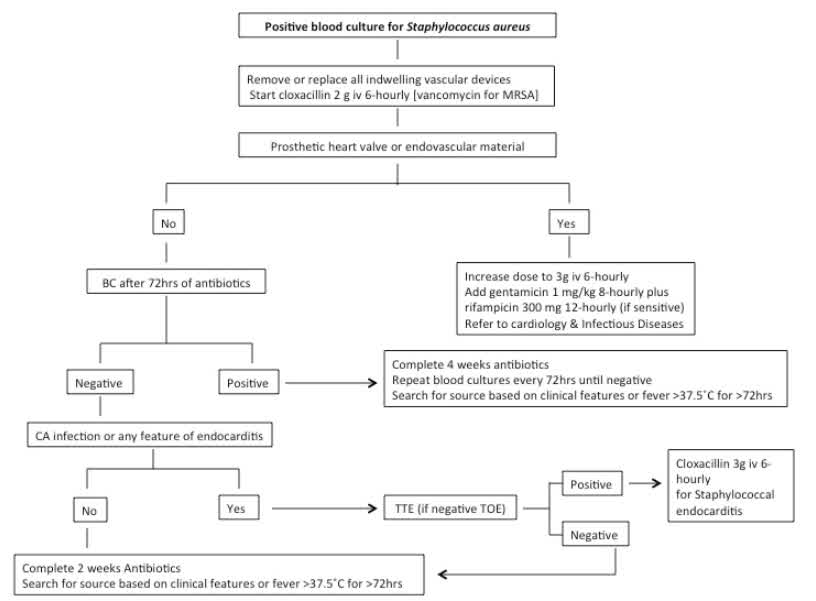
Clinical features of complicated S. aureus bacteraemia include persistent fever, bone pain, new murmur or peripheral manifestations of endocarditis or focal neurological signs. Patients with these problems require directed investigations for source control and should be discussed with an infectious diseases specialist.