Summary -Oral Healthcare Facility Preparedness Post- Lockdown Measures
SADA COVID-19 Guidelines, May 2020
Pre-Procedural Patient Factors
Pre-appointment Screening Questions and Instructions
Sterilisation and Disinfection Protocol
Personal Protection Equipment (PPE)
Recommendations for the Use of Specialised Equipment
Preamble
- National lockdown measures are well defined. The related Oral and Health Care document (SADA) defines the application of these measures in dentistry.
- These SADA defined levels must be considered in relation to the appropriate national-level announcements, as they might differ by region.
- These measurements are expected to be applicable for an extended time. A realistic estimated timeframe for national Level 1 to be reached is between May 2021 and November 2023, should herd immunisation not be achieved earlier).
- Complacency must be guarded against during easing measures, as this does not indicate lesser risk.
Pre-Procedural Patient Factors
- It is especially important for the oral health care (OHC) team to be well educated and informed on the COVID-19 pandemic.
- The goal is to help inform the patients with knowledge and all the precautions being taken to reduce the opportunity for uncontrolled virus spread at the facility.
- The front staff should be supplied by knowledge as well as all the appropriate forms to aid in the screening of patients, the management at entrance, waiting before the procedure as well as the exit of the patient, by adhering to governmental issued instructions and additional practice policies.
- No cure exists for COVID-19. The most effective way of treating COVID-19 is by preventing the spread of the virus. As part of the screening process, the patient’s temperature should be known before entering the premises. No patients with any of the screening answers in the positive should be allowed inside the premises.
- The principal dental health care worker (DHCW) must assume responsibility and the ultimate outcomes of these measures.
Pre-appointment Screening Questions and Instructions
- Does the patient have flu-like symptoms: fever > 38°C, cough, sore throat or difficulty breathing?
- Has the patient or any member of their household tested positive for COVID-19? When was the diagnosis made and when did the patient experience their most recent symptoms, if any? See clinical symptoms.
- Has the patient experienced any flu-like symptoms (see question 1) in the past fourteen (14) days?
- Has the patient been in contact with someone outside their household who has tested positive for COVID-19 or had flu-like symptoms?
- Has the patient been in contact with somebody with flu-like symptoms who has also received a negative or inconclusive COVID-19 test?
- Did the patient travel to areas marked by transmission of COVID-19?
- Has the patient worked in or attended a health care facility where COVID-19 patients were being treated?
- Has the patient been recently admitted with severe pneumonia?
- Other symptoms: chills, loss of taste, loss of smell, muscle pain, headache.
Emergency COVID-19 related attention: Know your local COVID-19 hotline number and have it posted in a prominent visual place for easy referral.
Emergency COVID-19 related symptoms that require immediate attention
- Persistent pain
- Pressure in the chest
- Uncharacteristic confusion
- Bluish face, lips and an inability to be aroused
Practice Management
- The risk potential area in each practice must be clearly defined by the principal dentist.
- Staff restrictions on entering certain areas should be clearly communicated with all knowing exactly where the red (danger) zone is located.
- The practice should be prepared in such a way that there would be no unforeseen areas where the virus can settle without the ability to sanitise these areas with ease and at regular intervals.
- A practice management plan should be drawn up to identify any risk areas and appropriate precautions taken and maintained.
Ventilation
- Aerosol-Generating Procedures (AGP) pose our biggest risk.
- The volume of air of the practice can easily be virus laden without our knowledge. No test exists to quantify the virus load in the air.
- Knowledge of air distribution is key to making informed decisions.
- It is imperative that air circulates with fresh air, replacing the air volume in the practice.
- Ventilation can be natural (windows) or artificial (a closed or open system). The importance of the aforementioned point is the connection to the neighbouring structures.
- The units can either be connected or unconnected to fresh air outside the building.
- If any circulation takes place, this air must pass through an appropriate HEPA filter (H13/14) or Hyper HEPA filter (or a similar) that can remove micro-elements from the air.
- SARS-CoV-2 is only 0.15 μm in size. Appropriate loose standing air filtration or purification units can help to reduce the viral load in the air.
Sterilisation and Disinfection Protocol (Click here for the full chapter)
1. Reception Area Preparation (See diagram below)
- Protection of staff and patients with this checklist below.
- Emphasise hand hygiene, respiratory hygiene and cough etiquette for everyone.
- Patient only OHCF, without guests unless assistance is absolutely required (wait outside OFHC until called in by staff member).
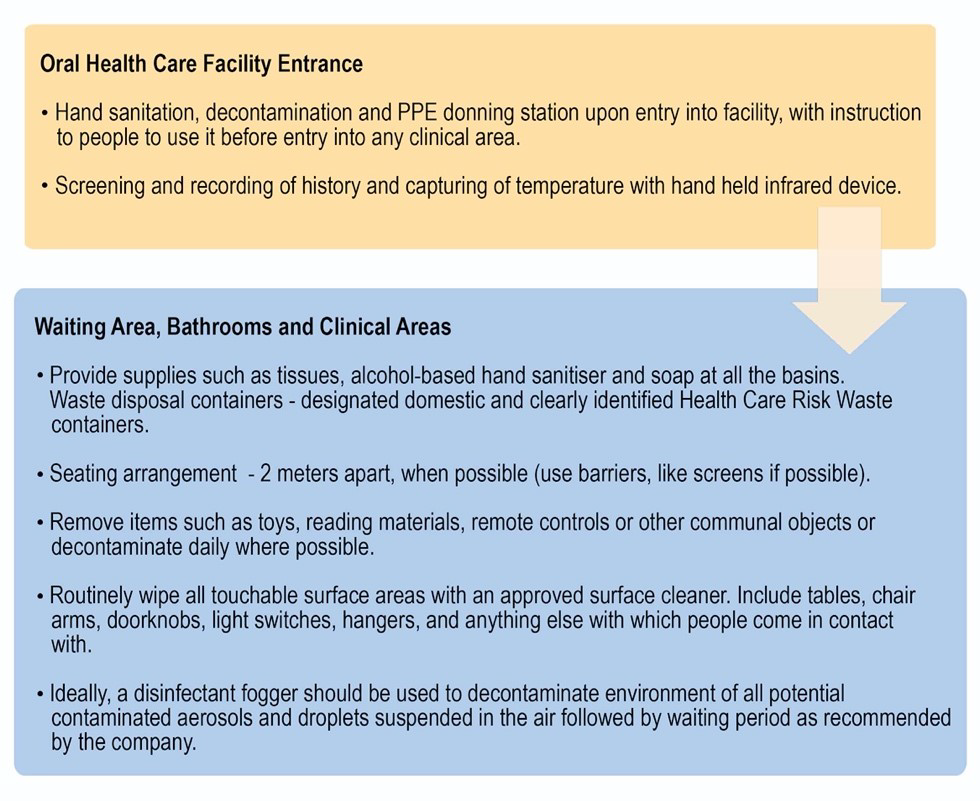
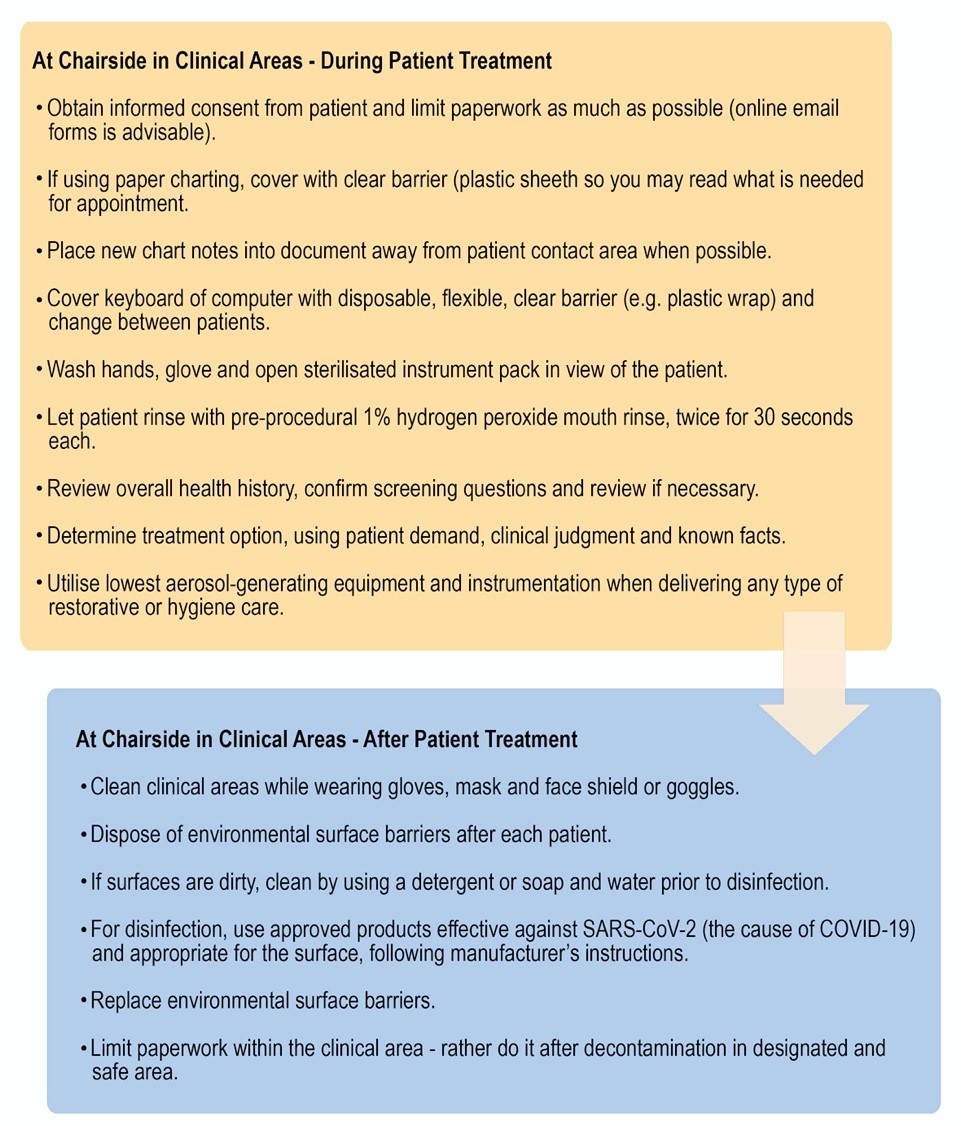
2. During and After Patient Treatment (See diagram below)
Infection Prevention and Control
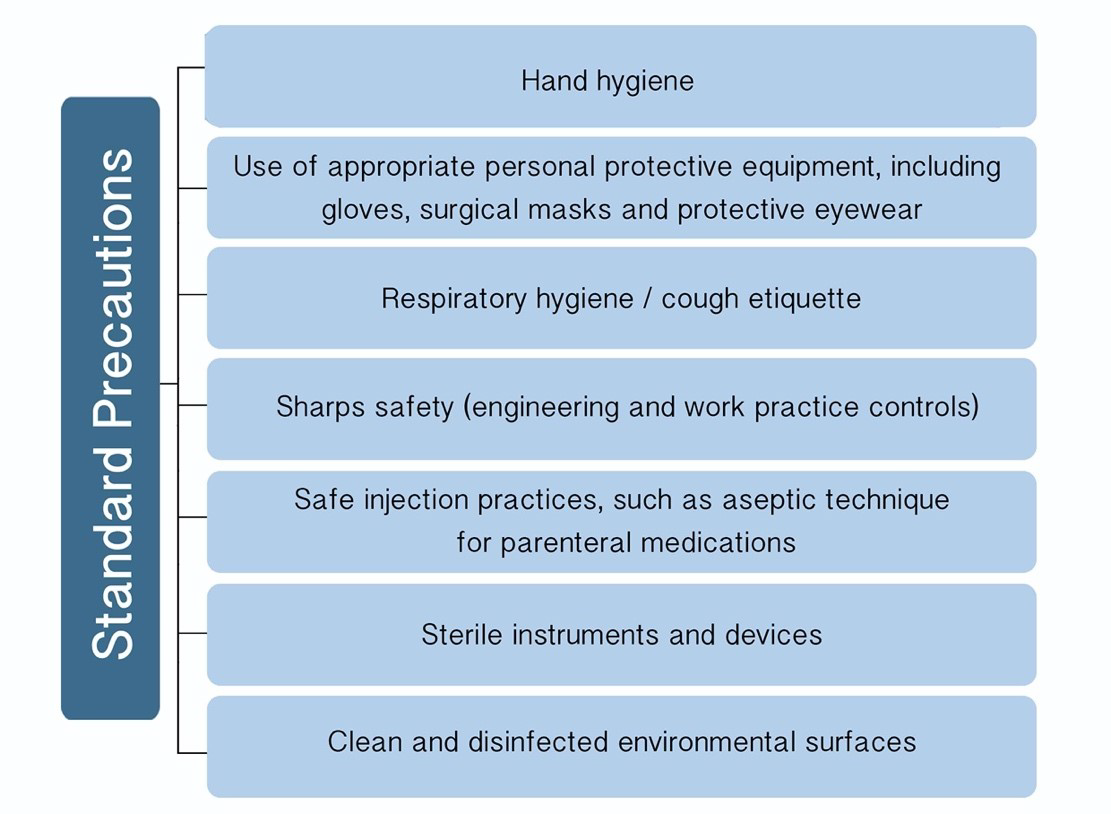
COVID-19 is a new disease, and we are still learning about how it spreads and the severity of illness it causes. Currently, there is evidence of the virus’s ability to survive in aerosols for hours and on some surfaces for days. During OHC procedures, rotary dental and surgical instruments, such as hand pieces or ultrasonic scalers, and air-water syringes are used routinely. Surgical masks protect mucous membranes of the mouth and nose from droplet spatter, but they do not provide complete protection against inhalation of airborne infectious agents. There are currently no data available to assess the risk of SARS-CoV-2 transmission during OHC procedures or to determine whether OHC providers are adequately protected when providing dental treatment using the Standard Precautions. To perform any OHC procedure, the Standard Precautions are essential and include:
Click on image to enlarge
Each element of the Standard Precautions is described in the sections of this protocol, and in addition, in the “Infection control guidelines for OHC South Africa”, also published by the South African Dental Association (Oosthuysen et al., 2020). Education and training are critical elements of the Standard Precautions to empower OHC workers to make appropriate decisions and comply with recommended practices.
Personal Protection Equipment (PPE) (Click here for the full chapter)
- The implementation and use of appropriate PPE have been highlighted by the COVID-19 crisis.
- Untested or non-scientific evidence could be harmful or detrimental to you because of a false sense of security from wearing inappropriate or standard equipment.
- There is a lack of compliance among dental care providers regarding PPE use.
- Clear guidelines on the availability and use of PPE are needed to avoid inappropriate practices that could result in the spread of infection and compromise the safety of patients, staff and dental practitioners.
- Although the best possible options regarding PPE will be provided, they will have no impact if they are not correctly used.
- The sequence for Putting on (Don, Donning) and Removing (Doff, Doffing) PPE is essential.
- Extended and reuse only apply in an emergency, such as the COVID-19 pandemic coupled with a shortage problem.
- Extended use refers to the practice of wearing the same N95 (or equivalent) respirator for repeated close contact encounters with several patients.
- Reuse refers to the practice of using the same N95 respirator for multiple encounters with different patients, but the respirator is removed (doffed) after each encounter.
- Restrictions are put in place that limit the number of times and in which procedures reuse is allowed.
- Hand hygiene and PPE use cannot be seen or practised in isolation in terms of safety, and both are equally important.
Non-Aerosol-Generating Procedures
- Procedures that do not generate aerosol.
-Intra-oral examination
-Intra-and extra oral x-rays
- Impressions - Patient care should be within the guidelines:
-PPE's
-Preoperative mouth rinse (1% hydrogen peroxide rinse or 0.23% to 1% povidone-iodine)
Aerosol-Generating Procedures
- Fine aerosols generated by AGP produce fine aerosols (<5 microns) or less in diameter that can suspend in the air. Spatter droplets are much larger than aerosol particles (<50 microns). Both aerosol particles and spatter droplets can contain infectious agents (bacteria and viruses).
- Ultrasonic and sonic transmissions during nonsurgical procedures have the highest incidence of particle transmission, followed by air polishing , air/water syringe and high-speed hand piece aerosolisation.
- Greater safety measures are needed when these devices are used:
-Rubber dam
-High-Volume Evacuation (HVE) / Extra_oral suction devices
-PPE's
-Postoperative sanitation - It is of utmost importance to consider all methods that can minimise the risk of transmission of potentially infectious agents, such as SARS-CoV-2, to dentists , dental auxiliary staff, dental assistants and patients.
Standards on Personal Protective Equipment and Decontamination Procedures Required for the COVID-19 Pandemic
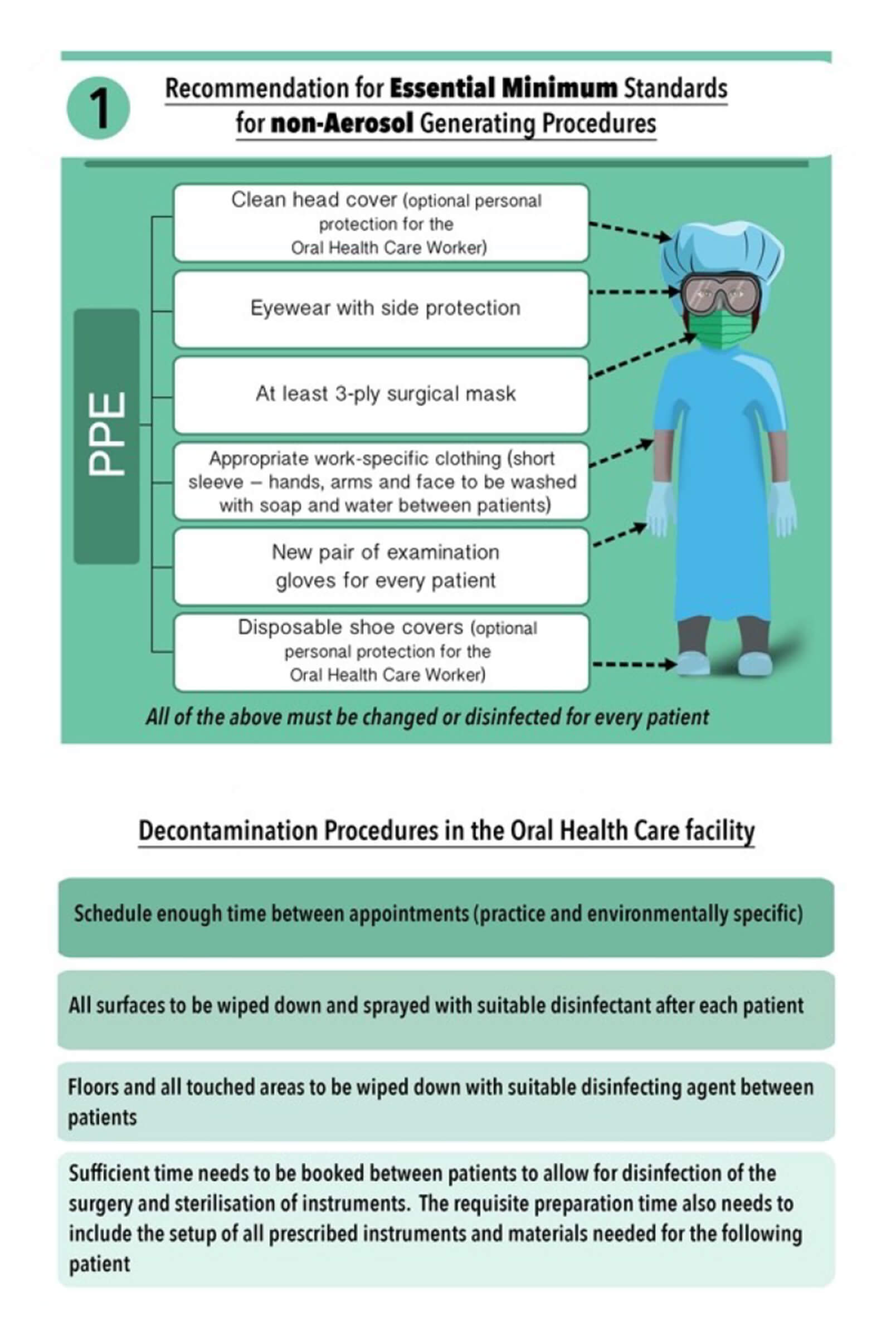
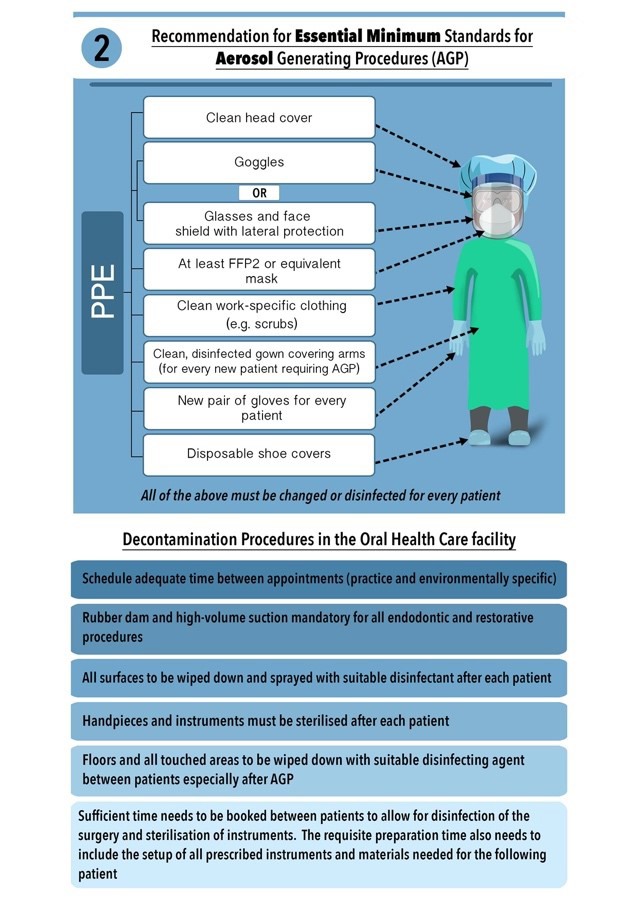
Diagrams 1 and 2 outline the essential minimum standards and decontamination protocols for non-aerosol and aerosol procedures. These are the minimum requirements for treating patients during the pandemic in an OHC facility.
Diagram 1: Recommendation for Essential Minimum standards for non-Aerosol Generating Procedures
Click on image to enlarge
Diagram 2: Recommendation for Essential Minimum Standards for Aerosol Generating Procedures (AGP)
Click on image to enlarge
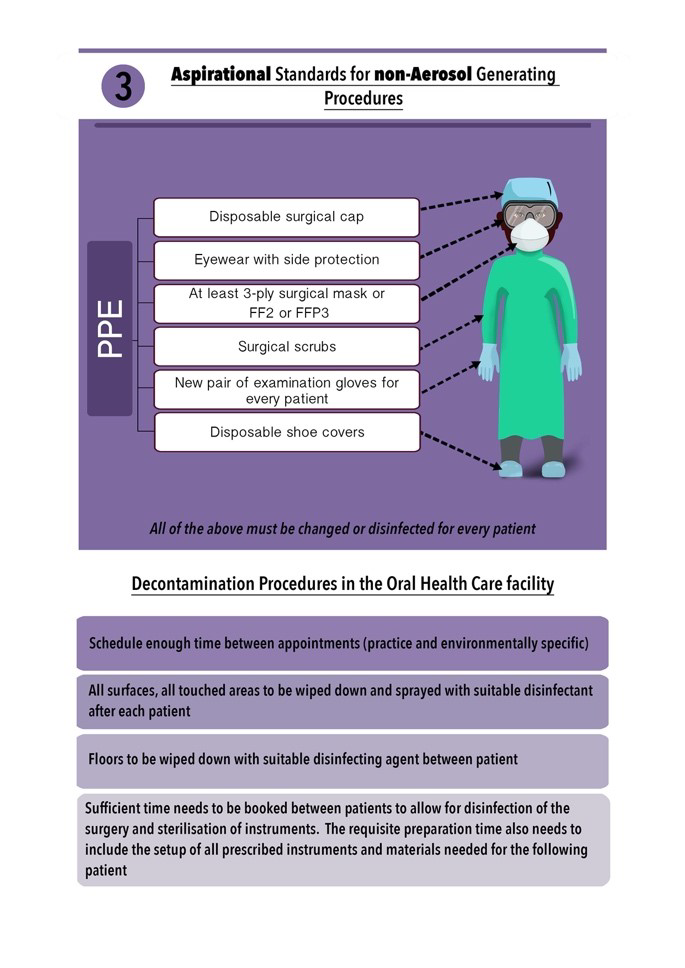
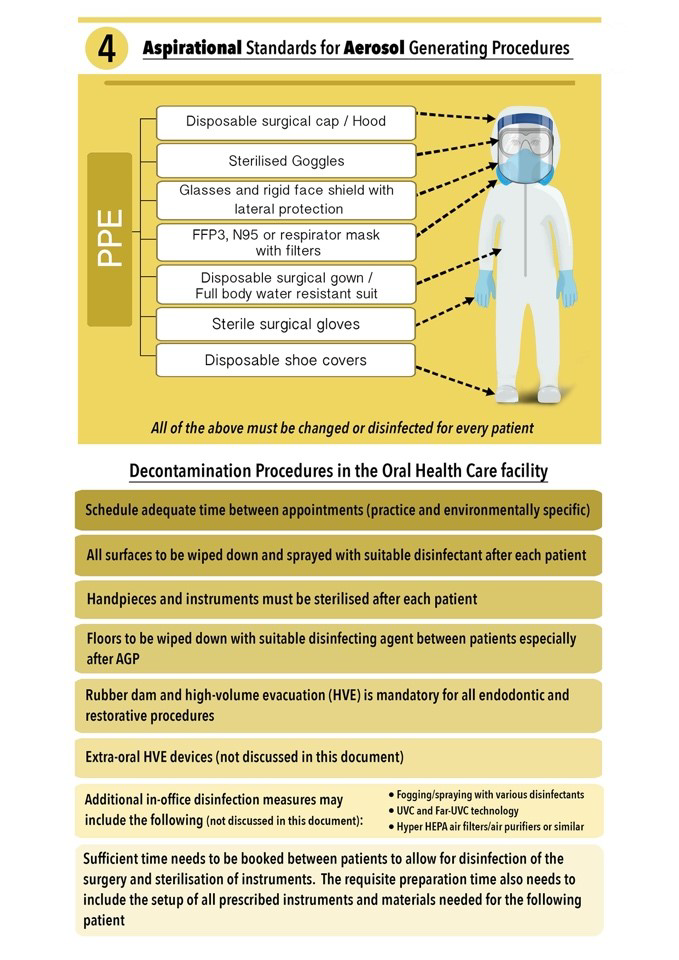
Diagrams 3 and 4 outline aspirational standards and decontamination protocols for non-aerosol and aerosol procedures that an OHC facility can employ to upgrade the essential minimum standards for additional personal and patient protection. The reasonable standard of care should be seen between these two levels.
Diagram 3: Aspirational Standards for non-Aerosol Generating Procedures
Click on image to enlarge
Diagram 4: Aspirational Standards for Aerosol Generating Procedures
Click on image to enlarge
The Use of Dental Auxiliaries
- Two handed dentistry is not ideal; if the only possibility then special measures should be taken to ensure reduction in Aerosol by using special HVE equipment.
- Ensure that all materials needed for treatments are unpacked before treatment so there is no unnecessary opening of cupboards and drawers.
- Four-handed dentistry is ideal , as it helps reduce aerosol production, improves turnaround time of the surgery and improves overall efficiency and risk.
- Ensure all auxiliaries are trained in all aspects of cross-infection control and aerosol reduction methods.
Isolation and Suction
1. Rubber Dam
- The water coolant from a high-speed hand piece generates aerosols during procedures, and when combined with bodily fluids, bioaerosols are created.
- Dentists and auxiliary staff who treat patients during aerosolisation procedures are at very high risk of infecting themselves or re-infecting other patients.
- Several studies have confirmed that the viral load in human saliva is very high and that preoperative mouth rinses can reduce but not eliminate it.
- Studies have shown that during conservative dental procedures (15–30 minutes) without the use of a rubber dam, the airborne bacterial load increased from 8.8 to 25.1 CFU.
- Patients, dentists and assistants, as well as surfaces and objects, are at a risk of exposure to airborne contamination 2.5 to 3X greater than the norm.16
- Various studies have shown that the use of rubber dam isolation during AGP resulted in a 98.8% bacterial reduction (greater reduction with antiseptic mouth rinse before rubber dam application).
- The rubber dam provides a barrier of protection from the primary source and can virtually eliminate all pathogens emerging from respiratory secretions during dental procedures that generate aerosols.
- If the rubber is correctly placed, the only source of contamination would be the tooth /teeth undergoing treatment.
- Rubber dam application during cavity preparation showed a reduction in the spread of microorganisms by 90% and can significantly reduce airborne particles in a 3-foot diameter ßof the operational field by 70%.
- It is important to note that rubber dam isolation can result in significantly higher aerosol levels on various areas of the dentist’s head; dentists are advised to cover the head with suitable protective wear during AGPs.
2. Suction
- During AGP, the use of HVE at source is mandatory. Extra-oral evacuation systems can further assist in reducing aerosol.
- It should be understood that correct efficacy (300 l/min) of the HVE can guarantee the maximum removal of aerosol/splatter.
- Correct installation to control potential toxic waste and meticulous maintenance of the suction system is essential.
3. Final Recommendations
- The rubber dam with an appropriate preceding mouth rinse appears to be the best option for working field isolation in order to infectious agents in aerosol and spatter.
- The rubber dam in conjunction with extra high-volume suction can drastically reduce aerosol and spatter during procedures.
Recommendations for the Use of Specialised Equipment
1. Loupes and Dental Operating Microscope (DOM) Disinfection
- Loupes and the DOM can collect debris and aerosol spray from most dental procedures. Ideally, all areas of the loupe and microscope should be disinfected with a high level of disinfectant after each patient.
- Follow your manufacturer’s standards of care guidelines for your surgical microscope to ensure that you are cleaning within the tolerances of your instrument.
a) Dental Loupes
- Ethyl alcohol is the recommended solution of choice to disinfect the loupe telescopes and frame surfaces. The lenses can be cleaned with alcohol or quaternary ammonium disinfectant.
b) Dental Operating Microscope
- All the system's mechanical surfaces can be wiped clean with a damp cloth. Do not use any aggressive or abrasive cleaning agents. Remove any residue using a mixture of 50% ethyl alcohol and 50% distilled water plus a dash of household dishwashing liquid.
- For disinfection of mechanical surfaces, the maximum application concentrations for disinfection solutions are either 60% alcohol, 2% glutaraldehyde or 0.2% quaternary compounds. For regular cleaning of the surgical microscope’s objective lenses and eyepieces, it is recommended that special, manufacturer-produced cleaning kits be used.
- Some manufacturers also supply sterilisable caps for handgrips and knobs and custom-made sterile drapes to cover the microscope head and body to protect the microscope from aerosol spray during procedures. Disinfected plastic bags can also be used to protect the DOM from aerosol and should be replaced after each patient.
2. Lasers in Dentistry
- Both wet and dry lasers should be managed in the same way as other aerosol-producing instruments.
- Lasers using water for cooling should have their air/water levels at the minimum possible levels without compromising the health of the tissue one is using them on.
- Both wet and dry lasers produce plume, which has been shown to contain viral material.
- Plume should be treated in the same way as aerosols.
- Photo-biomodulation, laser anaesthesia, and photo-dynamic therapy are deemed safe.
- Ensure the correct sterilisation protocols are used for all laser parts.
Disinfection of Dental Impressions (Laboratory Work)
- Dental impressions invariably are contaminated with patient saliva or blood and are considered potentially infectious.
- It is the responsibility of the dentist to disinfect impressions that are sent to dental laboratories to prevent cross-contamination and spread of disease.
- Communication between the dental practice and dental laboratory is essential to ensure that appropriate disinfection protocols are implemented without overlap.
- See later in this document for more detail on disinfection of impressions, bite registration materials and impression trays.
Conclusions
- Know your environment and the dangers and risks that you pose to your own OHC facility but also to the population at large.
- Identify high-risk patients and potential positive patients appropriately; all other patients should be treated as potentially positive.
- Positive Covid-19 patients should be treated in very specialised environments such as laminar flow, HEPA filtered (H13, H14) hospital theatres or specially designed Airborne Infection Isolation Rooms (AIIR). These could be constructed/adapted in an environment outside of the hospital, decreasing the load on our healthcare facilities, especially if AGP are unavoidable.
- The goal should always be to aim to better isolate your working space and thereby decrease the risk of spread, change from a possible risk situation to a relatively safe situation (rubber dam isolation and use of HVE).
- Implement additional safety and sterility measures until vaccination.
- Take all measures to avoid AGP in the initial relaxing stages.
- Health care workers at high risk: > 65 or with comorbidities as well as environmental high-risk practices (Health and Safety certified) should stay in self-quarantine/closed until such time as vaccination or Level 1 is reached. Professional insurance companies should be encouraged to see these above groups as actively not being able to function normally and should be compensated such as would apply to a long-term illness.