The HIV Infected Infant/Child (< 10 Years)
Description General and supportive measures Standardised national monitoring for infants & children with HIV Medicine treatment ART Regimens Recommended regimen in ART-naïve Neonates, Infants, Children 0 to < 10 years of age Switching existing clients to DTG-containing regimens Transition from ABC/3TC/LPV/r to DTG based regimens Switching children on PI-containing regimens to DTG reg
Description
General and supportive measures
Standardised national monitoring for infants & children with HIV
Medicine treatment
- ART Regimens
- Recommended regimen in ART-naïve Neonates, Infants, Children 0 to < 10 years of age
- Switching existing clients to DTG-containing regimens
- Transition from ABC/3TC/LPV/r to DTG based regimens
- Switching children on PI-containing regimens to DTG regimens
- Treatment failure
- Management of confirmed virological failure in adolescents on TLD
- Third-line
- Viral Load Monitoring for clients on TLD
- ART regimens for children with confirmed virological failure
- Dosing tables
- Specific information on ARVs
- Criteria for changing therapy
ICD-10 codes: B20-24
DESCRIPTION
Defined as an infant or child in whom HIV infection has been confirmed with two appropriate tests.
For confirmation of HIV infection, see: Human immunodeficiency virus infections.
GENERAL AND SUPPORTIVE MEASURES
Counselling is a vital part of the successful care of children with HIV infection and their families. Specific matters requiring attention are:
- The implications of the disease to the family.
- Implications of treatment, non-adherence and understanding of the condition and its care.
- The disclosure process within the family and extended family/friends should be encouraged. Help from family/friends is often useful.
- Disclosure to the child of appropriate age and maturity.
Treatment of mothers, caregivers and other family members:
- Always ask about the caregiver's health and the health of other members of the family.
- Ensure that mothers and other family members have timeous access to medical care, including ART.
- Encourage breastfeeding in all mothers with HIV-infected children, with the introduction of weaning foods from 6 months of age. Breastfeeding duration is recommended for 2 years or longer, as in HIV-unexposed children.
- Always ask, at every visit, about TB contacts and TB symptoms in all children and their caregivers.
STANDARDISED NATIONAL MONITORING FOR INFANTS & CHILDREN WITH HIV
|
At initial diagnosis of HIV |
|
| Confirm HIV status. | To ensure that the national testing algorithm has been followed. |
| Document weight, height, head circumference (HC if < 2 years of age) and development. | To monitor growth and development. |
| Screen for TB symptoms. | To identify TB co-infection. |
| Do CD4 count. |
To determine eligibility for cotrimoxazole prophylaxis < 1 year: CPT irrespective of 1–5 years: CPT if CD4 count > 5 Years: CPT if CD4 count |
|
At the initiation of ART (baseline) |
|
| Hb or FBC. | If < 8 g/dL, manage appropriately. |
| CD4 count (if not performed in the last 6 months). | Baseline assessment. |
| ALT (if jaundiced or on TB treatment). | To assess for liver dysfunction at baseline. |
|
On ART |
|
| Height, weight, head circumference (HC if < 2 years of age) and development. | To monitor growth and development stages. Adjust dosing at each visit as necessary according to weight gain. |
| Clinical assessment, including drug related adverse events. | To monitor response to ART and exclude adverse effects. |
| CD4 count: At 1 year on ART, and then every 6 months until they meet the criteria to stop cotrimoxazole. Thereafter, stop CD4 count monitoring if the patient remains virologically suppressed. If not virologically suppressed, monitor CD4 count every 6 months. |
To monitor response to ART and stop cotrimoxazole prophylaxis as indicated. |
| Viral load (VL): At month 3 on ART, after 12 months on ART, then every 12 months if virologically suppressed. More frequent monitoring (3–6 monthly) recommended in patients with treatment failure. |
To monitor viral suppression on ART. To identify treatment failure and identify adherence problems. |
| If on AZT, Hb or FBC and differential WBC at months 3 and 6. Thereafter, repeat if clinically indicated. | To identify AZT-related anaemia. |
| If on a PI, cholesterol + triglyceride at month 3. If above the acceptable range, do fasting cholesterol and TGs, and obtain expert advice if still above the acceptable range. | To monitor for PI-related metabolic side effects. |
MEDICINE TREATMENT
Cotrimoxazole prophylaxis
Indications:
- According to the current guideline, babies with a positive HIV PCR should be started and continued on cotrimoxazole prophylaxis until criteria for discontinuation are met.
- Co-trimoxazole (sulfamethoxazole/trimethoprim), oral, once daily (everyday).
| Recommended daily dosage by weight band |
Dose of sulfa- |
Per Formulation |
| 3 to 5.9 kg | 100/20 mg |
Suspension Single strength Double strength |
| 6 to 13.9 kg | 200/40 mg |
Suspension Single strength Double strength |
| 14 to 24.9 kg | 400/80 mg |
Suspension Single strength Double strength |
| 25 kg | 800/160 mg |
Suspension Single strength Double strength |
Discontinuation:
- If HIV-infected, the immune system is fully reconstituted on ART and child > 1 year of age (i.e. child 1 to 5 years of age: CD4 > 25%, or child > 5 years of age: CD4 > 200 cells/mm3 on 2 tests at least 3–6 months apart).
Immunisation, deworming and vitamin A program
- Continue deworming and vitamin A programme as in the HIV-negative child.
- Continue immunisation as in the HIV-negative child. See the Standard Treatment Guidelines and Essential Medicines List for Primary Health Care: Immunisation.
Nutritional support
Specific nutritional conditions should be treated appropriately.
Antiretroviral therapy (ART)
Initiation of ART in clinically stable HIV-infected children without complications should be at PHC level – See national NIMART guidelines (IMCI) and Standard Treatment Guidelines and Essential Medicines List for Primary Health Care.
Preparing the child and family to start ART is critical to the success of the treatment. Failure to achieve adherence may lead to resistance and adversely affect the child's prognosis.
Eligibility criteria for antiretroviral therapy
- Confirmation of diagnosis of HIV infection irrespective of CD4 count or WHO clinical staging.
AND
- No medical contraindication (e.g. major organ dysfunction). If medical contraindications are present, refer to the hospital for rapid review and planning.
Social issues that must be addressed to ensure successful treatment
These are extremely important for success as they impact on adherence.
Social challenges should be overcome and not be barriers to care.
Disclosure to another adult living in the same house is encouraged so that there is someone else who can assist with the child’s treatment.
- Mandatory component: at least one identifiable caregiver able to supervise the child and/or administer medication. All efforts should be made to ensure that the social circumstances of vulnerable children, e.g. orphans, be addressed to facilitate treatment.
- Adherence:
- High levels of adherence should be maintained for adequate virological response and prevention of viral resistance. This can be achieved with regular education and support.
- All efforts to encourage this level of adherence should be made.
- Viral load measurements are useful for monitoring adherence.
- Sensitive, age-appropriate disclosure may facilitate adherence.
Requirements before ART is used
The child’s family (parents, caregivers) should understand:
- that antiretroviral therapy is long-term,
- the prognosis of the condition (treated and untreated),
- adverse effects of the medicines, their mode of action, and the risk and implications of developing resistance, if incorrectly used,
- that all medications should be given as prescribed and adequately stored.
ART Regimens
- These are chosen according to age, weight, expected adverse effects, efficacy and prior antiretroviral exposure.
- Adjust the dosage of antiretroviral therapy according to weight during follow-up visits. Assess weight gain and need for adjustment at each visit.
- Do not change regimens or move to second-line therapy without clear guidance from an experienced practitioner in child ARV medicine, as unnecessary loss of effective regimens can shorten life expectancy. Adherence problems need to be addressed thoroughly before switching to a second- or third-line regimen.
- Single drug substitution should be discussed with an experienced practitioner in child ARV medicine.
|
TLD1: Clients on a DTG-containing regimen, having never failed a previous regimen (old ‘first-line’ terminology). TLD2: Clients on a DTG-containing regimen, who have failed a previous regimen (old ‘second- line’ terminology). |
TLD: tenofovir, lamivudine, dolutegravir
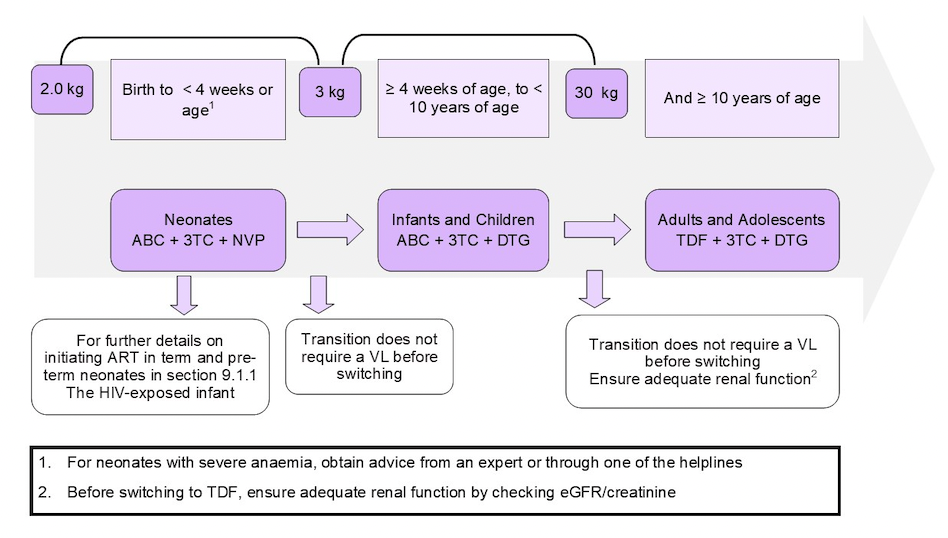
Recommended regimen in ART-naïve Neonates, Infants, Children 0 to < 10 years of age
Click on image to enlarge
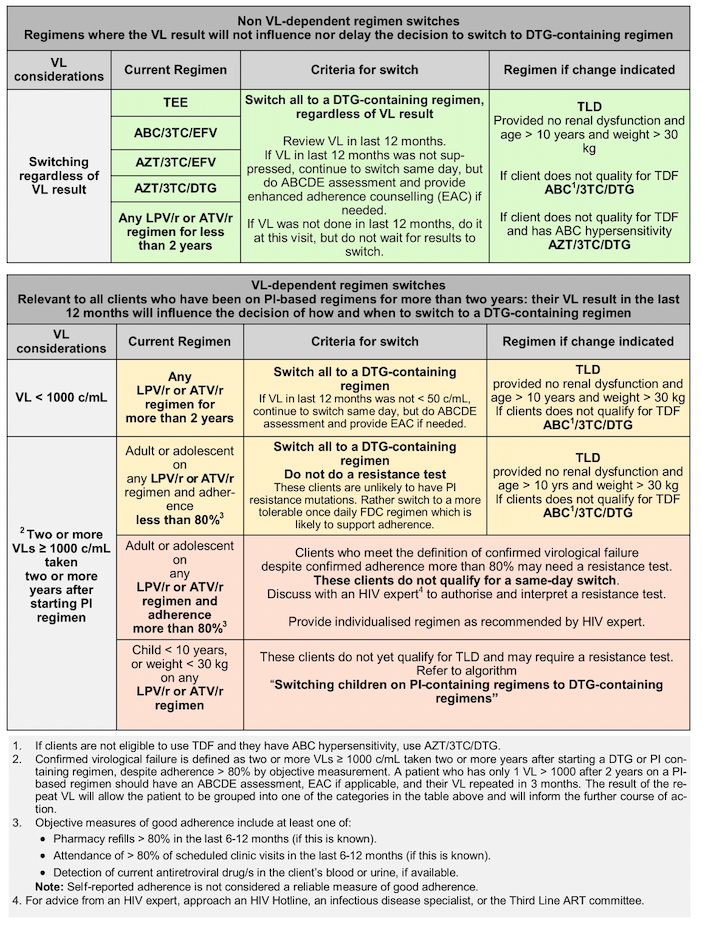
Switching existing clients to DTG-containing regimens
Click on image to enlarge
Transition from ABC/3TC/LPV/r to DTG based regimens
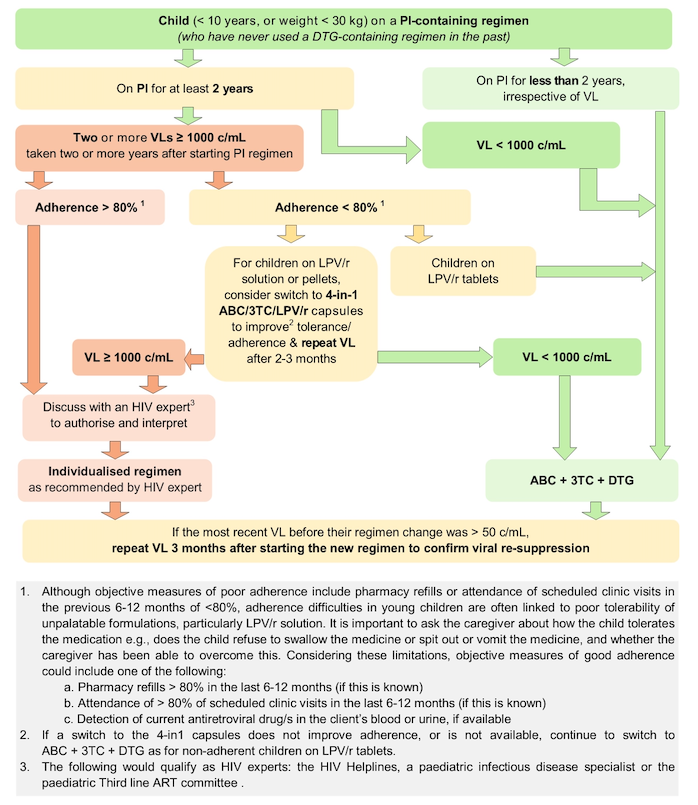
ALL children < 10 years and < 30 kg on ABC/3TC/LPV/r switch to ABC/3TC/DTG.
EXCEPT if VL > 1000 copies/mL (performed in the last 12 months) for > 2 years.
- Consider switching to ABC/3TC/LPV/r 4-in-1 formulation and repeating HIV VL in 3 months. If HIV VL < 1000 copies/mL, change to ABC/3TC/DTG and if > 1000 copies/mL, perform an HIV drug resistance test (DR)
- Perform an HIV DR if 4-in-1 formulation not available.
- If NRTI mutations on the HIV DR show:
- No mutations or only M184V – switch to ABC/3TC/DTG.
- M184V + other mutations – discuss with an experienced practitioner in child ARV medicine.
Switching children on PI-containing regimens to DTG regimens
Click on image to enlarge
Treatment failure
The HIV viral load is the most sensitive method to detect failure of response to ART.
Virological failure can be defined as a measurable viral load despite optimal adherence and dosage over 4 months. Treatment failure is primarily defined by viral loads, as waiting for clinical or immunological failure increases the chances of increasing viral resistance to other available antiretroviral agents.
Poor adherence is the most common cause of treatment failure. Adherence issues should be assessed and then implement strategies to improve adherence.
*For guidance on the step-up adherence package, refer to the National adherence guidelines.
https://www.nacosa.org.za/wp-content/uploads/2016/11/Integrated-Adherence-Guidelines-NDOH.pdf
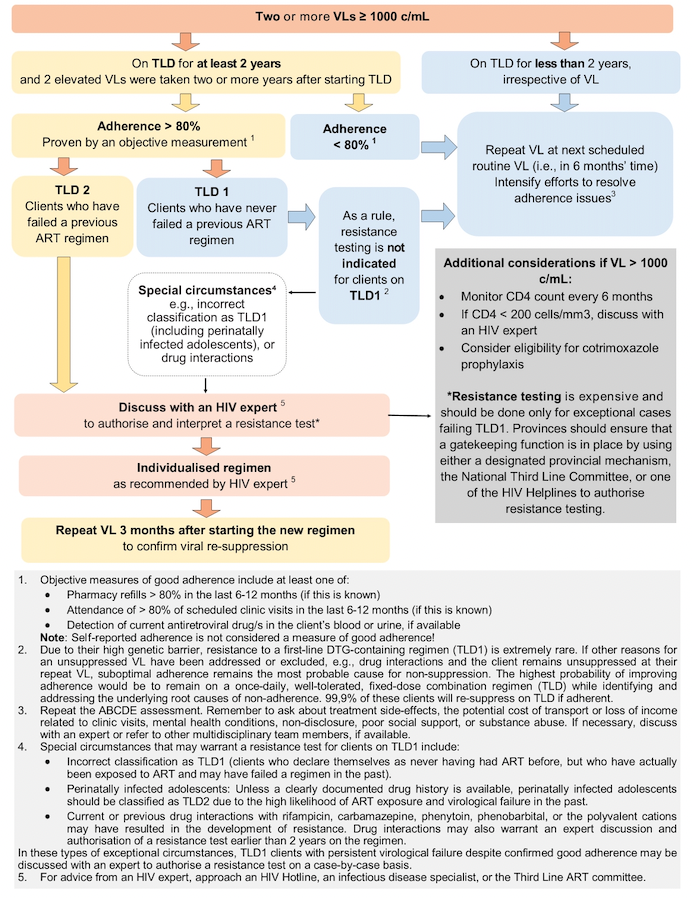
Management of confirmed virological failure in adolescents on TLD
Click on image to enlarge
Third-line
Application forms for third-line antiretroviral therapy can be accessed at the following link: Application for Third Line Antiretrovirals_2017.pdf (sahivsoc.org)
- Important information to assist in applying for third-line antiretrovirals can be found at www.righttocare.org/what-we-do/third-line-art/
Applications can be emailed to TLART@health.gov.za
General comments
Switch to tablets or capsules from syrups or solutions as soon as possible. Use fixed-dose combinations in preference to single agents. If available, use once daily regimens.
Viral Load Monitoring for clients on TLD
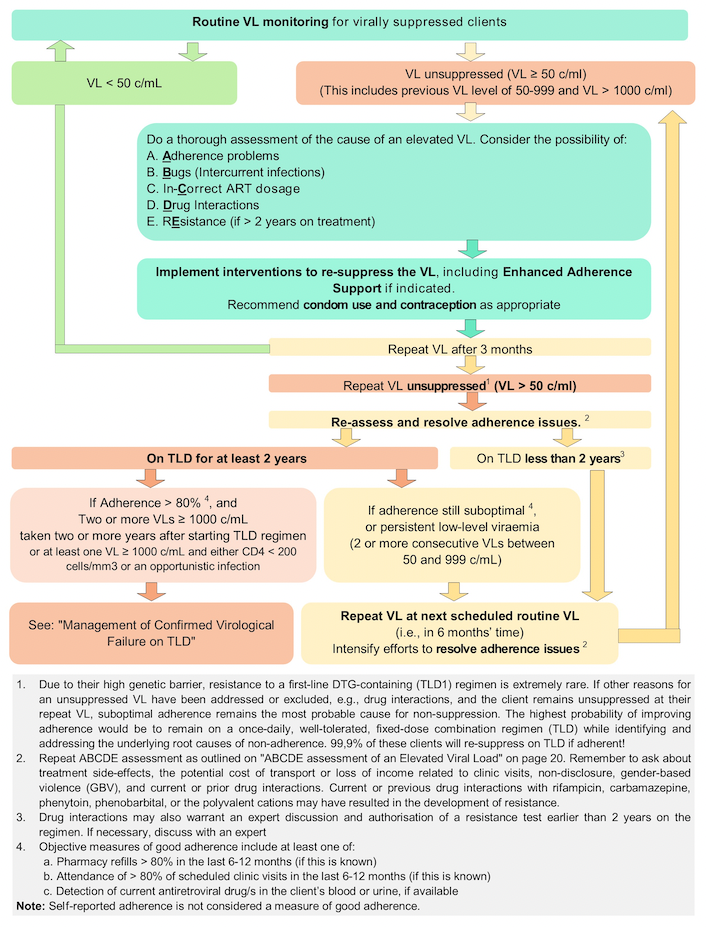
Click on image to enlarge
ART regimens for children with confirmed virological failure
All children and adolescents with confirmed virological failure should be discussed with an expert.
| NNRTI based regimen | |
| Regimen | ABC/AZT/TDF + 3TC/FTC + EFV/NVP |
| Resistance testing4 | Resistance test not required. |
| Resistance test results | Not applicable. |
| New regimen or Other action required |
If < 10 years and < 30 kg: AZT + 3TC + DTG If > 10 years and > 30 kg: TDF + 3TC + DTG1,2 |
| PI-based regimen3 | |
| Regimen | AZT/TDF + 3TC/FTC + LPV/r or ATV/r |
| Resistance testing4 | Resistance test required. |
| Resistance test results | No PI resistance. |
| New regimen or Other action required |
If < 10 years and < 30 kg: 2 NRTIs + DTG (1 active NRTI in consultation with an experienced practitioner in child ARV medicine.) If > 10 years and > 30 kg: TDF + 3TC + DTG.1,2 |
| InSTI-based regimen3 | |||
| Regimen | ABC/AZT/TDF + 3TC/FTC + DTG | ||
| Resistance testing4 | Resistance test required. | ||
| Resistance test results | PI resistance (or genotype unsuccessful). | No InSTI resistance. | InSTI resistance. |
| New regimen or Other action required | Refer to Third-Line Committee. Adherence issues must be addressed. |
If < 10 years and < 30 kg: 2 NRTIs + DTG (1 active NRTI in consultation with an expert in child ARV medicine). If > 10 years and > 30 kg: TDF + 3TC + DTG1,2 Adherence must be addressed. |
Refer to Third-Line Committee. Adherence issues must be addressed. |
- Always check hepatitis B status before stopping TDF. If the client has chronic hepatitis B, stopping TDF may lead to a severe hepatitis flare. If hepatitis B-positive, TDF should be continued in the second-line regimen.
- Before switching to TDF, ensure renal function by checking eGFR/creatinine. (See: Acute Kidney Injury, for calculation).
- See Transition to ABC/3TC/DTG.
- Criteria for HIV Drug resistance (refer to the 2023 HIV Guidelines)
Dosing tables
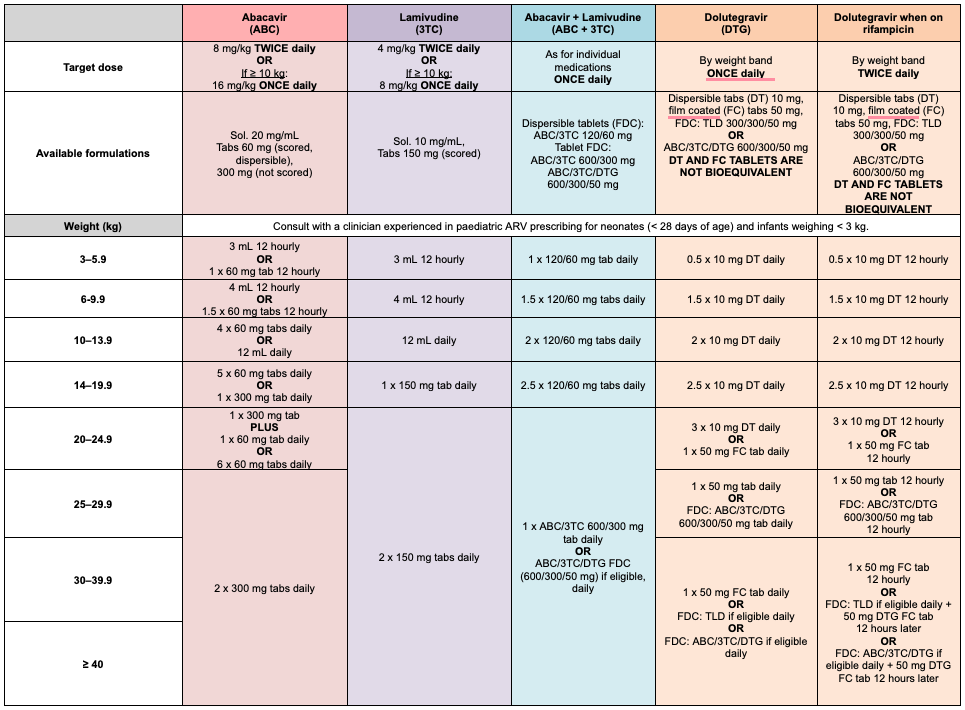
Click on the table to enlarge
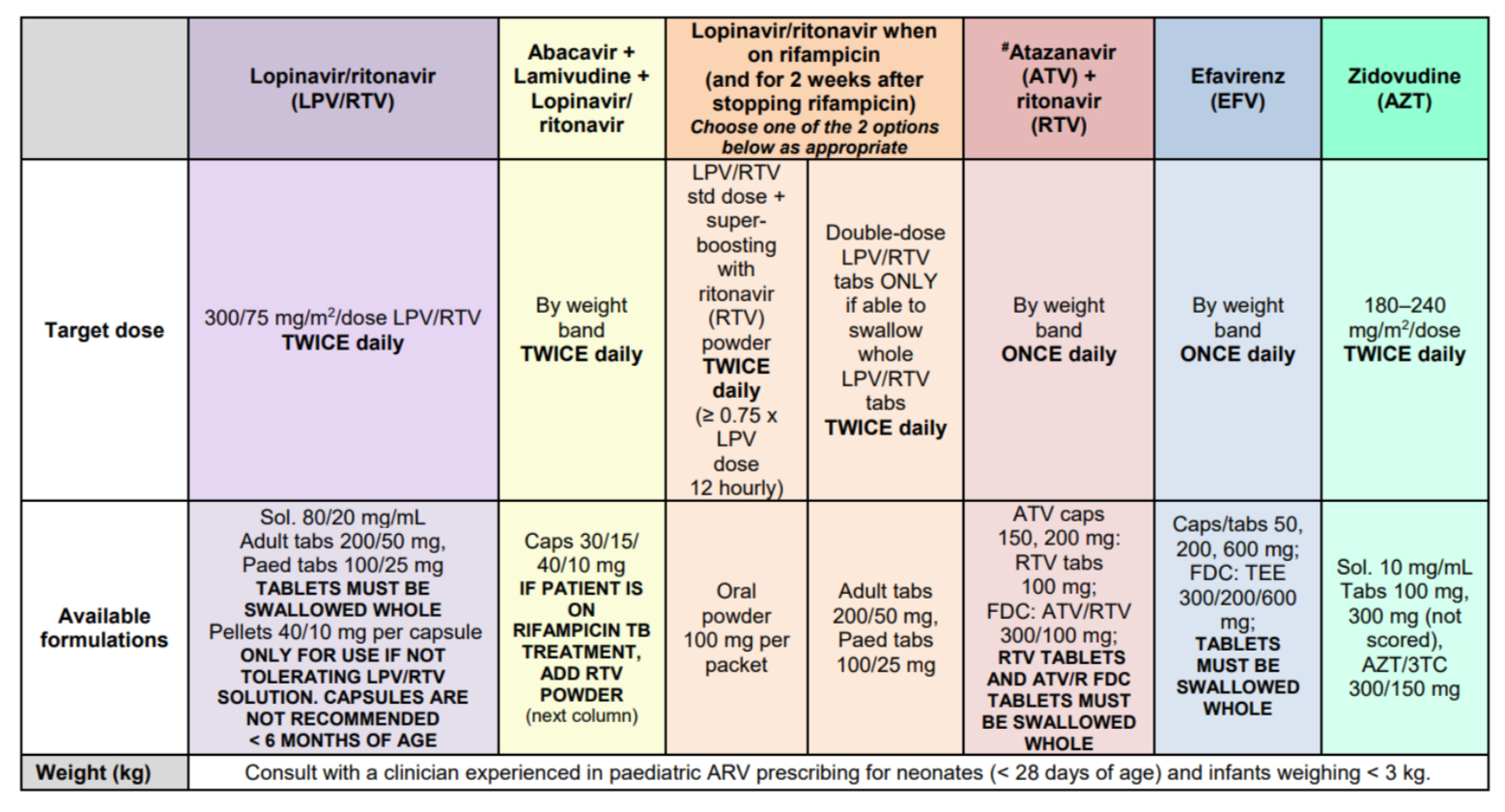
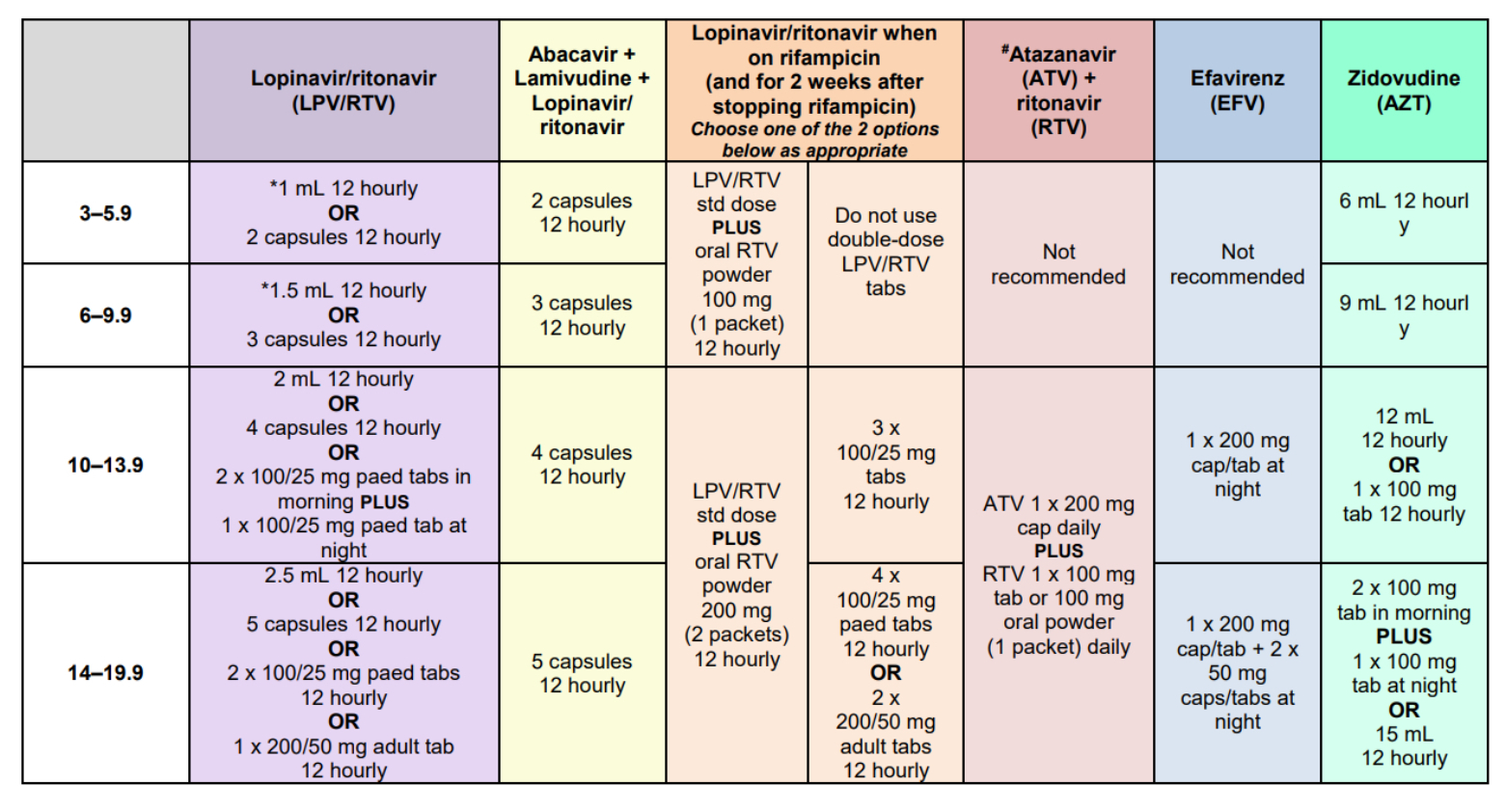
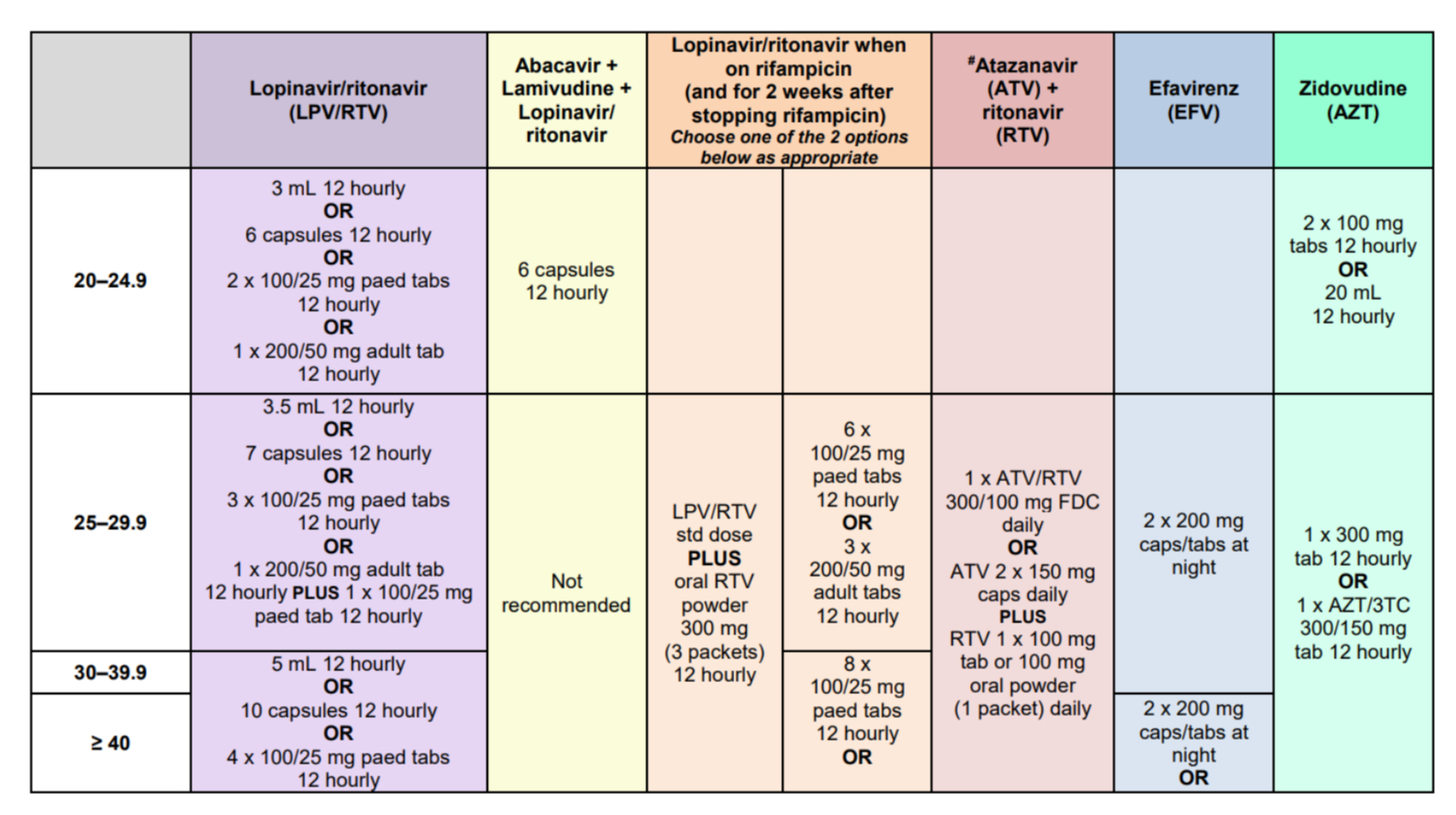
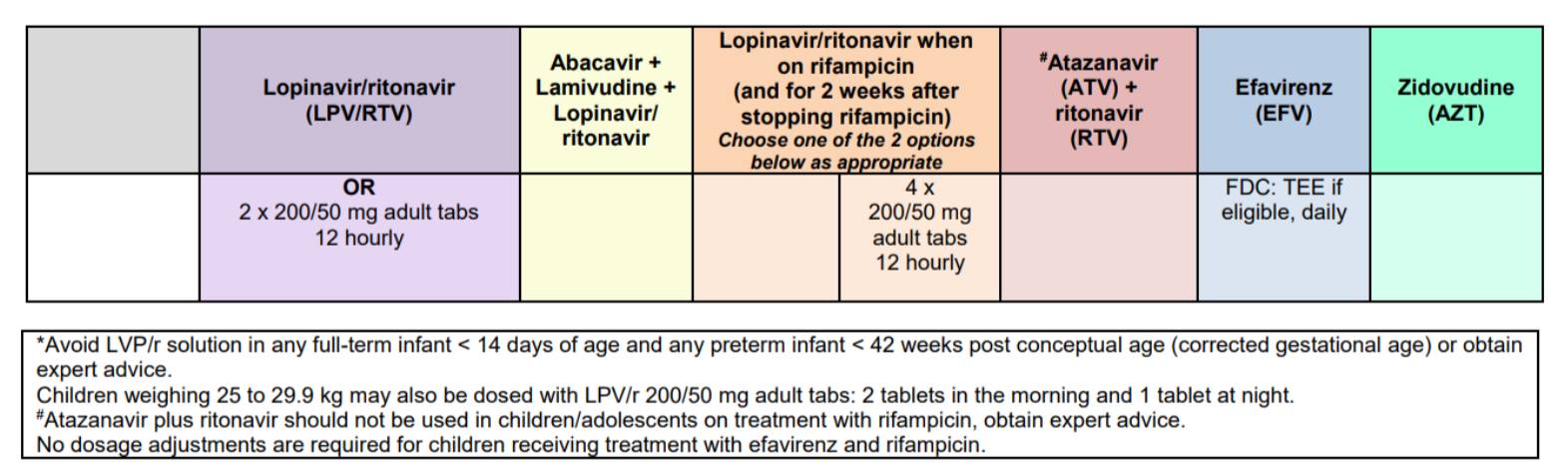
Click on the tables above to enlarge (table has been split to aid better resolution)
Specific information on ARVs
| Nucleoside reverse transcriptase inhibitors (NRTIs) | ||
| Storage | Adverse effects | |
| Zidovudine (AZT) | Room temperature. | - Haematological, e.g. anaemia, neutropenia. |
| Dolutegravir (DTG) | Room temperature. | - Insomnia – rare. |
| Lamivudine (3TC) | Room temperature. | - Pure red cell aplasia – uncommon. |
| Abacavir (ABC) | Room temperature. |
- Abacavir Hypersensitivity Reaction: - Very rare in our population: - Laboratory abnormalities include raised transaminases and creatinine phosphokinase, and lymphopenia. - Discuss with an expert. If ABC discontinued, do not re-challenge with abacavir. |
| Non-nucleoside reverse transcriptase inhibitors (NNRTIs) | ||
| Storage | Adverse effects | |
| Nevirapine (NVP) | Room temperature. |
- Skin rash usually occurs in first 6 weeks. - Do not increase the dosage until the rash resolves. - Beware of liver toxicity. |
| Efavirenz (EFV) | Room temperature. |
- Give at night to avoid CNS side effects: - Hepatotoxicity |
| Protease inhibitors (PIs) | ||
| Storage | Adverse effects | |
| Ritonavir (r) | Tablets/ powder – room temperature. |
- Bitter taste |
| Lopinavir/ ritonavir (LPV/r) | Syrup – refrigerator. Tablets/ pellets and granules – room temperature. |
- Nausea - Vomiting - Diarrhoea |
| Important side effects of ARVs (*Consult an expert before stopping ART.) |
||
| Continue ART with careful monitoring. | Consult an expert and/or stop treatment. | |
| Anaemia | - Hb: 7.0–9.9 g/dL | - Hb < 7 g/dL or cardiac failure |
| Neutropenia | - 0.4–1.2 x 10⁹ /L | - ≤ 0.399 x 10⁹ /L |
| Increased liver enzymes and hepatitis | - ≤ 9.9 x upper normal limit | - ≥ 10.0 x upper normal limit |
| Increased serum triglycerides | - 1.54–8.46 mmol/L | - ≥ 8.47 mmol/L* |
| Increased cholesterol | - 4.43–12.92 mmol/L | - ≥ 12.93 mmol/L* |
| Severe skin reactions | - diffuse maculo-papular rash, or - dry desquamation |
- vesiculation, or - ulcers, or - exfoliative dermatitis, or - Stevens-Johnson syndrome, or - erythema multiforme, or - moist desquamation, or - with elevated ALT or AST |
|
- Peripheral neuropathy |
Clinical evaluation:
|
|
Criteria for changing therapy
Adverse effects
Children may occasionally need to change antiretroviral drugs because of intolerance or a serious adverse reaction. There is no need to change an entire regimen for a single adverse drug reaction.
Note: A single drug substitution can only be made if the viral load is < 50 copies/mL/undetectable or if the change is made in the first 6 months of starting a regimen. The decision to swap must be made by a doctor with antiretroviral experience (this can be by telephonic consultation), as inappropriate choices of antiretrovirals may be ineffective or dangerous.
Treatment failure
The HIV viral load is the most sensitive method to detect failure of response to ART.
Virological failure can be defined as a measurable viral load despite optimal adherence and dosage over 4 months. Treatment failure is primarily defined by viral loads, as waiting for clinical or immunological failure increases the chances of increasing viral resistance to other available antiretroviral agents.
Poor adherence is the most common cause of treatment failure. Adherence issues should be assessed and then implement strategies to improve adherence.
- For guidance on the step-up adherence package, refer to the National adherence guidelines.
https://www.nacosa.org.za/wp-content/uploads/2016/11/Integrated-Adherence-Guidelines-NDOH.pdf
REFERRAL
Complicated or very ill children should be referred to a practitioner skilled in the care of such children.
- Attempts should be made to refer patients to accredited primary healthcare sites once stable on ART.
Standard Treatment Guidelines and Essential Medicines List for South Africa, Hospital Level, Paediatrics, 2023 Edition
Chapter 9: Human Immunodeficiency Virus Infections, 9.1.3 The HIV-Infected Infant/child (< 10 Years)