Treatment
These are the approved guidelines published by the South African Society of Psychiatrists to provide an overview on treatment and management of commonly diagnosed psychiatric illnesses. The guidelines include consensus recommendations, based on peer contribution and using the international evidence based guidelines that are suitable for the local South African health service.
Please note that parts of this guideline may be out of date, an update will be published as soon as it is available.
Acute treatment: bipolar mania
Acute treatment: bipolar depression
Partial or no treatment response
Pharmacological treatment
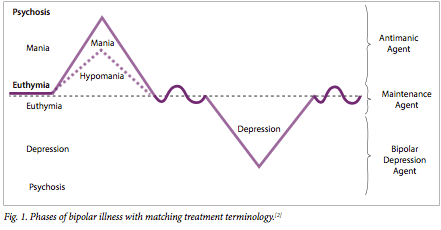
Malhi and co-authors[2] have used specific terminology to categorise the pharmaco-logical agents for BD treatment. As illustrated in Fig. 1 these terms have been chosen based on the intended therapeutic action rather than on the traditional medication class.[2]
Medications efficacious in the treatment of mania or hypomania include antimanic agents. Maintenance agents include those administered in the euthymic phase of BD with proven prophylactic efficacy. Bipolar depression agents, which should not be confused or used interchangeably with the term antidepressants, include effective medications for the treatment of bipolar depression.
Some medications have indications for multiple phases of the illness. Since there are very few drugs that truly meet the full definition of a mood stabiliser (i.e. effective for all phases of the illness), the term mood stabiliser has largely fallen into disfavour. While some antibipolar agents are efficient in the acute phase, others are more efficient in the maintenance phase.
NOTE: SODIUM VALPROATE (trade name Epilim) is now black-boxed for use as a mood stabilizer in any woman/female of child bearing age - due to the high risk of fetal teratogenicity. If there are no other agents available for use in this population group, then contraception must be advised, and patients informed of the high risk of Epilim in pregnancy
The treatment of BD can be divided into the following components:
- Acute treatment of mania and hypomania
- Acute treatment of depression
- Maintenance treatment
- Bipolar II disorder
- Treatment of complex bipolar presentations (i.e. rapid cycling and mixed states)
- Partial or no treatment response
- Treatment of comorbidities (i.e. anxiety disorders and substance-use disorders (not included in this guideline)).
Acute treatment: bipolar mania
For acute symptoms of mania, taper and cease any antidepressants or agents with mood-elevating properties (e.g. stimulants) and introduce general measures where possible:
- Reduce stimulation
- Lower activity level
- Delay individual from making important decisions
- Maintain a structured routine.
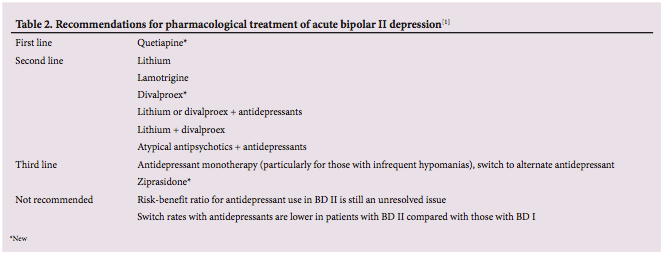
Commence treatment with an antimanic agent (level 1). When selecting an agent, its antimanic efficacy and tolerability, as well as the likelihood of continuing acute treatment into maintenance phase, should be considered. Recommendations for the pharmacological treatment of acute mania are summarised in Table 2.[3]
Monotherapy[2]
Antimanic agents with evidence for efficacy in acute mania include:
- Lithium
- Valproate – the speed of action for valproate can be accelerated using dose-loading
- Olanzapine
- Aripiprazole
- Quetiapine
- Risperidone
- Ziprasidone
- Paliperidone
- Haloperidol – haloperidol is efficacious but longer-term use carries an increased risk of extrapyramidal side-effects (e.g. tardivedyskinesia). Haloperidol is not recommended unless other options have failed, as it lacks efficacy in maintenance treatment.
- To a lesser extent, carbamazepine.
Combination treatment[2]
In comparison to monotherapy with either lithium or valproate alone, recent studies have shown superior efficacy of lithium or valproatein combination with the short-term administration of an atypical antipsychotic. If symptoms and/or behavioural disturbances are severe or protracted, electroconvulsive therapy (ECT) (level 3) should be considered. During ECT, discontinue lithium and anticonvulsants. Although recent studies have indicated that anticonvulsants may be continued during ECT without losing therapeutic efficacy of ECT, it is advisable to discontinue anticonvulsants during ECT.
Gabapentin, lamotrigine, topiramate, phenytoin and oxcarbamazepineare not recommended for the treatment of acute mania.
Behavioural disturbance:[2]
- Acute behavioural disturbance can be managed by either the short-term use of a benzodiazepine (e.g. lorazepam) or an antipsychotic; the concurrent use of two antipsychotics is not recommended.
- Oral administration is preferable.
- It is advisable to use an injectable atypical or a combination of an injectable typical antipsychotic and a benzodiazepine if intramuscular (IM) administration is necessary. RCT data support the use of IM aripiprazole or IM olanzapine (level 2) in the treatment of acute agitation.[1]
- IM aripiprazole (9.75 mg and 15 mg) (not available in South Africa) is superior to placebo and comparable with IM lorazepam (2 mg).[10] In a DBRCT, IM olanzapine 10 mg was superior to placebo and has shown a trend toward greater improvement than IM lorazepam 2 mg.[11]
- In view of the risk of respiratory failure, olanzapine should not be used in combination with benzodiazepines.
Psychotic mania:
- Psychosis is common and occurs in approximately 60% of acute manic episodes.
- For acute psychotic symptoms, an antipsychotic may be employed as adjunctive treatment, if not already being administered as an antimanic agent.
- Atypical antipsychotics are preferred to typical antipsychotics since they have enhanced tolerability.
Psychotherapy for mania
Psycho-education (PE) and family-focused therapy (FFT) are efficacious in the prevention of mania/hypomania (and possibly depression).[11] To prevent bipolar episodes, interpersonal social rhythm therapy (IPSRT) and cognitive-behavioural therapy (CBT) are probably efficacious.[11]
Acute treatment: bipolar depression
Pharmacotherapy for bipolar depression
In patients with bipolar depression, any agents that could exacerbate depressive symptomatology (e.g. typical antipsychotics such as chlorpromazine, antihypertensive agents and corticosteroids) should be ceased.[2]
First-line monotherapy treatment options for bipolar depression include:[2]
- Quetiapine 300 - 600 mg/day
- Lamotrigine 200 - 500 mg/day
- Olanzapine 5 - 15 mg/day
- Lithium
- Valproate.
Second-line options for bipolar depression include the following adjunctive or combination therapies:
- Adjunctive risperidone 2 - 4 mg/day
- Lithium and antidepressant combinations
- Olanzapine and fluoxetine combination
- Valproate and lithium
- Lamotrigine as an add-on to lithium.
- For concurrent psychotic symptoms, atypical antipsychotics can be used as augmentation (level 2),[2] but combining two antipsychotic medications should best be avoided.
The benefits of conventional antidepressants such as the tricyclic antidepressants (TCAs), selective serotonin reuptake inhibitors (SSRIs), and serotonin and noradrenaline reuptake inhibitors (SNRIs) in the treatment of bipolar depression is currently unclear.[2] If a conventional antidepressant is employed for bipolar depression, it should be concurrently administered with an antimanic maintenance agent to diminish the possibility of switching. The antidepressant should then gradually be tapered after 2 - 3 months of sustained recovery.[2] In addition, antidepressants should not be prescribed in rapid-cycling BD. Also, venlafaxine (13 - 15%) and the TCAs (7 -11%) are associated with a relatively higher risk of inducing a manic switch than SSRIs (0 - 4%),[11] while other agents can also precipitate switching (e.g. psychostimulants).[2]
ECT should be considered if the risk to self or others is high, if psychotic features are present, or if there has been a previous response to ECT (level 3).[2]
Psychotherapy for bipolar depression
As there is no definitive evidence for the efficacy of psychological therapies as BD monotherapy, these therapies are best administered as adjunctive treatments to pharmacotherapy. There is also limited evidence for psychological treatments in acute bipolar depression compared to evidence for their use as maintenance-phase treatments.
CBT and FFT are efficacious, with IPSRT possibly efficacious, as adjuncts to medication, in the treatment of bipolar depression.[11]
If a patient has severe psychomotor impairment or psychotic features, psychological treatments are not recommended during the acute phase.[2]
Maintenance treatment
Maintenance treatment is important once a diagnosis of BD has been made. Indications for maintenance treatment include:[2]
- A mood episode in the past 5 years
- Two previous mood episodes over any time period
- Severe acute episodes with psychotic features, or a suicide risk
- Ongoing functional disability (level 5).
The treatment plan should be re-evaluated and attention should be paid to factors that may increase the risk of relapse, including comorbid conditions and psychosocial stressors. A collaborative approach to maintenance care should be adopted. Furthermore, both pharmacological and psychological treatment strategies should be used to eliminate subsyndromal depressive symptoms, since disability is closely related to the depressive component of the illness. Psychosocial stressors should be addressed; address problem-solving skills and the development of social support networks (especially with chronic depressive symptoms); encourage a healthy lifestyle (good sleep hygiene, exercise, regular routine); treat comorbidities, particularly substance misuse; monitor clinical response to medications, adherence and side-effects; monitor social and occupational functioning; provide PE for the family; and address caregiver support.[2]
Psychological interventions as an adjunct to medication
These appear to have the greatest benefit in reducing the risk of relapse and can improve functioning. By targeting euthymic patients in the maintenance phase of illness, therapeutic effects can be optimised, but are likely to be less effective in those with a high number of prior mood episodes (>12 episodes). There is strong evidence for interventions that focus on the recognition of early warning signs (level 1) and this includes:
- CBT (level 2)
- FFT (level 2)
- IPSRT (level 2)
- Group PE (level 2)
Maintenance pharmacotherapy[2]
As a first step, any adjunctive agents that have been used to manage behavioural disturbance associated with an acute mood episode should be withdrawn. As little evidence currently exists for combining treatments, monotherapy is preferred. Medications shown to be effective maintenance agents include:
- Lithium (level 1), mainly for preventing manic episodes
- Lamotrigine (level 2), mainly for preventing depressive episodes
- Valproate (level 2)
- Atypical antipsychotics: olanzapine (level 2)
- Aripiprazole (level 2)
- Quetiapine adjunctive to lithium or valproate (level 2).
Other atypical antipsychotics that have a limited evidence base (restricted to small trials or retrospective data) include:
- Ziprasidone (level 3)
- Risperidone (level 3)
- Adjunctive depot risperidone (level 3)
- Adjunctive clozapine (level 3).
Selection of maintenance agents should be based on their efficacy and tolerability profiles. In addition, consideration needs to be given to individual patient factors (preference, past response, safety). In this regard and to maintain therapeutic blood levels, lithium needs to be monitored regularly (0.6 - 1.2 mmol/l). The evidence for carbamazepine as a maintenance treatment is mixed, while there is no evidence for the efficacy of conventional antidepressants (e.g. TCAs, SSRIs and SNRIs) in maintenance. That said, if depressive episodes are recurrent, an antidepressant may be considered as an adjunctive to a maintenance agent, after carefully weighing up the benefits of prevention versus the risk of precipitating mania or rapid cycling.[2] The recommendations for maintenance pharmacotherapy of BD are summarised in Table 3.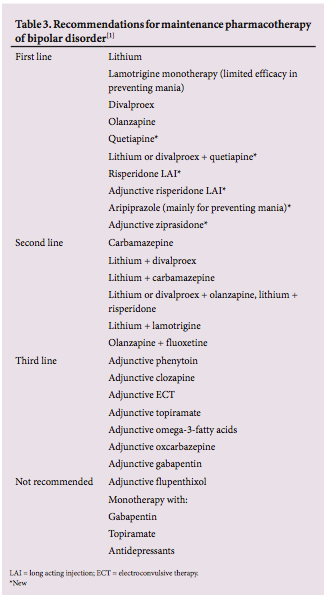
How long to treat
Treatment of BD is often lifelong, and a minimum of 6-monthly reviews is recommended.
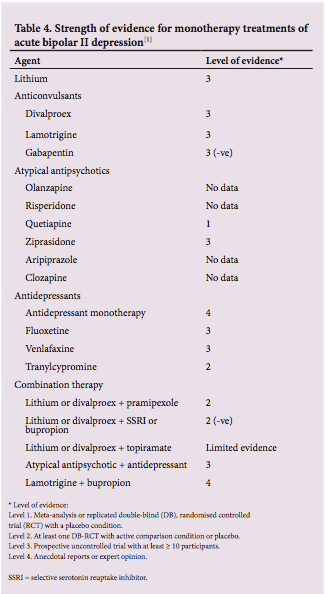
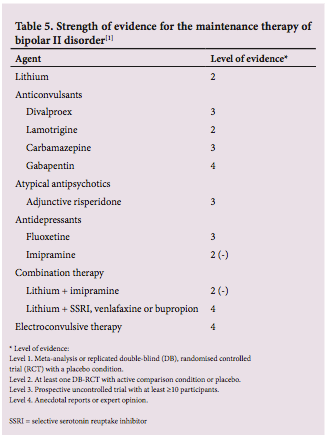
The strength of evidence for monotherapy treatments for acute bipolar II depression, and for maintenance of BD II are summarised in Tables 4 and 5, respectively.
Complex bipolar presentations
Rapid cycling[2]
This presentation is associated with higher rates of morbidity, increased suicide risk, and poorer long-term treatment response.
It is important to screen for and, where possible, exclude factors that may precipitate or exacerbate rapid cycling:
- Antidepressants
- Substance misuse
- Medications
- Medical illness, e.g. hypothyroidism.
Treatment options for rapid cycling:[2]
- There is a limited evidence base of effective treatments for rapid cycling.
- Current treatments appear to be less effective in countering depressive symptoms than manic symptoms.
- Pharmacological monotherapy:
- Consider valproate (level 2)
- Lithium (level 2)
- Olanzapine (level 2)
- Lamotrigine (level 2) (primarily for BD II patients)
- Quetiapine (level 3).
- Combination therapies:
- Consider adjunctive psychological interventions (level 5) as outlined under maintenance treatments.
- There is limited evidence to support combination pharmacological treatments and this should be decided according to clinical need, e.g.:
- Lithium + valproate (level 3)
- Lithium + carbamazepine (level 3)
- Adjunctive lamotrigine (level 5)
- Physical treatments: ECT (level 3).
Mixed states
Distinguish mixed states from both mania and agitated depression.[2] Studies focusing on monotherapy and adjunctive treatment options for mixed states are scant, although patients with mixed states have been included in trials of acute mania and acute bipolar depression. As a start, it is important to taper and cease medications with mood-elevating properties, especially those that may induce inter-episode switching.[2] Antidepressants can worsen or induce rapid cycling and are thus not recommended. Lithium may have reduced efficacy for treating mixed states.[2] Treatment options include:[2]
- Olanzapine (level 2)
- Quetiapine or valproate as monotherapy
- Olanzapine and fluoxetine in combination
- Valproate in combination with olanzapine (level 2).
- Lamotrigine may be a useful adjunctive treatment to an antimanic agent for depressive symptoms in mixed states, although treatment effect is likely to be delayed as this requires slow titration, especially when used in conjunction with valproate.[2]
- ECT (level 3) may be considered if symptoms and/or behavioural disturbances are severe or protracted.
Partial or no treatment response
Structured rating scales employed in combination with clinical assessment can be valuable in assessing treatment response and in quantifying symptom change.
- Re-evaluate the diagnosis.
- Reassess for psychosocial stressors that may maintain symptoms and consider alternative causes (e.g. organic causes).
- Reassess for medical comorbidities and psychiatric comorbidities (e.g. anxiety disorders, drug and alcohol use disorders, personality disorders).
- Review adherence and dosage. Reassess adherence and satisfaction with treatment plan.
- Ensure a therapeutic dose is prescribed and that adequate blood levels of medication are attained when taking an antidepressant.
- Therapeutic strategies for non-response in mania:[2]
- Optimise antimanic agent:
- Checklevels
- Adjust dose
- And/or augment
- And/or combine with another antimanic agent.
- Optimise antimanic agent:
- Consider combination therapy. This is often used in clinical settings where response to monotherapy has been inadequate. Head-to-head comparison studies of different combinations are scant. Combinations that have been assessed in clinical trials include:[2]
- Lithium and valproate (level 2)
- Lithium and carbamazepine (level 2)
- Lithium or valproate and olanzapine (level 2)
- Adjunctive clozapine or risperidone (level 3).
- Substitute antimanic agent with another and/or consider ECT (level 3) if episode is very severe or there is a high suicide risk.[2]Bipolar depression: non-response:[2 ]
- Optimise dose (check blood levels and/or adjust dose) of medication being used and/or
- Switch to alternative bipolar depression agent and/or
- Augment and/or combine agents
- Consider adjunctive psychological therapy that will target depressive symptoms (e.g. CBT, IPSRT, FFT)
- Consider using conventional antidepressants, but closely monitor for switch to mania.
- Consider ECT (level 3) if episode is very severe, or there is marked or significant risk for treatment resistance.
Treatment non-adherence is common in BD.[2] Depot treatment of either an injectable atypical antipsychotics (level 3) (e.g. risperidone) or an injectable first-generation antipsychotic (level 3) should be considered in cases of ongoing persistent non-compliance, and after failure of other appropriate interventions.[2] A first-generation depot antipsychotic is not recommended where the course of BD is characterised predominantly by depression. [2]
Algorithm
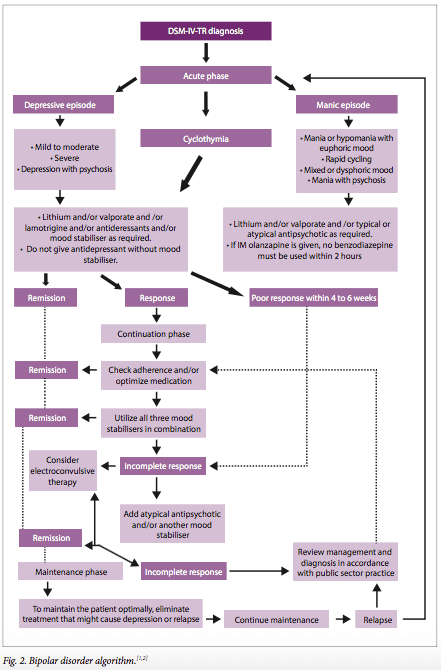
Fig. 2 outlines the treatment algorithm. Please refer to Appendix A for other aspects of treatment and management.