Treatment
These are the approved guidelines published by the South African Society of Psychiatrists to provide an overview on treatment and management of commonly diagnosed psychiatric illnesses. The guidelines include consensus recommendations, based on peer contribution and using the international evidence based guidelines that are suitable for the local South African health service.
Please note that parts of this guideline may be out of date, an update will be published as soon as it is available.
Patients with dementia almost invariably display neuropsychiatric symptoms (NPS), such as disturbances in mood with psychotic and vegetative symptoms among other phenomena.[18] Hitherto the focus with cognitive enhancers has been on cognitive improvement, overlooking the fact that these medications will often improve the NPS, especially in the early phases of the illness. Amelioration of these symptoms may be insufficient later on, at which stage treatment with more conventional psychotropic agents will be required.
Treatment goals
- Re-establishing the homeostasis, correcting for both internal and external factors by correcting influences such as dehydration, urinary tract infection, and disruptions in day/night rhythm.
- Stabilising the NPS to promote patient well-being and reduce caregiver burden.
- Maintaining the quality of life and highest level of patient functioning for as long as possible, in order to delay institutional care.
General aspects of treatment
As with the assessment process, treatment is holistic, by its nature multifaceted and, more often than not, multidisciplinary. Of necessity, the treatment involves caregivers and family. Team-work is essential and should utilise as many members from the community (helpful family members, religious groups) and medical resources (social worker, occupational therapist, community nurse) as possible. Patient target symptoms include declining cognition and impairment in daily functioning, among various associated symptoms that manifest during the course of the disorder. Treatment aims at maximising functional performance and quality of life, while reducing the period of disability.
Imparting the diagnosis
Ensure that key family members and caregivers are present. Be compassionate, honest and leave sufficient time available for questions and answers in order to contain the situation. Keep hope alive int hat there are treatments available for some dementias, and potential benefits from psycho-education, social support and medication trials. Apart from the diagnosis, include prognosis and management strategies. Keep an open-door policy, link up with the family physician and refer to the local support organisation.[19] Additional issues that need to be addressed include genetics and other practical and medico-legal decisions such as driving, firearms, power of attorney, financial controls, curatorship and wills, and capacity assessments (discussed above). Note that the detection of elder abuse, incapacity to drive and/or ownership of a firearm is notifiable by law.[16]
Accommodation and level of supervision
The situation in South Africa mirrors the global move away from residential institutions. Fewer beds are available at ever-rising cost. Patients, their families and caregivers increasingly have to rely on their own resources. To help them in this task are the primary-care facilities, social clubs, seniors centres, daycare centres and respite-care facilities. Welfare organisations and non-profit organisations (NPOs) offering support, counselling and psycho-education are invaluable.
Pharmacological treatment
Acetylcholinesterase inhibitors and memantine
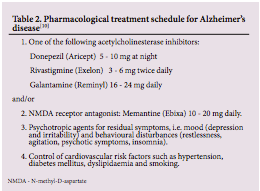
Based on the cholinergic hypothesis of AD, cognitive deterioration is associated with progressive loss of cholinergic neurons and decreasing levels of acetylcholine in the brain. Both acetylcholinesterase (AChE) and butyrylcholinesterase (BuChE) have been found to play an important role in the degradation of acetylcholine. Table 2 outlinesthese medications.
The 3 acetylcholinesterase inhibitors (AChEIs) differ in their pharmacological action: donepezil selectively inhibits AChE; rivastigmine affects both AChE and BuChE; and galantamine selectively inhibits AChE and also affects nicotinic receptors. To date, these differences have not been shown to result in differences inefficacy and tolerability.[20]
An alternative strategy is the inhibition of excitotoxic amino-acid neurotransmitters (e.g. glutamate, aspartate, homocysteine) which play an important role in the pathophysiology of dementia. Memantine is an N-methyl-D-aspartate receptor antagonist which regulates calcium flux across membranes and may protect against neuronal death.
A combination of an AChEI with memantine appears to be more effective than either agent on its own and is well tolerated, there being no pharmacokinetic or pharmacodynamic interactions between the two.[20,21]
Most indications for the above agents are AD-specific but may also benefit those AD patients with cerebrovascular disease. Other indications include MCI, diffuse Lewy body (DLB) dementia, and Parkinson’s disease dementia. These indications are, however, country-specific as is their range of applications for the mild, moderate and severe stages of AD. The mode of administration (slow-release capsules, transdermal patches) further impacts more positively on tolerability, compliance and efficacy; as do ease of titration, price of product and familiarity with the medication. Under ideal circumstances, treatment should start in the prodromal/symptomatic/MCI phase of AD, bearing in mind that patients only tolerate the minimum effective dose in the early stages. The earlier diagnosis would involve the testing of cerebrospinal fluid biomarkers for AD, which is currently being standardised.[22] Patients respond with both improved cognitive and behavioural changes. Studies tend not to capture the more subtle changes in the dementing patient, such as the return of personality, spontaneity, insight and interest in their surroundings. The relief in caregiver stress burden is observed immediately, and this in turn enhances the well-being of the caregiver. Improvement in the mild to moderate AD patient is usually above baseline for the first 9 months; then it slowly declines as the illness relentlessly progresses. Data obtained at the 3-year mark show that patients are still functioning at above their expected level of deterioration when compared to untreated patients observed over the past decades.[23,24] With positive results, treatment may continue uninterrupted to an MMSE as low as 5/30, after which continuing benefit becomes increasingly questionable and difficult to evaluate in research;[17,25] or where the patient’s dementia has progressed to a stage where there is no significant benefit from continued therapy.[26] Furthermore, longer-term follow-up data of AD patients on a previous generation AChE shows a cost-saving of 7.5% over the patient’s lifetime from diagnosis to death.[27,28] Though the costs of medical and social services were reduced, most of the savings were due to reduced time in nursing home placement (at least 14 months). New treatments that can both improve clinical outcomes and save costs should be given serious consideration by clinicians and administrators.[29]
The benefits of treatment with AChEIs are rapidly lost when drug administration is interrupted for as little as 6 weeks and may not be fully regained when drug treatment is reinstated.[30] Notwithstanding, it may be necessary to check whether the medication is having the desired effect by very occasionally withholding treatment for approximately 2 weeks when the recurrence in severity of former NPS/behavioural and psychological symptoms of dementia (BPSD) target symptoms will act as an indicator for continued treatment.[26]
At least two-thirds of patients can be expected to derive modest benefit from the above medications with regard to not only improvement in cognition, but also to NPS/BPSD and activities of daily living (ADL). Failure to benefit from one AChEI or memantine does not necessarily mean that the patient will not respond to another of these medications.[19,20]
Adverse effects
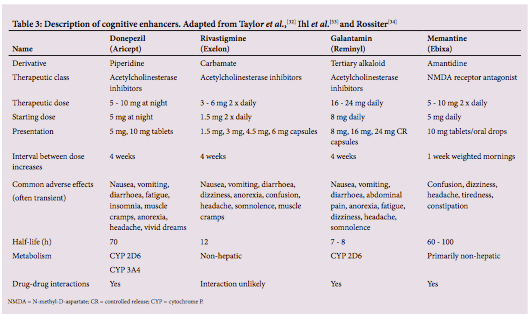
Excess cholinergic stimulation with the use of AChEIs may lead to transitory nausea, vomiting, dizziness, insomnia and diarrhoea. A lowering of dosage, short pause or even rechallenge (if treatment is re-initiated after a prolonged period) is usually successful in overcoming these events should they occur. Urinary incontinence, abdominal muscle cramps and excessive sweating may occur and usually indicate the need for a ‘switch’ to another agent. There appear to be no important differences between drugs in respect of type or frequency of adverse events.[20]
AChEIs may potentially have vagotonic effects on heart rate (i.e.bradycardia), of importance in patients with ‘sick sinus syndrome’ or other supraventricular cardiac conduction disturbances such as sinoatrial or atrioventricular block. These medications should therefore be used with caution in patients with cardiovascular disease or those taking concurrent medicines that reduce heart rate. Bradycardic drugs include beta-blockers, digoxin, amiodarone and calcium channel antagonists. Recent reviews show that the incidence of cardiovascular side-effects is low and that serious adverse effects are rare. Interestingly, the value of pretreatment screening and routine electrocardiograms (ECG) is questionable and these are not currently recommended by the National Institute for Health and Clinical Excellence.[20,31]
Common (usually transient) side-effects of memantine include confusion, dizziness, headache and tiredness. Uncommon are anxiety, hypertonia and vomiting. Note that, being an amantadine derivative memantine may enhance the action of L-dopa and dopaminergic agonists.[20]
Generally, all the above interact with anticholinergic drugs and cholinomimetics to a variable extent.
Recommended dosages
It is also important to optimise the dose and duration of cholinesterase inhibitor treatment. It is thought that the higher the dose tolerated by the patient, the better the result. A minimal trial period of between 3 and 6 months is indicated.
AD patients are given a once-daily dose of 5 mg donepezil at night, increasing to 10 mg after 4 weeks. Medication is given at night to obviate side-effects which may occur 4 hours after ingestion coinciding with peak plasma levels. The half-life of donepezil is 70 hours and steady state is usually obtained in 14 - 21 days. As with the other medications, should side-effects become intolerable, one skips the medication for a day or two.[20] Elimination of the drug is through both renal excretion of intact drug and bio-transformation via the cytochrome P450 system. The latter is only partially saturated by the drug, and hence drug-drug interactions tend not to be a problem. Rivastigmine is initiated at 1.5 mg twice daily, and increased by 1.5 mg twice daily every 2 - 4 weeks to a maximum of 12 mg daily. Rivastigmine has almost no potential for interaction since it is metabolised at the site of action and does not affect hepatic cytochromes. Galantamine is initiated at 8 mg daily, and the dose is then increased by 8 mg every 4 weeks to a maximum of 24 mg daily. Metabolism is via the cytochrome P450 system. Memantine is given in the morning with a starting dose of 5 mg, then raised in increments of 5 mg on a weekly basis to a maximum of 20 mg per day. Metabolism is primarily non-hepatic (Table 3).[10,20,32-34]
Follow up
It is important to determine the patient’s response to medication, and as such it may be useful to complete a scale such as the MMSE orADL[15] or the Neuropsychiatric Inventory (NPI) for NPS[35] in order to help quantify the treatment response.
Neuropsychiatric symptoms
NPS, also formally known as BPSD, rather than cognitive decline, prompt entry into long-term care. Over 90% of subjects with dementia will exhibit at least one NPS that needs specific management at some point in the course of their illness. These symptoms may wax and wane over time while some symptoms (e.g. visual hallucinations in DLB dementia) are more common in some dementias than in others. Another frequent mistake made by both caregivers and physicians alike is to assume that there are no hallucinations or delusions, since patients may objectively not display these phenomena which are only elicited on very careful mental state examination or behavioural assessment. The behavioural domains are best assessed by using the NPI.[35] The diffuse nature of the NPS means that each patient needs an individual assessment and treatment strategy.[18,32,35-37]
In general, once treatable medical causes for NPS have been addressed or eliminated, psychosocial intervention follows with or without psychotropic medication. The latter consists of the use of AChEIs or memantine on their own or in combination followed by antidepressant, antipsychotic or other medication as indicated.
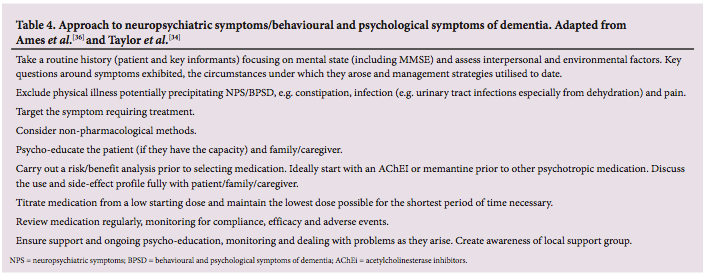
The general treatment principles follow those for younger adults. Except that half to two-thirds of the adult dose is given. ‘Start low, go slow, review frequently’ is the standard watchword, as the elderly are more sensitive to medication side-effects than the younger adult. Note that polypharmacy may be necessary in the form of a non-sedating (high-potency) neuroleptic by day and a sedating (low-potency) neuroleptic at night. Psycho-education about the illness and supervision of medication is essential, keeping in mind that data on medication are, in general, controversial (Table 4).[32,36]
Antidepressants
While symptoms of anxiety or depression are common in the premonitory stages of dementia, e.g. their occurrence at 50 years of age may herald dementia 10 - 20 years later, once the dementia is established, apathy is the most common NPS (frequently misinterpreted as ‘depression’).[18] Though major depression may precede the onset of AD, it occurs less frequently as the disease progresses, while minor depression, mild depressive symptoms or bouts of dysphoria become much more common in the early course of AD. If in doubt about the coexistence of depression with AD, a trial of antidepressant medication should be given. Note that antidepressants also have anxiolytic, and in the case of some newer-generation antidepressants, sedating if not hypnotic qualities. Symptomatic treatment of neuropsychiatric disturbances will afford both the patient and caregiver much relief. By and large the elderly require smaller dosages (about half to two-thirds) of antidepressant medication than that of the young adult population, and in most cases the ‘sedating’ antidepressants are preferred. Higher dosages may be required for more resistant cases where the diagnosis of coexistent depression is certain. Exercise caution with regard to side-effects and patient tolerance. AD patients with an MMSE of below 20/30 tend not to benefit from an antidepressant in terms of its antidepressant effect. AD patients on an AChEI, however, may experience depressive symptoms in both the mild and moderate stages of AD.[38] In these patients the depression appears in part to be coupled to the renewed insight afforded the patient by the drug, and is usually transient in nature. When it persists, treatment with an antidepressant is indicated.[38]
Avoid tricyclics in therapeutic doses on account of anticholinergic side-effects, and ECG QTc problems, especially when combined with other medication, e.g. antipsychotics.
Dementia patients fare better on ‘sedating’ antidepressants such ascitalopram (20 mg), sertraline (50 - 150 mg), mirtazapine (15 - 30 mg) and agomelatine (25 - 50 mg) at night. Escitalopram (2.5 - 5 mg) and venlafaxine (75 - 225 mg) are given in the mornings. The latter should only be used as second-line treatment. Augmentation usually involves neuroleptics, while electroconvulsive therapy may only be effective during the prodromal phase of the disorder.
Antipsychotics
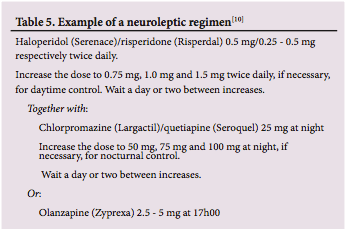
Table 5 outlines a treatment schedule for restlessness, psychotic symptoms, agitation and insomnia. Note that haloperidol (a potentant ipsychotic, with little sedation, but prone to extra pyramidalside-effects) acts synergistically with chlorpromazine (a less potentant ipsychotic, sedating, and prone to postural hypotension as side-effect). The drugs in combination usually allow for a lower dose of either agent, with fewer side-effects, affording better tolerability and targeting of symptoms. Some caregivers prefer one drug only, an even lower dosage of either agent, or different timing. Good caregivers will experiment with different regimens, tell you what their AD patient needs, and should be accommodated, for at the end of the day it is they who have to live with the consequences.[10,38]
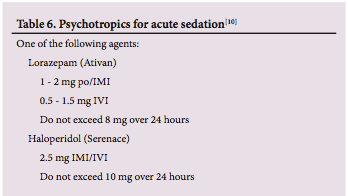
When aggression, psychosis, resistance to care or restlessness is prominent, low-dose risperidone/haloperidol at 0.25/0.5 mg twice daily is the drug of choice. Reinforce the day-night cycle by adding a sedative antipsychotic such as quetiapine/chlorpromazine 25 - 50mg at night (Table 5).[10] Titrate up as indicated. For acute sedation 1 - 2 mg lorazepam orally or intramuscularly is the drug of choice (Table 6).[10]
Ultimately, it is the treatment with which one is familiar and comfortable that works best. First-generation antipsychotics (FGAs) are probably as effective as second-generation antipsychotics (SGAs) but owing to their side-effect profile less well tolerated. As a rule of thumb, the ‘non-sedating’ antipsychotics have extrapyramidal symptoms as side-effects, the sedating antipsychotics have oversedation, hypotension and dizziness as their chief side-effect. There is no significant difference between treatment groups.[32,36]
In 2004 increased mortality with antipsychotics in dementia raised warnings for risperidone and olanzapine, which over the years were extended to include all SGAs as well as FGAs. The risk of developing both serious and non-serious cerebrovascular adverse events (CVAEs) such as stroke and mortality increases threefold with the use of antipsychotics. To date the mechanism by which the risk of such CVAEs is raised remains obscure, and patients with poorly controlled cardiac arrhythmias, hypertension, diabetes and previous stroke are more at risk.[32]
Other medications/strategies
Hypnotics
Avoid benzodiazepines on account of the frequent occurrences of daytime somnolence, emotional lability, confusion, in coordination, ataxia, memory impairment and incontinence. Implementation of measures of sleep hygiene is a prerequisite.
If medication is required for insomnia (preferably short-term) the following may be useful:
- Benzodiazepine-related: zolpidem 5 mg or zopiclone 3.75 – 7.5 mg
- Antidepressants: Sedating agents such as citalopram 10 - 20 mg, trazodone 50 mg, mirtazapine 7.5 - 15 mg or agomelatine 25 mg at night.
- Neuroleptics: Sedating agents such as chlorpromazine 25 mg, olanzapine 2.5 mg (given at 17h00) or quetiapine 25 mg at night.
Mood stabilisers/anticonvulsants
Trials with anticonvulsants (carbamazepine, sodium valproate, lamotrigine, topiramate and gabapentin) have not produced convincing evidence upon which to advocate their routine use.[32]
Restless legs syndrome
Clonazepam 0.5 mg may be taken at bedtime. Failing this, a dopamine agonist may be indicated: pramipexole, 0.125 mg at night.
Hypersexuality
Cyproterone acetate 150 mg given every 2 - 4 weeks IMI is effective in combating paraphilia in non-dementing patients and those with dementia. Sexual disinhibition or hypersexuality will diminish with in a few days. The strategy is to administer the medication for 6 months, then withhold treatment, and should symptoms re-emerge, another 3 months of treatment is indicated. Very occasionally a further 3-month course may be necessary.[39]
Treatment-resistant psychoses and disruptive vocalisers
In these situations the clozapine/amisulpiride regimen (taking into account white cell count measurements) may be useful:
Initiate: clozapine
- Start with 12.5 mg (in very frail patients, prone to extrapyramidal side- effects)
- Increase in 12.5 mg increments
- Start with 25 mg (in more robust patients)
- Increase in 25 mg increments
- If response is good, continue to near-intolerance level
- Split dose with night-time weighting, then drop one level
- Total daily dose 125 - 300 mg
- Watch out for: sedation, hypotension, urinary incontinence and drooling
Add: amisulpiride - Start with 50 mg
- Increase in 50 mg increments
- Split dose with night-time weighting• Total daily dose 150 - 200 mg
- Watch out for sedation and dystonia
Non-pharmacological treatment
The patient
A complex interaction of biological, psychosocial and environmental factors contribute to the development of NPS in AD.[18] It is therefore important to observe for environmental triggers that influence behaviour, and get feedback from those around the patient. This has led to the A-B-C approach, whereby Antecedents to the behaviour are noted, as well as details of the Behaviour (description, time, duration), and the Consequences. A disruptive patient may thus get much more attention from nursing staff than when they are quiet, which inadvertently reinforces their disruptive behaviour.[18]
Environmental factors implicated in triggering NPS include excessive noise and stimulation, lack of daily structure and routine, confusing surroundings, excessive demands, loneliness and boredom.[18] Specific non-pharmaceutical interventions that enjoy success are validation therapy, positive reinforcement, reminiscence therapy, reality orientation and creative diversions, among others.
The caregiver
A most vital link in the pharmacotherapy and general care of AD is the caregiver. Caregivers are estimated to spend an average of 70 - 100 hours per week on providing care. Caregivers utilise 45% more physician visits and 70% more prescription drugs than non-caregivers, and are more likely to be hospitalised. More than 50% of caregivers are at risk for clinical depression.[40,41] A recent study[42] showed that, in general, there was a six-fold risk of dementia in spouses of patients with dementia. Where husbands looked after spouses suffering from dementia the risk was twelve-fold. Judicious use of pharmacotherapy, therefore, not only alleviates the stress on the caregiver but also delays the institutionalisation of the AD patient.
All caregivers should be referred to NPOs such as Dementia SA in the Western Cape and Alzheimer’s South Africa, elsewhere. Not only do these organisations assist in supporting caregivers and monitoring their well-being but they also explain how to care for the patient, provide support services –such as home help or respite care – wherever possible, provide counselling and medicolegal advice, and continually update the caregiver by means of newsletters, meetings or workshops, on the latest developments.
Preventative measures
It is estimated that the neurodegenerationin AD starts some 20 - 30 years before the appearance of the first clinical symptoms,[43] reflecting the need for earlier intervention while minimal brain damage has occurred.
Note that the preventative measures mentioned below offer no benefit to people whose preclinical AD pathology is sufficiently advanced to produce dementia symptoms within very few years and especially once the dementia is clinically evident:
- Hormone replacement therapy (oestrogen with or without progesterone) is only effective if initiated at the time of menopause where a deficiency in female sex hormones has clearly been established.[44]
- Vitamin E (≤400 IU) and C (400 mg) daily, preferably in combination.[45] Note that high-dose vitamin E (+400 IU daily) supplementation is associated with an increased mortality risk.[46]
- Red wine (Bordeaux blend 250 - 500 ml daily). Ascribed to resveratrol and other aliphatic compounds.[47]
- Non-steroidal anti-inflammatory drugs (NSAIDs). Conventional NSAIDs such as ibuprofen and voltaren[48] as well as naproxen used for as little as 2 - 3 years[49] may protect against AD.
- Coffee. Consuming 3 - 5 cups of coffee (not decaffeinated or instant) a day decreases the risk of dementia/AD later in life.[50-52]
Currently, there is interest in establishing a ‘risk score’ as early as midlife, similar to that of the risk of cardiovascular disease. It is hoped that these lifestyle changes, antioxidant supplementation and treatment of medical conditions may then decrease the risk of AD and other dementias in persons at risk.[53] A diet rich in vitamins B, C, D and E (fruit and vegetables) and omega 3 fatty acids (fish) and low in high trans-fat (processed foods) reflects in beneficial blood nutrient biomarker patterns influencing both cognitive function and brain volume.[54]
- Physical exercise
- Weight reduction
- Control of hypertension
- Control of hypercholesterolaemia
- Dietary antioxidants
- Intellectual activity
- Leisure activities and hobbies
- Social networks
- Red wine
- Fish and other sources of omega 3
- Folate-rich food or low-dose vitamin B supplementation
Drugs mentioned
- Chlorpromazine3
- Donepezil3
- Rivastigmine3
- Agomelatine2
- Clozapine2
- Galantamine2
- Haloperidol2
- Mirtazapine2
- Olanzapine2
- Quetiapine2
- Risperidone2
- Amantadine
- Amiodarone
- Carbamazepine
- Citalopram
- Clonazepam
- Cyproterone Acetate
- Digoxin
- Dopamine
- Escitalopram
- Gabapentin
- Ibuprofen
- Lamotrigine
- Lorazepam
- Naproxen
- Pramipexole
- Progesterone
- Sertraline
- Sodium Valproate
- Topiramate
- Trazodone
- Venlafaxine
- Zolpidem
- Zopiclone